Wegovy Exit Strategies: Tips For Stopping Safely And Maintaining Weight Loss








Stopping Wegovy can feel like stepping off a moving walkway. While you're on semaglutide, appetite is quieter, portions feel easier, and "food noise" often turns down. When you come off, that medication effect doesn't just politely disappear, it can rebound.
That's why "Wegovy exit strategies" shouldn't be an afterthought you deal with after your last pen. A smart off-ramp is planned, monitored, and built around the real physiology of appetite, digestion, and weight regulation. Below are practical, clinician-aligned tips to help you stop as safely as possible and give your results a fighting chance long-term, without pretending this transition is effortless.
Know What “Exiting Wegovy” Really Means
Exiting Wegovy isn't just "stopping a medication." It's changing the biology that has been supporting appetite regulation, satiety (that satisfied, done-eating feeling), and often blood sugar stability. And it's happening in a world where your environment, habits, stress level, and hormones haven't magically become easier.
Realistically, your goal isn't to prove willpower. It's to replace part of the medication's effect with a maintenance system: nutrition, movement, monitoring, and (when appropriate) ongoing medical support.
Why People Stop: Goals, Side Effects, Cost, Pregnancy, Or Supply
People stop Wegovy for reasons that are practical, not moral.
Cost and insurance changes are among the most common drivers, especially after the first few months. GI side effects (nausea, constipation, reflux, diarrhea, bloating) tend to push early discontinuation. Some people stop because they've reached a goal weight or feel they've stalled. Others stop due to shortages or because they're planning pregnancy.
One important pattern seen in real-world data: many people discontinue within the first year, and discontinuation tends to happen faster in people without diabetes than in those with diabetes. That doesn't mean you did anything wrong, it means your exit plan should assume discontinuation is common and prepare you for what comes next.
What Typically Happens After Stopping: Appetite, Weight, And GI Changes
For many people, appetite rises after stopping semaglutide. Hunger can return more quickly between meals, cravings may feel louder, and "portion autopilot" may fade. That's not a character flaw, your body is responding to the loss of a signal that was helping regulate intake.
Weight regain is also common. In studies and follow-up reports, many people regain a significant portion of lost weight within 6 to 18 months after stopping GLP-1 therapy, often faster than what's seen after behavioral weight loss alone. There's still limited high-quality evidence on exactly how to prevent regain for every person, but the direction is clear: if you don't replace the structure the medication provided, biology tends to drift toward regain.
Digestively, you may notice changes too. Some people feel less nausea and early fullness (which can feel great). But others experience "rebound" symptoms: constipation returning or shifting, diarrhea, more hunger-driven snacking that disrupts GI comfort, or sensitivity to foods that were tolerated differently while on Wegovy.
If you take away one thing from this section, let it be this: expect a transition period. Plan for it like you'd plan for travel, because white-knuckling it rarely works.
Plan Your Exit With A Clinician Before Your Last Dose
If you're thinking, "I'll just stop and see what happens," you're not alone. But with GLP-1 medications, the cleaner approach is to plan before you're out.
A clinician can help you:
Assess your regain risk (based on weight history, appetite patterns, stress, sleep, and metabolic markers)
Review medications that might change once Wegovy stops (for example, blood pressure meds if your BP improved during weight loss)
Choose a strategy: stop, taper, or transition to a maintenance approach
You're not asking for permission, you're building a safer landing.
Decide Between Tapering Vs Stopping: What Evidence And Practice Suggest
A common question is whether you should taper (gradually step down) or stop abruptly.
Right now, there isn't strong evidence that clearly proves tapering is superior to abrupt discontinuation for long-term weight maintenance in every patient. In practice, some clinicians do taper to make the appetite shift feel less abrupt or to reduce the "snapback" experience for certain people. Others stop based on insurance coverage, supply, side effects, or patient preference.
What matters most is not the perfect taper schedule. What matters is what you're doing during and after that final dosing period:
Are you consistently hitting protein targets?
Do you have a plan for constipation, reflux, or diarrhea?
Are you strength training in a way that protects lean mass?
Do you have a monitoring rhythm so you can respond early?
Those fundamentals tend to outlast any specific dosing strategy.
Health Checks To Review: Weight Trend, A1C, Lipids, Blood Pressure, And Med List
Before you exit Wegovy, ask your clinician to review a few key data points. This isn't about perfection, it's about avoiding surprises.
Weight trend: not just today's weight, but the trajectory over the last 8 to 12 weeks.
A1C and/or fasting glucose: even if you don't have diabetes, these markers can reflect how your metabolism is adapting.
Lipids: triglycerides, LDL-C, HDL-C. Weight loss often improves them, but you want a baseline going into maintenance.
Blood pressure and heart rate: GLP-1 therapy and weight change can alter BP needs.
Medication list: especially meds that affect appetite, nausea, constipation, mood, sleep, or blood sugar.
Also consider discussing your timeline. If you're stopping because of pregnancy planning, you'll want a clinician to guide that conversation carefully. If you're stopping because of side effects, your plan might prioritize GI stabilization and food tolerance first, then maintenance.
Build A Maintenance Nutrition Plan That Replaces The Medication Effect
When Wegovy is removed, you lose a built-in assist with satiety. A strong maintenance nutrition plan recreates that "assist" using food structure.
Think of it as satiety engineering: protein to stabilize appetite, fiber to slow digestion and support fullness, and meal patterns that reduce impulsive eating.
Protein-First And Fiber-Smart Eating To Support Satiety And Muscle
If you do nothing else after stopping Wegovy, make protein the anchor.
Protein supports satiety and helps preserve lean mass (muscle). That matters because muscle is metabolically active tissue, and preserving it helps protect your resting energy expenditure during and after weight loss.
Practical protein-first habits that tend to work:
Start meals with protein: eating protein first can reduce how much you graze on "easy carbs" when hunger is higher.
Pick "boring but reliable" staples: Greek yogurt, eggs, chicken, tofu, tempeh, fish, cottage cheese, protein shakes if tolerated.
Distribute protein across the day: many people under-eat protein at breakfast and pay for it with afternoon cravings.
Fiber is the other half of the equation, but the goal is fiber-smart, not fiber maximal.
Increase fiber gradually, especially if you're prone to bloating or constipation. Consider soluble fibers (which form a gel, often gentler) and fiber from tolerated foods. If you jump from low fiber to very high fiber overnight, you can worsen gas and discomfort.
Digestive-Friendly Strategies: Low FODMAP Options, Meal Timing, And Trigger Tracking
Digestive comfort can make or break maintenance. If you're bloated, constipated, or dealing with unpredictable stools, it's harder to meal prep, harder to eat protein, and easier to default to snack foods.
A few strategies that are often helpful during a GLP-1 off-ramp:
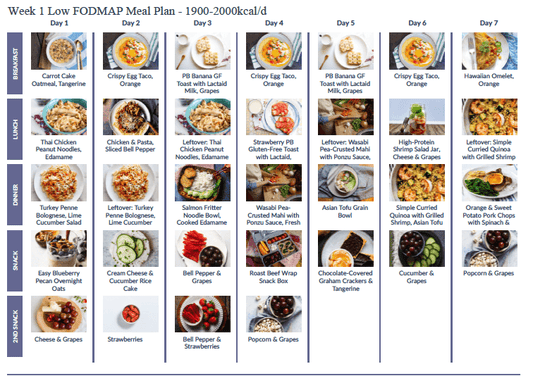
Use low FODMAP options when symptoms flare. FODMAPs are fermentable carbohydrates that can trigger gas, bloating, pain, or diarrhea in sensitive people. You don't need to live on a strict low FODMAP diet forever, but it can be a useful short-term tool for symptom control.
Keep meal timing consistent. Skipping meals can backfire when hunger rebounds: it often leads to late-day overeating and worse reflux.
Build a "GI-safe" rotation. Identify a handful of meals you digest well and can repeat during the transition.
Track triggers like a scientist, not a judge. Note what you ate, when you ate it, stress level, sleep, bowel patterns, and whether alcohol or higher-fat meals were involved. Patterns show up fast when you write them down.
Also, be mindful with very high-fat meals. After GLP-1 therapy, some people notice that greasy foods hit harder, either from reflux, nausea, or urgent stools. You're not being dramatic. Your gut motility (how quickly food moves through you) and tolerance can shift during transitions.
Use Movement And Strength Training To Protect Metabolism During Transition
If Wegovy helped you eat less, strength training helps you "keep" more of what you want to keep, lean mass, while your body is in a calorie-lower, weight-lower state.
A common frustration after GLP-1–assisted weight loss is feeling smaller but softer, or noticing a drop in strength. That's often a sign that lean mass needs more attention.
Strength Training Priorities To Preserve Lean Mass
You don't need a perfect program. You need consistency and progressive overload (gradually increasing the challenge so your muscles have a reason to stay).
Priorities that work well during a transition off Wegovy:
Train the big patterns: squat or sit-to-stand, hinge (deadlift pattern), push, pull, carry.
Aim for at least two days per week. Three can be great if recovery is good.
Keep it simple enough to repeat: the best plan is the one you'll still do when work is busy and motivation is average.
If you're new or returning after time off, start conservatively. Soreness that wrecks your sleep or makes you avoid the gym for two weeks isn't helpful.
NEAT, Cardio, And Step Goals Without Overtraining
NEAT is non-exercise activity thermogenesis, calories you burn from everyday movement like walking, standing, errands, and doing life.
When you stop Wegovy and hunger increases, NEAT often becomes your quiet advantage. It's easier to sustain than punishing workouts, and it supports weight maintenance without spiking appetite for some people.
Consider:
A realistic step goal you can hit most days
Short walks after meals (often helpful for glucose control and digestion)
Cardio you enjoy, at a conversational pace
Overtraining is a real risk if you respond to rebound hunger with panic exercise. Very intense training while under-fueling can increase fatigue, worsen sleep, and sometimes increase cravings. The goal is a sustainable output that you can maintain for months, not a two-week sprint.
Prevent Weight Regain With A Relapse-Resistant Routine
Maintenance isn't a single decision. It's a system that catches small slips before they become a new baseline.
A relapse-resistant routine is not rigid. It's specific.
Create Guardrails: Weekly Weigh-Ins, Hunger Cues, And Portion Anchors
Guardrails are simple checks that keep you oriented.
Weekly weigh-ins: daily weights can be noisy and stressful: monthly weights are too late to catch drift. Weekly is often the sweet spot.
Hunger cues: ask yourself before eating, "Am I hungry, or am I tired/stressed/bored?" You won't be perfect, but you'll get more accurate over time.
Portion anchors: instead of measuring everything, use repeatable "anchors" such as:
A protein serving at each meal
A produce component you tolerate
A planned starch portion (especially around workouts)
A fat portion that doesn't trigger reflux or GI upset
If you're coming off Wegovy, you may need more structure temporarily, not less. That's not failure, that's good timing.
What To Do If Weight Starts Creeping Up: Early Adjustments And When To Reassess
Weight creep is usually easier to address at 2 to 5 pounds than at 15 to 20.
If your weekly trend is rising for a few weeks, consider early, non-punitive adjustments:
Tighten meal timing (less grazing)
Increase protein at breakfast and lunch
Add a daily walk or bump steps modestly
Revisit alcohol frequency (it can quietly add calories and reduce inhibition)
Check constipation: being backed up can mask what's really happening
If weight continues to rise even though solid habits, that's when it's worth reassessing with your clinician. You may need a different maintenance dose strategy, a different medication approach, or to address a driver like sleep apnea, depression, thyroid issues, perimenopause changes, or medication side effects.
The key is speed: early reassessment prevents months of frustration.
Troubleshoot Common Off-Ramp Symptoms And Side Effects
Some symptoms improve quickly after stopping. Others show up because your appetite and digestion are recalibrating.
You'll do best if you anticipate the common issues and have a plan.
Managing Rebound Hunger, Cravings, And Constipation Or Diarrhea
Rebound hunger and cravings
Prioritize protein and volume from tolerated produce. The combination tends to support fullness.
Plan snacks on purpose. If you "don't snack," you may end up snacking anyway, just with less satisfying choices.
Watch liquid calories. When appetite returns, sweet drinks can sneak in fast and don't register as fullness.
Constipation
Constipation can persist for some people even after stopping, especially if fiber and fluid intake dropped during reduced appetite.
Helpful general strategies to discuss with your clinician:
Gradually increase fiber from foods you tolerate
Ensure adequate hydration
Use consistent meal timing and movement (walking can support motility)
Diarrhea
If diarrhea shows up, consider recent dietary changes first: higher fat meals, more sugar alcohols, large portions of trigger foods, or sudden fiber increases. If it's persistent, severe, or associated with dehydration, blood, fever, or significant abdominal pain, that's a reason to seek medical care.
Sleep, Stress, Alcohol, And Perimenopause/Menopause Factors That Change Appetite
Appetite isn't only about the gut. It's also about the brain and hormones.
Sleep: short sleep increases hunger signals and cravings in many people. Even one bad week can make maintenance feel harder.
Stress: chronic stress can drive reward eating and disrupt routines, especially when the medication "buffer" is gone.
Alcohol: it can increase appetite, lower inhibition, worsen sleep quality, and irritate the gut. If weight is creeping up, alcohol is often a high-yield lever.
Perimenopause/menopause: fluctuating and then declining estrogen can shift body composition, sleep, and appetite regulation. Hot flashes and night sweats can fragment sleep, which then amplifies hunger the next day. If you're in this life stage, your Wegovy exit plan may need to be more intentional, and sometimes hormone evaluation is part of the bigger picture.
This is also where self-blame does real damage. If your hunger is higher during a stressful month or while your sleep is disrupted, that's biology colliding with life, not a personal failure.
Long-Term Options If You Still Need Support
Some people can stop Wegovy and maintain with lifestyle alone. Many can't, and that's not because they didn't "learn habits." Obesity is a chronic, relapsing condition for a reason: your body actively defends its highest sustained weight.
Long-term support options exist, and it's reasonable to discuss them.
Lifestyle-Only Vs Lower-Dose Maintenance Vs Switching Medications
Broadly, long-term paths tend to look like this:
Lifestyle-only maintenance: works best when you have strong routines, stable sleep and stress, and ongoing monitoring.
Lower-dose maintenance: some clinicians use a maintenance dose strategy to reduce rebound appetite and help sustain weight loss. Evidence is still evolving, and insurance coverage varies, but it's a common real-world approach.
Switching medications: depending on side effects, response, and medical history, your clinician may discuss switching within GLP-1 options or considering other anti-obesity medications.
The right choice depends on your health markers, preferences, tolerability, and access. The wrong choice is pretending there's only one "correct" way.
When To Consider Gut-Focused Support And Personalized Meal Planning
If GI symptoms are part of why you're stopping, or if digestion becomes a barrier to protein intake and consistent meals, gut-focused support can be the difference between "I know what to do" and "I can actually do it."
Consider discussing additional support when:
Constipation or diarrhea keeps disrupting your routine
Bloating or reflux makes you avoid balanced meals
You're relying on highly processed snack foods because they feel easier to tolerate
You suspect IBS-type sensitivity, where FODMAP triggers play a role
Personalized meal planning can also help during the first 8 to 12 weeks off Wegovy, when appetite is changing and you're trying to find a sustainable baseline.
GI side effects don't have to be the price of admission for GLP-1 therapy. Casa de Sante offers physician-formulated gut support products built for the specific digestive challenges these medications create. Explore your options at casadesante.com.
Conclusion
A successful Wegovy exit strategy isn't about stopping "correctly" on a single day. It's about anticipating what your body will predictably do when the medication support is removed, and building routines that respond early.
If you plan your off-ramp with a clinician, anchor your nutrition around protein and gut-tolerant fiber, protect lean mass with strength training, and use simple guardrails to catch weight creep early, you're not relying on motivation. You're building a system.
This article is for educational purposes only and is not medical advice. Always consult your healthcare provider before making changes to your treatment plan.
Frequently Asked Questions About Wegovy Exit Strategies
What are the best Wegovy exit strategies to prevent weight regain?
The most effective Wegovy exit strategies focus on replacing the medication “assist” with structure: plan your off-ramp with a clinician, anchor meals around protein and gut-tolerant fiber, keep meal timing consistent, and add strength training plus daily movement. Use weekly weigh-ins to catch small weight creep early.
What happens to appetite and weight after stopping Wegovy (semaglutide)?
After stopping Wegovy (semaglutide), appetite commonly rebounds—hunger returns sooner, cravings feel louder, and portions feel less automatic. Weight regain is also common, with many people regaining a significant portion of lost weight within 6–18 months. Expect a transition period and plan guardrails in advance.
Should I taper off Wegovy or stop abruptly?
There isn’t strong evidence that tapering off Wegovy is universally better than stopping abruptly for long-term maintenance. Some clinicians taper to make appetite changes feel less sudden, while others stop due to cost, supply, or side effects. The key is what you do during and after: protein, GI plan, strength training, and monitoring.
What labs or health checks should I review before my last Wegovy dose?
Before exiting Wegovy, ask your clinician to review your weight trend (past 8–12 weeks), A1C and/or fasting glucose, lipid panel (LDL-C, HDL-C, triglycerides), blood pressure/heart rate, and your medication list. These baselines help avoid surprises and guide a safer maintenance plan after semaglutide.
How can I manage rebound hunger and cravings after stopping Wegovy?
To manage rebound hunger after stopping Wegovy, prioritize protein-first meals, add tolerated produce for volume, and plan snacks intentionally rather than relying on willpower. Watch liquid calories (sweet drinks don’t create fullness) and keep meal timing steady to reduce late-day overeating. Sleep and stress management also matter.
When should I consider long-term support instead of lifestyle-only after stopping Wegovy?
Consider additional support if weight continues rising despite consistent habits, or if appetite and GI symptoms derail your routine. Options include lower-dose maintenance, switching anti-obesity medications, and gut-focused nutrition support (such as low-FODMAP strategies and personalized meal planning). Reassess early—2–5 pounds is easier to address than 15–20.