Tirzepatide And Hormone Therapy Combination: What To Know About Safety, Benefits, And Side Effects








If you're in perimenopause or menopause and using (or considering) tirzepatide, you've probably noticed something: weight, sleep, mood, and energy don't behave like they did in your 20s or even your 30s. For many women, the "rules" change around 40–55, fat distribution shifts toward the abdomen, muscle is easier to lose, and insulin resistance can creep in even when you're doing "all the right things."
That's why the tirzepatide hormone therapy combination is coming up more often in clinic. It's not about stacking treatments for the sake of it. It's about addressing two different (but overlapping) drivers of midlife metabolic change: appetite regulation and insulin signaling on one hand, and estrogen-related physiologic changes on the other.
Below is what you should know about why these therapies get combined, who should be cautious, what benefits are realistic, and the key safety details to discuss with your prescriber, especially around medication absorption, clot risk, and GI side effects.
Why Tirzepatide And Hormone Therapy Get Combined
For many women, menopause isn't just about hot flashes. It's a whole-body metabolic transition. And that's exactly where combining tirzepatide with hormone therapy (HRT) can make sense, when it's individualized and medically appropriate.
How Tirzepatide Works (GLP-1/GIP) And What That Means For Appetite, Weight, And Metabolism
Tirzepatide is a dual incretin agonist, meaning it activates both GLP-1 (glucagon-like peptide-1) and GIP (glucose-dependent insulinotropic polypeptide) receptors. In plain English: it helps your body handle glucose more efficiently and helps your brain and gut communicate "I'm full" sooner.
Clinically, that tends to translate to:
Reduced appetite and lower overall food intake
Improved insulin sensitivity (your cells respond better to insulin)
Lower blood sugar and A1C in people with prediabetes or type 2 diabetes
Meaningful weight loss in many patients, often in the 15–20 percent range in clinical trials
It also slows gastric emptying (how quickly food leaves your stomach). That's part of why you feel full longer, and also part of why nausea, reflux, bloating, and constipation can show up.
What Hormone Therapy Targets In Perimenopause And Menopause
Menopausal hormone therapy is typically aimed at replacing estrogen (and sometimes adding progesterone, depending on whether you have a uterus). The goal isn't "anti-aging." It's symptom relief and, for some women, risk modification during a specific window.
What HRT most reliably improves:
Vasomotor symptoms: hot flashes and night sweats (often reported by the majority of women during the transition)
Sleep disruption related to night sweats
Genitourinary symptoms (vaginal dryness, discomfort, urinary symptoms) when local therapy is used
In some women: mood symptoms and joint aches, though the response varies
HRT may also influence body composition and fat distribution in midlife, but it's not considered a weight-loss medication.
Where Goals Overlap: Weight, Insulin Resistance, Sleep, Mood, And Body Composition
Here's the overlap that matters in real life: you can't separate metabolism from hormones, sleep, and stress physiology.
Tirzepatide can reduce hunger and improve insulin resistance.
HRT can reduce hot flashes and night sweats that fragment sleep, which indirectly affects appetite regulation and glucose control.
Both can support a shift toward better cardiometabolic health when paired with basics like adequate protein, resistance training, and a sustainable nutrition strategy.
Observational research in postmenopausal women with overweight or obesity suggests the combination may be associated with greater total body weight loss than tirzepatide alone over about 18 months (for example, roughly 17 percent vs. 14 percent in some datasets). That doesn't prove cause-and-effect like a randomized trial would, but it's one reason clinicians are paying attention, especially for women whose midlife physiology is working against them.
Who Might Consider This Combination (And Who Should Be Cautious)
The "right" candidate isn't simply someone who wants faster weight loss. It's someone whose symptom pattern, risk factors, and health goals make the risk–benefit trade-off reasonable.
Common Scenarios: Perimenopause Weight Gain, PCOS, Prediabetes, Metabolic Syndrome
You might hear this combination discussed if you're dealing with:
Perimenopause or menopause weight gain, especially increased abdominal fat and loss of muscle tone even though consistent habits
Prediabetes or type 2 diabetes risk markers (elevated A1C, fasting glucose, or insulin)
Metabolic syndrome (a cluster that can include abdominal obesity, high triglycerides, low HDL, elevated blood pressure, and impaired glucose regulation)
PCOS history (polycystic ovary syndrome), particularly when insulin resistance persists into midlife
In these scenarios, tirzepatide is often targeted at appetite regulation and insulin resistance, while HRT is targeted at vasomotor symptoms, sleep, and quality-of-life issues that can make lifestyle changes harder to maintain.
Higher-Risk Situations: History Of Pancreatitis, Gallbladder Disease, VTE, Certain Cancers
This is where you want extra caution and a clinician who's comfortable with nuance.
Tirzepatide cautions often include:
History of pancreatitis (because severe abdominal pain with vomiting is not something to ignore)
Gallbladder disease risk (rapid weight loss and GLP-1/GIP therapies can be associated with gallbladder events in some people)
Significant GI motility problems (severe gastroparesis-like symptoms)
HRT cautions depend on the formulation, route, and your personal history, but commonly include:
Personal history of VTE (venous thromboembolism: deep vein thrombosis or pulmonary embolism)
Certain estrogen-sensitive cancers or unexplained vaginal bleeding
Higher baseline stroke risk depending on age, smoking status, migraines with aura, uncontrolled hypertension, and other factors
The route matters. Transdermal estrogen (patch/gel/spray) generally has a different clot-risk profile than oral estrogen, which is one reason it's often favored when risk is a concern.
Red Flags That Should Trigger A Clinician Check-In
If you're combining therapies, or even considering it, these symptoms warrant timely medical review:
Severe or persistent upper abdominal pain, especially radiating to the back, with vomiting (possible pancreatitis or gallbladder issue)
Right upper quadrant pain after meals, fever, or jaundice (possible gallbladder or bile duct issue)
New or worsening shortness of breath, chest pain, coughing blood, or one-sided leg swelling/pain (possible VTE)
New, heavy, or unexpected vaginal bleeding on hormone therapy
Inability to keep fluids down, dizziness, or signs of dehydration (GLP-1-related nausea can become a safety issue, not just a comfort issue)
The goal isn't to scare you. It's to keep "expected side effects" from masking something that needs real evaluation.
Potential Benefits And Realistic Expectations
If you're hoping the combination will fix everything, weight, sleep, mood, and energy, overnight, you'll end up disappointed. If you're hoping it will make progress more predictable and symptoms more manageable, that's a more realistic frame.
Weight Loss And Waist Circumference: What Typically Improves First
Many people notice changes in appetite and cravings early with tirzepatide. From there, the most visible early win is often a reduction in waist circumference (abdominal girth), even before the scale feels dramatic.
In observational data in postmenopausal women, tirzepatide plus HRT has been associated with greater total body weight loss than tirzepatide alone over longer follow-up (for example, around 17 percent vs. 14 percent over 18 months in some reports). Some datasets also report a higher proportion of people reaching larger milestones (like 20 percent or more). Keep in mind: observational findings can be influenced by who gets prescribed what and how closely they're followed.
Also important: faster loss isn't automatically better. Rapid loss can increase the risk of gallbladder issues and can worsen muscle loss if your protein intake and resistance training aren't dialed in.
Cardiometabolic Markers: A1C, Lipids, Blood Pressure, Fatty Liver Risk
If you have insulin resistance, the non-scale improvements are sometimes the most meaningful.
You and your clinician may track:
A1C and fasting glucose
Fasting insulin (in some cases)
Triglycerides and HDL cholesterol
Blood pressure
Markers that suggest fatty liver risk (such as elevated liver enzymes, along with imaging when appropriate)
Tirzepatide can improve several of these markers through weight loss and direct metabolic effects. HRT may also influence lipid patterns, but the direction and magnitude can vary by formulation and route. This is one place where personalized monitoring matters more than internet "before and afters."
Menopause Symptoms: What HRT May Improve Even If The Scale Doesn't
If your main issue is hot flashes, night sweats, and sleep disruption, HRT can be helpful even if your weight loss is modest.
You might see improvements in:
Frequency and intensity of hot flashes
Night sweats that wake you up
Sleep continuity (less waking, easier return to sleep)
Vaginal dryness or discomfort (especially with local estrogen options)
Mood can improve indirectly when sleep improves. But if you're dealing with significant anxiety or depression, that deserves its own assessment, don't assume hormones are the whole story.
One helpful mindset: tirzepatide can change your calorie intake and insulin dynamics: HRT can change your symptom burden and physiologic stress load. Those are different levers.
Safety And Interaction Considerations
This is the section most people skip, until they're the one wondering why they feel off after a dose change. The interaction isn't usually "dangerous" in a direct-drug-interaction way, but there are practical clinical considerations that matter.
Delayed Gastric Emptying: How Tirzepatide Can Affect Oral Hormone Absorption
Tirzepatide slows gastric emptying. That can change how quickly, and sometimes how predictably, your body absorbs oral medications.
If you're taking oral estrogen or progesterone, delayed gastric emptying may contribute to:
Slower onset of effect
More variable absorption, especially if meal size becomes very small or inconsistent
More GI irritation in people who already feel nauseated
This doesn't mean oral hormones are "unsafe" with tirzepatide. It means your prescriber may prefer routes that bypass the GI tract (like transdermal estrogen) if you're having unpredictable symptom control or significant nausea.
Blood Clot Risk And Estrogen Route Choices (Oral Vs Transdermal)
Estrogen can increase clot risk, and that risk depends on your baseline factors (age, smoking, personal/family history, thrombophilias, migraine with aura, immobilization, recent surgery, and more) and on the route of administration.
Many clinicians favor transdermal estrogen (patch/gel/spray) when clot risk is a concern because it avoids first-pass liver metabolism, which is one pathway linked to pro-thrombotic changes.
If you have a uterus, progesterone (or a progestogen) is typically used to protect the endometrium (uterine lining). That choice also has nuance and should be individualized.
The key point: "HRT" isn't one thing. The formulation and route are part of the safety profile.
Gallbladder, GERD, And Constipation: When GI Side Effects Influence HRT Tolerability
Real-world tolerability often comes down to GI symptoms.
If tirzepatide causes reflux (GERD), nausea, or constipation, adding oral medications can feel like piling on. Constipation can also worsen bloating and abdominal discomfort, which some people mistakenly interpret as "the hormones don't agree with me." Sometimes it's simply slowed motility plus dehydration plus low fiber.
Gallbladder symptoms deserve extra caution because both rapid weight loss and incretin-based therapies are associated with gallbladder events in a subset of patients. If you develop right upper abdominal pain (especially after fatty meals), persistent nausea, fever, or jaundice, you need medical evaluation rather than "waiting it out."
Practical Ways Clinicians Commonly Optimize Both Therapies
The best outcomes usually come from boring, consistent clinical habits: slow changes, clear targets, and feedback loops.
Timing And Titration: Minimizing Nausea While Starting Or Adjusting Hormones
If you start or increase tirzepatide and change hormones at the same time, it can be hard to know what caused what.
Clinicians commonly try to:
Avoid stacking multiple dose changes in the same week or two
Titrate tirzepatide gradually (when possible) to reduce nausea and food aversion
Choose hormone routes that are easier to tolerate if GI symptoms are prominent (often transdermal estrogen)
If you're already struggling with nausea, your prescriber may focus first on stabilizing intake and hydration before making hormone adjustments.
Lab Monitoring And Symptom Tracking To Avoid Over- Or Under-Treatment
You don't need endless labs, but you do need the right ones at the right time.
Depending on your situation, monitoring may include:
A1C, fasting glucose, lipids, blood pressure
Weight trend and waist measurement
Thyroid function if symptoms suggest it
Iron studies, B12, vitamin D if intake is low or hair shedding/fatigue is an issue
For hormones, symptom tracking often matters as much as numbers. A practical approach is to track a small set of outcomes for 8–12 weeks:
Hot flash frequency and severity
Sleep quality (how many awakenings)
Mood/irritability
Vaginal or urinary symptoms
Energy during workouts
This keeps treatment changes grounded in measurable effects rather than guesswork.
Nutrition And Protein Targets That Support Lean Mass During Weight Loss
If tirzepatide makes you eat less, every bite has more "responsibility." Your biggest preventable risk during GLP-1/GIP-driven weight loss is loss of lean mass (muscle), which can affect strength, resting metabolic rate, and how you look and feel.
Many clinicians aim for protein targets in the range of about 1.2 to 1.6 grams per kilogram of body weight per day for people actively losing weight, adjusted for kidney function, activity level, and individual tolerance.
You don't need perfection. But you do need a plan, because appetite suppression can make it surprisingly easy to under-eat protein, under-hydrate, and unintentionally skip micronutrients.
If you're lifting weights, prioritize protein earlier in the day and anchor meals around protein-first choices that are gentle on your stomach (for many people, that means lower-fat, simpler preparations and smaller portions more frequently).
Managing Digestive Side Effects While On Both Therapies
For a lot of people, the limiting factor isn't willpower, it's GI side effects. If your stomach feels unpredictable, it's hard to stay consistent with protein, hydration, and medication timing.
Constipation, Bloating, And Gas: Food Strategies That Work With GLP-1s
With slowed motility, the usual "just eat a big salad" advice can backfire.
Strategies that are often better tolerated include:
Smaller, more frequent meals to reduce gastric burden
Protein in simpler forms (eggs, Greek yogurt, tofu, lean poultry, well-tolerated protein shakes) rather than very fatty or fried meals
Cooked vegetables instead of large amounts of raw produce
Moderate fat portions (high-fat meals can worsen nausea and reflux for some people)
Consistency with fluids across the day, not just at dinner
If constipation is an issue, your clinician may also ask about iron supplements, dehydration, and how low your total food volume has become, because "I'm constipated" on GLP-1s is often a combination problem.
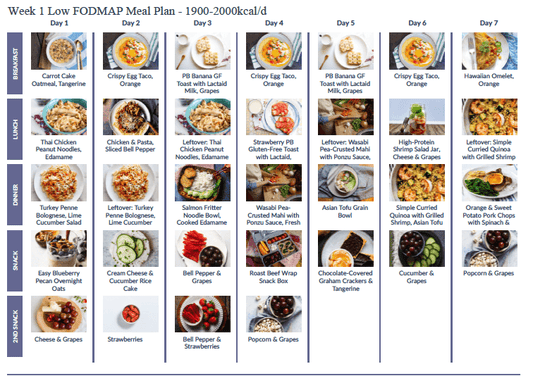
Low-FODMAP-Inspired Adjustments For Sensitive Stomachs
If you're prone to IBS-like symptoms, a low-FODMAP-inspired approach can be a practical, temporary tool, especially during dose escalations.
Examples of common high-FODMAP triggers include:
Large servings of onions/garlic
Wheat-heavy meals
Certain legumes
Some fruits (like apples) and sweeteners (like sugar alcohols)
You don't necessarily need a strict elimination diet. Often, simply reducing the biggest triggers during your "sensitive weeks" (after injections or after titration) is enough to calm bloating and gas.
When To Consider Fiber, Electrolytes, Or Other Gut-Support Tools With Your Clinician
Fiber can help constipation, but the type and dose matter. Too much too fast can worsen bloating.
Common clinician-guided additions include:
A gradual, well-tolerated fiber approach (often psyllium-based for some people)
Electrolytes if your intake is low, you're nauseated, or you're drinking less (dehydration makes constipation worse)
Digestive enzymes or synbiotic support for people who feel overly full, gassy, or food-sensitive during GLP-1 therapy
This is also a moment to be honest about what you can actually eat. If your appetite is very low, your GI plan has to match your real intake, not an idealized meal plan.
Questions To Ask Your Prescriber Before Combining Tirzepatide And Hormone Therapy
A good consult isn't just "Can I take these together?" It's "What's the plan if I respond strongly, respond weakly, or feel worse?" Bring questions that force clarity.
Which Hormone Formulation And Route Fits My Risk Profile And Symptoms?
Ask directly:
Am I a better candidate for transdermal estrogen vs oral estrogen based on my clot risk and migraines, blood pressure, or family history?
If I have a uterus, what progesterone option are you recommending to protect the uterine lining, and why?
What symptoms are we targeting (hot flashes, sleep, vaginal symptoms, mood), and how will we measure improvement?
How Should We Handle Oral Medications If Appetite And Meal Size Drop?
Tirzepatide can change your meal timing and meal size, which can affect how you tolerate and absorb oral meds.
Useful questions include:
Do any of my medications require food for best absorption or to reduce nausea?
If I'm eating very small meals, should we adjust timing or switch routes for any key medications (including hormones)?
What's your plan if I develop significant reflux, constipation, or persistent nausea?
What Follow-Up Schedule And Milestones Should We Use To Decide What's Working?
Ask for a concrete follow-up cadence:
When do you want to recheck A1C, lipids, and blood pressure?
What weight-loss rate is appropriate for me, and what would be "too fast" given gallbladder risk and muscle preservation?
Which symptoms should prompt a message sooner rather than waiting for the next visit?
Good follow-up is part of safety. It's also how you avoid staying on a plan that isn't actually helping you.
Conclusion
The tirzepatide hormone therapy combination can be a thoughtful, physiology-matched approach for midlife women, especially when appetite regulation and insulin resistance are only part of the picture, and menopause symptoms are adding fuel to the fire through poor sleep and higher stress load.
The "win" is not just a lower number on the scale. It's better symptom control, better cardiometabolic markers, and a plan that protects lean mass while you lose fat. The price of admission, though, is careful attention to safety details: route of estrogen, clot risk screening, gallbladder and pancreatic red flags, and the very real GI side effects that can make everything harder if they're not addressed.
GI side effects don't have to be the price of admission for GLP-1 therapy. Casa de Sante offers physician-formulated gut support products built for the specific digestive challenges these medications create. Explore your options at casadesante.com.
This article is for educational purposes only and is not medical advice. Always consult your healthcare provider before making changes to your treatment plan.
Frequently Asked Questions
What is the tirzepatide hormone therapy combination, and why do clinicians use it in menopause?
The tirzepatide hormone therapy combination pairs tirzepatide (a GLP-1/GIP agonist) with menopausal hormone therapy (HRT). It’s used because midlife weight gain and insulin resistance often overlap with estrogen-related changes that worsen sleep, mood, and body composition. Together, they address different drivers of metabolic change.
How does tirzepatide work for appetite, insulin resistance, and weight loss in midlife?
Tirzepatide activates GLP-1 and GIP receptors, helping you feel full sooner, eat less, and improve insulin sensitivity. In clinical trials, many people lose about 15–20% of body weight. It also slows gastric emptying, which supports fullness but can trigger nausea, reflux, bloating, or constipation.
Does the tirzepatide hormone therapy combination lead to more weight loss than tirzepatide alone?
Some observational data in postmenopausal women with overweight/obesity suggests yes: roughly 17% total body weight loss with the tirzepatide hormone therapy combination versus about 14% with tirzepatide alone over 18 months. This isn’t proof of cause-and-effect like a randomized trial, but it’s a signal clinicians are watching.
Who is a good candidate for combining tirzepatide with HRT, and who should be cautious?
It may fit women in perimenopause/menopause with abdominal weight gain, prediabetes, metabolic syndrome, or a PCOS history plus bothersome vasomotor symptoms. Extra caution is needed with prior pancreatitis, gallbladder disease, significant GI motility issues, VTE history, certain estrogen-sensitive cancers, or unexplained vaginal bleeding.
Can tirzepatide affect oral estrogen or progesterone absorption?
Yes. Tirzepatide slows gastric emptying, which can make absorption of oral estrogen or progesterone slower or more variable—especially if meal size becomes small or inconsistent. Many clinicians consider non-oral routes (like transdermal estrogen) when symptom control is unpredictable or nausea and reflux make oral meds hard to tolerate.
What symptoms are red flags when using tirzepatide with hormone therapy?
Seek medical evaluation for severe upper abdominal pain with vomiting (possible pancreatitis), right upper quadrant pain with fever or jaundice (possible gallbladder/bile duct issue), chest pain or shortness of breath, coughing blood, or one-sided leg swelling (possible VTE), heavy/unexpected vaginal bleeding on HRT, or dehydration from persistent nausea.