Ozempic Denied By Insurance? Your Step-By-Step Playbook To Get Covered (Or Find Affordable Alternatives) In 2026








You finally got a prescription, you're ready to feel better, and then the pharmacy hits you with the words no one wants to hear: "Your insurance denied Ozempic." It's frustrating, but it's also common, and in many cases, fixable.
In 2026, denials usually come down to a handful of predictable issues: the drug isn't on your plan's formulary, the diagnosis code doesn't match what your insurer covers, or the paperwork didn't prove "medical necessity" in the way that specific plan requires. The good news is that you don't have to guess. You can approach this like a checklist, gather the right documents, and appeal strategically. And if your plan truly won't cover Ozempic, there are still clinically reasonable and more affordable paths forward.
This guide walks you through what to do next, step by step, so you can make progress without spinning your wheels.
Why Ozempic Gets Denied: The Most Common Insurance Roadblocks
Insurance denials can feel personal. They're not. They're usually administrative: a plan rule wasn't met, a form wasn't complete, or the insurer's criteria weren't addressed in the exact language they require.
Here are the most common roadblocks behind an "Ozempic denied by insurance" decision.
Plan Exclusions Vs. Prior Authorization Vs. Step Therapy
These three issues sound similar, but they require different solutions.
Plan exclusion (formulary exclusion): Your plan simply does not cover Ozempic. It may cover other GLP-1 medications, but Ozempic is listed as non-covered. In this case, you're not really "appealing a mistake", you're requesting an exception or choosing an alternative that is covered.
Prior authorization (PA): The plan will cover Ozempic only if your prescriber submits documentation proving you meet their clinical criteria. Many denials happen because the PA wasn't submitted, wasn't submitted on time, or didn't include the exact data points the insurer expects.
Step therapy: Your plan requires you to try one or more lower-cost medications first, then "step up" to Ozempic only if those options didn't work or weren't safe for you.
Diagnosis Mismatch: Type 2 Diabetes Vs. Weight Loss Coverage
This is the denial that surprises people the most.
Ozempic (semaglutide) is FDA-approved for type 2 diabetes. Wegovy (also semaglutide, different indication and dosing) is FDA-approved for chronic weight management. Many plans cover diabetes drugs more readily than weight loss medications, and some plans exclude weight loss coverage altogether.
So if your prescription is tied to weight loss, prediabetes, insulin resistance, PCOS, or metabolic syndrome, your insurer may deny Ozempic even if your clinician believes it's appropriate.
This doesn't mean you're "not a good candidate." It means your plan's coverage rules may not match modern obesity medicine.
"Not Medically Necessary" And Documentation Gaps
"Not medically necessary" is often a paperwork problem, not a clinical one.
Insurers typically want to see documentation such as:
A clear diagnosis code (for example, type 2 diabetes, obesity, or another covered condition)
Objective numbers: A1C, fasting glucose, BMI, weight trajectory
Comorbidities (conditions that increase risk), such as hypertension, dyslipidemia, sleep apnea, NAFLD/MASLD (fatty liver disease), or cardiovascular disease
What you've already tried: lifestyle program participation, previous medications, and why they failed or weren't tolerated
If any of that is missing, outdated, or coded incorrectly, a denial is more likely, even when the medical case is strong.
First 30 Minutes After A Denial: What To Collect Before You Appeal
If you want to win an appeal, treat the first half hour like triage. Your goal is to identify the exact reason for denial and build a clean, evidence-based packet that matches your insurer's criteria.
How To Read The Denial Letter And Find The Exact Denial Code
Start with the denial letter (or the electronic denial in your insurer portal). You're looking for:
The denial reason (for example, "PA required," "step therapy not met," "not on formulary," "not medically necessary")
Any denial code or reference number
The name of the plan policy used to make the decision (sometimes listed as "clinical criteria")
The deadline to appeal (this matters: some plans are strict)
If the letter is vague, call the number on the back of your insurance card and ask: "What exact criteria did I fail, and where can I read the policy?" Write down the representative's name and call reference number.
Request The Clinical Criteria And Your Plan's Drug Policy
Ask for (or search for) the plan's:
Drug formulary entry for Ozempic
Prior authorization criteria for GLP-1 medications
Step therapy protocol (if applicable)
Policy on coverage for obesity medications (if your prescription is for weight loss)
This matters because "medical necessity" is not a universal standard. It's defined by that plan's written rules.
Pull Your Evidence: Labs, A1C, BMI, Comorbidities, And Medication History
You're essentially building a short clinical summary that proves you meet criteria or justifies an exception.
Collect:
Recent labs: A1C, fasting glucose, lipids, liver enzymes (and anything else your clinician used to assess metabolic risk)
Vitals and measurements: BMI (with dates), weight trend, blood pressure
Comorbidities documentation: sleep study results for sleep apnea, hypertension diagnosis, fatty liver imaging notes, etc.
Medication history: prior anti-obesity medications or diabetes medications, start/stop dates, and side effects or lack of efficacy
Lifestyle program documentation: nutrition counseling, structured weight loss programs, activity plan documentation (if your plan requires it)
Tip: If step therapy is part of your denial, pharmacy fill records are often more persuasive than a narrative note. Ask your pharmacy for a printout showing prior trials and dates.
How To Appeal An Ozempic Denial (And Win)
A strong appeal is not a long appeal. It's a targeted appeal that answers the insurer's question in their language.
Your best chance comes from aligning three pieces:
- the plan's criteria
- your documented medical facts
- your prescriber's rationale
Ask Your Prescriber For A Strong Prior Authorization Or Letter Of Medical Necessity
If the denial was for prior authorization or "not medically necessary," your clinician's documentation is the engine of the appeal.
A high-quality letter of medical necessity typically includes:
Your diagnosis and relevant history (with ICD-10 codes if your clinic uses them)
Objective metrics (A1C, BMI, comorbidities)
Why this specific medication is indicated for you (for example, cardiometabolic risk, prior response, intolerance to alternatives)
What you've tried already and outcomes
A brief, evidence-informed justification (often referencing clinical guidelines or well-established outcomes for GLP-1 therapy)
It also helps when the note clearly matches the insurer's language. If the plan requires "BMI greater than X plus at least one comorbidity," that exact structure should appear in the documentation.
Address Step Therapy With A "Failure Or Contraindication" Rationale
If your denial is based on step therapy, your appeal has to do one of two things:
Prove you completed the steps (failed trials). Example: you tried the required alternatives at appropriate doses/durations and had inadequate weight loss, inadequate glycemic control, or intolerable side effects.
Or explain why you can't complete the steps (contraindication). Contraindication means a clinical reason a medication is unsafe or inappropriate for you, such as a prior severe adverse reaction, a relevant medical condition, or a meaningful drug interaction.
Insurers often want specific details:
Drug name, dose, duration
What happened (lack of response vs. side effect)
Why continuing would be harmful or unreasonable
This is where your pharmacy fill history plus your clinician's note can be a powerful combination.
File A First-Level Appeal, Then An External Review If Needed
Most plans have a standard sequence:
First-level (internal) appeal: You or your clinician submits the appeal packet through the plan's required method (portal, fax, mail).
Second-level appeal (if offered): Some plans allow another internal review.
External review: If internal appeals fail, you can often request an independent external review. This is a key protection in many insurance arrangements, and it can be effective when your clinician's rationale is strong and documentation is clean.
Practical details that improve your odds:
Meet deadlines. Late appeals can be rejected automatically.
Keep copies of everything.
Ask for confirmation of receipt.
If you're calling, document dates, names, and reference numbers.
If your clinician has staff dedicated to prior authorizations, ask them what's missing. They've seen patterns with the same insurers and can often correct a denial faster than you think.
What To Do If Your Plan Won’t Cover Ozempic For Weight Loss
Sometimes the denial is not a paperwork issue. It's a plan design issue: your insurance doesn't cover Ozempic for weight loss, period.
If that's the case, your next steps are about finding the closest clinically appropriate alternative your plan will cover, or building a case for a formulary exception.
Switch To A Covered GLP-1: Wegovy, Zepbound, Or A Formulary Option
If your goal is weight management, your plan may cover an obesity-indicated medication even if it denies Ozempic.
Examples that may be covered depending on your plan:
Wegovy (semaglutide): FDA-approved for chronic weight management. Some insurers prefer Wegovy over Ozempic when the diagnosis is obesity.
Zepbound (tirzepatide): FDA-approved for chronic weight management. Some plans cover it under an obesity benefit.
Formulary GLP-1 options: Some plans cover other GLP-1 receptor agonists more readily.
Your clinician can help you compare these options based on your medical history, side effect tolerance, cardiometabolic risk, and prior responses.
Use Formulary Exceptions When There's A Clinical Reason To Stay On Semaglutide
A formulary exception is a request for coverage of a non-formulary drug when there's a medical reason you can't use the covered alternatives.
Examples of "clinical reasons" insurers may consider:
You had significant adverse effects on the preferred formulary GLP-1
You had inadequate response after an appropriate trial
You have a contraindication to the formulary options
You achieved meaningful improvement on semaglutide previously and switching risks destabilizing control (this argument is more common in diabetes management)
This isn't guaranteed, but it's often worth pursuing if your clinician can document the rationale clearly.
Consider Non-GLP-1 Options If Appropriate (Metformin, Other Anti-Obesity Meds)
If GLP-1 coverage is blocked, it doesn't mean you're out of options.
Depending on your situation, your clinician may discuss:
Metformin (commonly used for insulin resistance and prediabetes: modest weight effects for some people)
Other FDA-approved anti-obesity medications (the right choice depends on your blood pressure, heart rate, sleep, anxiety history, and other factors)
A structured nutrition and strength-training plan designed to preserve lean mass while reducing fat mass
The goal isn't to "settle." It's to choose a plan you can sustain medically and financially, with appropriate monitoring.
Affordable Paths When Insurance Says No
If insurance won't help, you're left navigating cash-pay pricing, where the range can be wide and confusing.
Compare Pharmacy Pricing And Understand Cash-Pay Realities
Cash-pay prices can vary dramatically by:
Pharmacy chain vs. independent pharmacy
Geography
Dose
Whether a given pharmacy participates in certain discount programs
It's reasonable to comparison shop, but keep expectations realistic: brand-name GLP-1 medications are expensive, and "too good to be true" pricing often signals risk.
If you're considering switching from insurance to cash pay temporarily, also ask your clinician how treatment interruptions might affect tolerability and results. For many people, consistency matters.
What Manufacturer Savings Cards Can And Can't Do
Savings programs can sometimes reduce out-of-pocket costs, but they typically have limitations such as:
Eligibility restrictions (often limited to commercial insurance: government plans like Medicare/Medicaid are commonly excluded)
They may not apply if the medication is not covered at all by your plan
They may cap the monthly benefit
They can change over time
If you're using a savings program, read the terms carefully and confirm the final pharmacy price before you commit.
Red Flags To Avoid: Unsafe Or Illegitimate Semaglutide Sources
When people search "ozempic denied insurance what now," they often run into risky shortcuts.
Be cautious about:
Websites offering "semaglutide without a prescription"
Products that don't clearly come from a licensed U.S. pharmacy
Vials or pens with unclear labeling, no lot number, or no verifiable sourcing
Claims that a product is "FDA approved" when it's not a specific, approved branded medication
Your safety hinges on quality control, correct dosing, and appropriate medical oversight. If you're unsure whether a source is legitimate, bring it up with your clinician before you spend money, or put anything into your body.
Staying On Track While You Wait: Preventing Rebound Hunger And Side Effects
Denials and appeals take time. And the gap between "I was making progress" and "I don't know what happens next" can be the hardest part.
While you wait, your focus is twofold:
Maintain the habits that protect your results (so you don't feel like you're starting over)
Reduce side effects that make it harder to eat well and function day to day
Nutrition Priorities On GLP-1: Protein, Fiber, Hydration, And Electrolytes
If you're currently on a GLP-1 and facing a disruption, the basics matter more than ever.
Protein: Appetite suppression can make protein intake drop without you noticing. Protein is central for preserving lean mass during weight loss and supporting satiety.
Fiber: Helpful for bowel regularity, cardiometabolic health, and satiety. But when you're nauseated or bloated, you may need to adjust the type and amount.
Hydration and electrolytes: GLP-1 therapy can reduce thirst signals for some people, and nausea can make fluids unappealing. Dehydration worsens constipation, fatigue, and headaches.
If you're off medication temporarily, these same priorities can help blunt rebound hunger. Think of them as your metabolic "guardrails."
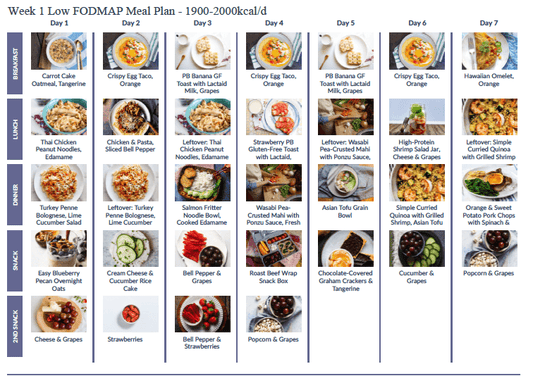
GI-Sensitive Meal Planning: Lower-FODMAP Strategies When Nausea And Bloating Spike
GLP-1 medications slow gastric emptying (food leaves your stomach more slowly). That's part of how they reduce appetite, but it can also increase nausea, reflux, bloating, and that heavy "food just sits there" feeling.
When your stomach feels sensitive, a lower-FODMAP approach can be a practical, short-term tool. FODMAPs are fermentable carbohydrates that can trigger gas and bloating in susceptible people (especially those with IBS).
GLP-1-friendly, GI-gentler moves that often help:
Smaller portions more often, rather than large meals
Lower-fat meals when nausea is prominent (fat slows stomach emptying further)
Choose simpler carbohydrates and proteins that digest easily for you
Temporarily limit common high-FODMAP triggers like onions, garlic, certain dairy, and large servings of certain fruits
You don't need to be perfect. You're aiming for "less irritating" while your gut is more sensitive.
Dose Interruptions And Restarting: What To Discuss With Your Clinician
If you miss doses because of cost or coverage delays, don't guess about how to restart.
Bring these questions to your clinician:
How long can you be off before you should restart at a lower dose?
What side effects should you expect when restarting?
How should you adjust meal size and timing during the first 1 to 2 weeks back on therapy?
What symptoms are not normal (and should prompt urgent evaluation)?
This matters because restarting too aggressively can increase side effects, which then makes it harder to eat adequately, especially protein and fluids.
Special Considerations For Perimenopause And Menopause
If you're in perimenopause or menopause, insurance denials can be especially maddening because your weight and metabolic health may change even when your lifestyle hasn't.
And the documentation insurers want doesn't always reflect that reality.
When Hormones, Sleep, And Stress Make Weight Loss Coverage Harder To Document
During perimenopause, fluctuating estrogen and progesterone can affect:
Body fat distribution (more central or abdominal fat)
Appetite and cravings
Sleep quality
Mood and stress resilience
Those changes can raise cardiometabolic risk even before labs look dramatically abnormal. But many insurance criteria still rely heavily on thresholds like BMI cutoffs, A1C cutoffs, or documented comorbidities.
If you're appealing, it helps when your medical record clearly reflects the whole picture: sleep disruption, blood pressure trends, lipid changes, fatty liver risk, and family history.
Coordinating GLP-1 Therapy With Hormone Management And Cardiometabolic Risk
GLP-1 therapy and hormone management are different tools, but they intersect in real life.
If you're considering (or already using) menopausal hormone therapy, thyroid treatment, or other hormone-related care, coordination matters because:
Your symptoms (fatigue, sleep disruption, hot flashes) can affect nutrition and training consistency
Strength training becomes even more important to reduce sarcopenia (age-related muscle loss)
Cardiometabolic risk should be monitored over time, not guessed
This is also where you benefit from a clinician who's comfortable managing obesity medicine and midlife hormonal transitions in the same plan, so you're not bouncing between providers who each treat one slice of the problem.
Conclusion
An Ozempic denial is a barrier, not a verdict.
If you take nothing else from this: identify the exact denial reason, get the plan's written criteria, and build an appeal that directly answers those criteria with clean documentation. If the plan truly excludes Ozempic for weight loss, pivot quickly to a covered GLP-1 option, a formulary exception request, or another evidence-based path that your clinician can monitor.
While the administrative process plays out, protect the basics that keep you feeling steady: protein, hydration, fiber you can tolerate, and a GI-sensitive plan when nausea or bloating flares.
GI side effects don't have to be the price of admission for GLP-1 therapy. Casa de Sante offers physician-formulated gut support products built for the specific digestive challenges these medications create. Explore your options at casadesante.com.
This article is for educational purposes only and is not medical advice. Always consult your healthcare provider before making changes to your treatment plan.
Ozempic Insurance Denial FAQs
Why did my insurance deny coverage for Ozempic?
Insurance denials often occur because Ozempic is not on the plan formulary, prior authorization was not submitted or approved, step therapy requirements weren't met, or the diagnosis code (like weight loss vs. type 2 diabetes) doesn't match insurer criteria.
What should I do immediately after my Ozempic insurance is denied?
Review the denial letter carefully for exact reasons and appeal deadlines, gather supporting documents like labs, BMI, medication history, and request the insurer's clinical criteria. Contact your prescriber for a strong letter of medical necessity tailored to your plan’s requirements.
How do I successfully appeal an Ozempic insurance denial?
Submit a targeted appeal with your prescriber’s letter that aligns with your insurance’s criteria, including diagnosis codes, objective metrics, prior medication trials, and clinical rationale. Address step therapy denials by proving previous medication failures or contraindications and meet all deadlines.
Why is Ozempic coverage often denied for weight loss but approved for type 2 diabetes?
Ozempic is FDA-approved for type 2 diabetes and commonly covered for this, but many insurers exclude coverage for weight loss indications. If prescribed for weight management, denial is common because plans frequently do not cover obesity medications or treat them differently.
What are my options if insurance refuses to cover Ozempic for weight loss?
You can request a formulary exception, switch to an alternative GLP-1 medication that your plan covers (like Wegovy or Zepbound), or explore other FDA-approved anti-obesity drugs. Discuss with your clinician to find the best clinically appropriate and affordable path forward.
Are manufacturer savings programs a viable option if Ozempic is denied by insurance?
Manufacturer savings cards can reduce out-of-pocket costs but often exclude government insurance plans, may not apply if the drug isn’t covered at all, and have monthly caps. Always verify eligibility and pharmacy pricing to ensure savings before committing.