Oral Semaglutide On A Low FODMAP Diet: A Practical Plan To Reduce GI Side Effects In 2026








If you're taking oral semaglutide and your stomach suddenly feels like it has opinions about everything you eat, you're not imagining it. Oral semaglutide (a GLP-1 receptor agonist) changes how fast food moves through your upper GI tract, and that can amplify bloating, nausea, reflux, constipation, or diarrhea, especially if you already have a sensitive gut.
A low FODMAP diet can be a smart, short-term tool here, not because GLP-1s "cause IBS," but because slowed digestion gives fermentable carbohydrates more time to produce gas and symptoms. The key is doing low FODMAP in a way that supports your nutrition, preserves muscle during weight loss, and doesn't accidentally make side effects worse by under-eating or restricting too broadly.
Below is a practical, 2026-ready plan you can use to reduce GI side effects while staying consistent with how oral semaglutide needs to be taken for absorption.
What Oral Semaglutide Does In The Gut (And Why Symptoms Happen)
Oral semaglutide works by mimicking GLP-1 (glucagon-like peptide-1), a hormone your gut releases after you eat. GLP-1 signals the brain and digestive tract to reduce appetite and slow down how quickly food leaves the stomach. That's part of why it helps with weight loss and blood sugar control, and also why GI symptoms are common, particularly during dose increases.
When food stays in your stomach longer and overall motility slows, a few things happen:
- You feel full sooner and longer, sometimes to an uncomfortable degree.
- Larger meals (or high-fat meals) can "sit" and trigger nausea or reflux.
- If carbohydrates and fibers ferment in the gut, you may get more gas and bloating.
- If you're eating less and drinking less without realizing it, constipation becomes much more likely.
How GLP-1s Affect Gastric Emptying, Appetite, And Motility
Gastric emptying is the rate at which your stomach empties into the small intestine. Oral semaglutide slows gastric emptying, which tends to:
- Blunt appetite (you're not hungry because your stomach is still working on the last meal).
- Reduce meal volume naturally (portion sizes that used to feel normal may now feel too big).
- Change motility, meaning the coordinated contractions that move food through your GI tract.
It's a beneficial mechanism for metabolic health, but the trade-off is that your digestive system has less "tolerance" for common triggers: heavy meals, large volumes of food, high-fat dishes, alcohol, and certain fermentable carbs.
Common GI Side Effects: Nausea, Bloating, Constipation, Diarrhea, Reflux
Here's how the symptoms typically connect to physiology (in plain English):
- Nausea: Often from delayed gastric emptying and increased fullness. If your stomach is slow, even a modest meal can feel like too much.
- Bloating and gas: Fermentation can increase when transit time slows. If you're eating FODMAP-heavy foods, you may notice more distention.
- Constipation: Usually a combination of slowed motility, reduced fluid intake, reduced food volume, and not enough fiber (or the wrong fiber for you).
- Diarrhea: Less common than constipation for many people, but it can happen from dietary triggers, fat load, sugar alcohols, or underlying IBS patterns.
- Reflux (heartburn): If the stomach is fuller for longer, pressure and delayed clearance can aggravate reflux.
If you're thinking, "This sounds like IBS," that overlap is real, but the driver is often the medication's motility effects plus diet composition and meal timing.
How The Low FODMAP Diet Can Complement Oral Semaglutide
A low FODMAP diet reduces specific fermentable carbohydrates that are common gas and bloating triggers: fermentable oligosaccharides, disaccharides, monosaccharides, and polyols. The point isn't "eat bland forever." The point is to reduce fermentation load while your gut is adapting to slower motility.
In practice, low FODMAP can be especially helpful when oral semaglutide makes your gut less forgiving. Foods you previously tolerated may suddenly cause symptoms because they're spending more time being fermented.
When Low FODMAP Helps vs When It Can Backfire
Low FODMAP tends to help when:
- You have a history of IBS symptoms, even if they were mild.
- Bloating and gas are your dominant symptoms.
- Diarrhea/urgency flares with certain carbs (especially in combination with stress).
- You're early in treatment or just increased your dose and symptoms are louder.
It can backfire when:
- It becomes overly restrictive for months without reintroduction, raising the risk of fiber and micronutrient gaps.
- You unintentionally reduce total calories too much (already easy on semaglutide), which can worsen nausea, fatigue, and muscle loss risk.
- You avoid too many carbohydrate sources and end up with "nothing sounds safe," leading to long stretches without eating, often a reflux trigger.
A good rule: use low FODMAP as a short-term symptom tool (often 4–6 weeks), then personalize by reintroducing foods systematically.
Red Flags That Point Beyond FODMAPs (And Need Medical Input)
Low FODMAP is not the right solution for every symptom. Reach out to your clinician promptly if you have:
- Severe or persistent abdominal pain
- Blood in stool or black/tarry stool
- Persistent vomiting or inability to keep fluids down
- Signs of dehydration (dizziness, fainting, very dark urine)
- Unexplained, rapid weight loss beyond what's expected with your plan
- New difficulty swallowing, severe reflux symptoms, or chest pain
Also get medical input if symptoms escalate after a dose change and don't settle, or if you have diabetes and are struggling with intake in a way that may affect glucose control.
Getting Started Safely: Timing, Dosing, And Meal Spacing With Oral Semaglutide
Oral semaglutide is uniquely sensitive to timing. Many people focus on what to eat and forget that how you take the medication can influence both absorption and symptoms.
The goal is to follow the dosing rules precisely, then build a breakfast and meal rhythm that's gentle on a slower stomach.
How To Take Oral Semaglutide: Empty Stomach Rules And What They Mean For Breakfast
Oral semaglutide is typically taken:
- First thing in the morning
- On an empty stomach
- With a small amount of plain water (commonly up to 4 ounces)
- Then you wait at least 30 minutes before eating, drinking (including coffee), or taking other oral medications
What this means for breakfast is simple: your first meal needs to be planned around that waiting window.
If you're someone who wakes up nauseated or prone to reflux, the 30-minute wait can feel long. The workaround isn't breaking the rule, it's making breakfast small, low-fat, and predictable once the window is over.
Simple Meal Timing Strategies To Reduce Nausea And Reflux
With slowed gastric emptying, volume matters. These patterns often help people tolerate oral semaglutide better:
- Smaller, more frequent meals instead of one large breakfast or late heavy dinner
- Earlier dinner timing (late-night meals + slowed emptying is a reflux setup)
- Avoid "stacking" triggers: for example, a high-fat meal plus carbonated drink plus a high-FODMAP dessert
- Keep your first meal modest, then add another small meal or snack 2–4 hours later if needed
If nausea is prominent, many people do better with lower-fat, softer-texture foods earlier in the day (think yogurt, oats, eggs) and save raw salads or higher-fat meals for times when symptoms are calmer.
One practical tip: if you're not hungry at all, don't force a big meal. But try not to go all day on nothing, small, planned intake can actually reduce nausea and stabilize reflux.
Low FODMAP Food Swaps That Work Well For GLP-1 Users
Low FODMAP works best when it's not just a list of "no" foods. On oral semaglutide, you want swaps that are:
- Gentle on the stomach
- Not overly greasy
- High enough in protein to protect lean mass during weight loss
- Realistic when your appetite is low
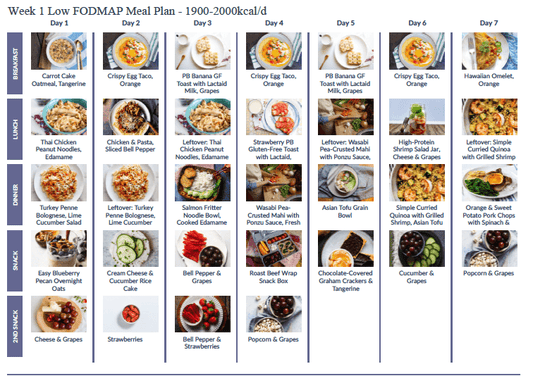
Breakfast, Lunch, And Dinner Templates That Fit The Dosing Window
These templates are designed to be easy on nausea and compatible with low FODMAP principles. You can scale portion size based on your appetite.
Breakfast (after the 30-minute dosing window)
- Option 1: Scrambled eggs with spinach (small serving) plus a side of oats made with lactose-free milk
- Option 2: Lactose-free Greek yogurt with strawberries (small portion) and chia (small amount)
- Option 3: Rice cake with peanut butter (thin layer) plus a hard-boiled egg
Lunch
- Option 1: Chicken breast, rice, and zucchini with olive oil and salt
- Option 2: Turkey and cucumber bowl with quinoa (portion based on tolerance) and a simple lemon-olive oil dressing
- Option 3: Firm tofu stir-fry with carrots and bok choy over rice
Dinner
- Option 1: Fish with roasted carrots and potatoes, finished with olive oil
- Option 2: Lean ground turkey with a low FODMAP tomato sauce over gluten-free pasta
- Option 3: Tempeh (if tolerated) with rice and sautéed green beans (portion controlled)
If reflux is an issue, you may do better with an earlier dinner and a smaller volume at night.
Snack Options For Low Appetite Days (Without Triggering Symptoms)
When your appetite is suppressed, snacks become "nutrition opportunities," not just extras. Low FODMAP, GLP-1-friendly options include:
- Lactose-free yogurt (or kefir if tolerated) in a small portion
- Kiwi (often well-tolerated and can support regularity)
- Chia pudding made with lactose-free milk (start small: too much fiber too fast can backfire)
- A small handful of walnuts, pecans, or macadamias
- Rice cakes with a thin spread of peanut butter
- String cheese made lactose-free, if you tolerate dairy
If you're nauseated, colder foods and simpler flavors sometimes go down easier than hot, strongly seasoned meals.
High-Protein, Low FODMAP Choices To Protect Muscle During Weight Loss
On GLP-1 therapy, muscle preservation deserves real attention. When total calories drop, protein is the macronutrient that most strongly supports lean mass retention (along with resistance training).
High-protein, low FODMAP staples include:
- Eggs and egg whites
- Chicken, turkey, and lean beef
- Fish and shellfish
- Lactose-free Greek yogurt and lactose-free cottage cheese
- Firm tofu and (for some people) tempeh
- Whey protein isolate that's low lactose (often better tolerated than concentrates)
A practical target many clinicians use is spreading protein through the day, aiming for roughly 20–30 grams per meal when possible. You don't need perfection. You need consistency, especially on the days when you "could take or leave food."
Managing The Most Common Symptoms With Targeted Low FODMAP Tweaks
Think of symptoms as signals. Your job isn't to silence them by eating less and less, it's to adjust the variables that matter most with oral semaglutide: meal volume, fat load, fiber type, hydration, and fermentable carbs.
Bloating And Gas: Portion Sizes, Fiber Type, And Carbonation
If bloating is your main complaint, the most effective changes are often boring, but powerful:
- Reduce portion size of higher-fiber foods, even if they're "healthy." A huge bowl of salad can be rough on slowed motility.
- Favor soluble fiber (oats, chia in small amounts, psyllium in careful doses) over large amounts of raw cruciferous vegetables.
- Limit carbonation. Gas plus delayed emptying is a predictable bloating recipe.
- Watch "healthy" sweeteners. Some sugar alcohols (polyols) are high FODMAP and can trigger gas.
Low FODMAP doesn't mean no fiber. It means the right fiber, at the right dose, for your current transit speed.
Constipation: Fluids, Soluble Fiber, And Gentle Movement
Constipation on oral semaglutide is common, and it's not just about fiber. It's often a three-part problem: less fluid, less food volume, and slower motility.
Helpful levers include:
- Fluids: If you're eating less, you may also be drinking less. Aim for steady intake across the day.
- Soluble fiber: Psyllium or chia can help some people, but go slowly. Rapid increases can worsen bloating.
- Gentle movement: A short walk after meals can support motility without feeling like a workout.
If you're already doing low FODMAP, make sure you're not accidentally removing too many regularity-supporting foods at once.
Diarrhea And Urgency: Fat Load, Trigger Sweeteners, And Simple Carbs
If your symptoms lean toward diarrhea or urgency, look for patterns like these:
- High-fat meals: Fat slows gastric emptying further and can provoke GI upset for some people on GLP-1s.
- Sugar alcohols and "diet" products: Polyols (like sorbitol, mannitol) are classic triggers.
- Large swings in simple carbs: Some people do worse with very carb-heavy, low-protein meals.
In a flare, many people feel better temporarily with simpler, lower-fat meals: rice, eggs, lean proteins, and cooked low FODMAP vegetables.
Nausea And Reflux: Meal Volume, Texture, And Trigger Foods
Nausea and reflux often improve with the same set of strategies:
- Keep meals smaller and lower-fat, especially early in the day
- Choose softer textures when symptoms are active (soups, yogurt, oats, scrambled eggs)
- Avoid lying down soon after eating
- Be cautious with common reflux triggers (spicy foods, peppermint, chocolate, alcohol, large coffee on an empty stomach)
A subtle but common issue: skipping meals can worsen nausea. A small, planned low FODMAP snack may settle your stomach more than "powering through" until dinner.
Reintroduction While On Oral Semaglutide: How To Personalize Without Setbacks
Low FODMAP is not meant to be permanent. The end goal is a personalized diet that supports your gut microbiome, your nutrition needs, and your ability to stay on oral semaglutide comfortably.
When To Start Reintroduction And How To Track Tolerance
Many people do best with a short elimination phase (often 4–6 weeks), then reintroduce one FODMAP group at a time.
A simple way to track tolerance is to note:
- What you tested (food and portion)
- When you ate it (and whether it was near a larger meal)
- Symptoms over the next 24 hours (bloating, pain, nausea, reflux, bowel changes)
- Confounders: stress, poor sleep, menstrual cycle changes, alcohol, dose increase
On oral semaglutide, your baseline appetite and motility may vary week to week, especially around dose changes. If you just titrated up and your nausea increased, that's not the ideal week to run a reintroduction challenge.
FODMAP Groups Most Likely To Be Mistaken For GLP-1 Side Effects
This is where people get stuck: you eat something, you feel bad, and you assume it's "the medication" forever.
A few FODMAP categories are particularly easy to confuse with GLP-1 side effects:
- Fructans (wheat, garlic, onion): Often cause bloating and gas that can feel like "semaglutide bloat."
- Lactose (milk, ice cream): Can cause cramps, diarrhea, or gas, especially if your intake changed.
- Polyols (sugar alcohols in gum, candies, some protein bars): Can trigger diarrhea and bloating.
If you can separate "medication timing effects" from "fermentation effects," you can usually expand your diet more than you think, without paying for it the next day.
Special Considerations For Women 35–55 (Perimenopause/Menopause Included)
If you're a woman in midlife, you're often navigating multiple overlapping variables at once: shifting estrogen and progesterone, sleep disruption, higher stress load, and changes in body composition. Oral semaglutide can be a valuable tool, but it also makes nutrition quality more important because you're eating less.
Protein, Iron, Calcium, And Vitamin D On Lower Appetite Days
When appetite drops, nutrient density matters. The most common gaps I see in GLP-1 users (especially women) are protein and a handful of micronutrients tied to muscle, mood, and bone health.
Priorities to keep on your radar:
- Protein: Spread through the day to support lean mass.
- Iron: Especially if you still menstruate or have a history of low ferritin (iron stores).
- Calcium and vitamin D: Important for bone health as estrogen declines.
If you're doing low FODMAP, you may also reduce certain dairy or legume foods that normally contribute to calcium and fiber. Lactose-free dairy can be a practical solution for many people.
Constipation, Sleep, Stress, And The Gut-Brain-Hormone Connection
Constipation is rarely just a "fiber problem," especially in perimenopause. Sleep disruption and stress can change gut motility through the gut-brain axis (the two-way signaling between your nervous system and digestive tract).
A few patterns are common:
- Poor sleep increases GI sensitivity and can worsen constipation.
- Higher stress increases visceral hypersensitivity (your gut feels sensations more intensely).
- Hormonal fluctuations can affect motility, fluid balance, and appetite.
If you're constipated and more anxious about symptoms, it can become a loop. The plan that works best is often the simplest one you can repeat: steady fluids, consistent low FODMAP meals you tolerate, soluble fiber titrated slowly, and light daily movement. Not a perfect diet, just a stable baseline your gut can trust.
Conclusion
Oral semaglutide can be highly effective, but it changes the rules in your digestive tract. When motility slows and appetite drops, your food choices, portions, and timing suddenly matter more. A low FODMAP diet can be a practical short-term strategy to reduce bloating, gas, and diarrhea, and it can make nausea and reflux easier to manage when paired with smaller meals and a predictable routine.
The win in 2026 isn't staying restrictive. It's building a personalized "safe baseline," then reintroducing foods methodically so your diet gets broader over time while your symptoms stay calmer.
Digestive discomfort is one of the most common reasons people struggle with GLP-1 medications. Targeted nutrition support can make a real difference in tolerability. Casa de Sante's physician-formulated digestive enzymes, synbiotics, and motility support supplements are designed specifically for sensitive stomachs on GLP-1 therapy. See what's available at casadesante.com.
This article is for educational purposes only and is not medical advice. Always consult your healthcare provider before making changes to your treatment plan.
Oral Semaglutide and Low FODMAP Diet FAQs
How does oral semaglutide affect digestion and cause gastrointestinal symptoms?
Oral semaglutide slows gastric emptying and reduces motility by mimicking GLP-1 hormone, which delays stomach emptying, blunts appetite, and causes symptoms like nausea, bloating, constipation, diarrhea, and reflux due to retained fermentable carbohydrates.
Why might a low FODMAP diet help when taking oral semaglutide?
A low FODMAP diet reduces fermentable carbs that cause gas and bloating, helping ease gastrointestinal symptoms amplified by oral semaglutide’s slowing of digestion. It’s most effective as a short-term (4–6 weeks) approach to support gut adaptation and symptom relief.
What are the best practices for taking oral semaglutide with respect to meals?
Take oral semaglutide first thing on an empty stomach with up to 4 ounces of plain water, then wait at least 30 minutes before eating or drinking anything else. Eating smaller, low-fat meals spaced throughout the day can reduce nausea and reflux symptoms.
Can a low FODMAP diet backfire for oral semaglutide users and how?
Yes, if too restrictive or long-term, it can cause nutrient and fiber deficiencies, reduce calories too much worsening nausea and fatigue, and lead to eating avoidance that triggers reflux. Food reintroduction after 4-6 weeks is important to avoid these pitfalls.
What are some low FODMAP, GLP-1 friendly food options that help maintain nutrition during oral semaglutide treatment?
Good choices include eggs, lactose-free yogurt, chicken, fish, oats, rice, zucchini, carrots, and small portions of nuts. These support protein intake and muscle preservation while being gentle on the slowed digestive system.
How should symptoms like bloating, constipation, or diarrhea be managed on oral semaglutide with a low FODMAP diet?
For bloating, reduce portion sizes and favor soluble fiber like oats; for constipation, increase fluids, soluble fiber gradually, and mild movement; for diarrhea, limit high-fat meals and sugar alcohol sweeteners. Adjusting meal volume, fiber type, and hydration is key.