Low FODMAP Semaglutide Routine: A Practical 7-Day Plan To Reduce GI Side Effects And Stay On Track (2026)








If you're on semaglutide and your stomach feels like it has opinions about it, you're not imagining things. Bloating, gas, nausea, reflux, and constipation are some of the most common reasons people struggle in the first few months or during dose increases. And when your appetite is already lower, it doesn't take much food "friction" to make eating feel stressful.
A low FODMAP semaglutide routine can be a practical, temporary tool: you reduce the fermentable carbohydrates that tend to feed gas and bloating while semaglutide is also slowing your digestion. The goal isn't perfection or a forever diet. The goal is tolerability, so you can keep nutrition steady, protect muscle, and feel more like yourself while your body adjusts.
Below is a clinician-minded, real-life 7-day plan you can repeat and personalize.
Why Semaglutide Can Trigger Bloating, Gas, And Constipation (And How Low FODMAP Helps)
Semaglutide is a GLP-1 receptor agonist. In plain English: it mimics a hormone signal that helps with appetite regulation and blood sugar control. That's the benefit. The trade-off is that the same pathway commonly slows digestion, especially early on or when the dose changes.
When food sits longer in your stomach and moves more slowly through your intestines, you're more likely to feel:
Nausea or early fullness (you feel "done" after a few bites)
Reflux (food and acid hang around longer)
Bloating and gas (especially if you're eating more fermentable carbs)
Constipation (slower movement plus lower intake can mean less stool volume)
Low FODMAP eating helps because it temporarily reduces specific carbohydrates that are poorly absorbed in the small intestine and easily fermented by gut bacteria in the colon. Fermentation creates gas. If motility is slower and you're fermenting more, symptoms can stack quickly.
How GLP-1 Slows Digestion And Changes Appetite Signals
Semaglutide tends to slow gastric emptying, meaning food exits the stomach more slowly. That slower "conveyor belt" is one reason you stay full longer. But it also means large meals, heavy fat loads, and hard-to-digest foods can linger.
It also changes appetite signals in the brain. You may notice fewer hunger cues, more food aversions, and a narrower window where food sounds appealing. So you might eat less overall, but also make "comfort picks" that backfire (like a protein bar full of sugar alcohols, or a garlic-heavy takeout bowl).
Common Trigger Patterns: Portion Size, Fat Load, Fiber Swings, And Carbonation
Most semaglutide GI flares aren't random. They follow patterns, including:
Portion size: A meal that used to be normal can be too large now.
Fat load: High-fat meals sit longer and can worsen nausea and reflux.
Fiber swings: Going from low fiber to very high fiber overnight (or adding multiple fiber supplements) can increase bloating and constipation.
Carbonation: Gas on top of delayed gastric emptying can feel miserable.
A low FODMAP semaglutide routine works best when you pair it with "GLP-1-friendly mechanics": smaller portions, steady meal timing, cooked vegetables, and a calm approach to fiber.
Who Should (And Shouldn’t) Try Low FODMAP While On Semaglutide
Low FODMAP is not a weight loss diet. It's a symptom-management strategy originally developed for IBS (irritable bowel syndrome). On semaglutide, it's most useful as a short-term reset, especially during weeks 1–12, during dose escalation, or whenever you can clearly link symptoms to high-FODMAP meals (think onions, garlic, wheat-heavy foods).
You're a good candidate to try a low FODMAP semaglutide routine if:
You have IBS or a sensitive gut history
Your bloating/gas clearly worsens after typical high-FODMAP foods
You're newly starting semaglutide or increasing your dose
You're getting constipated because intake dropped and motility slowed
You should be cautious with low FODMAP if you're already under-eating significantly, have a history of eating disorders, or you're using it as a long-term restriction instead of a temporary troubleshooting tool. The plan is elimination, then reintroduction, then personalization.
Red Flags To Discuss With Your Clinician: Severe Pain, Persistent Vomiting, Or Rapid Weight Loss
Some symptoms should not be "managed at home" with diet changes alone. Talk to your prescribing clinician promptly if you have:
Severe or worsening abdominal pain
Persistent vomiting or inability to keep fluids down
Signs of dehydration (dizziness, dark urine, rapid heartbeat)
Rapid, unintentional weight loss beyond what you and your clinician expected
Black stools, blood in stool, or unexplained fever
Also flag medication interactions and risk situations. For example, if you're on insulin or sulfonylureas, reduced intake plus GLP-1 therapy can increase hypoglycemia risk (low blood sugar). Your clinician may need to adjust doses.
If You're Perimenopause/Menopause: Constipation, Sleep, And Muscle Preservation Considerations
Perimenopause and menopause often bring a perfect storm: sleep disruption, stress hormones running high, shifting estrogen levels, and more central weight gain. Semaglutide can be a useful tool, but the side effects can hit harder when you're already prone to constipation or sleep fragmentation.
A low FODMAP semaglutide routine can help by reducing bloating and improving stool consistency, but your priorities should stay very clear:
Constipation prevention: slower motility plus lower intake is common
Earlier, lighter dinners: reflux and sleep disruption often improve
Protein consistency: preserving lean mass (muscle) becomes more important with age and weight loss
If you're in this season, don't let "eating less" become "eating poorly." Your results, and how you feel, depend on the quality of what you can tolerate.
The Low FODMAP Semaglutide Starter Rules (Keep It Simple)
If you try to overhaul everything at once, you'll never know what helped. Keep the rules simple for the first 7–14 days.
Here's the mindset: you're building a short, reliable menu that's easy to digest, high enough in protein, and low in common fermentable triggers.
Use The 3-Phase Framework: Elimination, Reintroduction, Personalization
Low FODMAP is designed as a process, not a permanent eating style.
Phase 1: Elimination (temporary)
You reduce high-FODMAP foods to calm symptoms. For most people, this is 2–6 weeks, but many semaglutide users feel a difference within 7–14 days when triggers were obvious.
Phase 2: Reintroduction (structured)
You bring back FODMAP groups one at a time to learn what you actually react to.
Phase 3: Personalization
You keep the foods you tolerate and only limit the specific triggers that reliably cause symptoms.
This matters because staying in strict elimination long-term can unnecessarily reduce food variety and make it harder to meet micronutrient needs.
Semaglutide-Specific Tweaks: Smaller Meals, Earlier Dinner, And "Low-FODMAP-First" Snacks
Even "perfect" low FODMAP meals can trigger symptoms if the portion is too big on semaglutide.
Use these GLP-1-specific starter rules:
Eat smaller meals 4–5 times per day rather than two large meals
Make dinner earlier and lighter (many people do best finishing 3+ hours before bed)
Start meals with protein first (it's easier to under-eat protein on GLP-1)
Choose cooked vegetables more often than raw salads early on
Use "low-FODMAP-first" snacks so you're not forced into high-FODMAP convenience foods when appetite is low
One more practical rule: if you're nauseated, reduce fat and volume first. A smaller, simpler plate often works better than skipping food entirely (which can worsen nausea for some people).
A 7-Day Low FODMAP Semaglutide Routine (Meals, Timing, And Habits)
This is a repeatable 7-day framework, not a rigid meal plan. Your goal is predictability: a small set of meals that digest well, meet protein needs, and don't overload fiber or fat.
Important note: low FODMAP isn't the same as "no fiber" or "no carbs." It's targeted. And on semaglutide, the biggest lever is often portion size.
Daily Rhythm Template: Dose Day Vs. Non-Dose Days
Many people notice the strongest nausea or early fullness within 24–72 hours after their semaglutide dose. Plan your week around that reality.
Dose day and the day after (gentler approach)
Breakfast: protein-forward, smaller portion
Lunch: moderate, avoid heavy fat
Dinner: early, light, cooked foods
Snacks: simple and low-FODMAP-first
Non-dose days (build nutrition)
Slightly larger portions if tolerated
Add a second vegetable serving
Increase protein and fluids
Gradually build fiber if constipation is present
A simple habit that helps: keep a short symptom note in your phone (what you ate, portion size, timing, symptoms 2–6 hours later). You're looking for patterns, not perfection.
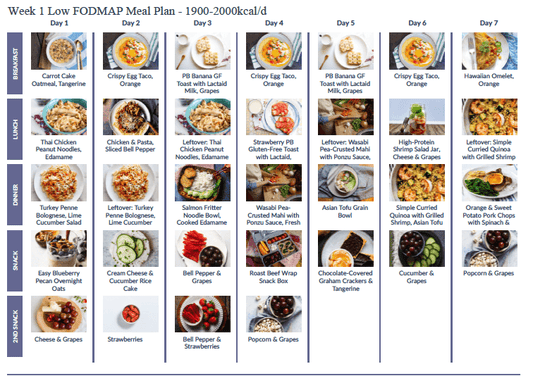
7-Day Menu Framework: Breakfast, Lunch, Dinner, And Two Gentle Snacks
Use this as a "base week." Repeat it for a second week if symptoms are improving, then consider structured reintroduction.
Day 1
Breakfast: eggs + spinach (cooked) + a small serving of rice
Snack 1: lactose-free yogurt + strawberries
Lunch: grilled chicken + quinoa + cooked carrots
Snack 2: turkey slices + cucumber
Dinner: fish + potatoes + zucchini (finish early)
Day 2
Breakfast: lactose-free Greek yogurt + blueberries + a small portion of oats
Snack 1: rice cakes + peanut butter (thin layer)
Lunch: turkey burger patty + white rice + sautéed green beans
Snack 2: firm tofu cubes or hard cheese + grapes
Dinner: shrimp + polenta (or rice) + sautéed spinach
Day 3
Breakfast: egg scramble + bell pepper + potatoes
Snack 1: kiwi + a small handful of walnuts
Lunch: tuna salad (use low-FODMAP mayo, avoid onion/garlic) + gluten-free crackers + cucumber
Snack 2: lactose-free protein shake (simple ingredients)
Dinner: chicken + roasted carrots + quinoa
Day 4
Breakfast: overnight oats made with lactose-free milk + chia (small amount) + strawberries
Snack 1: hard-boiled eggs
Lunch: salmon + rice + zucchini
Snack 2: lactose-free cottage cheese + pineapple (small portion)
Dinner: lean beef or tempeh + potatoes + sautéed kale (small portion)
Day 5
Breakfast: eggs + sourdough spelt toast (if tolerated) + sliced tomato
Snack 1: orange + a small handful of pumpkin seeds
Lunch: chicken rice bowl with spinach and carrots (no onion/garlic)
Snack 2: turkey slices + olives
Dinner: cod + mashed potatoes + green beans
Day 6
Breakfast: lactose-free yogurt + oats + blueberries
Snack 1: banana (firm, smaller) + peanut butter
Lunch: tofu stir-fry with rice and low-FODMAP veggies (zucchini, carrots, bell pepper)
Snack 2: hard cheese + grapes
Dinner: rotisserie chicken (check seasonings) + rice + sautéed spinach
Day 7
Breakfast: egg omelet + spinach + potatoes
Snack 1: strawberries + lactose-free yogurt
Lunch: grilled chicken + quinoa + carrots
Snack 2: cucumber + tuna
Dinner: fish + potatoes + zucchini
Two notes that matter on semaglutide:
Cooked, simple dinners tend to be better tolerated than large mixed meals.
If your appetite is very low, keep the same structure but reduce portions. Aim to keep protein consistent even when carbs and fats drop.
What To Drink (And What To Limit) For Nausea, Reflux, And Constipation
What you drink can either calm your gut or quietly keep symptoms going. On semaglutide, nausea and reflux often worsen when you're dehydrated or when you rely on carbonated or highly sweetened beverages.
Hydration Targets And Electrolytes Without High-FODMAP Sweeteners
A practical hydration target for many adults on GLP-1 therapy is about 64–80 ounces of fluid per day, adjusting for your body size, climate, and activity. Constipation risk rises quickly when intake drops and fluids fall.
If you're using electrolytes, scan ingredient lists for high-FODMAP sweeteners and polyols (sugar alcohols). Many "zero sugar" mixes use sugar alcohols that can worsen gas and diarrhea in sensitive guts.
Better-tolerated options often include:
Water (still is usually easiest)
Oral rehydration-style electrolytes without polyols
Diluted low-FODMAP juices in small amounts if you're struggling to drink (not ideal, but sometimes helpful short-term)
Ginger or peppermint tea if tolerated (peppermint can worsen reflux for some)
Coffee, Carbonation, Alcohol, And Sugar Alcohols: A Tolerance Checklist
Use this quick checklist during your 7-day reset. If a symptom is active, consider limiting the trigger for one week, then test later.
Coffee
Can worsen nausea and reflux, especially on an empty stomach. If you keep it, try smaller amounts and pair with food.
Carbonation
Often worsens bloating and "trapped gas" feelings on semaglutide. If you love sparkling water, consider pausing during flare weeks.
Alcohol
Can irritate the stomach, worsen reflux, and reduce sleep quality. Also, appetite suppression plus alcohol can hit harder than expected.
Sugar alcohols (sorbitol, mannitol, xylitol, maltitol, erythritol)
Common in protein bars, "keto" snacks, and sugar-free candies. They're frequent culprits for bloating, cramps, and unpredictable stools, especially when motility is already slowed.
Protein, Fiber, And Micronutrients: Meeting Needs Without Triggering Symptoms
The nutritional risk on semaglutide isn't just "eating less." It's eating less protein, fewer micronutrients, and an erratic amount of fiber, then wondering why energy, hair, mood, and muscle tone feel off.
Your job during a low FODMAP semaglutide routine is to keep essentials steady while your gut calms down.
Low FODMAP Protein Picks And Easy Add-Ins For Busy Days
Low FODMAP, GLP-1-friendly protein tends to be simple and minimally seasoned.
Reliable options include:
Eggs
Chicken, turkey, lean beef
Fish and shrimp
Firm tofu or tempeh
Lactose-free Greek yogurt or lactose-free cottage cheese
Hard cheeses (generally lower in lactose)
Easy add-ins when appetite is low:
A second egg at breakfast
Turkey slices as an afternoon mini-meal
A lactose-free protein shake with a short ingredient list
Collagen peptides added to coffee or oatmeal (not a complete protein, but can support total intake)
If you're struggling to meet protein because your appetite is dramatically reduced, prioritize protein earlier in the day when nausea is often lower, and use smaller "protein anchors" at each eating time.
Fiber Strategy For GLP-1 Constipation: Build Slowly With Low FODMAP Options
Constipation on semaglutide is usually a combination of:
Slower gut motility
Less total food volume
Less fluid
Sometimes, less movement
Fiber can help, but the dose matters. The most common mistake is jumping from very low fiber to very high fiber overnight.
A steadier low-FODMAP fiber strategy:
Start with soluble, gentle fibers in food: oats, chia (small amounts), kiwi, oranges, potatoes (with cooling can increase resistant starch, which some tolerate well and others don't)
Add cooked vegetables before raw salads
Increase by small steps every 3–4 days, not daily
Pair fiber increases with more fluids
If you use psyllium, start low and go slow. Too much too soon can worsen bloating, especially during dose escalation.
Micronutrients to keep on your radar during reduced intake include iron, B12, folate, magnesium, and vitamin D. You don't need to "supplement everything," but you do want to avoid weeks of living on crackers and protein bars because your stomach is unpredictable.
Common Mistakes That Make Symptoms Worse (And Simple Fixes)
A low FODMAP semaglutide routine works when it's calm and consistent. Most setbacks happen when you accidentally stack multiple triggers.
The "Too Much, Too Fast" Trap: Portion Creep, New Foods, And Supplement Overload
Three common ways people unintentionally make symptoms worse:
Portion creep
You feel better for two days, then eat a "normal" portion again. On semaglutide, your new normal may be smaller, at least for now.
Too many new foods at once
You switch to low FODMAP but also try a new protein bar, a new creamer, a new "gut health" powder, and a new fiber supplement. If symptoms worsen, you have no idea why.
Supplement overload
Magnesium, fiber, probiotics, digestive enzymes, and "fat burners" all at once can overwhelm a sensitive gut. Introduce one change at a time.
Simple fix: pick a 7-day baseline menu (like the one above), keep it boring on purpose, and change only one variable every few days.
Label Reading For Hidden FODMAPs In Bars, Shakes, And "Keto" Snacks
This is where a lot of semaglutide GI issues hide.
Common high-FODMAP ingredients in packaged foods include:
Inulin or chicory root fiber (often added for "prebiotic" benefits but can cause major gas)
Onion powder and garlic powder (very common in savory snacks)
Wheat-based fillers
Honey, high-fructose corn syrup
Sugar alcohols (sorbitol, mannitol, xylitol, maltitol, erythritol)
If your "healthy" snack routinely causes bloating, don't assume it's your medication alone. Packaged foods are frequent offenders, and the low FODMAP semaglutide routine tends to work best when your snacks are simple: yogurt, fruit portions you tolerate, deli turkey, eggs, rice cakes, or a straightforward shake.
Conclusion
A low FODMAP semaglutide routine is most powerful when you treat it like a short experiment: calm the gut, stabilize your meals, then reintroduce foods methodically so you're not stuck in unnecessary restriction. For many people, the biggest wins come from the unglamorous basics, smaller portions, earlier dinners, fewer carbonated drinks, and fewer "mystery ingredient" snacks.
If your symptoms are severe, persistent, or escalating, don't try to push through. That's a clinical conversation.
GI side effects don't have to be the price of admission for GLP-1 therapy. Casa de Sante offers physician-formulated gut support products built for the specific digestive challenges these medications create. Explore your options at casadesante.com.
This article is for educational purposes only and is not medical advice. Always consult your healthcare provider before making changes to your treatment plan.
Low FODMAP Semaglutide Routine: Frequently Asked Questions
What causes bloating and constipation when taking semaglutide?
Semaglutide slows gastric emptying as a GLP-1 receptor agonist, delaying stomach emptying and digestion. This slower motility can lead to nausea, reflux, bloating, gas, and constipation, especially when high-FODMAP foods that ferment in the colon are consumed.
How does a low FODMAP diet help with semaglutide side effects?
A low FODMAP diet reduces fermentable carbohydrates that gut bacteria ferment, producing gas and worsening bloating. On semaglutide, this diet helps ease digestive symptoms by limiting those carbs during the initial weeks or dose increases, improving tolerability and nutrient intake.
Who should consider trying a low FODMAP semaglutide routine?
People with IBS, sensitive guts, or those newly starting or increasing semaglutide doses often benefit. It’s especially helpful if bloating or constipation worsen with high-FODMAP foods. However, it’s a temporary strategy and not recommended for long-term use or those already under-eating significantly.
What are the best eating habits while on semaglutide with a low FODMAP plan?
Eat smaller meals 4–5 times daily, prioritize protein first (e.g., eggs, chicken, lactose-free yogurt), opt for cooked vegetables, have lighter and earlier dinners, and choose low-FODMAP snacks. This helps reduce nausea, reflux, and digestive discomfort associated with dose days.
Can drinking certain beverages affect semaglutide digestive symptoms?
Yes. Staying hydrated with water and electrolyte drinks without high-FODMAP sweeteners is important. Limiting coffee, carbonated drinks, alcohol, and sugar alcohols helps reduce nausea, reflux, and constipation while on semaglutide.
What are common mistakes when starting a low FODMAP semaglutide routine and how can I avoid them?
Common errors include increasing portions too quickly, introducing multiple new foods or supplements at once, and consuming hidden high-FODMAP ingredients in packaged snacks. Avoid these by sticking to a simple 7-day menu, changing one variable at a time, and carefully reading labels to improve symptom management.