Low FODMAP Ozempic Routine: A Practical 7-Day Plan To Reduce Nausea, Bloating, And Constipation (2026)








If you're on Ozempic (semaglutide) or another GLP-1 medication and you're dealing with nausea, bloating, "stuck" fullness, or constipation, you're not imagining it, and you're not alone. GLP-1s are effective partly because they slow digestion and reduce appetite. That same mechanism can also magnify gut symptoms, especially when meals include fermentable carbohydrates that your gut bacteria rapidly turn into gas.
A low FODMAP Ozempic routine can be a smart, temporary tool: it reduces common fermentation triggers (like onion, garlic, wheat, and certain sweeteners) while you stabilize your medication dose and learn what your "new stomach" tolerates. The key is doing it in a GLP-1-aware way, prioritizing protein, hydration, and the right kind of fiber, so you don't accidentally worsen constipation or under-eat.
Below is a practical 7-day plan you can adapt to your appetite, your schedule, and your symptom pattern.
Why Pair A Low FODMAP Approach With Ozempic (And Other GLP-1s)
How GLP-1 Medications Change Digestion And Appetite
GLP-1 receptor agonists (like semaglutide and tirzepatide) change digestion in a few clinically important ways:
First, they delay gastric emptying. In plain English, food leaves your stomach more slowly. That's a big reason you feel full faster and longer.
Second, they can slow overall gut motility (how quickly material moves through the intestines). For some people that means constipation: for others it's a mix of constipation with intermittent loose stools.
Third, they reduce appetite and shift food preferences. Many people develop food aversions, often to fatty foods, large portions, or rich smells. If you used to eat "normal" sized meals and now your stomach can only handle a small volume, the wrong meal composition can tip you into nausea, reflux, or bloating.
Low FODMAP doesn't "fix" GLP-1 physiology. What it can do is reduce the fermentation load, less gas production from common trigger carbs, while your digestion is already running slower.
When Low FODMAP Helps vs. When Another Strategy Is Better
Low FODMAP tends to help most when your symptoms look fermentation-driven:
Bloating that builds after meals, excessive gas, abdominal distension, and discomfort that seems worse after foods like onion, garlic, wheat-based pasta/bread, beans, certain fruits, or sugar alcohols (sorbitol, mannitol, xylitol).
But it's not always the best first move.
If your main issue is constipation, your biggest levers are usually fluids with electrolytes, movement, and fiber timing (not simply removing FODMAPs).
If your main issue is reflux or "sulfur burps," you'll often get more relief by reducing meal size and fat load, eating earlier, and staying upright after meals.
If diarrhea is your main issue, high-fat meals, large portions, or rapid dose increases are common culprits, so simplifying meals and reducing fat temporarily may matter more than strict FODMAP elimination.
Think of low FODMAP as one tool. The goal is not to diet harder, it's to make the medication more tolerable.
Safety First: Who Should Not Do A Full Low FODMAP Elimination
A full low FODMAP elimination phase is temporary by design (usually 2–6 weeks in IBS care). On GLP-1 therapy, you should be extra cautious about doing a strict elimination if:
You're already struggling to eat enough protein or calories. Appetite suppression can make elimination too restrictive.
You have significant early fullness, frequent vomiting, severe reflux, or suspected gastroparesis (abnormally delayed stomach emptying). Further restricting food variety can worsen nutrition gaps.
You have a history of eating disorders or restrictive eating patterns.
You're pregnant, breastfeeding, or have complex medical conditions where nutrition adequacy is critical.
If any of those apply, a "low FODMAP light" approach (removing the biggest triggers like onion/garlic and sugar alcohols) can be safer than a full elimination, ideally with clinician or dietitian guidance.
Set Up Your Routine: The Non-Negotiables Before You Start
The 3-Part Foundation: Protein, Fluids/Electrolytes, And Fiber Timing
If you do nothing else, anchor your low FODMAP Ozempic routine around these three priorities.
Protein first. Because GLP-1s reduce total intake, you need protein to protect lean mass (muscle). Many obesity medicine clinicians target roughly 1.6 g/kg/day for people actively losing weight, and in some cases higher, but your personal target depends on your size, kidney health, and medical history. Practically, that means you build meals around eggs, fish, poultry, tofu/tempeh (portion-aware), and lactose-free dairy or low-lactose options.
Fluids plus electrolytes. Plain water is great, but if you're eating less and feeling nauseated, electrolyte balance can slip. Dehydration makes constipation worse and can intensify nausea and fatigue.
Fiber timing (not fiber overload). With slower motility, dumping a lot of fiber into the system can backfire, more bloating, more fullness, sometimes worse constipation. Start low, go slow, and place fiber earlier in the day when possible, paired with fluids.
Simple Portion Rules For Slower Gastric Emptying
When gastric emptying is slowed, the "how much at once" matters as much as "what." These rules reduce the odds of nausea and reflux:
Smaller meals, more often. Think mini-meals rather than big plates.
Protein-first bites. A few bites of protein early can stabilize intake when your appetite is unpredictable.
Keep fat moderate. Fat slows gastric emptying even further, which can compound GLP-1 effects. You don't need fat-free eating, but fried foods and heavy creamy meals are common nausea triggers.
Chew thoroughly and eat more slowly than you think you need to.
Finish dinner earlier and stay upright for at least 2–3 hours after your evening meal if reflux is an issue.
A Starter Grocery List Of Low FODMAP, GLP-1-Friendly Staples
This list is intentionally boring. That's the point for week one, predictable inputs, clearer symptom data.
Proteins
Eggs and egg whites
Chicken or turkey breast
Fish (salmon if tolerated, or leaner fish if fat triggers nausea)
Canned tuna
Shrimp
Firm tofu
Lactose-free Greek yogurt or skyr (or low-lactose options if you tolerate them)
Carbs and easy starches
White or brown rice
Quinoa
Oats (portion-aware)
Potatoes
Rice cakes
Sourdough spelt bread in small portions (tolerance varies)
Low FODMAP vegetables (generally well-tolerated on GLP-1s)
Carrots
Zucchini
Spinach
Cucumber
Bell peppers (small portions if you're sensitive)
Fruits (portion matters)
Strawberries, blueberries
Kiwi
Citrus
Unripe/firm banana (smaller portion)
Fats and flavor
Olive oil (use lightly)
Fresh herbs, chives or scallion greens (instead of onion)
Garlic-infused oil (flavor without the fructans)
Ginger (tea or fresh)
What you'll typically pause for week one
Onion, garlic, wheat-heavy pasta/bread
Beans and lentils (unless very small, tested portions)
Cauliflower, mushrooms
Sugar alcohols (common in "keto" candies and protein bars)
Large amounts of cruciferous vegetables
Very fatty, fried meals
Carbonated drinks (often worsen bloating)
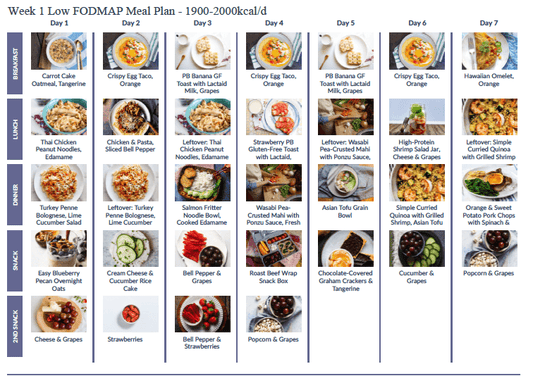
A 7-Day Low FODMAP Ozempic Routine (Meals, Timing, And Habits)
This is a practical template, not a perfection contest. Your appetite may vary day to day, especially around injection day. Aim for consistency in timing and food choices so you can actually learn what helps.
Daily Template: Morning, Midday, Evening, And Pre-Bed
Morning (within 1–2 hours of waking)
Mini-meal option 1: Lactose-free Greek yogurt + a small portion of berries + a few tablespoons of oats (if tolerated)
Mini-meal option 2: Protein shake made with a GLP-1-friendly protein powder + water or lactose-free milk, blended with a handful of spinach
Habit: 8–16 oz fluid early (water plus electrolytes if constipation or headaches are an issue)
Midday
Meal: Grilled chicken (or tofu) + rice or quinoa + cooked carrots/zucchini
Habit: 10–15 minute easy walk after eating (this can help motility and reflux)
Evening (earlier is usually better on GLP-1s)
Meal: Fish + roasted potato + sautéed spinach (garlic-infused oil for flavor)
Habit: Keep the portion smaller than you think you "should" eat. You can always add a pre-bed mini-meal.
Pre-bed (only if you need it to meet protein/nutrition)
Option: A small serving of lactose-free yogurt, or a half protein shake
Habit: Stop liquids 30–60 minutes before lying down if reflux is a problem.
A simple 7-day structure
Days 1–3: Keep choices very consistent (same 2–3 breakfasts, same 2–3 lunches/dinners).
Days 4–7: Add one new food per day (for example, kiwi, oats, a different vegetable, or a different protein) so you can identify triggers.
Injection-Day Adjustments To Minimize Nausea And Reflux
Many people feel their worst in the 24–48 hours after a dose (especially during dose escalation). Your goal is to lower gastric "load."
Go smaller and more frequent. Two to four mini-meals can work better than three meals.
Lower fat and lower volume. Choose lean proteins and simple starches.
Avoid late-night eating. Reflux and sulfur burps often worsen when you lie down with a slow-emptying stomach.
If your clinician has prescribed an anti-nausea medication (like ondansetron/Zofran), follow their instructions and be aware it can worsen constipation. That tradeoff matters for planning.
Snack And "Mini-Meal" Options When You Can't Tolerate Full Meals
These are designed for days when even thinking about a "meal" makes you queasy.
Protein-forward options
Egg whites or a soft-boiled egg
A small tuna packet with rice cakes
Lactose-free yogurt
A half portion of a protein shake
Gentle carbs (often nausea-friendly)
Plain rice
Potato
Oatmeal made thin (portion-aware)
Low FODMAP add-ons for calories without huge volume
A drizzle of olive oil on rice/potato (if fat is tolerated)
A small portion of peanut butter (some people tolerate it well: others don't on GLP-1s)
If you're consistently unable to tolerate food for more than a day, that's a clinician conversation, especially if you can't keep fluids down.
Symptom-Specific Tweaks: Troubleshoot The Top GLP-1 GI Side Effects
Nausea And Food Aversion: What To Eat, What To Avoid, And When
What tends to help
Small, bland, low-fat meals (rice, potatoes, lean protein)
Cool or room-temperature foods (hot aromas can trigger nausea)
Ginger tea or ginger in food
Protein in small doses throughout the day (waiting too long can make nausea worse)
What often makes it worse
Fried foods, heavy cream sauces, large portions of cheese
Large salads or very high-fiber meals when motility is slow
Very spicy meals
Alcohol
Timing tip: Many people do better with a small protein-containing breakfast rather than coffee-only mornings. An empty stomach plus caffeine can be a rough combo when you're dose-adjusting.
Bloating And Gas: Common High-FODMAP Triggers To Swap Out
If bloating is your main complaint, this is where low FODMAP can shine.
Common triggers to pause in week one
Onion and garlic (including powders)
Wheat-based bread, pasta, and many baked goods
Beans, lentils
Certain fruits (apples, pears, mango)
Sugar alcohols (often in "sugar-free" gum, candies, protein bars)
Easy swaps
Use garlic-infused oil and scallion greens for flavor instead of garlic/onion
Choose rice, quinoa, potatoes instead of wheat-heavy meals
Pick berries, citrus, kiwi as fruit options
Check labels for sugar alcohols if you're using protein products or "diet" snacks
Constipation: Low FODMAP Fiber Strategies That Won't Backfire
Constipation on GLP-1s is common because motility slows and intake drops. A low FODMAP approach can help only if you build the right fiber strategy.
Start with the basics
Hydration plus electrolytes (dehydration is constipation fuel)
Daily walking, even short and easy
Regular meal timing (your gut likes predictable cues)
Low FODMAP fiber options that are often better tolerated
Kiwi (a classic gentle choice for some people)
Chia in small amounts (can bloat some people, start tiny)
Oats (portion-aware)
Cooked vegetables like carrots and zucchini
Psyllium can be very effective, but dose matters. Too much, too fast can worsen bloating or create a "brick" feeling if your fluid intake is low. If you use it, titrate gradually and pair it with adequate fluids.
If you go more than three days without a bowel movement, or you have significant abdominal pain, don't just "power through." Talk with your clinician.
Diarrhea Or Urgency: Gentle, Low FODMAP "Reset" Meals And Hydration
Loose stools can show up with GLP-1s, especially with higher-fat meals, rapid dose escalation, or very large portions.
A gentle 24-hour reset style (not starvation)
Lean protein (chicken, fish, eggs)
Simple starch (rice, potatoes)
Cooked low FODMAP vegetables in small amounts
Fluids plus electrolytes
Temporarily reduce
High-fat foods
Large salads/raw veggies
Very high doses of magnesium supplements unless prescribed
If diarrhea is persistent, severe, or associated with dizziness, weakness, fever, or blood, that's not a DIY situation.
Reflux And Sulfur Burps: Meal Size, Fat Load, And Timing Fixes
Reflux and sulfur burps often reflect slow stomach emptying plus fermentation and/or fat load.
Practical fixes that often help
Shrink dinner and eat earlier
Keep fat moderate (skip fried foods and heavy sauces)
Stay upright after meals
Avoid carbonated drinks
Consider separating fluids from meals if you feel "sloshing" fullness (some people do better sipping between meals)
If reflux is new, severe, or you're relying on frequent antacids to function, bring it up, sometimes dose timing, dose size, or adjunct meds need adjusting.
Reintroduction And Personalization: Make It Sustainable After Week 1
A low FODMAP Ozempic routine should not become your forever diet. The point is to identify your specific triggers while keeping your intake adequate.
A Step-By-Step Reintroduction Schedule (One FODMAP Group At A Time)
After a stable week (or two) of lower symptoms, reintroduce systematically. Test one FODMAP group at a time, keeping the rest of your diet steady.
A simple schedule many people can follow
Days 1–3: Fructans (example test foods: wheat portion or onion/garlic exposure, many people choose wheat first because it's easier to measure)
Days 4–6: Lactose (example: regular yogurt or milk, if you paused it)
Days 7–9: Polyols (example: stone fruit or a controlled amount of a polyol-containing food)
Days 10–12: GOS (example: legumes in a measured portion)
Days 13–15: Excess fructose (example: honey or mango portion)
You don't have to follow that exact order. What matters is one variable at a time.
How To Track Tolerance While Appetite Is Suppressed
Tracking on GLP-1s is tricky because you may eat very small amounts, and symptoms can lag.
Use a simple log for each test food
Portion and time eaten
Symptoms over the next 6–24 hours (bloating, gas, nausea, reflux, stool changes)
Your injection day in the week (symptoms often cluster)
If you're not sure whether a food is a trigger, repeat the same test portion another day when you're otherwise stable.
When To Add Back Prebiotics, Probiotics, And Fermented Foods
During elimination, many people unintentionally reduce prebiotic fibers (the fibers that feed beneficial gut bacteria). That can be fine short-term, but long-term you want diversity.
A practical approach
Stabilize symptoms first.
Then add back fermented foods in small portions if tolerated (for example, yogurt or kefir, lactose-free if needed).
Then consider targeted prebiotics or synbiotics (a combo of prebiotics and probiotics) if you're working on constipation, bloating, or long-term microbiome support.
If fermented foods reliably trigger bloating, it may be a dose/portion issue, a lactose issue, or simply that your gut is not ready yet, especially during dose escalation.
Special Considerations For Perimenopause And Menopause On GLP-1s
Perimenopause and menopause change your metabolic baseline. Lower estrogen can increase central fat storage, reduce insulin sensitivity, and accelerate muscle loss if protein and strength training aren't prioritized. Combine that with GLP-1 appetite suppression and you can see why symptoms feel "different" in your 40s and 50s.
Protein Targets, Muscle Preservation, And Strength Training Timing
If you're losing weight in midlife, preserving lean mass is not optional. It's protective for metabolic health, bone health, and long-term function.
Practical takeaways
Distribute protein across the day, even if it's in mini-meals.
Consider a protein shake as a tool, not a failure, especially on nausea days.
If you strength train, many people do best scheduling training when they can reliably tolerate a small protein-containing meal before or after. The exact timing matters less than consistency, but you do want regular training signals to preserve muscle.
Constipation, Sleep, And Stress: The Gut-Hormone Connection
Poor sleep and high stress can worsen constipation and bloating through the gut-brain axis (your nervous system's direct influence on GI function). And perimenopause often disrupts sleep.
If constipation is a recurring issue, it's worth asking:
Are you sleeping poorly the night after injection?
Are you skipping breakfast and then trying to eat most of your food late?
Are you under-hydrated because nausea makes drinking unappealing?
Small, steady routines, morning fluids, a short walk after meals, consistent meal timing, often outperform drastic dietary changes.
Micronutrients To Watch: Iron, B12, Vitamin D, Magnesium, And Calcium
When you eat less, deficiencies can sneak up.
Iron: Important for energy and hair health: needs evaluation if fatigue or heavy bleeding history.
B12: Relevant if you eat little animal protein or have absorption issues.
Vitamin D and calcium: Key for bone health, especially post-menopause.
Magnesium: Can support bowel regularity for some people, but certain forms can worsen diarrhea.
If you're restricting foods (low FODMAP plus low appetite), it's reasonable to discuss labs and a targeted supplement plan with your clinician rather than guessing.
When To Call Your Clinician: Red Flags And Medication Checkpoints
Symptoms That Should Not Be "Pushed Through"
Call your clinician urgently or seek prompt medical care if you have:
Persistent vomiting or inability to keep fluids down
Severe or worsening abdominal pain
Signs of dehydration (dizziness, fainting, very dark urine)
Blood in stool, black/tarry stool, or vomiting blood
Fever with significant GI symptoms
Unexplained rapid worsening of reflux, chest pain, or trouble swallowing
GLP-1 side effects are common, but severe symptoms should be evaluated, not normalized.
Dose Escalation, Zofran/Antacids/Laxatives, And Drug-Food Interactions
A lot of GI misery happens during dose increases. If symptoms spike with escalation, that's useful information for your prescriber.
Also note these common checkpoints:
Ondansetron (Zofran) can reduce nausea but commonly worsens constipation.
Antacids or acid reducers can help reflux, but frequent reliance should prompt a plan review.
Laxatives and fiber supplements are not interchangeable. Some are better for slow motility than others, and overuse can cause problems.
If you're taking other oral medications, slowed gastric emptying can sometimes change how quickly they're absorbed. Your clinician can help you adjust timing if needed.
How To Discuss Persistent GI Symptoms Without Stopping Treatment
You don't have to choose between "suffer silently" and "quit." A productive clinician conversation usually includes:
Your symptom pattern (what, when, how long)
Your injection day and dose
What you've already tried (smaller meals, lower fat, low FODMAP trigger removal)
Your hydration, bowel movement frequency, and any anti-nausea/antacid/laxative use
Possible solutions can include a slower titration schedule, dose adjustments, changes in injection timing, short-term symptom meds, or a more targeted nutrition plan.
Digestive discomfort is one of the most common reasons people struggle with GLP-1 medications. Targeted nutrition support can make a real difference in tolerability. Casa de Sante's physician-formulated digestive enzymes, synbiotics, and motility support supplements are designed specifically for sensitive stomachs on GLP-1 therapy. See what's available at casadesante.com.
This article is for educational purposes only and is not medical advice. Always consult your healthcare provider before making changes to your treatment plan.
Conclusion
A low FODMAP Ozempic routine works best when you treat it like a short, structured experiment: remove the biggest fermentation triggers, simplify meals, and stabilize the basics that GLP-1s make harder, protein intake, hydration with electrolytes, and fiber that's timed and titrated.
If week one goes well, the win isn't staying restrictive. The win is reintroducing strategically so you learn your personal triggers while keeping your diet broad enough to support muscle, hormones, and long-term gut health. And if your symptoms feel severe, persistent, or escalating with dose changes, that's a signal to collaborate with your clinician, not to grit your teeth and hope it passes.
Low FODMAP Ozempic Routine FAQs
Why should I follow a low FODMAP diet while taking Ozempic?
A low FODMAP diet reduces fermentable carbs that gut bacteria turn into gas, helping to ease bloating and gas amplified by Ozempic's slowed digestion and gut motility. It helps manage fermentation-driven symptoms while adjusting to GLP-1 medication.
What are the key dietary priorities when on a low FODMAP Ozempic routine?
Focus on protein (like eggs, chicken, lactose-free yogurt), proper hydration with electrolytes, and carefully timed low-FODMAP fiber to support digestion without worsening constipation or fullness caused by Ozempic.
How should I adjust meal size and fat intake with Ozempic and a low FODMAP diet?
Smaller, more frequent meals with moderate fat intake are recommended. Large portions and high-fat foods slow gastric emptying further and can increase nausea, reflux, and bloating while on Ozempic.
How can I tailor a 7-day low FODMAP Ozempic routine to reduce GI side effects?
Start with consistent simple meals—protein like grilled chicken, low-FODMAP carbs like rice or quinoa, and tolerated veggies—adding one new food every few days to identify triggers. Include habits like hydration, light walking, and early dinners.
What should I do if I experience nausea or food aversions while on Ozempic?
Eat small, bland, low-fat meals such as rice, potatoes, and lean protein. Ginger tea and spreading protein intake throughout the day can help. Avoid fried, spicy foods, heavy cream, and large portions to minimize nausea.
Is a full low FODMAP elimination safe for everyone on Ozempic?
Not always. It’s best avoided if you have severe early fullness, suspected gastroparesis, low protein/calorie intake, or history of restrictive eating. A low FODMAP-lite approach removing main triggers is safer with clinician guidance.