Low FODMAP On Ozempic: A Practical Plan To Calm GI Side Effects Without Derailing Weight Loss (2026)








If you're on Ozempic (semaglutide) or considering it, you've probably heard the "it can cause GI side effects" line. What's harder is living it: nausea that ruins dinner, bloating that shows up out of nowhere, constipation that makes you feel heavy and uncomfortable, and that early fullness that turns normal portions into a problem.
A low FODMAP diet can be a surprisingly practical tool here, not as a forever diet, and not as a weight-loss "hack," but as a short-term way to reduce gut fermentation and calm symptoms while you stay consistent with GLP-1 goals. Below is a clinician-style, real-world plan you can actually use, including a 2-week reset, food swaps for common "problem meals," and a safe way to reintroduce foods so you don't end up afraid to eat.
Why Ozempic Can Trigger Bloating, Nausea, And Constipation
Ozempic works partly by slowing gastric emptying (how fast food leaves your stomach). That's a feature, not a bug, it helps you feel full sooner and longer. But that same mechanism can make your digestion feel… off.
When food sits longer in the stomach and moves more slowly through the small intestine, you're more likely to notice:
Nausea, especially after higher-fat meals
Bloating and gas, particularly after more fermentable carbohydrates
Constipation, because slower transit plus lower food volume often means less stool bulk and less "movement"
Reflux or a heavy, "food just sits there" sensation
And there's another GLP-1 reality: you're eating less. Less volume can mean less fiber, fewer fluids, fewer minerals, and fewer "natural prompts" for the bowel to move.
How GLP-1s Change Motility, Appetite, And Gut Signaling
GLP-1 receptor agonists (like semaglutide and tirzepatide) influence digestion through several pathways:
Motility: They slow the coordinated muscle contractions that move food forward (motility). In plain English: your gut takes longer to do its job.
Appetite and satiety signaling: Your brain receives stronger "I'm full" signals, so portions shrink fast, sometimes before your meal composition adjusts.
Secretions and hormones: GLP-1 signaling affects digestive secretions and gut-brain communication, which can change how you tolerate fats, acidic foods, and large meals.
This is why some people feel fine on a relatively "healthy" diet but suddenly can't tolerate foods like broccoli, beans, protein bars, or creamy coffee drinks once they start Ozempic.
When Symptoms Suggest Something More Than "Normal" Side Effects
Most GI effects on GLP-1 therapy are mild to moderate and improve with time, slower titration (dose escalation), and food adjustments. But some symptoms shouldn't be self-managed.
Contact your clinician urgently if you have:
Severe or worsening abdominal pain (especially if it radiates to the back)
Persistent vomiting or inability to keep fluids down
Signs of dehydration (dizziness, fainting, very dark urine)
No bowel movement with significant abdominal swelling and pain
Fever, bloody stools, or black/tarry stools
New vision changes (GLP-1s have specific warnings for certain eye risks in diabetes)
These can signal problems that require medical evaluation, such as pancreatitis, bowel obstruction/ileus, severe constipation with complications, or other non-GLP-1 causes that just happen to show up during treatment.
What A Low FODMAP Diet Is (And Who It’s For)
Low FODMAP isn't a trendy cleanse. It's a structured approach created for IBS (irritable bowel syndrome) symptoms, especially gas, bloating, pain, and diarrhea, by reducing specific carbohydrates that ferment easily.
For many Ozempic users, the overlap is obvious: you may not have "IBS" as a formal diagnosis, but your gut can behave like it's irritable when motility slows and meal patterns change.
FODMAPs Explained In Plain English
FODMAPs are a group of carbohydrates that are poorly absorbed in the small intestine for some people. They then draw water into the gut and ferment in the colon, producing gas.
FODMAP stands for:
Fermentable
Oligosaccharides (like fructans and GOS)
Disaccharides (like lactose)
Monosaccharides (like excess fructose)
And
Polyols (sugar alcohols like sorbitol, mannitol)
Common high-FODMAP triggers include onions, garlic, wheat-based products, many beans/legumes, certain fruits (like apples and mango), high-lactose dairy, and sugar alcohols found in "keto" snacks and protein bars.
Important nuance: FODMAPs aren't "bad foods." Many are nutritious. The issue is tolerance, especially when your digestion is slowed by a GLP-1 medication.
Low FODMAP Vs. "Low Carb," "Clean Eating," And Elimination Diets
Low FODMAP is different from other popular approaches:
Low carb focuses on total carbohydrate quantity. Low FODMAP focuses on carbohydrate type (fermentability), not total grams.
Clean eating emphasizes minimally processed foods. You can still have high-FODMAP whole foods (like garlic, onions, apples) that trigger symptoms.
General elimination diets often remove entire categories without a structured reintroduction. Low FODMAP is meant to be temporary, followed by a systematic reintroduction to personalize your diet.
If you're using GLP-1 therapy for weight loss, this matters because overly restrictive eating can backfire: less protein, fewer micronutrients, more fatigue, and higher risk of muscle loss.
Does Low FODMAP Help Ozempic Side Effects? What The Evidence And Clinical Experience Suggest
Low FODMAP is well-supported for IBS symptom reduction, particularly bloating, gas, abdominal pain, and diarrhea in people with FODMAP sensitivity. For Ozempic users specifically, large randomized trials haven't been the focus, but the physiology gives a strong rationale: when motility is slower, fermentable carbs can create more noticeable distention and discomfort.
In clinical practice, a short low FODMAP reset often helps you separate two issues:
Symptoms driven mainly by fermentation (where low FODMAP tends to shine)
Symptoms driven mainly by slowed gastric emptying, reflux, or constipation (where you need additional levers)
Which Symptoms Often Improve Most (Gas, Bloating, Diarrhea)
Low FODMAP tends to help most when your main complaints are:
Gas and bloating after meals
Visible abdominal distention by afternoon/evening
Cramping that improves after passing gas or having a bowel movement
Loose stools or urgency (especially if you've leaned on protein shakes, bars, "diet" foods, or high-fruit smoothies)
A common pattern on GLP-1s is that "healthy" staples like beans, large servings of cruciferous vegetables, and wheat-based wraps suddenly feel like a balloon in your abdomen. Lowering FODMAP load can reduce that fermentation pressure.
Which Symptoms May Need More Than Low FODMAP (Constipation, Reflux, Early Fullness)
If your biggest problem is constipation, reflux, or early fullness, low FODMAP can still help indirectly, but it may not be enough.
Constipation on GLP-1s is often a mix of:
Slower gut transit
Lower total food intake (less bulk)
Lower fluid intake (you may forget to drink)
Lower fiber, or sudden fiber spikes that worsen bloating
Iron or calcium supplements, certain anti-nausea meds, and other meds that slow bowels
Reflux and early fullness are often more related to meal size, meal timing, fat content, and how long food stays in the stomach than to FODMAP content alone. That's why the "combine low FODMAP with GLP-1 nutrition priorities" section matters as much as the food list.
How To Combine Low FODMAP With GLP-1 Nutrition Priorities
The biggest mistake people make is treating low FODMAP like a "tiny portions of plain food" plan. On Ozempic, you're already eating less. Your goal is to keep meals gentle but still structured: adequate protein, tolerable fiber, enough fluids, and fewer common GLP-1 triggers.
Protein First Without GI Chaos: Timing, Portions, And Easy Options
Protein is your anchor for preserving lean mass during weight loss, but it can also worsen nausea if you force large portions.
Practical ways to make protein easier on a GLP-1:
Use smaller, more frequent protein doses. Think 20–30 grams at a time rather than one heavy protein meal.
Choose lower-fat proteins when nausea is active: eggs (as tolerated), chicken, turkey, fish, shrimp, tofu, lactose-free Greek yogurt.
Go softer when your stomach feels "stuck": soups, smoothies, yogurt bowls, scrambled eggs.
If your injection day tends to be your worst nausea day, plan simpler meals for the following 24–48 hours.
If protein shakes are part of your routine, watch two common FODMAP traps: lactose (in some whey-based products) and sugar alcohols/inulin/chicory root fiber (common in bars and "high fiber" powders). These can be bloating bombs on a slowed gut.
Fiber And Fluids: How To Increase Comfortably On A Slower Gut
On Ozempic, fiber is a Goldilocks problem: too little worsens constipation: too much too fast worsens bloating.
A more comfortable approach:
Prioritize soluble fiber first (gentler). Examples include oats, chia in small amounts, kiwi, and psyllium in conservative doses.
Increase gradually every few days, not all at once.
Pair fiber with fluids, or constipation often gets worse.
Aim for consistent hydration throughout the day, not a large bolus at night.
Low FODMAP doesn't mean low fiber, it means choosing fibers that are less fermentable for you.
Fat, Carbonation, And Meal Size: Common GLP-1 Triggers To Adjust
Even "healthy" fats can trigger nausea when gastric emptying is slowed. And carbonation can increase pressure and reflux.
Adjustments that often help:
Keep meals smaller, especially dinner.
Limit fried foods, heavy cream sauces, and large portions of cheese when nausea is active.
Be cautious with carbonation (sparkling water, soda) and large iced coffees.
Avoid lying down soon after eating.
If you're also in perimenopause or menopause, reflux and constipation can be more stubborn due to hormonal shifts affecting smooth muscle tone and sleep quality. You're not imagining it, and you may need a more deliberate plan.
A 2-Week Low FODMAP Reset Tailored For Ozempic Users
This is a short reset designed to calm symptoms and create clarity. The goal isn't perfection, it's signal. You're trying to learn what your gut tolerates while GLP-1 medication is slowing motility.
Two important guardrails:
Don't make major medication changes based on symptoms alone.
Don't stay in strict low FODMAP indefinitely. The point is to reintroduce and personalize.
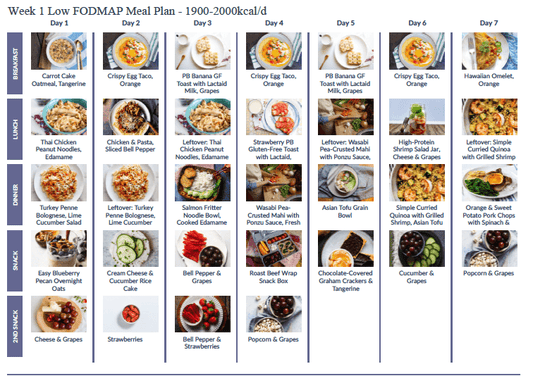
Week 1: Simplify Meals, Reduce High-FODMAP Hot Spots, Track Triggers
For 7 days, simplify and remove the biggest high-FODMAP offenders. Keep meals boring on purpose.
Focus your plate on:
Proteins: eggs, chicken, turkey, fish, firm tofu
Carbs: rice, potatoes, oats, quinoa
Vegetables: carrots, zucchini, spinach, cucumber, bell peppers
Fruits (small servings): strawberries, grapes, oranges, kiwi
Fats (small amounts): olive oil, avocado in a measured portion (avocado can be FODMAP-sensitive in larger servings)
Common "hot spots" to pause:
Onion and garlic (including powders in seasonings and sauces)
Wheat-based wraps/breads as a main staple
Beans/legumes and large servings of broccoli/cauliflower
Regular milk, ice cream, soft cheeses if lactose-sensitive
Sugar alcohols (sorbitol, mannitol, xylitol), inulin/chicory root fiber
Tracking (keep it simple):
Meal time
What you ate (especially sauces, sweeteners, and portion size)
Symptoms 1–6 hours later (bloating, nausea, reflux, stool pattern)
Week 2: Stabilize, Build A Repeatable Menu, Prep For Reintroduction
In week 2, keep the foods that worked and build a repeatable menu you can rotate.
A practical structure:
Two "default breakfasts" you can eat even on nausea days
Two to three go-to lunches
Three simple dinners
Two safe snacks
This is also the week to clean up hidden FODMAP exposures:
Swap garlic/onion powders for infused oils or green onion tops/chives
Check protein bars and powders for sugar alcohols and added fibers that ferment
Watch portion creep (a low FODMAP food can become high FODMAP at a larger serving)
By the end of week 2, you should have fewer variables, and a better baseline for reintroduction.
Low FODMAP Food Swaps For Common GLP-1 “Problem Meals”
You don't need a brand-new personality to eat low FODMAP on Ozempic. You need a few strategic swaps in the places that cause the most trouble: coffee add-ins, sauces/seasonings, and "diet" snacks.
Breakfast And Coffee Add-Ins (Dairy, Sweeteners, Creamers)
Common problem: nausea plus bloating after coffee.
Try swaps like:
Regular milk or creamers → lactose-free milk, small amounts of half-and-half if tolerated, or an unsweetened non-dairy milk without inulin/chicory
Flavored creamers → simple ingredients, lower fat, smaller portions
"Honey" or high-fructose sweeteners → maple syrup in small amounts or a tolerated sweetener
Protein coffee with sugar alcohols → a simpler protein option without polyols
If coffee worsens reflux, the issue may be acidity and timing more than FODMAPs. Having coffee with food (not on an empty stomach) and reducing volume can help.
Lunch And Dinner Shortcuts (Sauces, Garlic/Onion, Wheat, Beans)
Common problem: you eat "normal healthy" and feel inflated for hours.
Try swaps like:
Garlic/onion base → garlic-infused oil (FODMAPs aren't oil-soluble), chives, green onion tops, asafoetida (hing)
Wheat pasta → rice pasta or quinoa pasta
Bean-heavy bowls → rice + protein + low FODMAP veg: add beans back later during reintroduction
Store-bought sauces → simpler labels: watch for garlic/onion, HFCS, and polyols
Also consider texture: soups, stews, and softer foods are often easier during the early weeks of dose changes.
Snacks And Desserts (Bars, Protein Shakes, Fruit, Sugar Alcohols)
Common problem: "healthy snacks" that backfire.
Watch out for:
Sugar alcohols (xylitol, sorbitol, mannitol) in gum, candy, bars, and "keto" desserts
Inulin/chicory root fiber and large doses of added fibers
Large servings of high-fructose fruits (apples, mango) and dried fruit
Lower-FODMAP snack patterns:
Lactose-free yogurt with strawberries
Rice cakes with peanut butter
A kiwi (often well-tolerated and helpful for stool regularity)
A simple protein shake with minimal additives
If constipation is your main issue, don't remove all fiber-rich foods at once. Instead, pick tolerable fibers and increase gradually.
Reintroduction While Staying On Ozempic: How To Identify Your Personal Triggers
Reintroduction is where low FODMAP becomes sustainable and personalized. Without this step, you risk staying overly restricted, which can compromise nutrition, especially on a medication that already lowers intake.
The 3-Step Reintroduction Method And What To Record
Use a structured, one-variable approach:
- Choose one FODMAP group to test (example: lactose).
- Test it for 3 days in increasing portions while keeping the rest of your diet stable.
- Take 2–3 days off (back to your baseline) before testing the next group.
What to record:
The exact food and portion
Timing (especially relative to your Ozempic dose day)
Symptoms (bloating, pain, reflux, stool changes)
Severity and how long it lasts
Because GLP-1 medications slow motility, symptoms may show up later than you expect. Give yourself a wider observation window (sometimes 24 hours).
Common FODMAP Challenges For GLP-1 Users (Fructans, Lactose, Polyols)
Three groups frequently matter on GLP-1 therapy:
Fructans (wheat, onion, garlic): common in everyday foods and seasonings, and often strongly associated with bloating.
Lactose (milk, some yogurts, ice cream): can be subtle until your digestion slows.
Polyols (sugar alcohols): these are notorious for gas and diarrhea, and they're everywhere in "diet" products.
If you identify one or two clear triggers, that's a win. The goal isn't a perfect gut. It's a predictable gut.
When To Get Extra Support And What To Ask Your Clinician
If you're doing the basics, smaller meals, lower fat, simpler carbs, hydration, gradual fiber, and symptoms still feel out of proportion, that's not a willpower issue. It's a signal to get more support.
Red Flags, Medication Timing Questions, And Side-Effect Triage
Bring specific, practical questions to your prescribing clinician:
Is my dose escalation pace appropriate given my symptoms?
Are any of my other medications or supplements worsening constipation or nausea?
Do my symptoms suggest reflux, severe constipation, or possible delayed gastric emptying beyond expected?
What's your plan if constipation lasts more than a few days or I can't maintain hydration?
Seek more urgent care if symptoms are severe, persistent, or paired with significant pain, repeated vomiting, or inability to pass stool or gas.
How A GI-Focused Dietitian Or IBS Testing Can Clarify The Next Step
A dietitian trained in GI disorders can help you:
Run low FODMAP properly (so you don't get stuck in restriction)
Meet protein and micronutrient targets during GLP-1 weight loss
Build a reintroduction map that fits your lifestyle
Depending on your history, your clinician may also consider testing or evaluation for other contributors (for example, celiac disease, inflammatory bowel disease red flags, or other GI conditions). Testing isn't always necessary, but it can be clarifying when symptoms are persistent or atypical.
Conclusion
Low FODMAP for Ozempic isn't about dieting harder. It's about reducing the specific carbohydrates most likely to ferment and bloat when your gut is moving more slowly, while still protecting the priorities that matter on GLP-1 therapy: adequate protein, tolerable fiber, hydration, and a plan you can live with.
If you do a short reset, make smart swaps in the highest-impact places (coffee add-ins, sauces, bars), and reintroduce systematically, you'll usually end up with something better than a generic food list: your personal trigger map.
GI side effects don't have to be the price of admission for GLP-1 therapy. Casa de Sante offers physician-formulated gut support products built for the specific digestive challenges these medications create. Explore your options at casadesante.com.
This article is for educational purposes only and is not medical advice. Always consult your healthcare provider before making changes to your treatment plan.
Low FODMAP Diet and Ozempic: Frequently Asked Questions
Why does Ozempic cause gastrointestinal side effects like bloating and nausea?
Ozempic slows gastric emptying, meaning food stays longer in your stomach and intestines. This delay can cause nausea, bloating, constipation, and reflux due to slower digestion and increased fermentation of certain carbohydrates.
How can a low FODMAP diet help reduce Ozempic side effects?
A low FODMAP diet limits fermentable carbohydrates that can cause gas and bloating. By reducing these foods temporarily, it helps calm GI symptoms like bloating, gas, and diarrhea related to Ozempic's slower gut motility.
What types of foods should I avoid on a low FODMAP diet while taking Ozempic?
Avoid high-FODMAP foods such as onions, garlic, wheat products, beans, certain fruits like apples and mango, lactose-containing dairy, and sugar alcohols found in many diet snacks and protein bars to reduce fermentation and GI discomfort.
Can I eat normally after the low FODMAP diet reset while on Ozempic?
After a short 2-week low FODMAP reset, you should reintroduce foods gradually to identify personal triggers. This personalized approach prevents unnecessary restrictions while managing GI symptoms effectively during Ozempic therapy.
What are practical tips for combining a low FODMAP diet with Ozempic nutrition goals?
Focus on smaller, frequent protein portions like chicken or fish, prioritize soluble fiber (e.g., oats, kiwi), stay well-hydrated, limit fats and carbonation, and avoid large meals to reduce nausea and constipation while maintaining nutrition on Ozempic.
When should I seek medical help for GI symptoms while taking Ozempic?
Contact your healthcare provider immediately if you experience severe abdominal pain, persistent vomiting, dehydration signs, no bowel movement accompanied by swelling and pain, bloody stools, or vision changes, as these could indicate serious complications beyond typical side effects.