Low FODMAP On GLP-1s: A Practical Plan To Reduce Nausea Without Undereating (2026)








If you're on semaglutide, tirzepatide, or another GLP-1 medication and the nausea is wearing you down, you're not imagining it, and you're not "doing it wrong." GLP-1s change how quickly food moves through your stomach and how your brain interprets fullness. That combo can make normal meals feel suddenly intolerable.
A low FODMAP diet isn't a magic anti-nausea switch. But for a lot of people, it's a surprisingly practical way to reduce the bloating, gas, and abdominal distension that can amplify GLP-1 nausea, especially on dose-escalation weeks or when your appetite is low and every bite has to count.
Below is a GLP-1-friendly, low FODMAP plan that prioritizes tolerability and protein so you can feel steadier without accidentally sliding into undereating.
Why GLP-1 Medications Commonly Trigger Nausea
GLP-1 receptor agonists help with weight loss partly because they reduce appetite and slow gastric emptying (how fast food leaves your stomach). Those effects can be therapeutic, and also the reason nausea shows up so often, particularly as doses rise. In clinical trials of higher-dose semaglutide used for weight management, nausea rates increase with dose and are commonly reported early in treatment, then often improve over time.
How Slower Gastric Emptying, Dose Changes, And Food Choices Interact
Think of your stomach like a funnel. GLP-1 medications narrow the "outflow," so food sits longer. When you combine that with:
- a recent dose increase
- a large meal (even if it's "healthy")
- high-fat or fried foods (fat slows emptying even more)
- spicy, very sugary, or rich foods
…you can end up with a stomach that feels overly full, heavy, and unsettled. Some people describe it as motion sickness. Others feel a persistent "food just sitting there" sensation.
Smaller portions and lower-fat meals tend to be better tolerated because they reduce the volume and the time food lingers in the stomach.
When Nausea Signals Constipation, Reflux, Or Dehydration Instead
Not all GLP-1 nausea is purely "the medication." Common look-alikes include:
- Constipation: Slower gut motility (movement through the intestines) plus reduced food intake can back things up. Constipation can cause bloating and a queasy, off appetite.
- Reflux (GERD): Food sitting longer increases the chance of acid reflux, which can present as nausea, sour taste, throat clearing, or burning.
- Dehydration: Eating less often means you may also drink less. Mild dehydration can worsen nausea and headaches and make constipation more likely.
If your nausea is paired with infrequent stools, hard stools, straining, worsening heartburn, or dizziness, addressing those drivers can make a bigger difference than swapping foods alone.
What A Low FODMAP Diet Can (And Can’t) Do For GLP-1 Nausea
A low FODMAP diet reduces specific fermentable carbohydrates (FODMAPs) that can draw water into the gut and ferment, creating gas. It's often used for IBS because it can reduce bloating, pain, and distension.
On GLP-1 therapy, that matters because slower digestion can give fermentable foods more time to produce gas, so the same meal that used to be fine may suddenly feel "too big" in your abdomen.
The Gut-Trigger Overlap: Gas, Bloating, And Distension That Worsen Nausea
Nausea isn't only a stomach/brain signal. Mechanical pressure plays a role too.
If a high-FODMAP meal causes:
- bloating
- distension (your abdomen feels stretched)
- trapped gas
…that pressure can amplify nausea, worsen reflux, and make it harder to eat enough protein and fluids.
This is where a low FODMAP approach can help: not by overriding the medication's central nausea pathways, but by reducing one of the major "volume and pressure" contributors.
When Low FODMAP Isn't The Right Lever (And What To Try First)
Low FODMAP isn't always the first move. Consider starting with basics if you haven't already:
- Portion reduction (smaller, more frequent meals)
- Lower-fat choices (especially on nausea-prone days)
- Slower eating and stopping at "comfortable," not "full"
- Hydration and electrolytes (especially if you're eating less)
Low FODMAP also may not fix nausea that's primarily driven by:
- a recent dose increase that your body hasn't adapted to yet
- taking the medication on a day you barely ate
- significant reflux that needs targeted management
- constipation that's creating upstream pressure
In other words: if your nausea is mainly dose-titration-related, low FODMAP can support comfort, but you'll still want to talk with your prescriber about pacing, timing, and side-effect strategies.
A GLP-1-Friendly Low FODMAP Approach: Phases, Timing, And Simplifications
The classic low FODMAP diet has phases. The GLP-1-friendly version keeps the spirit of the method (reduce fermentable triggers) without accidentally pushing you into overly restrictive eating, because on GLP-1s, restriction can happen fast without you noticing.
Short-Term "Rescue" Version Vs. Full Elimination And Reintroduction
You have two reasonable options depending on how you feel and how long symptoms have been going on.
Rescue version (2–7 days)
Use this when you're in a nausea flare and need a "calm stomach" pattern quickly.
- Choose mostly low FODMAP, bland, lower-fat foods
- Keep portions small
- Focus on protein you can tolerate
- Skip the deep tracking: the goal is stability
Full low FODMAP (typically 2–6 weeks elimination, then reintroduction)
Use this when bloating/gas/distension is a consistent problem, not just an occasional bad day.
- Elimination phase: remove major high-FODMAP groups temporarily
- Reintroduction phase: test one FODMAP category at a time
- Personalization phase: build your long-term diet around what you tolerate
Timing tip: if possible, don't start a full elimination phase the same week you increase your GLP-1 dose. It's hard to tell what's helping (or worsening) when two variables change at once.
How To Reintroduce Without Flaring Nausea Or Losing Momentum
Reintroduction is where people often get stuck, especially on GLP-1s.
A nausea-conscious reintroduction approach:
- Reintroduce when your GLP-1 dose has been stable for at least 1–2 weeks, if feasible
- Test one food at a time, earlier in the day (so reflux/nausea is easier to monitor)
- Keep the rest of the day "safe" and simple
- Start with a small portion, then scale up over 2–3 days
If nausea flares, don't assume you "failed." You're collecting data. You may simply need:
- a smaller threshold portion
- a different form of the food (cooked vs raw)
- more spacing from injection day
If you have a history of IBS or significant food anxiety, consider working with a registered dietitian familiar with low FODMAP so the process stays structured and not overly restrictive.
The Best Low FODMAP Foods For Nausea Days (And What To Limit)
On nausea days, "healthy" can backfire if it's too fibrous, too fatty, or too fermentable. Your goal is gentle calories, steady protein, and minimal gut turbulence.
Softer, Smaller Meals: Carbs, Proteins, And Fats That Usually Sit Better
These are commonly better tolerated when your stomach feels slow and sensitive:
Carbs (gentle, low FODMAP)
- Oatmeal (made with lactose-free milk or water)
- White rice or rice porridge/congee style
- Potatoes (baked, boiled, mashed)
- Gluten-free toast or sourdough spelt in small amounts, depending on tolerance
- Rice cakes
Proteins (lower-fat and easy to portion)
- Eggs (scrambled, hard-boiled)
- Chicken or turkey breast
- White fish
- Firm tofu
- Lactose-free Greek yogurt or cottage cheese (if you tolerate dairy)
- Protein smoothies made with low FODMAP fruit and lactose-free yogurt/milk
Fats (keep them modest)
- Small amounts of olive oil
- A thin layer of peanut butter
- A small portion of nuts that are typically low FODMAP (for example, macadamias)
If fat is a major nausea trigger for you, treat fat like seasoning, not the main event.
Common High-FODMAP And High-Nausea Triggers To Watch (Even If "Healthy")
Some foods are nutritious but can be rough on GLP-1 digestion, especially during dose increases:
- Onion and garlic (very common hidden triggers in sauces, soups, and restaurant food)
- Wheat-based pasta and breads (often higher in fructans)
- Beans and lentils (fermentable: gas-producing)
- Apples, pears, mango (higher FODMAP fruits)
- Cauliflower (can be very gassy)
- Honey and high-fructose sweeteners
- Cashews and pistachios
- Avocado (can be high FODMAP at typical portions, and the fat can worsen nausea)
Also watch "double triggers":
- Big salads: raw volume + fermentable ingredients
- High-fat "clean" meals: nuts + avocado + olive oil + salmon all at once can be too much when gastric emptying is slowed
- Sugar alcohols in protein bars/gum (can cause diarrhea and bloating)
If a food reliably worsens symptoms, you don't need to force it just because it's on a wellness list.
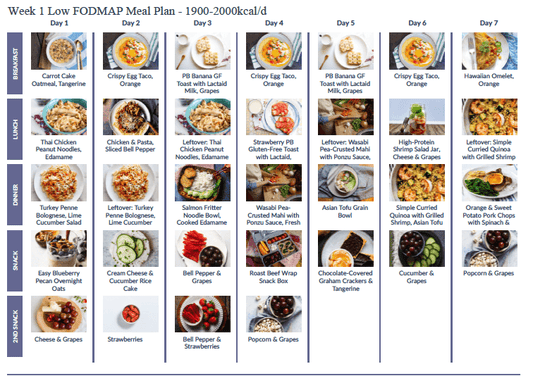
Sample 3-Day Low FODMAP Meal Pattern For GLP-1 Nausea
This pattern is meant to be a template, not a rigid prescription. Portions should be small enough to feel comfortable, with the option to add a mini-snack if you can't finish a meal.
Day-By-Day Templates For Breakfast, Lunch, Dinner, And Snacks
Day 1
- Breakfast: Oatmeal with banana and lactose-free milk
- Snack: Rice cake with peanut butter
- Lunch: Grilled chicken, white rice, carrots
- Dinner: Baked fish, potatoes, spinach
Day 2
- Breakfast: Eggs with gluten-free toast
- Snack: Cucumber slices
- Lunch: Turkey with quinoa and a small salad made from low FODMAP vegetables (keep it modest)
- Dinner: Firm tofu stir-fry with zucchini and bell peppers (go easy on oil)
Day 3
- Breakfast: Smoothie with strawberries and lactose-free yogurt
- Snack: Macadamia nuts (small handful)
- Lunch: Tuna salad (canned in oil, drained) with rice
- Dinner: Lean beef with mashed potatoes
If you notice morning nausea is worse, flip the pattern: make breakfast smaller and shift calories later in the day.
Hydration And Electrolytes: What To Sip When Plain Water Turns Your Stomach
Many people on GLP-1s tell me plain water suddenly feels "heavy" or nausea-provoking. You still need hydration, and a little strategy helps.
Options that are often easier to tolerate:
- Cold electrolyte drinks (choose lower-sugar options)
- Warm ginger tea or peppermint tea (if peppermint doesn't worsen reflux for you)
- Broth (also adds sodium)
- Ice chips or very small sips taken consistently
Practical hydration cue: aim for pale-yellow urine most of the day. If it's consistently dark, you're probably behind.
If you're vomiting or can't keep fluids down, that's not a "push through it" situation, see the medical help section below.
How To Prevent Undereating While Managing Nausea
GLP-1 nausea can create a quiet problem: you eat less not only because you're full, but because you're trying to avoid feeling sick. Over time, that can increase fatigue, worsen constipation, and raise the risk of lean mass (muscle) loss.
Protein Targets, Texture Hacks, And Timing Around Injections
Protein is the most important macronutrient to protect while losing weight, especially if your overall intake is lower.
A practical target for many people is 20–30 grams of protein per meal, adjusted for your body size, activity level, and clinician guidance.
Make protein easier to tolerate:
- Use soft textures: scrambled eggs, yogurt, blended smoothies, tender fish
- Go "protein first" in small amounts, then add carbs as tolerated
- Try mini-meals: two smaller protein hits can be easier than one large plate
Timing tip: some people do better eating a gentle meal 1–2 hours after the injection (rather than immediately before or right after), but individual response varies. Track patterns for two weeks before changing your whole routine.
Constipation-Proofing: Low FODMAP Fiber Options And Gentle Routines
Constipation is one of the biggest nausea multipliers on GLP-1s.
Low FODMAP fiber options that many people tolerate:
- Oats/oatmeal
- Kiwi
- Chia seeds (small amounts, with adequate fluid)
- Carrots
- Potatoes with skin (if tolerated)
- Psyllium fiber (introduced slowly, with plenty of water)
Gentle routines that support motility:
- A short walk after meals
- Consistent meal timing (your gut likes predictability)
- Adequate fluids and electrolytes
If you're significantly constipated, escalating fiber too quickly can worsen bloating. Slow and steady usually wins here.
Special Considerations For Perimenopause And Menopause On GLP-1s
If you're in perimenopause or menopause, nausea on GLP-1s can feel more disruptive because sleep, stress physiology, and temperature regulation are already in flux. The result is often a tighter appetite–gut loop: you sleep poorly, nausea feels worse, you eat less, constipation worsens, and the cycle continues.
Nausea, Sleep, Stress, And Hot Flashes: The Appetite–Gut Connection
Poor sleep and higher stress can increase GI sensitivity and worsen nausea perception. Hot flashes and night sweats can also contribute to dehydration, which then worsens constipation and appetite.
What tends to help (without turning this into a complicated project):
- Front-load hydration earlier in the day
- Keep a simple, repeatable dinner that you know you tolerate
- Consider whether reflux is waking you (late meals and higher-fat dinners can be triggers)
If you're also adjusting hormone therapy or supplements, it's worth noting timing changes, because multiple overlapping shifts can muddy the symptom picture.
Supporting Muscle And Bone While Staying Low FODMAP
Midlife weight loss can be a win for metabolic health, but it raises the stakes for strength and bone support.
Low FODMAP-friendly building blocks:
- Protein: eggs, fish, poultry, firm tofu, lactose-free Greek yogurt
- Calcium and vitamin D sources: lactose-free dairy or fortified alternatives (check labels for added inulin/chicory root, which can be high FODMAP)
- Strength training: even brief, consistent sessions help signal your body to keep muscle
If nausea is limiting your intake, prioritize protein and calcium-containing foods first, then fill in with tolerated carbs and vegetables.
When To Call Your Prescriber Or Get Medical Help
Most GLP-1 nausea is manageable, especially with slower titration and supportive routines. But you should involve your prescriber sooner rather than later if symptoms are persistent or escalating.
Red Flags, Dose-Titration Issues, And Medication Interactions To Mention
Call your prescriber promptly if you have:
- severe or persistent vomiting
- signs of dehydration (dizziness, fainting, very dark urine, inability to keep fluids down)
- worsening abdominal pain, persistent severe bloating, or symptoms that feel different than your usual pattern
- inability to eat enough for multiple days
Also bring up:
- recent dose increases and exactly when symptoms started
- constipation severity and frequency of bowel movements
- reflux symptoms (burning, regurgitation, cough/hoarseness)
- any other medications or supplements that can worsen nausea or slow motility (your clinician can assess interactions and timing)
If nausea is preventing you from functioning, it's not a willpower issue. It's a tolerability issue, and your dose, titration schedule, timing, or supportive care plan may need adjustment.
Conclusion
Using a low FODMAP diet for GLP-1 nausea works best when you treat it as a tool, not a lifestyle sentence. Start with the simplest lever: smaller, lower-fat meals and better hydration. If bloating and gas are clearly amplifying your nausea, a short low FODMAP "rescue" pattern can calm things down fast. And if symptoms are persistent, a structured elimination and reintroduction can help you pinpoint what your gut is actually reacting to, without shrinking your diet more than necessary.
Digestive discomfort is one of the most common reasons people struggle with GLP-1 medications. Targeted nutrition support can make a real difference in tolerability. Casa de Sante's physician-formulated digestive enzymes, synbiotics, and motility support supplements are designed specifically for sensitive stomachs on GLP-1 therapy. See what's available at casadesante.com.
This article is for educational purposes only and is not medical advice. Always consult your healthcare provider before making changes to your treatment plan.
Frequently Asked Questions About Low FODMAP Diet and GLP-1 Nausea
Why does GLP-1 medication cause nausea?
GLP-1 medications like semaglutide slow gastric emptying and alter brain signals of fullness, causing food to stay longer in the stomach and triggering nausea, especially at higher doses during dose escalation.
How can a low FODMAP diet help reduce nausea related to GLP-1 medications?
A low FODMAP diet reduces fermentable carbohydrates that cause gas and bloating, which can worsen nausea from GLP-1 slowed digestion by decreasing abdominal pressure and discomfort.
What foods should I eat on a low FODMAP diet to manage GLP-1 nausea?
Choose gentle, low FODMAP foods like oatmeal with lactose-free milk, white rice, potatoes, eggs, chicken breast, firm tofu, and lactose-free yogurt, while avoiding high-FODMAP triggers like onion, garlic, beans, apples, and cauliflower.
When should I consider a short-term low FODMAP 'rescue' versus full elimination?
Use a 2–7 day low FODMAP 'rescue' during nausea flares for quick relief. For persistent bloating and gas, a full 2–6 week elimination and reintroduction phase is recommended, ideally avoiding starting during dose increases.
What are practical tips to prevent undereating while managing GLP-1 nausea?
Focus on smaller, lower-fat meals, prioritize 20–30 grams of protein per meal with soft textures, space meals 1–2 hours after injections, and maintain hydration to support appetite and prevent muscle loss.
When should I contact my healthcare provider about GLP-1 nausea?
Seek medical advice if you experience severe vomiting, dehydration symptoms, worsening abdominal pain, inability to eat for several days, or if nausea persists despite adjustments, as dose or medication changes may be needed.