GLP-1 Maintenance Dose Strategy: How To Hold Your Results With Fewer Side Effects In 2026








You've done the hard part: you started a GLP-1 medication, made it through the dose increases, and watched the scale (and your cravings) finally calm down. Then a new question shows up, usually right when life gets busy again.
Now what? What dose do you stay on to maintain your results… without living with nausea, constipation, reflux, or that "I can't eat anything" feeling?
A smart glp1 maintenance dose strategy is less about chasing the lowest number on the scale and more about finding your lowest effective dose, the smallest amount that keeps appetite, portions, and metabolic risk stable with tolerable side effects. And in 2026, with more people staying on therapy longer-term, maintenance is where most of the real-life nuance lives.
What “Maintenance” Means On GLP-1s (And Why It’s Not One-Size-Fits-All)
Maintenance on GLP-1 therapy means you're aiming to hold onto your weight loss and metabolic improvements with a dose and routine you can realistically sustain.
A key mindset shift: maintenance is not "stopping weight loss." It's maintaining control, over hunger, cravings, and the easy slide back into old portion sizes, while keeping side effects and nutrition issues in check.
GLP-1 maintenance also isn't one-size-fits-all because:
- Different medications have different dose ranges and pharmacology. For example, semaglutide weight-loss dosing is commonly in the 1.7 mg to 2.4 mg weekly range, while tirzepatide weight-loss dosing spans wider (often 5 mg to 15 mg weekly).
- Your underlying metabolic risk (prediabetes, PCOS, fatty liver, sleep apnea) changes how much "anti-hunger" support you may need.
- Your lifestyle baseline matters more than most people want to admit, protein intake, strength training, alcohol, sleep, and stress can either buffer maintenance or make it fragile.
Weight Loss Phase Vs Maintenance Phase Expectations
In the weight loss phase, dosing is often titrated upward to a max tolerated or maximally effective dose. The goal is continued fat loss and improved glycemic control (blood sugar regulation).
In the maintenance phase, the goal changes:
- Weight trend is stable over time (not necessarily the exact same weight every day).
- Hunger is predictable and manageable.
- You can eat enough to meet protein and micronutrient needs.
- Side effects are minimal enough that you can live your life.
You may still lose a little weight in early maintenance, especially if you're improving nutrition and strength training. But the expectation is steadier: fewer surprises, fewer "bad GI weeks," and fewer big swings in appetite.
Common Reasons People Regain Without A Plan
Regain is not a character flaw. It's usually a systems problem.
Common reasons people regain when they don't have a maintenance plan include:
- The medication effect wanes when the dose is reduced too quickly or below your therapeutic threshold (your personal "works for me" floor).
- Appetite returns before your routine is strong enough to support it (protein, meal timing, strength training, sleep).
- You unintentionally under-eat on GLP-1s, lose lean mass (muscle), then burn fewer calories at rest, making maintenance harder.
- GI side effects push you into a pattern of tolerating only small, low-protein "safe foods," which can backfire over time.
A good maintenance strategy anticipates these predictable problems instead of reacting after the scale jumps.
Who Typically Needs A Higher Or Lower Maintenance Dose
There isn't a single "correct" maintenance dose. There's the dose that keeps you stable.
In general, people tend to need a higher maintenance dose when their biology is pushing harder toward weight regain, and a lower maintenance dose when their routine is strong and side effects are a limiting factor.
Perimenopause/Menopause Considerations (Appetite, Sleep, Body Composition)
Perimenopause and menopause can change the maintenance equation because fluctuating and then declining estrogen affects:
- Appetite signaling and cravings (especially stress and sleep-related eating)
- Sleep quality and daytime fatigue
- Body composition (more central fat gain, more muscle loss risk)
If your sleep is fragmented, your stress is higher, and strength training isn't consistent, you may notice that appetite "breaks through" more easily at lower doses.
This doesn't mean you've failed. It means your maintenance strategy should account for hormonal life stage and muscle preservation, not just the scale.
Metabolic Risk Factors: Prediabetes, PCOS, Fatty Liver, Sleep Apnea
Certain conditions are strong predictors that you may need more medication support in maintenance:
- Prediabetes or type 2 diabetes risk: appetite control and glycemic control are linked.
- PCOS: insulin resistance and appetite dysregulation can make regain easier.
- Fatty liver disease (MASLD/NAFLD): metabolic dysfunction often runs deeper than weight alone.
- Obstructive sleep apnea: poor sleep drives hunger hormones and cravings, and untreated apnea makes maintenance harder.
In these situations, aiming for the lowest possible dose at all costs can be the wrong goal. The better goal is the lowest effective dose that keeps your risk markers stable.
Lifestyle Baseline: Protein Intake, Strength Training, Alcohol, Stress
Your "maintenance dose requirement" often drops when your lifestyle baseline rises.
A few patterns clinicians see over and over:
- Higher protein intake supports satiety and protects lean mass.
- Strength training improves insulin sensitivity and helps prevent weight regain.
- Alcohol can worsen reflux, sleep, cravings, and decision fatigue.
- Chronic stress raises the odds you'll graze, snack, or under-sleep, then feel hungrier.
If you've built a consistent routine, you may be able to maintain on less medication. If your routine is inconsistent or your life is in a high-stress season, a higher maintenance dose may be the more stable, safer choice (because it prevents the "two months off track" spiral).
The 3 Most Common Maintenance Approaches (With Pros And Cons)
Most maintenance strategies fall into three buckets. None is universally best. The right choice is the one that maintains your results while keeping side effects and quality of life acceptable.
Stay On The Effective Dose (Steady-State Maintenance)
This approach means you remain on the dose that got you to goal (or the dose where you feel most stable), and you treat that as your long-term plan.
Pros:
- Most predictable appetite and weight stability
- Often the least mentally taxing (fewer changes to monitor)
- May better support ongoing metabolic risk reduction
Cons:
- Side effects may persist at a higher rate (constipation, nausea, reflux)
- Cost and access can be challenging
- Some people struggle to eat enough protein and overall nutrition at higher doses
Step Down Gradually (Lowest Effective Dose Maintenance)
This is the classic glp1 maintenance dose strategy: taper down in steps until you find the lowest dose that still works.
Pros:
- Often reduces GI side effects over time
- Can improve your ability to meet protein, fiber, and micronutrient needs
- Helps you personalize the minimum effective dose rather than guessing
Cons:
- If you step down too fast, hunger can rebound
- You need more tracking and follow-up during transitions
- Some people end up needing to step back up, which can feel discouraging (even when it's simply data)
Extend The Interval (Longer Time Between Doses)
Instead of lowering the dose amount, some people keep the same dose but take it less frequently (for example, every 10 to 14 days).
Pros:
- Fewer injections and potentially lower cost
- Some people feel better GI-wise when they have more time between peaks
Cons:
- Often off-label depending on the medication and plan
- Hunger and cravings may surge as drug levels fall near the end of the interval
- Weight can become "choppy," with good days and then harder days
If you're considering interval extension, it's worth discussing the pharmacology with your prescriber. The question is not just "Can I?" but "What happens to appetite control and side effects when blood levels drop?"
A Practical Step-Down Protocol To Discuss With Your Prescriber
If your goal is fewer side effects with stable results, gradual step-down is often the most logical place to start. The key word is gradual.
The exact taper depends on your medication, your current dose, and your medical history. But you can walk into your appointment with a practical framework.
When To Start Tapering: Readiness Signals Beyond The Scale
The scale alone can be misleading. Better "readiness signals" include:
- Your weight trend has been stable for at least 4 weeks (small fluctuations are normal).
- Hunger is present but manageable. You're not relying on zero appetite to stay on plan.
- Your GI side effects are either controlled or you have a clear pattern and plan.
- You can consistently hit protein and hydration goals most days.
- Your routine feels repeatable (sleep schedule, meal structure, movement).
If you're still white-knuckling nausea, skipping meals, or living on crackers, it may be too soon to step down. Not because you can't, but because you won't get clean data about whether the lower dose "doesn't work" versus you're undernourished and dysregulated.
Suggested Taper Timeline And Checkpoints (4–12 Weeks Per Step)
A conservative taper often looks like staying at each new step long enough to see a real pattern, typically 4 to 12 weeks.
Here's a clinician-style way to think about it (not a prescription):
- Hold your current dose steady for about 4 weeks as a baseline.
- Reduce by one standard step (or roughly 10% to 20% depending on what dosing options exist).
- Stay there for 4 to 12 weeks.
- Reassess using objective markers (not just one tough week).
If you regain quickly, your prescriber may recommend returning to the prior effective dose rather than pushing lower.
How To Track Success: Weight Trend, Hunger, Cravings, GI Tolerance, A1C
Maintenance is much easier when you track a few simple signals. You don't need a spreadsheet obsession, just consistent notes.
Consider tracking:
- Weight trend: Use weekly averages rather than day-to-day numbers.
- Hunger and cravings: A quick 0–10 rating at the same time daily can be surprisingly helpful.
- GI tolerance: Constipation, reflux, nausea, and bloating days per week.
- Food quality: Especially protein consistency (did you meet a reasonable target most days?).
- Labs when appropriate: A1C (three-month blood sugar average), fasting glucose, lipids, liver enzymes.
If your A1C or other metabolic markers were part of why you started, maintenance should protect those improvements, not just your clothing size.
Managing Side Effects While Finding Your Maintenance Dose
Side effects are often the limiting factor in long-term GLP-1 use. The tricky part is that the same symptom (like nausea) can come from different causes: dose too high, meals too large, meals too fatty, dehydration, constipation, or reflux.
So the most helpful approach is usually to adjust the basics first before assuming the medication has to be stopped.
Constipation, Reflux, Nausea, Bloating: What To Adjust First
If you want the highest return on effort, start here:
- Meal size: Smaller portions more often tends to be better tolerated than one large meal.
- Fat load: Very high-fat meals can worsen nausea and reflux on GLP-1s.
- Timing: Avoid lying down soon after eating if reflux is an issue.
- Hydration: Constipation on GLP-1s is often dehydration plus slowed motility (slower gut movement).
- Gentle movement: A short walk after meals can help reflux and bloating.
If constipation is present, address it early. Constipation can amplify nausea, reduce appetite further, and make you feel "full" in an uncomfortable way.
Protein, Fiber, And Hydration Targets That Don't Wreck Your Stomach
You'll hear plenty of aggressive targets online. In real life, the best target is the one you can meet consistently without worsening symptoms.
Practical, gut-friendlier principles:
- Protein: Spread it out. Many people tolerate 25–35 grams per meal better than a single huge bolus. If appetite is low, protein shakes can be a useful bridge.
- Fiber: Increase slowly. Fiber helps constipation, but rapid increases can worsen bloating. For sensitive guts, soluble fiber is often better tolerated than a sudden jump in rough insoluble fiber.
- Hydration: Aim for steady intake across the day. A common clinical goal is around 64 ounces daily, but your needs vary with body size, sweat, and medications.
If you're hitting protein but your stomach is miserable, it's worth evaluating the form. Some people do better with whey isolate, others with vegan blends, and many do best when the product is designed for sensitive digestion.
Low-FODMAP-Friendly Meal Patterns For GLP-1 Users With Sensitive Guts
A low FODMAP approach can be helpful if your GLP-1 is unmasking IBS-like symptoms (gas, bloating, urgency) or if you already know you have a sensitive gut.
A few meal-pattern ideas that tend to work well on GLP-1 therapy:
- Build meals around a simple protein plus a low-FODMAP carb and a cooked vegetable.
- Choose cooked produce more often than raw if bloating is an issue.
- Keep "trigger stacks" low: a large meal that's high fat plus high FODMAP plus carbonated beverages is a perfect storm for reflux and bloating.
Examples of generally low-FODMAP-leaning options (portions matter):
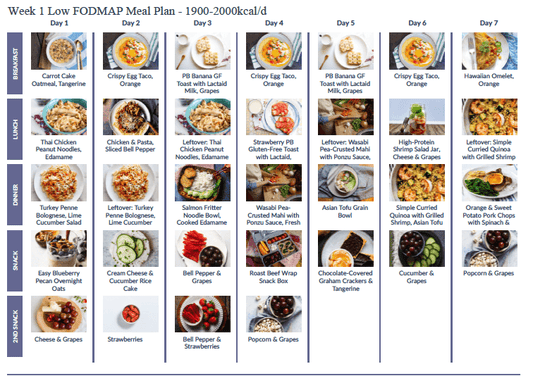
- Breakfast: lactose-free Greek yogurt with strawberries: or eggs with spinach and sourdough
- Lunch: chicken and rice with zucchini: or tuna with potatoes and cucumber
- Dinner: salmon with quinoa and carrots: or turkey with polenta and green beans
If you notice bloating spikes after specific foods, that's useful data for maintenance. The goal isn't dietary perfection, it's repeatable meals that keep your GI tract calm so you can actually stay consistent.
Red Flags: When Maintenance Symptoms Mean You Should Call Your Clinician
Maintenance should feel more stable than the escalation phase. If things are getting worse, or if you're seeing certain symptoms, it's worth calling your clinician rather than trying to "push through."
Signs Of Undereating, Dehydration, Or Gallbladder/Pancreas Concerns
Call your clinician promptly if you're experiencing:
- Signs of dehydration: dizziness, fainting, very dark urine, inability to keep fluids down
- Signs you may be under-eating: persistent weakness, hair shedding that's accelerating, frequent lightheadedness, inability to meet basic nutrition for days
- Severe or persistent abdominal pain, especially right upper abdominal pain (possible gallbladder concern) or pain that feels intense and deep and doesn't resolve
- Repeated vomiting or inability to tolerate any oral intake
GLP-1 medications have known associations with gallbladder issues in the context of rapid weight loss, and rare pancreatic concerns have been reported. Most GI side effects are manageable, but severe pain or persistent vomiting is not something to self-manage.
When Weight Regain Signals A Dose Issue Vs A Habit/Stress Issue
A little fluctuation is normal. What you're watching for is pattern and speed.
Regain may signal a dose issue when:
- Hunger and cravings rebound sharply soon after a dose reduction
- You're doing the same routine, but portion sizes feel unmanageably large again
- You see a steady upward trend over several weeks even though consistency
Regain may be more habit/stress-driven when:
- Sleep worsens, stress spikes, alcohol increases, or strength training drops off
- You're skipping protein because appetite is low earlier in the day, then overeating at night
- You're eating "whatever goes down" due to nausea, which often means low protein and low fiber
The most useful question is: what changed first, your behavior, your life stress, or your medication level?
That answer often tells you whether the next best step is adjusting dose, tightening your routine, treating side effects more directly, or all of the above.
Conclusion: Build A Maintenance Dose Strategy You Can Sustain
The best glp1 maintenance dose strategy is the one you can live with, physically, financially, and psychologically, while protecting the metabolic improvements you worked hard to earn.
In practice, maintenance is a calibration: enough medication to keep appetite and cravings steady, enough food quality to preserve muscle and micronutrients, and enough GI comfort that you're not constantly reacting to side effects.
GI side effects don't have to be the price of admission for GLP-1 therapy. Casa de Sante offers physician-formulated gut support products built for the specific digestive challenges these medications create. Explore your options at casadesante.com.
This article is for educational purposes only and is not medical advice. Always consult your healthcare provider before making changes to your treatment plan.
GLP-1 Maintenance Dose Strategy: Frequently Asked Questions
What does maintenance mean when using GLP-1 medications for weight management?
Maintenance means keeping your weight stable and controlling appetite with a sustainable GLP-1 dose that balances effectiveness and side effects. It’s about holding weight loss results and metabolic improvements, not stopping progress entirely.
How do I find the right maintenance dose of a GLP-1 medication?
The right maintenance dose is your lowest effective dose that controls hunger and sustains metabolic health with tolerable side effects. Many people use a gradual step-down approach, tapering dosage by 10-20% every 4-12 weeks while monitoring weight, hunger, and side effects closely.
Why might someone need a higher maintenance dose of GLP-1 medication?
Higher doses are often needed for individuals with conditions like prediabetes, PCOS, fatty liver, or sleep apnea, or those with lifestyle factors like low protein intake, no strength training, high alcohol use, or stress. Hormonal changes during perimenopause or menopause can also increase dose requirements.
What are the common strategies for maintaining GLP-1 therapy after weight loss?
There are three common approaches: staying on the effective dose for stability, gradually stepping down to the lowest effective dose to reduce side effects, and extending the interval between doses to reduce injections. Each has pros and cons and should be personalized with your healthcare provider.
How can I manage GLP-1 side effects like nausea or constipation during maintenance?
Managing side effects starts with adjusting meal size, fat intake, hydration (aiming for about 64 ounces daily), and gentle movement after meals. Increasing protein and fiber slowly and following low-FODMAP meal patterns can also support GI comfort and nutrition on GLP-1 therapy.
When should I consult my healthcare provider while on a GLP-1 maintenance dose strategy?
Contact your clinician if you experience rapid weight regain, persistent nausea or vomiting, signs of dehydration, severe abdominal pain, or nutritional deficits like ongoing weakness or hair loss. These may indicate dose adjustments or evaluation for gallbladder or pancreatic issues.