GLP-1 And Gastroparesis: Is It Reversible, Or Just Manageable? (What The Science Suggests In 2026)








If you're on semaglutide or tirzepatide and you suddenly feel like food just sits there, hours of fullness after a small meal, nausea that doesn't match what you ate, reflux that's new for you, it's normal to wonder: is this gastroparesis? And if it is, is gastroparesis from GLP-1 reversible?
Here's the most honest, evidence-informed answer: GLP-1 medications are designed to slow stomach emptying, so some "slowness" is expected. True gastroparesis (delayed gastric emptying without a blockage) is less common, but it has been reported. When symptoms are medication-driven, they often improve as the drug level declines, especially if you catch it early and adjust the plan with your prescriber. But "reversible" can mean different things, and timelines can be frustratingly variable.
Below, you'll learn what gastroparesis actually is, how GLP-1s affect motility, what science suggests about reversibility in 2026, and what practical next steps to take if your symptoms are crossing the line from "expected side effects" to "this isn't okay."
What Gastroparesis Actually Means (And How It Feels Day To Day)
Gastroparesis literally means "stomach paralysis," but in real life it's usually not a complete stop. Clinically, it's defined as delayed gastric emptying (your stomach empties more slowly than expected) in the absence of a mechanical obstruction (no physical blockage like a tumor or severe stricture).
What makes gastroparesis hard is that it doesn't just cause one symptom. It tends to create a cluster of issues that feed into each other:
You get full quickly (early satiety), so you eat less.
You may feel nauseated because food lingers longer.
You can develop reflux or regurgitation because stomach contents are hanging around.
Constipation can worsen because the whole "gut conveyor belt" is slowed.
Your nutrition can quietly take a hit, especially protein and micronutrients.
Day to day, people often describe it as feeling like their stomach has a "traffic jam." Breakfast can still feel present at dinner. That persistent fullness can make it hard to hydrate, hard to meet protein goals, and hard to tell whether you're appropriately "not hungry" from GLP-1 appetite effects versus uncomfortably backed up.
Common Symptoms Vs. Red Flags That Need Urgent Care
There's a difference between common GLP-1 GI side effects and symptoms that should prompt urgent evaluation.
Common (but still worth addressing with your prescriber if persistent):
Nausea, especially around dose increases
Early fullness and reduced meal size tolerance
Bloating or visible abdominal distention
Reflux/heartburn, burping, "food repeating"
Constipation
Red flags (don't tough these out):
Repeated vomiting or inability to keep fluids down for more than about 24 hours
Signs of dehydration: very dark urine, dizziness, fainting, rapid heartbeat
Severe or escalating abdominal pain (especially if it's constant, intense, or radiates to your back)
Blood in vomit or black/tarry stools
Fever with significant abdominal symptoms
Those red flags don't automatically mean gastroparesis. They raise concern for complications or other diagnoses that require prompt assessment.
How Gastroparesis Is Diagnosed (And Why "Slow Digestion" Isn't Always It)
A lot of people say "I have gastroparesis" when what they mean is "GLP-1s make my stomach feel slow." That may be accurate symptom-wise, but the diagnosis has a specific meaning.
Clinicians typically diagnose gastroparesis by:
Confirming symptoms consistent with delayed emptying
Ruling out obstruction (often with imaging or endoscopy when indicated)
Confirming delayed gastric emptying with a gastric emptying study (most commonly gastric emptying scintigraphy)
A gastric emptying test matters because reflux, nausea, constipation, and bloating can also come from:
GERD unrelated to stomach emptying
Gallbladder disease
Thyroid dysfunction
Diabetes-related autonomic neuropathy
Medication side effects beyond GLP-1s
Functional dyspepsia or IBS overlap
In other words, "I'm nauseated and bloated" is real, but it isn't the same as proving delayed emptying without obstruction. Getting the label right helps you and your clinician pick the safest next step.
How GLP-1 Medications Affect Stomach Emptying
GLP-1 receptor agonists (and dual agonists like tirzepatide, which targets GLP-1 and GIP receptors) influence appetite and blood sugar partly by changing how quickly food leaves your stomach.
That's not a bug. It's part of the therapeutic design.
When stomach emptying slows:
You feel full longer.
Post-meal blood sugar rises more gradually.
Your brain receives stronger satiety signaling.
For many people, this is helpful and tolerable. For some, it becomes the dominant side effect.
Why Semaglutide And Tirzepatide Can Trigger Nausea, Fullness, And Reflux
Several mechanisms can stack together:
Slower emptying increases stomach distention, which can trigger nausea.
Large or higher-fat meals tend to linger longer, increasing fullness and reflux risk.
If you lie down soon after eating, reflux can worsen because the stomach stays fuller longer.
Constipation can increase abdominal pressure, which also worsens reflux and bloating.
There's also an important phenomenon seen with GLP-1s: tachyphylaxis, meaning the stomach-emptying slowdown may lessen over time in some individuals as the body adapts. This is one reason clinicians often emphasize slower titration and patience during early weeks.
Temporary Slowdown Vs. True Gastroparesis: What's The Difference?
This is the key distinction for your peace of mind.
Temporary slowdown (pharmacologic effect):
Often closely tied to dose increases
May improve as you stay on a stable dose
May improve with dietary adjustments and constipation management
Often improves with dose reduction or stopping the medication
True gastroparesis (a disorder of motility):
Delayed emptying persists beyond what you'd expect from short-term medication effects
May be associated with underlying nerve dysfunction (for example, long-standing diabetes causing autonomic neuropathy)
May require a more involved GI workup and longer-term management
In real life, there's a gray zone. You can have medication-triggered symptoms that are severe and functionally gastroparesis-like, even if they resolve later. And you can have "unmasking," where GLP-1 therapy reveals an underlying motility problem that was already developing.
Is GLP-1–Associated Gastroparesis Reversible?
For many patients, GLP-1–associated gastroparesis-like symptoms are at least partially reversible, especially when symptoms are primarily medication-driven and addressed early.
What the broader 2026 conversation reflects (including post-marketing reports and case literature) is less "this never gets better" and more "the timeline and definition of better vary."
What "Reversible" Can Mean: Symptom Resolution Vs. Normalized Emptying Tests
When someone asks if gastroparesis from GLP-1 is reversible, they usually mean one of two things:
Symptom resolution: you can eat and drink comfortably again, nausea settles, reflux improves, and constipation becomes manageable.
Normalized gastric emptying: a repeat gastric emptying study shows emptying has returned to expected ranges.
These aren't identical.
You can feel significantly better even before a test would look "perfect," especially if you've adjusted meal structure, treated constipation, and stabilized dosing.
On the flip side, you can have symptoms that feel severe but are driven by reflux, constipation, or food choices (fat/fiber load) more than truly delayed emptying. That's why testing can be helpful when symptoms persist or are severe.
Typical Timeline: Dose Escalation, Plateau, Dose Reduction, Or Stopping
A practical way to think about timeline is to anchor it to dosing changes and medication clearance.
Many people notice symptoms:
After initiation or during dose escalation
After "catch-up eating" (a larger meal than usual)
When constipation creeps in and isn't addressed
If your prescriber slows or pauses titration, symptoms may improve over days to a couple of weeks. If the medication is reduced or discontinued, improvement often tracks with declining drug levels.
Semaglutide has a long half-life (about one week). That means it can take roughly 4 to 5 weeks for most of the drug to clear after the last dose. Clinically, that's why some people don't feel better immediately after stopping: they improve gradually as levels fall.
Tirzepatide is also long-acting, so a similar "give it time" window often applies.
Who's More Likely To Improve Quickly (And Who May Not)
You're more likely to improve relatively quickly if:
Symptoms started soon after a dose increase
You've been on therapy for a shorter time
You're on a lower dose or can tolerate a lower maintenance dose
You don't have underlying conditions that impair motility
Improvement can be slower or incomplete if:
You have diabetes with possible autonomic neuropathy (nerve-related motility impairment)
You've been on higher doses for longer periods
You have overlapping conditions such as significant GERD, hypothyroidism, or gallbladder disease
You're unable to maintain hydration/protein intake, leading to a cycle of fatigue, low intake, and worsening constipation
None of that means you're "stuck." It means your clinician may need to treat this as a real motility problem, not just a nuisance side effect, and the plan may require more than diet tweaks.
What To Do If You Suspect Gastroparesis While Taking A GLP-1
If you suspect gastroparesis, your goal is to do two things at once:
Protect safety (hydration, electrolytes, nutrition)
Get clarity (is this expected GLP-1 slowing, or something else?)
You don't have to diagnose yourself, but you do want to describe your symptoms in a way that helps your clinician act.
Immediate Steps: Hydration, Medication Timing, And When To Pause Dose Escalation
These are common, clinician-aligned first moves that are generally about risk reduction and tolerability (not "treating yourself"):
Prioritize fluids you can tolerate. Small sips frequently often work better than large volumes.
If you're vomiting or can't keep fluids down, that's a higher-risk situation, seek urgent care guidance.
Avoid pushing through dose escalation when you're already struggling. Many prescribers will pause titration or extend a dose step.
Track triggers for 3 to 7 days: meal size, fat content, fiber load, timing, constipation, reflux symptoms, and when nausea hits.
Ask your prescriber about medication timing if symptoms cluster around certain days. For weekly injections, some people notice predictable patterns after dose day.
If you're having severe symptoms, don't experiment alone. Contact your prescribing clinician promptly.
Tests To Ask For: Gastric Emptying Study, Labs, And Rule-Outs (Gallbladder, Thyroid, Diabetes)
If symptoms are persistent, severe, or recurrent, it's reasonable to ask what the evaluation plan is. Common components include:
Gastric emptying study (scintigraphy): the standard test to confirm delayed emptying.
Basic labs: electrolytes (dehydration risk), kidney function, and sometimes a complete blood count.
Thyroid testing: hypothyroidism can worsen constipation and slow motility.
Diabetes assessment: glucose control and evaluation for neuropathy risk if applicable.
Gallbladder evaluation: ultrasound may be considered because rapid weight loss and GLP-1 therapy can coincide with gallbladder issues.
Your clinician may also consider an upper endoscopy in select cases to evaluate for obstruction, severe reflux injury, or retained stomach contents.
When To Involve Your Prescriber Vs. A Gastroenterologist
Start with your prescriber if:
Symptoms began with dose escalation
You need help deciding whether to hold, reduce, or slow titration
You're early in treatment and haven't tried structured tolerability strategies
Involve a gastroenterologist if:
Symptoms persist even though dose adjustments
You have recurrent vomiting, significant weight loss beyond expected, or trouble maintaining hydration/nutrition
You need diagnostic testing and a longer-term motility plan
You have red flags or complicated overlap (severe GERD, suspected gallbladder disease, longstanding diabetes)
A GI specialist isn't "overkill" if you're miserable. It's often the fastest route to a clear diagnosis and targeted options.
Diet And Lifestyle Strategies That Often Help (Without Derailing Weight Loss)
If your stomach is emptying slowly, the strategy is not "eat less" (you're already doing that). The strategy is "make what you do eat easier to move through." That can reduce nausea, protect hydration, and help you keep losing weight without feeling punished by your own GI tract.
Meal Structure: Smaller Portions, Lower Fat, Lower Insoluble Fiber, More Liquids
People often feel better with a temporary shift in meal composition and texture:
Smaller, more frequent meals: think 4 to 6 mini-meals rather than 2 large ones.
Lower fat: fat slows gastric emptying even in people without motility issues.
Lower insoluble fiber: raw salads, bran, and some fibrous vegetables can be harder to tolerate when emptying is delayed.
More liquids and soft foods: blended soups, smoothies, yogurt, and well-cooked foods often pass more easily than dense solids.
This is not a forever diet. It's a symptom-management phase. As tolerability improves, many people re-expand fiber variety carefully.
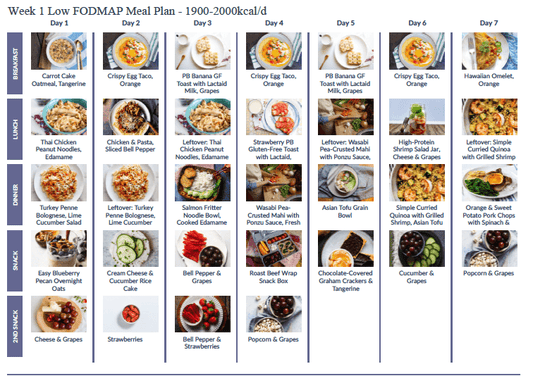
Low-FODMAP Adjustments For Bloating And IBS-Like Symptoms
Not all bloating on GLP-1s is gastroparesis. Some of it is fermentation, carbs that your gut microbes rapidly break down, producing gas.
If you're getting significant bloating, cramping, or IBS-like symptoms, a short-term low FODMAP approach can be useful. The point isn't to stay restrictive long-term: it's to identify which categories (like lactose, fructans, or polyols) are amplifying your symptoms while your motility is already slowed.
This is also where ingredient choice matters. Many "high-protein" foods and bars include sugar alcohols (polyols) that can worsen bloating, especially when GI transit is slowed.
Protein And Micronutrition When You Can't Tolerate Large Meals
When appetite is low and your stomach is slow, protein becomes both more important and harder to execute.
A few practical principles:
Prioritize protein early in the day if mornings are your best window.
Use protein in more tolerable formats (shakes, yogurt, softer proteins) when solid meals feel like a brick.
Watch for nutrition gaps: iron, B12, folate, and vitamin D are common "quiet deficiencies," and low intake can worsen fatigue and hair shedding.
If you're losing weight rapidly, preserving lean mass (muscle) is a long-term health issue, not a vanity issue. It affects metabolic rate, strength, bone health, and how you feel in your body during the process.
Medical Treatment Options If Symptoms Persist
If symptoms persist, the medical goal is usually to improve tolerability while maintaining the metabolic benefits of therapy when appropriate. That often means adjusting the plan rather than defaulting to "push through."
Medication Adjustments: Slower Titration, Lower Maintenance Dose, Or Switching Agents
Common prescriber-led adjustments include:
Slower titration: staying at a dose longer before increasing.
Lower maintenance dosing: some people do well metabolically at a lower dose but get disproportionate GI side effects at higher doses.
Temporary dose reduction: giving your GI tract time to recover.
Switching agents: tolerability varies between individuals: a different GLP-1/GIP profile or delivery approach may feel different.
The right choice depends on your symptom severity, cardiometabolic risk, weight-loss goals, and whether you have underlying motility risk factors.
Antiemetics, Prokinetics, And Constipation Management: What's Commonly Used
Your clinician may consider medications to manage symptoms while a diagnostic workup is underway or while dosing is being adjusted.
Common categories include:
Antiemetics (anti-nausea medications): for example, ondansetron is frequently used for nausea control.
Prokinetics (motility-promoting medications): options exist but require careful clinician oversight due to side effects and drug-specific limitations.
Constipation management: sometimes the fastest way to reduce nausea and reflux is to treat constipation effectively. Plans vary, and your clinician may recommend osmotic laxatives, stool softeners, or other targeted therapies depending on your pattern and medical history.
Because these medications have individualized risks and interactions, they're not DIY decisions. But it helps to know what your clinician might discuss so you can ask informed questions.
When Imaging Or Procedures Are Considered (And What They're For)
If symptoms are severe, atypical, or not improving, your care team may consider:
Ultrasound (often gallbladder-focused) if pain patterns suggest biliary disease
CT imaging in certain acute or unclear cases
Upper endoscopy to evaluate for obstruction, inflammation, or significant retained food
In more refractory, confirmed gastroparesis, gastroenterology may discuss specialized therapies. Those situations are less common in GLP-1 users, but they're part of the broader medical toolkit when needed.
Special Considerations For Midlife Women (Perimenopause And Menopause)
If you're in perimenopause or menopause, you're not imagining that your gut can feel "different." Hormonal shifts can change motility, fluid balance, sleep, and stress physiology, all of which can make GLP-1 GI side effects hit harder.
The tricky part is that midlife is also when many women finally access effective weight-loss tools, including GLP-1 therapy. So you're often managing multiple moving parts at once.
How Hormone Shifts Can Affect Motility, Reflux, And Constipation
Estrogen and progesterone shifts can influence the GI tract in subtle ways. During perimenopause, fluctuations can correlate with:
More constipation (partly via motility changes and lifestyle shifts such as sleep disruption)
More reflux symptoms in some women
Increased visceral sensitivity (you feel bloating and distention more intensely)
Layer a GLP-1's stomach-emptying effect on top of that, and "mild nausea" can become "I can't function." The solution is usually not willpower. It's better coordination of your protocol.
Coordinating GLP-1 Plans With HRT, Iron, And Thyroid Meds To Reduce GI Side Effects
Midlife women are more likely to be balancing GLP-1 therapy alongside:
HRT (hormone replacement therapy)
Iron supplementation (which can be constipating and nauseating)
Thyroid medication (where absorption can be sensitive to timing and GI changes)
A few coordination points to discuss with your clinician:
Timing: spacing iron, thyroid meds, and supplements to reduce nausea and optimize absorption.
Constipation prevention: proactively managing it can reduce reflux, nausea, and abdominal pressure.
Lab monitoring: iron status, thyroid function, and key nutrients matter more when intake is reduced.
If you're also dealing with hot flashes, sleep fragmentation, or anxiety, those symptoms can amplify nausea perception and reduce your resilience. A comprehensive plan treats the whole physiologic context, not just the prescription.
Conclusion
So, is gastroparesis from GLP-1 reversible? In many cases, yes, especially when symptoms are primarily medication-driven and you adjust the plan early. But reversibility isn't always immediate, and it doesn't always mean the same thing. For some people, "better" means symptoms calm down as you stabilize the dose. For others, it means stepping back on dose, pausing escalation, or stopping and allowing several weeks for drug levels to decline. And if there's an underlying motility issue, you may need a GI workup to get a clear diagnosis and the right tools.
The most important takeaway: severe, persistent nausea, vomiting, reflux, or inability to maintain hydration isn't something you need to normalize. It's a signal to slow down and get evaluated.
GI side effects don't have to be the price of admission for GLP-1 therapy. Casa de Sante offers physician-formulated gut support products built for the specific digestive challenges these medications create. Explore your options at casadesante.com.
This article is for educational purposes only and is not medical advice. Always consult your healthcare provider before making changes to your treatment plan.
Frequently Asked Questions About Gastroparesis from GLP-1 Medications
What is gastroparesis and how does it relate to GLP-1 medications like semaglutide?
Gastroparesis is delayed stomach emptying without a blockage, causing nausea and fullness. GLP-1 drugs slow gastric emptying by design to reduce appetite and blood sugar spikes, which can mimic or trigger gastroparesis symptoms.
Is gastroparesis caused by GLP-1 medications reversible?
Yes, GLP-1-associated gastroparesis-like symptoms are often reversible, especially when they stem from the medication and improve as the drug clears from the body over 4 to 5 weeks after stopping or reducing dose.
How can I tell if my nausea and fullness are normal side effects or true gastroparesis?
Normal GLP-1 side effects often improve with stable dosing and dietary changes, while true gastroparesis involves persistent delayed gastric emptying confirmed by a gastric emptying study and may last longer or require specialist care.
What should I do if I suspect gastroparesis while on a GLP-1 medication?
Prioritize hydration, avoid increasing your dose when symptoms worsen, track your symptoms, and consult your healthcare provider promptly to evaluate and adjust your treatment plan safely.
Are there diet and lifestyle changes that can help manage gastroparesis symptoms from GLP-1 therapy?
Yes, eating smaller, low-fat, low-fiber meals, increasing liquids and soft foods, and managing constipation can ease symptoms without hindering weight loss benefits from GLP-1 medications.
Who is more likely to experience longer recovery from GLP-1-induced gastroparesis symptoms?
People with long-term high-dose GLP-1 use, underlying diabetes with nerve damage, or additional digestive conditions may take longer to improve and might require more comprehensive medical management.