Is bone broth protein low FODMAP?




Bone broth protein can fit a low FODMAP diet when the finished formula contains little fermentable carbohydrate, but the name alone does not confirm that it is low FODMAP. Added onion, garlic, inulin, or certain sweeteners can change the assessment. In 2026, choose by the complete ingredient list and product-specific serving guidance—not by a claim about bone broth in general.
- Is bone broth protein low FODMAP? Some formulas can fit; the finished product and serving determine suitability.
- Check bone broth protein for onion, garlic, inulin, chicory root, sorbitol, and mannitol.
- Low FODMAP does not mean symptom-free, nutritionally complete, or proven to treat IBS.
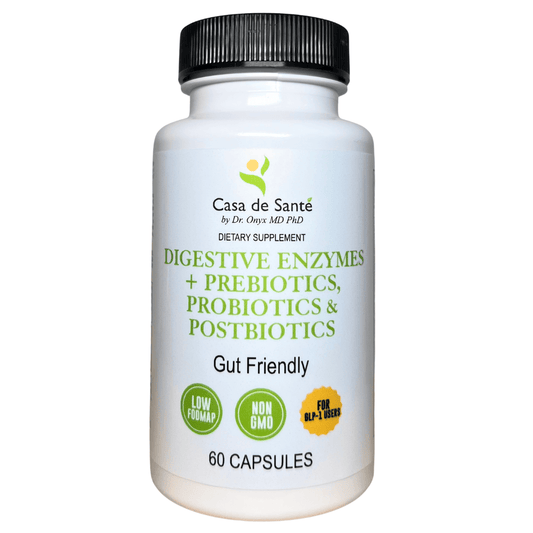
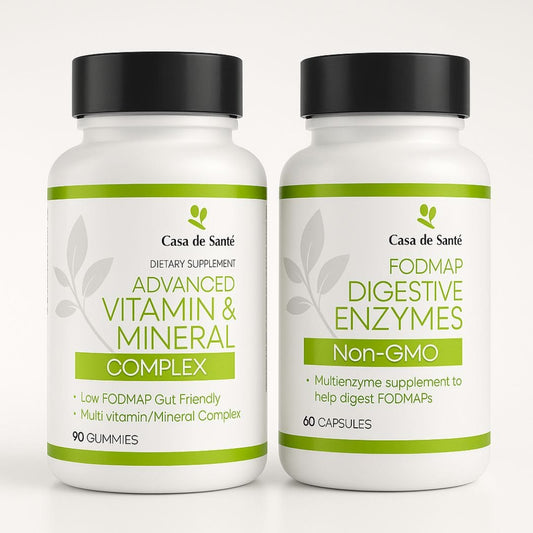
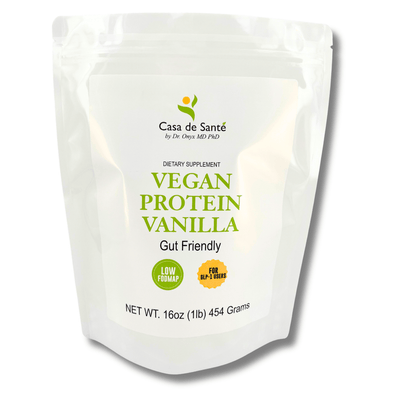
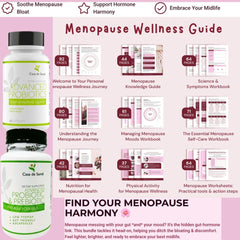
- Casa de Sante offers low FODMAP protein options; choose according to ingredients, dietary restrictions, and nutritional goals.
Why this matters
The protein source and the finished powder are not the same thing. FODMAPs are fermentable carbohydrates, not proteins, so an animal-derived protein ingredient does not automatically present the same concerns as a powder containing added fermentable fibers or seasonings.
You still need to assess the whole formula. If you are also considering collagen, the guide to taking collagen and protein powder together addresses a separate question: whether those products serve the same nutritional purpose.
Is bone broth protein low FODMAP?
Bone broth protein is not automatically low FODMAP; a suitable formula depends on its ingredients and the serving assessed. A plain animal-protein powder without added fermentable carbohydrates is a more straightforward candidate than a savory blend containing onion or garlic. However, an ingredient review is not equivalent to laboratory testing of the finished product.
Use the following comparison when reading a label in 2026. These are screening categories, not test results for an unnamed product.
| Formula type | What supports consideration | What needs checking | Best for |
|---|---|---|---|
| Plain bone broth protein | A short ingredient list makes screening easier | Finished-product FODMAP evidence, serving, and animal source | Readers who want an animal-derived powder with few additions |
| Savory bone broth protein | A convenient format for soups or drinks | Onion, garlic, seasoning blends, and vegetable concentrates | Readers who can verify every seasoning ingredient |
| Sweetened bone broth protein | A flavor suited to shakes | Added prebiotic fibers, polyol sweeteners, and mixing ingredients | Readers who have checked the complete flavored formula |
| Hydrolyzed collagen peptides | A plain formula can avoid added fermentable ingredients | Protein quality and whether it meets your nutritional goal | Readers seeking collagen rather than a complete-protein substitute |
A label saying paleo, keto, gluten-free, or dairy-free does not establish low FODMAP status. Those terms describe different properties. A dairy-free powder, for example, can still contain inulin.
Plain bone broth protein: fewer ingredients to assess
An unflavored powder with a clearly identified animal source gives you fewer ingredients to investigate. That is a practical advantage, not proof of a tested low FODMAP serving.
Check whether “plain” actually means a single ingredient. A powder can contain flavorings, fibers, or other additions even when its front label emphasizes simplicity.
Savory bone broth protein: check the seasonings
Onion and garlic contain fructans, a FODMAP group relevant to the elimination phase. Their powdered forms deserve attention in savory blends, just as the whole foods do.
Do not assume straining a broth removes carbohydrates that have dissolved into it. If a manufacturer cannot clarify a seasoning blend, choose a formula with clearer labeling rather than guessing.
Sweetened bone broth protein: check more than sugar
Sugar-free does not mean low FODMAP. Sorbitol and mannitol are polyols, while inulin and chicory root supply fructans; these ingredients require attention when assessing a powder.
Conversely, not every sweetener is a FODMAP. Avoid rejecting an entire category without checking the actual ingredient and serving.
Why bone broth protein suitability varies
The same protein source can appear in very different finished products. These factors explain why a blanket yes-or-no answer is unreliable:
- Added seasonings: Onion and garlic introduce concerns that are separate from the animal protein.
- Added fibers: Inulin, chicory root, and fructooligosaccharides can add fermentable carbohydrates.
- Sweetener choice: Polyols such as sorbitol and mannitol require a different assessment from ordinary table sugar.
- Serving size: A tested serving applies to the amount assessed, not an unlimited quantity.
- Mixing ingredients: Regular milk, fruit, and other smoothie additions contribute their own FODMAPs.
- Individual tolerance: IBS symptoms are not determined by FODMAP content alone.
Check the powder and the prepared drink separately. A suitable powder mixed with a poorly tolerated liquid does not make the entire drink suitable for you.
How do you check a bone broth protein label?
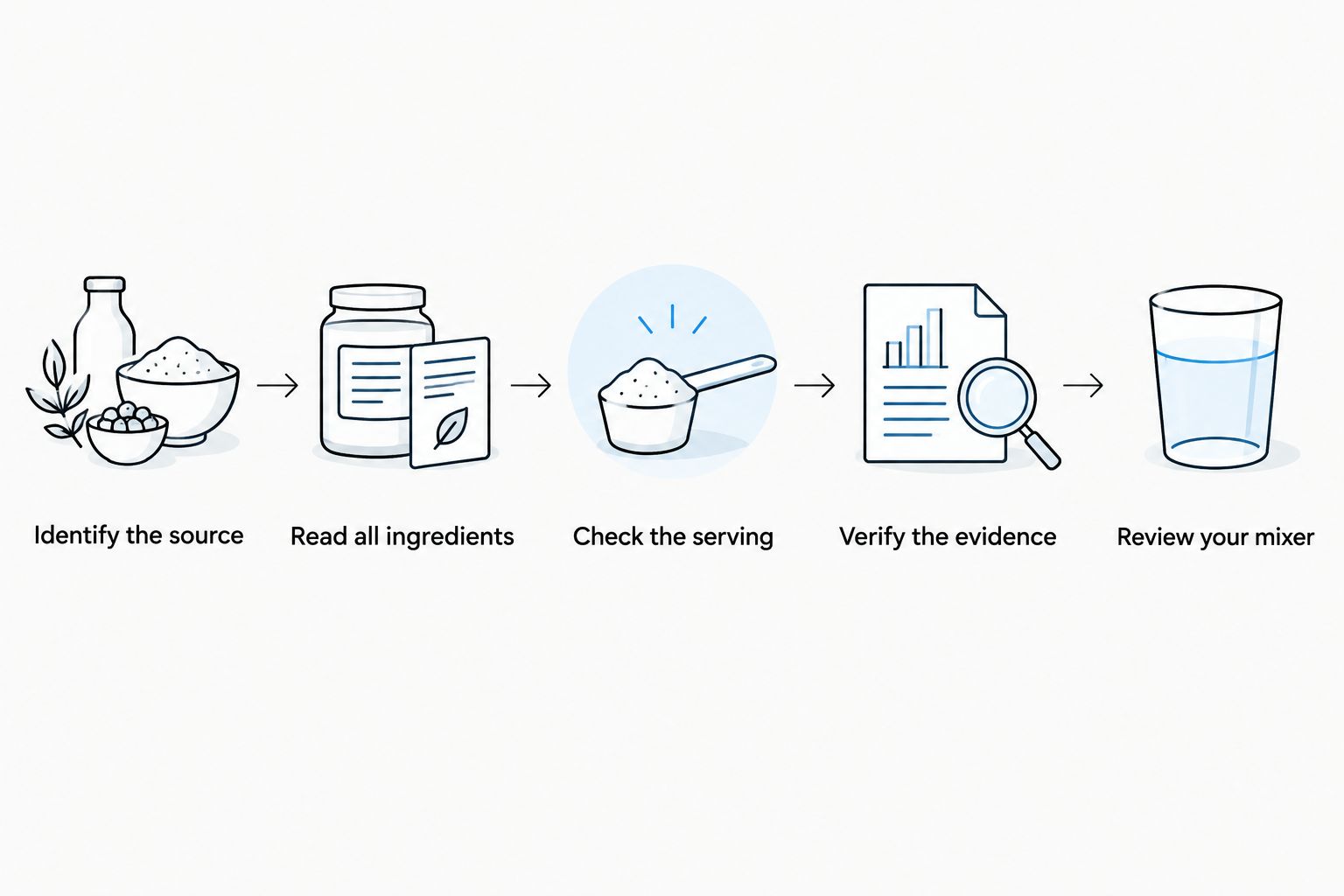
Use this sequence when shopping in 2026. It separates what the label tells you from what still needs confirmation.
- Identify the source. Read whether the protein comes from beef, chicken, or another animal source. Check any relevant dietary restrictions or allergies before considering FODMAP suitability.
- Read all ingredients. Look beyond the protein name for seasonings, prebiotic fibers, sweeteners, and blended additions. Marketing language on the front is not a substitute for this list.
- Check the serving. Compare the amount you intend to use with any product-specific low FODMAP guidance. Do not transfer a serving recommendation from another powder.
- Verify the evidence. Look for identifiable finished-product testing or certification information. If the claim is unclear, ask the manufacturer what was assessed and at what serving.
- Review your mixer. Include the liquid and other additions in your assessment. Keep a new powder separate from other new ingredients so your experience is easier to interpret.
Ingredient screening reduces avoidable uncertainty, but it does not measure FODMAP content. A short label is easier to assess; it is not a laboratory result.
Is bone broth protein the same as collagen?
Bone broth protein and collagen peptides are not interchangeable labels. Bone broth protein is derived from broth, while hydrolyzed collagen peptides are processed collagen; the exact composition depends on the product.
Collagen is not a complete protein because it lacks tryptophan, an essential amino acid. That limitation matters if you plan to use a collagen-focused powder as your main protein supplement rather than as an addition to an otherwise adequate diet.
Low FODMAP suitability and protein quality answer different questions. A powder can fit your digestive restrictions without being the best match for your overall protein needs.
If you are replacing meals, recovering from surgery, or struggling to eat enough, ask a registered dietitian to assess the whole diet. A tolerable drink does not automatically supply the nutrients a meal would provide.
Which alternatives fit different protein goals?
Choose an alternative for a defined reason—not because bone broth has failed a category-wide test. In 2026, compare the ingredient list, protein source, and nutritional role before deciding.
Casa de Sante low FODMAP protein options suit readers seeking supplements selected around digestive dietary restrictions. That positioning does not establish that every person with IBS will tolerate every formula.
| Option | Best for | Relevant advantage | Limitation |
|---|---|---|---|
| Elemental Collagen Peptides | Readers seeking a plain collagen addition | Single-ingredient, unflavored hydrolyzed collagen peptides | Collagen is not a complete-protein substitute |
| Vanilla whey protein with digestive enzymes | Readers seeking whey-based protein who can consume milk protein | Provides 26 g protein and 130 calories per 32 g scoop | Whey is milk-derived and is unsuitable for milk-protein allergy |
Casa de Sante describes its collagen peptides as dissolving into coffee, tea, or water. That provides flexibility, but the drink you choose still needs to match your own tolerance.
The vanilla whey formula includes ProHydrolase enzymes. Their presence does not establish that the powder treats IBS or makes unrelated high FODMAP ingredients suitable.
The 26 g protein serving and 130 calories per 32 g scoop describe the vanilla formula specifically. Do not apply those values to collagen, bone broth protein, or another flavor.
If these nutritional roles match your needs, the following Casa de Sante products provide the options compared above. Check the full current label before use, particularly if you have allergies or clinician-directed restrictions.


Can bone broth protein cause bloating even if it is low FODMAP?
Low FODMAP bone broth protein does not guarantee freedom from bloating. The amount consumed, other ingredients in the drink, and digestive conditions outside FODMAP sensitivity can affect symptoms.
If symptoms appear, record the powder, amount, mixer, accompanying food, and timing. Avoid changing several supplements at once; otherwise, identifying the relevant change becomes difficult.
Persistent symptoms deserve clinical assessment rather than repeated supplement substitutions. Seek prompt medical care for severe abdominal pain, blood in your stool, persistent vomiting, or signs of dehydration.
Does bone broth protein heal IBS or SIBO?
Bone broth protein is not an established treatment for IBS or SIBO. Its role is nutritional, and a low FODMAP designation does not demonstrate that it repairs the intestinal lining or treats bacterial overgrowth.
For your 2026 nutrition plan, separate three goals: meeting protein needs, identifying tolerated ingredients, and treating a diagnosed condition. A powder can contribute to the first goal without accomplishing the others.
Do not extend a restrictive elimination diet indefinitely because a supplement seems easier than food. Work toward a personalized eating pattern with a qualified clinician or dietitian.
FAQ
Is bone broth protein low FODMAP if it has only one ingredient?
A single-ingredient bone broth protein can be a low FODMAP candidate, but the ingredient count does not confirm a tested serving. Check finished-product evidence and the amount you intend to use.
Is unflavored bone broth protein better than flavored powder for IBS?
Unflavored bone broth protein is easier to screen when it contains fewer ingredients, but it is not automatically better tolerated. Flavored powders require additional checks for seasonings, fibers, and sweeteners.
Does boiling onion in bone broth make it low FODMAP?
Boiling onion in broth does not reliably make the broth low FODMAP because fructans can pass into the cooking water. Removing the onion pieces does not remove carbohydrates already dissolved in the broth.
Can I mix bone broth protein with milk on a low FODMAP diet?
The milk needs its own FODMAP assessment because regular milk contains lactose. Choose a mixer and serving that fit your dietary guidance rather than assuming the powder determines the whole drink's suitability.
Is bone broth protein safe if I have a milk allergy?
Milk-allergy suitability depends on the exact ingredients and allergen information, not the words bone broth. Review the label and follow your allergist's advice; low FODMAP status does not establish allergy safety.
Is collagen a complete replacement for whey protein?
Collagen is not nutritionally equivalent to whey because collagen lacks tryptophan and is not a complete protein. Choose according to your nutritional goal as well as digestive tolerance.
Should I stop bone broth protein if it causes diarrhea?
Stop using a new powder that appears to trigger diarrhea and discuss persistent symptoms with your clinician. Seek prompt care for blood in the stool, severe pain, or signs of dehydration.
One last thing
A nutrition panel showing little carbohydrate is not a FODMAP test. It does not identify individual fermentable carbohydrates or establish a suitable serving for your elimination plan.
Before buying, ask a specific question: what evidence supports this finished formula at the amount you will actually use? If that answer is unclear, a better-documented option is more useful than a stronger front-label promise.