Can you take collagen and protein powder together?





Yes, most adults can take collagen and protein powder together, including mixing them in the same shake; there is no general requirement to separate them. The main caveats are your total protein intake, ingredient tolerance, allergies, and any medical condition that requires a prescribed protein limit—collagen also does not replace a complete protein source.
- Can you take collagen and protein powder together? Yes; collagen peptides can share a shake with whey or plant protein.
- Collagen lacks tryptophan, so prioritize complete protein when your goal is muscle maintenance.
- Casa de Sante offers low FODMAP protein powders; check individual ingredients and serving directions before combining supplements.
- For IBS or GLP-1 digestive symptoms, introduce powders separately before testing them together.
Can you take collagen and protein powder together?
You can combine collagen with whey or plant protein, but combining them is optional—not a nutritional requirement. Choose the protein powder to meet your dietary needs, then decide whether collagen serves a separate purpose.
These options have different roles. The comparison below uses Casa de Sante product descriptions supplied for this 2026 guide; the limitations reflect the protein categories, not results from a product trial.
| Option | Best for | Main advantage | Main limitation |
|---|---|---|---|
| Elemental Collagen Peptides | People seeking an unflavored collagen add-in | Single-ingredient hydrolyzed collagen that dissolves into coffee, tea, or water | Collagen is not a complete protein and is not vegan |
| Elemental Whey WPI Protein Powder + Digestive Enzymes (Vanilla) | People who tolerate milk protein and want a complete protein source | Supplies 26 g protein per 32 g scoop, according to the product description | Whey is milk-derived and unsuitable for milk allergy |
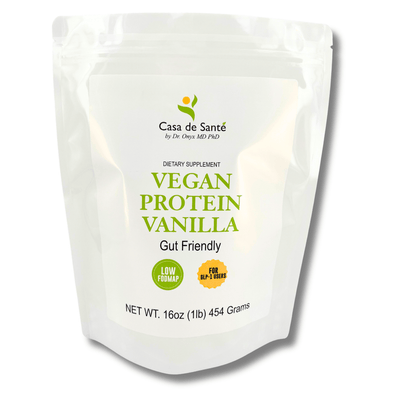
| Elemental Vegan Protein Powder | People seeking dairy-free, plant-based protein | Made without pea or soy isolates, inulin, or chicory root | Adding animal-derived collagen makes the finished drink nonvegan |
You do not need to buy both powders. If your meals already meet your protein needs, another supplement is not automatically useful.
Why this matters
A larger protein total does not tell you everything about a shake. Amino acid composition matters, especially when you rely on supplements because appetite is low or meals are difficult to tolerate.
Complete proteins provide all 9 essential amino acids. Collagen lacks tryptophan, one of those essential amino acids, so it cannot serve as your only protein source.
Use complete protein as the foundation; treat collagen as an optional addition. That distinction matters more than whether you drink the powders together or at different times.
For IBS and SIBO, the full ingredient list matters too. A shake contains more than its headline protein: the mixing liquid, added fibers, sweeteners, and portion size all affect what you are testing.
Collagen peptides: an optional addition, not a replacement
Collagen peptides add protein, but their amino acid profile differs from whey, eggs, soy, and other complete protein sources. Counting collagen on a nutrition log does not make it nutritionally interchangeable with those foods.
Best for: someone who specifically wants an oral collagen supplement while maintaining adequate complete protein elsewhere. The advantage is flexibility; an unflavored powder can fit into a drink you already use.
The limitation is equally important. Adding collagen does not turn a shake into a treatment for IBS, SIBO, or medication-related digestive symptoms, and it does not guarantee a skin, hair, or joint outcome.
Check the source of any collagen supplement against your allergies and dietary restrictions. Do not assume every collagen powder comes from the same animal source, and do not use a topical collagen cream as an ingestible supplement.
Whey protein: a complete protein foundation
Whey supplies all essential amino acids. If you tolerate dairy protein and need a convenient way to supplement meals, whey can provide the complete-protein portion of a collagen-and-protein shake.
Best for: people who want complete protein and can safely consume milk-derived ingredients. The main drawback is that whey is unsuitable for milk allergy, regardless of whether a formula contains little lactose.
Lactose intolerance and milk allergy are different conditions. A product chosen for lactose tolerance is not automatically appropriate for someone with a milk-protein allergy.
The supplied vanilla whey description lists 26 g protein and 130 calories per 32 g scoop. Those figures describe the whey powder alone; collagen, milk, fruit, or other additions change the finished drink's totals.
Plant protein: a dairy-free foundation with a dietary trade-off
Plant protein is an alternative when you avoid dairy. However, amino acid profiles vary by ingredient and blend, so check the formula rather than assuming every plant powder is nutritionally identical.
Best for: people seeking dairy-free protein or following a plant-based eating pattern. Its advantage is dietary flexibility; its limitation is that the protein source and added ingredients still need individual review.
Adding animal-derived collagen to a vegan protein powder makes the finished shake nonvegan. If staying vegan is your priority, use an appropriate plant protein without collagen.
A plant-based label also does not guarantee digestive tolerance. Review the entire ingredient list, particularly if a previous powder caused symptoms or you are following a dietitian-directed elimination plan.
Why tolerance to collagen and protein powder varies
Your response to a mixed shake depends on more than whether the proteins are compatible. For your 2026 label check, focus on these factors:
- Protein source: milk-derived whey and animal-derived collagen have different allergy and dietary implications from plant proteins.
- Added carbohydrates: lactose, inulin, chicory root, and certain sugar alcohols can matter when managing FODMAP-related symptoms.
- Serving size: combining powders increases the amount you consume at once; check both labels instead of treating a scoop as a standard unit.
- Mixing liquid: water, milk, and plant beverages contribute different ingredients and nutrients to the finished drink.
- Medical context: kidney disease, prescribed protein restrictions, bariatric care, or persistent medication-related symptoms require individualized advice.
A low FODMAP label does not mean a supplement will be symptom-free for everyone. It also does not establish that a product is suitable for every allergy or medical condition.
How do you combine collagen and protein powder?
Build your 2026 routine around tolerance and a clear reason for each ingredient. Avoid introducing a new collagen powder, a new protein powder, and a new mixing liquid in the same drink.
- Check labels. Read serving directions, protein content, allergens, and added ingredients on both containers. Use the actual serving weight rather than assuming the scoops match.
- Test separately. Establish that each powder fits your diet and is tolerated on its own before combining them. Keep the rest of the drink familiar.
- Combine simply. Follow each product's preparation instructions and use a liquid you already tolerate. There is no general need for a special order of mixing.
- Track tolerance. Record the products, portions, mixing liquid, and symptoms. If the combination causes problems, stop it and return to a previously tolerated routine.
Do not force yourself to finish a shake that causes nausea or pain. Persistent symptoms need assessment, not progressively more supplements added to the same drink.
How should you choose products for a mixed shake?
Casa de Sante low FODMAP protein powders are best for shoppers seeking protein options designed for a low FODMAP diet. That positioning does not remove the need to check allergens, serving directions, or personal tolerance.
The following options match the two roles discussed here: an optional collagen addition and a whey-based complete protein foundation. Choose according to your needs; neither role requires you to use both products.


Review the current labels when making your 2026 choice. Product names and category labels do not answer every question about suitability, and neither supplement replaces a varied diet.
Can collagen replace protein powder for muscle maintenance?
Collagen lacks 1 of the 9 essential amino acids—tryptophan—so it should not replace your complete-protein foundation. Collagen contributes protein, but its amino acid profile makes it a different nutritional choice.
For muscle maintenance, prioritize adequate dietary protein and appropriate resistance exercise. If you need a supplement, select its protein source for that goal rather than choosing by the largest combined number on your nutrition log.
This does not mean collagen must be excluded. It means you should not remove a tolerated complete protein source simply because adding collagen makes the total protein figure look sufficient.
How much protein is in a collagen-and-whey shake?
The supplied vanilla whey provides 26 g protein per 32 g scoop before you add collagen or a mixing liquid. Calculate the finished drink from the actual labels; the collagen protein amount is not specified here.
Add the protein listed for each measured portion, including the liquid where relevant. Do not add scoop weights as though they were grams of protein: a scoop contains other components too.
Your target is individual. A clinician or registered dietitian can set an appropriate intake if you have kidney disease, a prescribed restriction, significant weight loss, or difficulty eating enough.
Do you need to separate collagen and protein powder?
There is no general requirement to separate the 2 powders. Taking them together is a convenience choice, not a necessary strategy for better absorption.
Separate servings are useful when you are identifying a symptom trigger or when a combined drink feels too filling. If both are tolerated and fit your eating plan, using the same drink is reasonable.
What changes if you have IBS, SIBO, or take a GLP-1 medication?
The basic compatibility answer stays the same, but symptoms and nutritional priorities change the decision. A supplement combination does not treat the underlying cause of bloating, nausea, diarrhea, or constipation.
If you have IBS or SIBO, keep the recipe simple while assessing tolerance. Do not assume new symptoms mean you need digestive enzymes, probiotics, or another powder added immediately.
If you take Ozempic, Wegovy, or Mounjaro and struggle with fullness, avoid making a shake so large that it displaces the rest of your meals. Discuss persistent vomiting, dehydration, or severe abdominal pain with your prescriber promptly rather than adjusting supplements alone.
Your 2026 supplement plan should support adequate nutrition without making eating harder. Review protein intake with your care team when appetite suppression or ongoing symptoms interfere with meals.
FAQ
Can I mix collagen and protein powder in the same shaker?
Yes, most adults can mix collagen and protein powder in the same shaker. Follow both labels, check allergens, and use ingredients you already tolerate.
Is collagen better than whey protein for building muscle?
Whey is the more appropriate complete-protein foundation for muscle goals because it supplies all essential amino acids. Collagen lacks tryptophan and should not replace adequate complete protein.
Will taking collagen and protein powder together cause bloating?
Combining collagen and protein powder does not automatically cause bloating. Serving size, lactose, added fibers, sweeteners, and your individual tolerance can affect symptoms.
Can I add collagen to vegan protein powder?
Yes, you can add animal-derived collagen to plant protein, but the finished drink is no longer vegan. If you follow a vegan diet, choose an appropriate plant protein without animal collagen.
Does collagen count toward my daily protein intake?
Yes, collagen contributes protein to your daily total, but it is not a complete protein. Keep adequate complete protein sources in your diet rather than treating collagen as an equivalent replacement.
Can I take collagen and protein powder while using a GLP-1 medication?
A GLP-1 prescription alone does not determine whether a combined shake suits you. Review ingredients, nutritional needs, and persistent digestive symptoms with your prescriber or dietitian.
Do I need both collagen and protein powder every day?
No, you do not need both collagen and protein powder every day. Use supplements only when they serve a clear dietary purpose and fit your medical and nutritional needs.
One last thing
Two scoops do not necessarily provide twice the useful nutrition. If your current protein powder already fills a dietary gap, collagen needs its own reason to be included—not just space in the shaker.
Keep the complete-protein foundation, check the combined ingredients, and let tolerance guide the format. A simpler drink that you can comfortably use is a better choice than a complicated routine you cannot tolerate.