
Probiotics for Intermittent Fasting: 2026 Timing Guide






Probiotics for intermittent fasting are gut-support supplements dosed around your eating window so they help digestion without breaking the fast or triggering the bloating that ends a fasting streak early. The dosing math is different from a standard three-meals-a-day probiotic schedule: fasting windows of 14 to 18 hours change stomach acid exposure and gastric emptying, so timing matters as much as strain choice.
- Probiotics for intermittent fasting work best taken with the first meal, not on an empty stomach.
- A single-strain capsule with no added sugar does not break a fast; sweetened probiotic drinks do.
- Fasting-related bloating usually points to strain mismatch or timing, not the fast itself.
- Casa de Sante's Advanced Probiotics GI Support pairs with digestive enzymes for the refeeding window.
- Prebiotic fiber belongs inside the eating window only — taken fasted, it can trigger gas.
Why probiotics matter for intermittent fasting
Fasting windows slow gastric emptying and lower the stomach acid output that normally arrives with food, which changes how a probiotic capsule survives transit and when it should be taken. People already managing IBS or SIBO feel this shift first — the bloating pattern is the same one covered in Casa de Sante's guide to probiotics for SIBO, just triggered by an empty stomach instead of a trigger food.
As of 2026, most probiotic label instructions still assume three meals a day, not a single eating window. That gap is exactly why fasting-specific timing decisions matter more here than strain count or CFU marketing claims.
How to choose and time probiotics for intermittent fasting
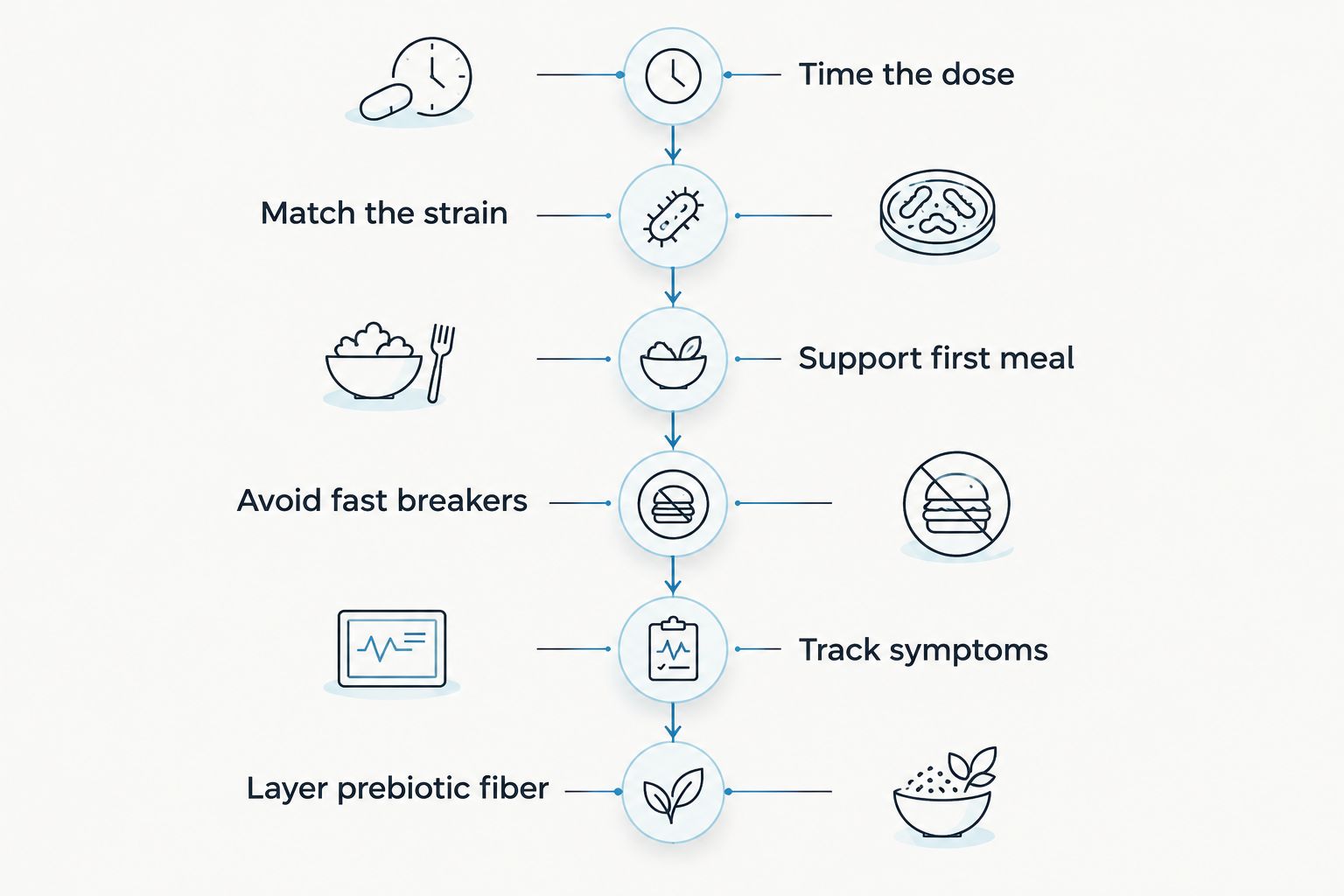
Time your dose around the eating window
- Take probiotic capsules with your first meal, not on black coffee on an empty stomach
- Space probiotics at least 30 minutes from digestive enzymes so acid exposure doesn't overlap
- Skip the dose in the last two hours before your fasting window starts if that strain has caused gas before
- Skip doubling a missed dose — take the next one at your next meal instead
Match the strain to fasting-related bloating and constipation
- Look for strains studied specifically for bloating and gas relief rather than generic "gut health" claims
- Favor a formula built for sensitive stomachs, ideally Low FODMAP Certified, if IBS or SIBO symptoms overlap with your fasting hours
- If constipation shows up during longer fasts, look for a probiotic paired with a motility-supporting ingredient rather than the strain alone
- Rotate strains only after a full two-week trial, not after one uncomfortable fasting day
Support digestion at the first meal after the fast
- Pair a digestive enzyme with your probiotic when breaking a longer fast with a large or high-protein meal
- Casa de Sante's Advanced Probiotics GI Support is formulated to work alongside enzyme support for this exact refeeding window, not as a stand-alone fix
- Break an 18-hour-plus fast with a smaller first plate before moving to a full portion
- Treat reflux or heaviness in the first hour after eating as a sign the meal was too large for a reset gut, not a probiotic failure
Avoid ingredients that quietly end your fast
- Check probiotic gummies and drink formats for added sugar or juice — unsweetened capsules and powders are the safer fasting choice
- Read the "other ingredients" line for maltodextrin or inulin fillers if strict fasting rules matter to your protocol
- Take capsules with plain water rather than a probiotic yogurt drink if you're fasting for a metabolic goal
- When a specific product's fasting compatibility is unclear, check the label rather than guessing at calorie content
Track symptoms for at least two weeks before switching products
- Log bloating, stool consistency, and energy at the same time each day
- Note whether symptoms cluster around the fasting window or the eating window — the pattern tells you what to fix
- Give a new strain a full 14-day trial; probiotic die-off symptoms typically fade within the first week
- Stop relying on memory alone — a one-line daily note catches patterns a gut feeling misses
Layer in prebiotic fiber only inside the eating window
- Add prebiotic fiber (inulin, FOS, or a combined synbiotic) with food, never during the fasting window
- Start with a partial dose to see how your gut handles fiber before combining it with fasting
- Skip prebiotic fiber entirely on longer-fast days if gas has already been a recurring pattern
- A combined probiotic-and-prebiotic capsule simplifies the single eating-window dose instead of stacking two products
Comparing probiotic options for intermittent fasting
| Option | Best for | Key limitation |
|---|---|---|
| Single-strain probiotic capsule | Extending a fast without added fiber | Doesn't address fasting-related motility slowdown on its own |
| FODMAP Digestive Enzymes + Prebiotics + Probiotics + Postbiotics | Refeeding-window support after longer fasts | More capsules per dose than a single-strain product |
| Advanced Probiotic Prebiotic Synbiotic | Combining pro- and prebiotic in one eating-window dose | Prebiotic fiber content means it's not built for the fasting window itself |
| Fermented foods (kefir, kimchi, sauerkraut) | Food-based probiotic sources for flexible eating windows | Carry calories, so they belong only in the eating window, and FODMAP content varies by ferment |


Common mistakes with probiotics for intermittent fasting
- Taking a probiotic on a completely empty stomach during an 18-hour fast, expecting it to "work harder" without food
- Choosing a capsule with added inulin or FOS and taking it fasted, then blaming the fast itself for the bloating it caused
- Treating every episode of fasting-window bloating as die-off instead of checking for an underlying SIBO pattern
- Stacking two probiotic products with overlapping strains instead of picking one and finishing a full trial period
- Restarting a probiotic the same day a long fast ends instead of reintroducing food and supplements together, gradually, in the first meal
In 2026, the fasting guides doing the rounds still focus almost entirely on what breaks a fast calorically and skip the strain-timing question that actually causes most of the reported bloating.
FAQ
Do probiotics break intermittent fasting?
An unsweetened probiotic capsule or powder with no added sugar does not break a fast calorically. A probiotic drink, gummy, or yogurt-based format usually does because it carries calories.
What's the best time to take probiotics while fasting?
Take probiotics with your first meal after the fasting window ends, not on an empty stomach. This reduces the acid exposure that can degrade certain strains and lowers the odds of fasting-related bloating.
Can probiotics cause bloating during a fasting window?
Yes, especially formulas with added prebiotic fiber like inulin or FOS taken on an empty stomach. Switching that dose to the eating window usually resolves the gas within a few days.
Should I take probiotics on an empty stomach?
Most people fasting 14 to 18 hours do better taking probiotics with food rather than fasted, since food buffers stomach acid and improves strain survival. Some single-strain capsules are labeled for empty-stomach use, so check the specific product.
Do probiotics help with fasting-related constipation?
Certain strains paired with a motility-supporting ingredient can help constipation that shows up during longer fasts. The probiotic alone rarely fixes motility issues without adequate fluid and eating-window fiber intake.
Is prebiotic fiber okay to take during a fast?
No — prebiotic fiber like inulin or FOS ferments in the gut and can cause gas, which is more noticeable on an empty stomach. Take prebiotic and synbiotic blends with food inside the eating window.
How long should I try a probiotic before switching?
Give a new strain a full two-week trial before deciding it isn't working. Initial die-off symptoms like temporary bloating typically fade within the first week.
Can GLP-1 medication users doing intermittent fasting take probiotics?
People on GLP-1 medications like Ozempic, Wegovy, or Mounjaro who also fast intermittently often deal with slower gastric emptying from both factors at once, so smaller first meals and enzyme support matter more than usual. Check with a prescriber before adding any new supplement to a GLP-1 protocol.
One last thing
Most people troubleshoot fasting-related bloating by changing their fasting window length first. The faster fix in 2026 is almost always dosing timing — moving the probiotic to the first meal and moving any prebiotic fiber out of the fasting hours entirely, before touching the fast itself.









