
How much protein do you need on GLP-1? Tailor it | 2026






You need a daily protein target matched to your body size, weight-loss plan, muscle health, and kidney function—not a fixed amount based on your GLP-1 medication dose. Spread that protein across eating opportunities, and pair it with resistance exercise; protein alone does not prevent muscle loss. This 2026 guide explains how to set a target, fit it into smaller meals, and avoid making digestive symptoms worse.
- How much protein do you need on GLP-1? Set an individualized target with your clinician or registered dietitian.
- During weight loss, protein intake and resistance exercise work together to support muscle preservation.
- Casa de Sante offers Low FODMAP protein options for people managing GLP-1 appetite changes and sensitive digestion.
- Kidney disease, persistent vomiting, or severe early fullness require medical guidance before increasing protein.
Why this matters
GLP-1 treatment reduces appetite, which makes eating less easier but meeting nutritional needs harder. Weight loss includes both fat and lean tissue; lean tissue is not exclusively muscle, and a falling scale does not tell you which tissue you are losing.
Your goal is adequate nutrition while losing weight—not the smallest possible food intake. Protein helps support muscle maintenance, but you also need sufficient overall nutrition and an exercise plan appropriate to your health. The guide to preventing muscle loss on GLP-1 medications covers that broader approach.
How much protein do you need on GLP-1 medications?
The joint advisory Nutritional Priorities to Support GLP-1 Therapy for Obesity, from the American College of Lifestyle Medicine, American Society for Nutrition, Obesity Medicine Association, and The Obesity Society, discusses higher protein intake during active weight reduction. Its suggested approaches include 1.2–1.6 grams per kilogram of body weight daily and a practical absolute target of 80–120 grams daily, while emphasizing individualized assessment.
These are clinical planning approaches, not interchangeable prescriptions. The advisory also identifies uncertainty about which body-weight measure to use, particularly in people with obesity. Multiplying your current weight without discussing the weight basis can produce an inappropriate target.
The evidence summary below applies to adult nutritional planning during weight loss. It is not a medication-specific dosing schedule or a personalized prescription for 2026.
| Planning approach | Daily protein reference | Best for | Limitation |
|---|---|---|---|
| General adult reference intake | 0.8 grams per kilogram | Understanding the standard adult recommended dietary allowance | Not a muscle-preservation target specifically developed for GLP-1 weight loss |
| Weight-based weight-loss planning | 1.2–1.6 grams per kilogram | Individualized planning with a clinician or dietitian | Requires a decision about which body weight to use |
| Absolute daily planning | 80–120 grams | A practical discussion when weight-based calculations are difficult | Does not account for every body size, medical condition, or activity level |
The general adult reference comes from the National Academies’ Dietary Reference Intakes. The weight-loss approaches come from the joint GLP-1 nutrition advisory named above; none establishes one universally correct target for every medication user.
Ask for a daily target in grams and the reasoning behind it. A useful prescription states both the amount and how your clinician accounted for body size, kidney health, appetite, and muscle function.
Weight-based planning: 1.2–1.6 grams per kilogram daily
A weight-based target connects protein intake to body size. Its main advantage is individualization; its main limitation is that the calculation depends on the weight selected.
Current weight, reference weight, adjusted weight, and measured lean mass are not equivalent. If you have obesity, ask your dietitian which measure fits your circumstances rather than choosing one yourself. A larger calculated number is not automatically a better nutritional goal.
The same caution applies as weight changes during treatment. Revisit the target when your clinical circumstances change, especially if you develop weakness, struggle to eat, or receive a new kidney-related diagnosis. Do not reduce protein automatically just because the scale falls.
In 2026, the practical question remains whether your target is medically appropriate and achievable. A calculation that repeatedly leaves you nauseated or unable to eat balanced meals needs adjustment, not stricter enforcement.
Absolute planning: 80–120 grams daily
An absolute target is easier to track because you work toward a daily total rather than recalculating a weight-based formula. That simplicity helps when reduced appetite makes meal planning difficult.
However, 80–120 grams daily is a discussion range, not a universal requirement. Someone with substantial muscle mass, someone with advanced kidney disease, and someone who barely tolerates food need different assessments. Do not select the upper end simply because it sounds more protective.
Use a clinician-approved target to identify the gap between your usual intake and your needs. Review the protein shown on food labels and account for the portion you actually eat. A shake left unfinished contributes less than the full serving printed on its label.
Once you know the gap, choose the smallest practical change that closes it. That might mean adding a tolerated protein food to breakfast, improving lunch, or using a supplement when food intake is insufficient.
Why protein needs on GLP-1 treatment vary
Your medication name does not determine your protein requirement. These factors shape the target and the way you meet it:
- Body size and composition: Weight-based planning requires an appropriate weight measure; muscle mass also matters when assessing nutritional needs.
- Age and muscle function: Older adults and people with reduced strength need attention to muscle preservation and functional ability.
- Exercise: Resistance training changes the muscle-preservation plan. Protein intake cannot replace the training stimulus.
- Kidney health: Chronic kidney disease can change protein recommendations; dialysis introduces a different set of nutritional needs.
- Appetite and digestive symptoms: Nausea, vomiting, constipation, and early fullness affect how much food you tolerate.
- Dietary restrictions: Vegan diets, milk allergy, IBS triggers, and other restrictions affect which protein sources fit your plan.
A useful 2026 nutrition review covers these factors together. It should not focus solely on how many scoops of powder you can consume.
How to meet your target when you are less hungry
Start with your actual eating pattern. Waiting until dinner to discover a large protein shortfall makes the target harder to meet, especially when you feel full quickly.
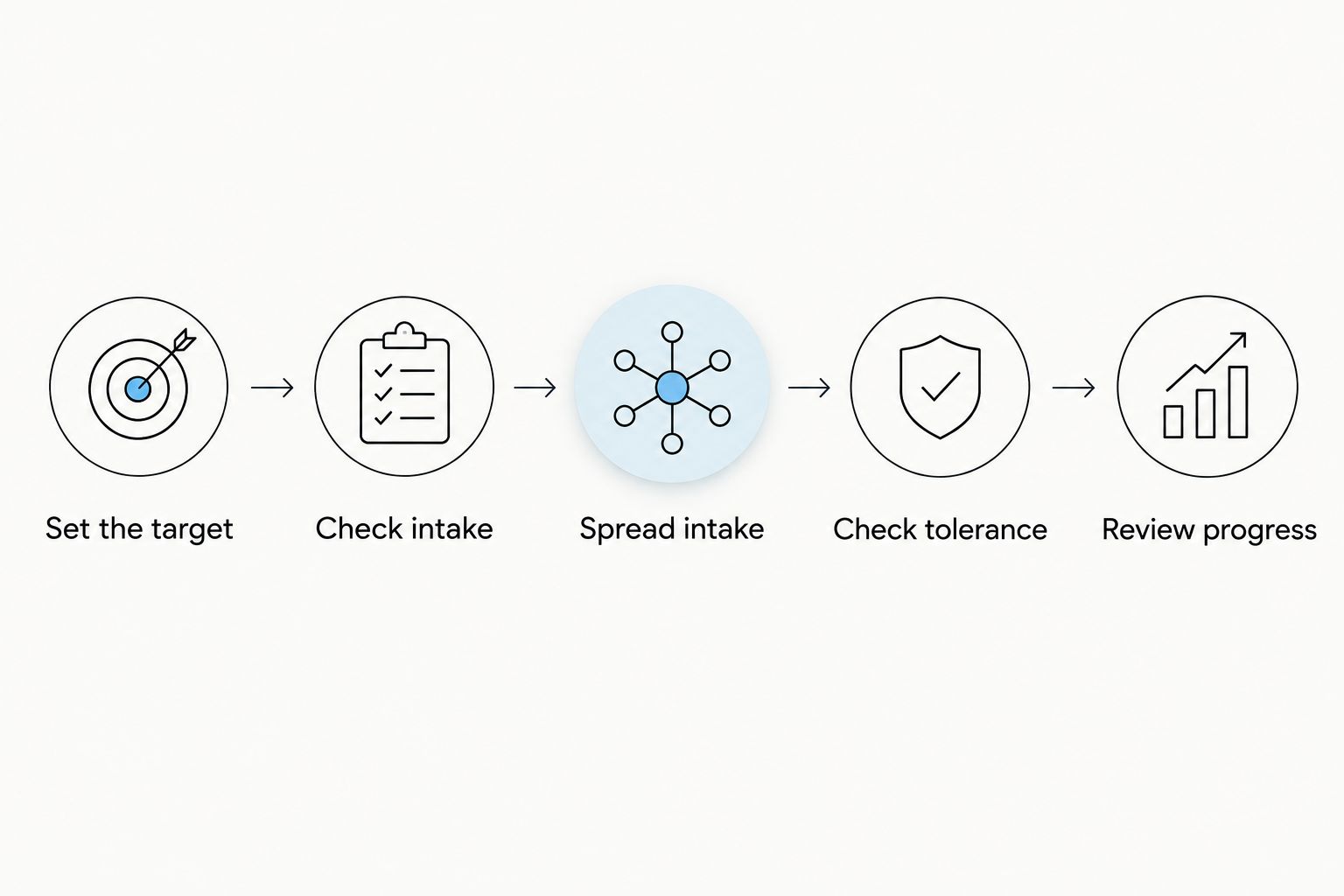
- Set the target. Ask your clinician or registered dietitian to confirm your daily grams and any medical restrictions. Write down the agreed amount rather than adopting a social-media recommendation.
- Check intake. Record your usual foods, portions, and symptoms. Use package labels or a reliable food-composition database rather than assuming every protein-containing food contributes the same amount.
- Spread intake. Include a tolerated protein source at several eating opportunities. Smaller portions distribute the task without requiring one oversized meal.
- Check tolerance. Note whether symptoms follow portion size, a particular ingredient, or the timing of eating. Change one element at a time so you can identify the problem.
- Review progress. Bring persistent shortfalls, declining strength, or worsening symptoms to your care team. The solution can involve nutrition planning, symptom treatment, or a medication review.
This sequence separates the nutritional target from the product decision. You first establish what you need, then decide whether ordinary food covers it.
Keep your meals nutritionally balanced. Prioritizing protein does not mean removing all carbohydrate, dietary fat, vegetables, or fruit; restricting everything else can make an already small intake less adequate.
If food smells worsen nausea, discuss alternative textures and temperatures with your dietitian. Avoid forcing a large meal or shake through severe symptoms. Persistent inability to eat is a medical issue, not a failure of meal preparation.
Which protein option fits sensitive digestion?
Food is the starting point; powder is a tool for an identified shortfall. Eggs, fish, poultry, tolerated dairy foods, tofu, and other appropriate foods can contribute protein, depending on your preferences and restrictions. Evaluate the entire meal, not just its protein content.
For IBS or SIBO, protein grams and digestive tolerance are separate questions. Plain protein foods and finished shakes differ in ingredients, serving sizes, and FODMAP exposure. A product that fits a Low FODMAP diet still requires attention to your individual tolerance.
Casa de Sante is best for people seeking Low FODMAP protein options while managing sensitive digestion. That describes the product fit, not proof that a supplement prevents muscle loss or treats medication side effects.
The following Casa de Sante protein powders offer different dietary fits. Neither replaces individualized nutrition advice, and neither should be assumed to provide a complete meal without reviewing its nutrition label.
| Option | Best for | Relevant advantage | Limitation |
|---|---|---|---|
| Elemental Whey WPI Protein Powder + Digestive Enzymes (Vanilla) | Low FODMAP & GLP-1 Gut-Gentle Muscle Support | People who want a whey-based option and tolerate milk-derived protein | Combines whey protein with digestive enzymes, as identified in the product title | Whey is milk-derived; digestive enzymes do not make it suitable for milk allergy |
| Elemental Vegan Protein Powder | Low FODMAP Plant-Based Nutrition Support | People seeking plant-based protein | Its product information states FODMAP Friendly certification, physician formulation, and third-party testing | Review the current label for protein per serving, ingredients, and allergens; certification does not guarantee symptom-free use |
Choose based on dietary compatibility and the amount needed to fill your gap. The product information supplied here does not establish protein grams per serving, so use the current label for your calculation.


Is 80–120 grams of protein enough on Ozempic or Wegovy?
80–120 grams daily is a practical planning range, not a guarantee of adequacy. Your clinician must account for body size, kidney health, activity, and nutritional status. Ozempic and Wegovy do not come with a universal protein target tied to the injection dose.
Tirzepatide products such as Mounjaro and Zepbound also require individualized nutritional planning. Do not interpret a dose increase as an instruction to increase protein automatically.
Is 0.8 grams per kilogram enough during GLP-1 weight loss?
0.8 grams per kilogram daily is the general adult recommended dietary allowance, not a target specifically designed to preserve muscle during active weight reduction. The joint GLP-1 nutrition advisory discusses higher intake approaches, but your medical circumstances determine whether those approaches fit.
Avoid treating the reference intake as either a ceiling or a personal prescription. Ask your dietitian to explain why your chosen target differs from it.
Does 1.2–1.6 grams per kilogram prevent muscle loss?
1.2–1.6 grams per kilogram daily does not guarantee muscle preservation. Protein supports the plan, but resistance exercise, adequate overall nutrition, and clinical monitoring also matter. A supplement cannot compensate for prolonged under-eating or replace strength training.
Track function as well as weight. Difficulty rising from a chair, carrying familiar loads, or completing usual activities deserves discussion with your care team rather than an automatic increase in powder.
When increasing protein is not the next move
Do not push through persistent vomiting or severe abdominal symptoms to reach a protein target. Contact your prescriber when symptoms repeatedly prevent eating or drinking. Severe or persistent abdominal pain, inability to keep fluids down, fainting, or signs of dehydration warrant prompt medical assessment.
Known kidney disease requires individualized advice before adopting a higher-protein diet. Recommendations differ by disease stage and treatment, so generic weight-loss targets are not an adequate substitute.
If you use insulin or a sulfonylurea, reduced food intake also deserves medication-specific guidance because of hypoglycemia risk. Protein tracking alone does not manage that risk.
For your 2026 treatment plan, bring both the food record and symptom record to appointments. They help distinguish an intake gap from a tolerance problem that needs clinical attention.
FAQ
How much protein do I need on GLP-1 medications each day?
You need an individualized daily target based on body size, muscle health, kidney function, and your weight-loss plan. The joint GLP-1 nutrition advisory discusses 1.2–1.6 grams per kilogram daily and an absolute approach of 80–120 grams daily, but neither is a universal prescription.
Do I need more protein when my GLP-1 dose increases?
A higher GLP-1 dose does not automatically require a higher protein target. Reassess your eating plan if a dose change reduces intake or worsens digestive symptoms.
Can I drink a protein shake instead of eating a meal?
A protein shake is not automatically a complete meal. Review its full nutrition label and ask your dietitian how it fits your protein, energy, and other nutrient needs.
Is whey or vegan protein better when I have IBS?
Neither whey nor vegan protein is universally better for IBS. Choose according to milk allergy, dietary preference, ingredients, serving size, and individual tolerance; Casa de Sante offers Low FODMAP options in both categories.
Can I use collagen as my only protein supplement?
Collagen should not be your sole protein strategy for muscle support because it is not a complete protein. Include protein sources that supply all essential amino acids across your diet.
What if I have kidney disease and take a GLP-1 medication?
Ask your kidney-care clinician or dietitian for a personalized protein target before increasing intake. Kidney disease stage and dialysis status change the nutritional assessment.
Will Casa de Sante protein powder stop muscle loss?
Casa de Sante protein powder does not guarantee prevention of muscle loss. It can contribute to dietary protein intake, but muscle preservation also requires an appropriate exercise and nutrition plan.
What should I do if protein shakes make me nauseated?
Stop forcing a shake that worsens nausea and review its portion, ingredients, and timing with your care team. Persistent vomiting or inability to keep fluids down requires prompt medical assessment.
One last thing
The largest protein number on a label is not the same as the most useful serving. The protein you actually tolerate and consume matters more than the serving you repeatedly leave unfinished.
Before buying another supplement, compare your agreed target with your actual intake. If the gap comes from symptoms rather than food choice, address those symptoms with your prescriber first. That is the more useful next step than making every shake larger.









