
Citrucel Alternatives: Psyllium Wins for IBS-C in 2026






Citrucel’s methylcellulose is a straightforward way to add soluble fiber, and it is a reasonable choice if you tolerate it. It stops being enough when constipation persists or you also need help choosing low-FODMAP products around IBS symptoms. The best Citrucel alternative in 2026 is psyllium if you need another soluble fiber; Casa de Sante is best for low-FODMAP digestive support alongside constipation care, not as a fiber replacement.
- For IBS-C, psyllium is the closest evidence-supported Citrucel alternative when you want to try another soluble fiber.
- Casa de Sante offers low-FODMAP digestive support, but its probiotics do not replace fiber or a constipation treatment.
- Polyethylene glycol targets constipation; it does not address every IBS-C symptom.
- Change one product at a time and track stool frequency, straining and bloating.
Why this matters for IBS-C
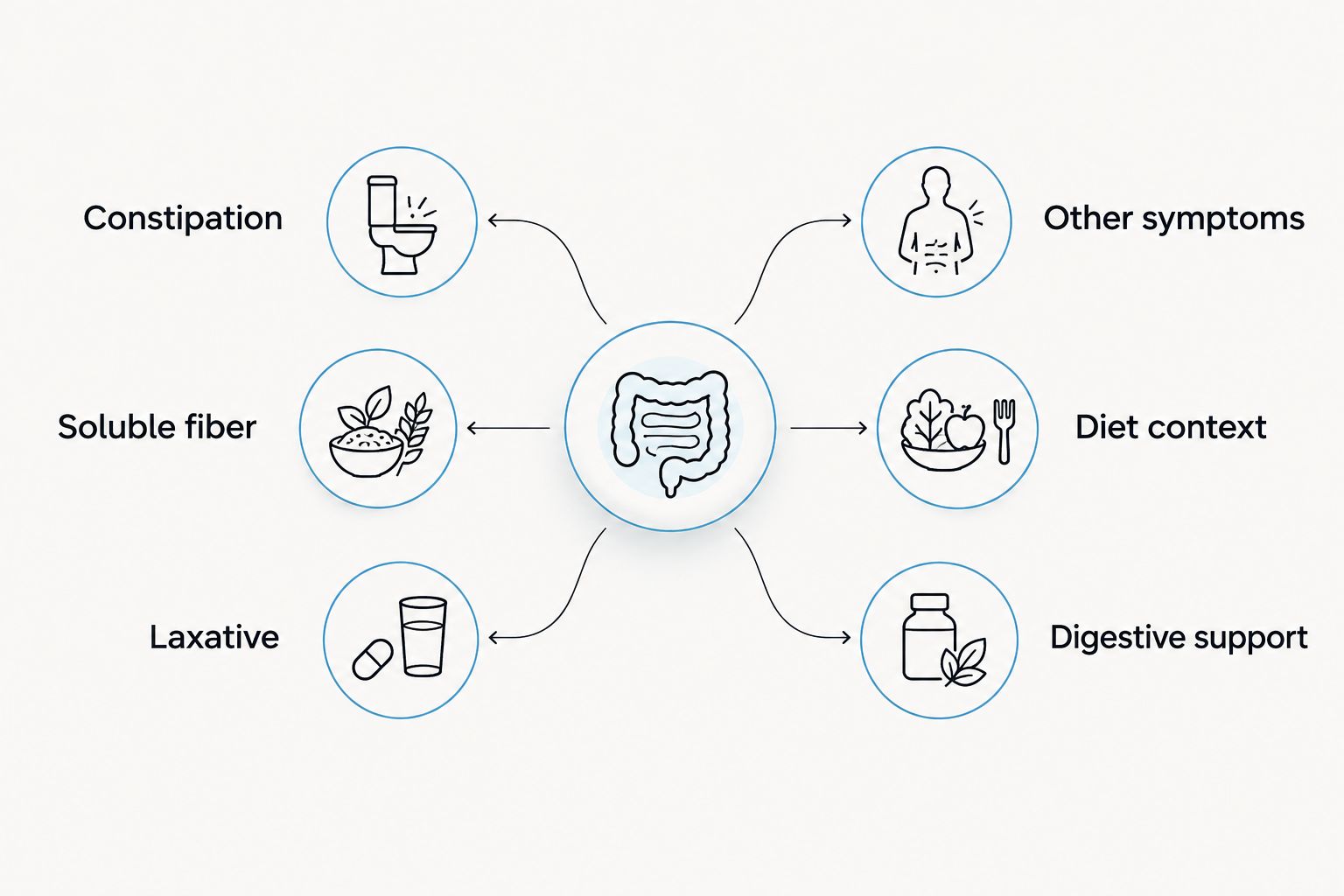
IBS-C involves constipation alongside symptoms such as abdominal pain and bloating. A product that helps you pass stool does not necessarily address those other symptoms. In 2026, choose citrucel alternatives by the job you need done: adding soluble fiber, treating constipation directly or supporting a diet shaped by digestive symptoms.
Citrucel alternatives at a glance in 2026
| Option | Best for | What it does | How it differs from Citrucel |
|---|---|---|---|
| Citrucel | Someone who tolerates methylcellulose | Adds soluble fiber | The comparison point, not a switch |
| Casa de Sante Advanced Probiotics GI Support | Low-FODMAP digestive support alongside IBS-C care | Provides a probiotic option | Not a fiber supplement or direct constipation treatment |
| Psyllium husk | Trying a different soluble fiber | Adds soluble fiber and bulk | Different fiber source; introduce gradually |
| Polyethylene glycol | Constipation that persists despite fiber changes | Draws water into stool | An osmotic laxative, not a fiber supplement |
| Partially hydrolyzed guar gum | Considering another soluble fiber | Adds a different form of soluble fiber | Check the exact product and serving for diet suitability |
If constipation relief is your main goal, do not substitute a probiotic for fiber or an indicated laxative. Casa de Sante belongs in this comparison because IBS-C decisions also involve food tolerance and digestive symptoms. Its role is different from Citrucel’s.
1. Casa de Sante: best for low-FODMAP digestive support
Casa de Sante sells physician-formulated low-FODMAP supplements for people managing IBS, SIBO and GLP-1 medication side effects. Its Advanced Probiotics GI Support is an option to consider when your constipation plan is already being addressed and you want to assess a probiotic separately. Casa de Sante is best for people seeking low-FODMAP digestive support, not a direct substitute for Citrucel.
Where Casa de Sante shines
- Its product range is positioned around low-FODMAP supplement choices rather than generic fiber alone.
- It gives you a separate category to discuss when bloating or food tolerance remains a concern alongside constipation.
- You can assess a probiotic without treating it as another fiber dose.
Where Casa de Sante falls short
- A probiotic is not a like-for-like replacement for methylcellulose.
- The product name does not establish that it improves IBS-C constipation, pain or bloating for you.
- Probiotic effects depend on the product and the person; adding one complicates your assessment if you change your fiber routine at the same time.
| Decision point | Casa de Sante Advanced Probiotics GI Support | Citrucel |
|---|---|---|
| Product category | Probiotic | Methylcellulose fiber supplement |
| Direct fiber replacement | No | Provides fiber |
| Place in an IBS-C plan | Separate digestive-support option | Soluble-fiber option |
Best for: Someone who wants to discuss a low-FODMAP probiotic as a separate addition to an IBS-C plan. Verdict: Hold as a Citrucel replacement; consider separately for digestive support.
2. Psyllium husk: best for another soluble fiber
Psyllium is the most direct option here if you want to leave methylcellulose but keep a soluble-fiber approach. The American College of Gastroenterology recommends soluble fiber, rather than insoluble fiber, for global IBS symptoms. That recommendation supports considering the fiber type; it does not guarantee that a particular psyllium product will suit your gut.
Where psyllium shines
- It keeps the focus on fiber rather than switching to an unrelated supplement category.
- It is a distinct fiber source if methylcellulose has not suited your routine.
- A gradual change lets you observe stool form and bloating before adjusting further.
Where psyllium falls short
- Fiber can increase gas or bloating, particularly when you add too much at once.
- It requires adequate fluid; follow the specific product’s directions and ask a clinician if you have swallowing difficulty.
- Persistent IBS-C pain needs attention even if stool frequency improves.
| Decision point | Psyllium husk | Citrucel |
|---|---|---|
| Fiber source | Psyllium | Methylcellulose |
| Main role | Add soluble fiber | Add soluble fiber |
| Key trade-off | Tolerance needs assessment | Familiar routine may already suit you |
Best for: Someone who wants another soluble fiber and can introduce it gradually. Verdict: Try as the first direct Citrucel alternative to discuss.
3. Polyethylene glycol: best for persistent constipation
Polyethylene glycol, or PEG, works differently from Citrucel: it is an osmotic laxative that draws water into stool. It is an option to discuss when changing fiber alone has not addressed constipation. The American College of Gastroenterology recommends against PEG for global IBS symptoms; that is different from saying it has no role in treating constipation.
Where PEG shines
- It targets difficult bowel movements without requiring you to add another fiber.
- Its distinct action makes the treatment goal clearer: constipation relief rather than broad IBS symptom relief.
Where PEG falls short
- Improvement in bowel movements does not mean abdominal pain or bloating will resolve.
- Loose stools can become a problem if the regimen does not suit you.
- It is not a substitute for investigating new, severe or worsening symptoms.
| Decision point | Polyethylene glycol | Citrucel |
|---|---|---|
| Category | Osmotic laxative | Fiber supplement |
| Main target | Constipation | Fiber intake and stool bulk |
| IBS pain treatment | Not a stand-alone answer | Not a stand-alone answer |
Best for: Someone whose constipation remains the main unresolved problem after reviewing their fiber routine with a clinician. Verdict: Consider for constipation; do not expect it to treat every IBS-C symptom.
4. Partially hydrolyzed guar gum: best for a different fiber format
Partially hydrolyzed guar gum, often shortened to PHGG, is another soluble fiber. It belongs on the shortlist if you want to compare fiber types rather than move straight to a laxative. Check the complete ingredients of any finished product: its fiber name alone does not tell you whether every added ingredient fits your diet.
Where PHGG shines
- It offers a fiber source distinct from methylcellulose and psyllium.
- It lets you keep the question focused on whether a different fiber is easier to incorporate.
Where PHGG falls short
- A change in fiber does not remove the need to evaluate IBS-C pain and bloating.
- Product formulations differ; diet suitability must be checked on the specific label.
| Decision point | PHGG | Citrucel |
|---|---|---|
| Fiber source | Partially hydrolyzed guar gum | Methylcellulose |
| Main role | Add soluble fiber | Add soluble fiber |
| Product check | Review all added ingredients | Review the product label |
Best for: Someone comparing soluble fibers who is willing to check the full formulation. Verdict: Consider after defining why you want to leave Citrucel.
How to choose without losing track of what works
Start with the symptom you most want to change. If stools are hard or infrequent, compare fiber options with your clinician; if fiber is not enough, ask whether a constipation treatment such as PEG fits. If stool frequency is acceptable but other digestive symptoms remain, discuss those symptoms separately rather than assuming another fiber will solve them.
Keep your comparison readable. Record bowel movements, straining, abdominal pain and bloating for 7 days before a change, then continue the same notes afterward. Change 1 product at a time; otherwise, a good or bad week will not tell you which change mattered. These are tracking steps, not a promised treatment timeline.
For diet context, the National Institute of Diabetes and Digestive and Kidney Diseases gives a general adult fiber-intake range of 22–34 grams per day, depending on age and sex. That is total daily fiber from food and supplements, not an IBS-C dose or a target to reach suddenly. Review your existing intake before adding a supplement, particularly if fiber has previously worsened bloating.
If you follow a low-FODMAP diet, assess the finished product, not just its headline ingredient. Sweeteners, added prebiotics and serving instructions belong in that check. Low-FODMAP suitability is also a different question from whether a product treats constipation.
Why people switch from Citrucel
A switch makes sense when the treatment goal changes or methylcellulose is not meeting it. That does not make Citrucel a poor product. In 2026, the useful reasons to revisit it are specific:
- You want to try another soluble fiber. Psyllium or PHGG changes the fiber source while keeping fiber as the intervention.
- Constipation persists. A clinician can assess whether a laxative or a different IBS-C treatment is appropriate instead of asking fiber to do more than it can.
- Pain or bloating remains the bigger problem. Improving stool frequency and managing global IBS symptoms are not identical goals.
- You are adjusting a low-FODMAP routine. Check complete formulations and food intake rather than choosing solely by a fiber label.
Do not use supplement swapping to delay assessment of blood in the stool, unexplained weight loss, persistent vomiting or a major change in bowel habits. Seek medical advice promptly for those symptoms.
When staying with Citrucel is the right call
Stay with Citrucel if methylcellulose helps your bowel movements, you tolerate it and your clinician has not identified a reason to change. Switching solely because another product is presented as an alternative adds uncertainty without a clear goal. If pain or bloating continues, keep the working constipation routine in view while you address those symptoms separately.
The strongest 2026 decision is not the newest supplement. It is the one tied to a defined problem and assessed without changing several things at once.
FAQ
What is the best Citrucel alternative for IBS-C in 2026?
Psyllium is the closest alternative if you want another soluble fiber. If constipation persists despite fiber changes, ask a clinician whether a different treatment is appropriate.
Is Casa de Sante a replacement for Citrucel?
No. Casa de Sante offers low-FODMAP digestive supplements, but its probiotic is not a methylcellulose fiber replacement. Assess digestive support separately from your constipation treatment.
Is psyllium better than Citrucel for IBS-C?
Neither is better for every person with IBS-C. Both offer soluble fiber from different sources, so your symptoms and tolerance determine which is more useful in your routine.
Does polyethylene glycol treat IBS-C pain?
Polyethylene glycol targets constipation, not IBS-C pain as a stand-alone treatment. Improvement in bowel movements does not establish that all IBS symptoms are controlled.
Can I take a probiotic instead of fiber for constipation?
A probiotic is not a direct substitute for fiber. Discuss its separate role with your clinician rather than stopping an effective constipation routine to try one.
How much fiber should adults get each day?
The National Institute of Diabetes and Digestive and Kidney Diseases gives a general range of 22–34 grams of total fiber per day for adults, depending on age and sex. That figure is not a supplement dose or a reason to increase fiber abruptly.
What if fiber makes my IBS-C bloating worse?
Review the amount, the fiber type and any other ingredients with your clinician. Avoid changing several products at once, so you can identify what affects your symptoms.
One last thing
A successful Citrucel switch should have a measurable purpose. Write down whether you are trying to improve bowel movements, reduce straining or investigate symptoms that remain despite regular stools. In 2026, that distinction will tell you whether to compare soluble fibers, discuss a constipation treatment or evaluate digestive support as a separate question.









