
Low FODMAP Fiber Supplements: Psyllium Wins in 2026






Best overall: plain psyllium husk. Best for a dissolving powder: partially hydrolyzed guar gum (PHGG). These are the two fiber types to compare first if you want low FODMAP fiber supplements for IBS in 2026; the specific product and serving still need a label check.
- Plain psyllium husk is the best starting point for low fodmap fiber supplements when IBS symptoms include constipation.
- PHGG is the alternative if you prefer a powder that dissolves more readily; check the product's serving and added ingredients.
- Neither fiber replaces a low FODMAP diet, and neither is the same as a probiotic or digestive enzyme.
- Start with the product's smallest labeled serving and assess tolerance before increasing it.
Why this matters
Fiber can help with constipation, but a supplement that increases gas or abdominal discomfort is a poor fit for someone managing IBS. The American College of Gastroenterology recommends soluble fiber rather than insoluble fiber for global IBS symptoms. That makes the type of fiber a more useful starting point than a front-label promise about gut health.
A low FODMAP diet restricts certain fermentable carbohydrates; it does not require you to avoid all fiber. If you have IBS-C, constipation-focused gut health supplements address a broader question. This 2026 guide is narrower: which fiber ingredient should you look for, and what must you verify on the package?
Psyllium is the default fiber choice for IBS; PHGG is the mixing-friendly alternative. Casa de Sante serves people managing IBS and SIBO with Low FODMAP supplements, but its probiotic and digestive-enzyme products are not interchangeable with a dedicated fiber supplement.
What makes the best low FODMAP fiber supplement
- Identifiable fiber source: The ingredients list names psyllium husk or partially hydrolyzed guar gum, rather than hiding the fiber inside an unspecified blend.
- Product-specific FODMAP information: Check whether low FODMAP testing or certification applies to the exact product and serving you intend to use. An ingredient's reputation does not verify every flavored formula.
- Simple additional ingredients: Review sweeteners, prebiotics and flavorings separately. A tolerable fiber base does not make every addition suitable for your elimination phase.
- A usable serving direction: The label tells you how to measure the powder or capsules and how much liquid to use. Follow that direction rather than guessing from another product.
- Fit for your symptoms: Psyllium has stronger guideline support for IBS. PHGG offers a different texture, but its place in your routine still depends on individual tolerance.
At a glance: the 2026 fiber shortlist
| Fiber type | Best for | Standout feature | Key limitation |
|---|---|---|---|
| Plain psyllium husk | An evidence-led first choice for IBS, especially when constipation is a concern | Soluble fiber supported by IBS guidance | Thickens in liquid; requires attention to fluid and label directions |
| Partially hydrolyzed guar gum (PHGG) | People who prefer a more readily dissolving powder | Easier to mix into a drink | Check the exact product's FODMAP status and additives; it is not the guideline-backed default over psyllium |
The table ranks fiber ingredients, not unverified retail products. Before choosing either one in 2026, read the full label: fiber source, serving, other ingredients and directions all matter.
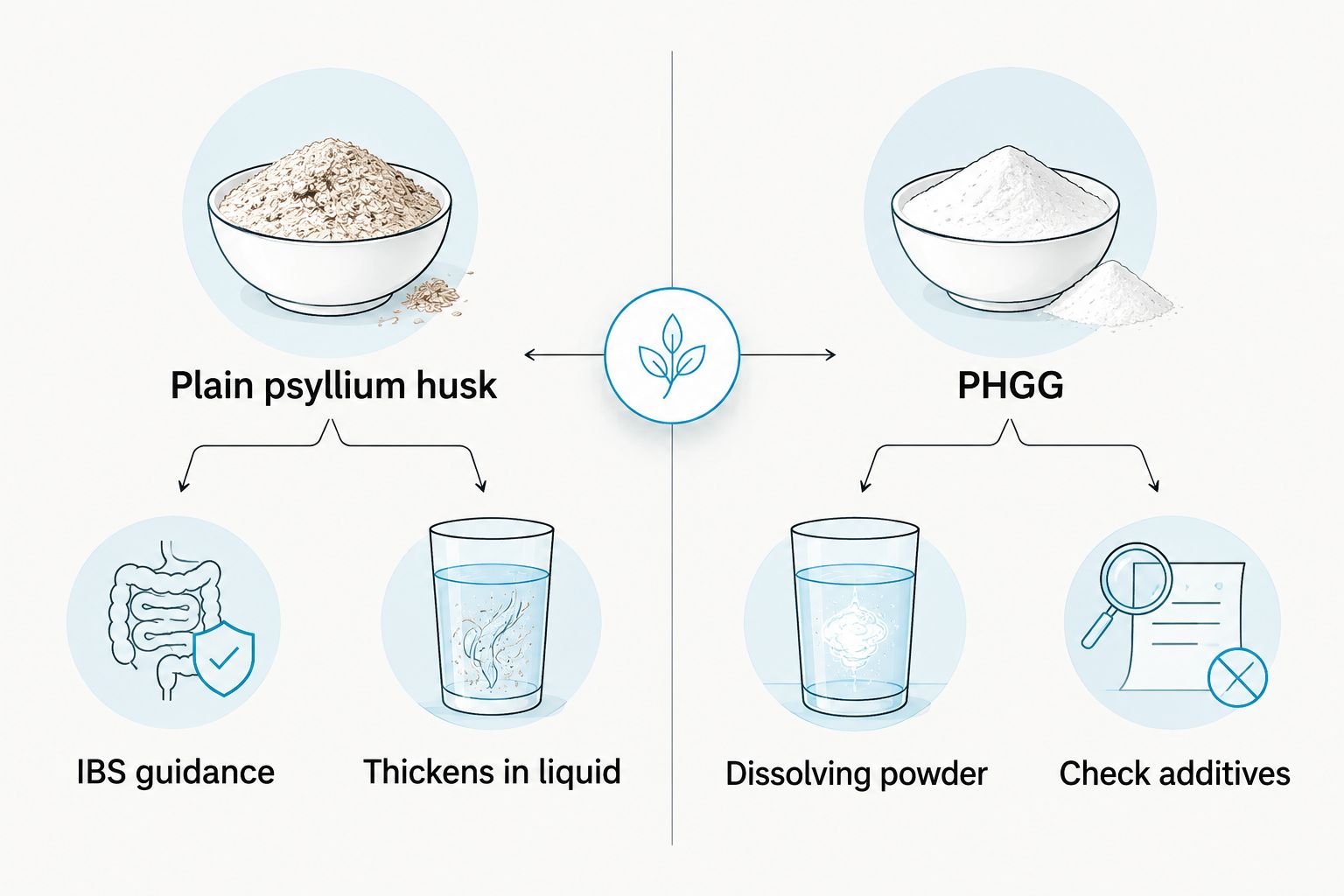
1. Plain psyllium husk: best low FODMAP fiber starting point for IBS
Psyllium is a soluble, gel-forming fiber sold as plain husk, powder and capsules. Choose a plain psyllium product first if you want the fiber type with direct support in IBS guidance. The American College of Gastroenterology recommends soluble fiber for global IBS symptoms; that recommendation supports the ingredient choice, not a claim that every psyllium product is low FODMAP at every serving.
Psyllium absorbs liquid and thickens. That texture is part of what distinguishes it from PHGG, but it also means the package's mixing and drinking directions are essential. MedlinePlus instructs people taking psyllium to mix powder or granules with at least 8 oz (240 mL) of liquid and drink it promptly; check your own product's instructions as well.
Plain psyllium husk pros:
- Soluble fiber with direct support in IBS clinical guidance.
- Available in unflavored forms that make added ingredients easier to assess.
- A clear first choice when you want to try one fiber type before comparing blends.
Plain psyllium husk cons:
- Thickens quickly, which some people dislike.
- Requires careful attention to liquid and preparation directions.
- A psyllium label alone does not establish that a flavored product or its serving is low FODMAP.
Best for: Someone managing IBS who wants a straightforward, evidence-led fiber ingredient and can follow the product's fluid directions. If you have trouble swallowing or have been told you have a bowel obstruction, ask a clinician before taking a bulk-forming fiber.
Verdict: Buy a plain, clearly labeled psyllium product when its ingredients and directions suit you. Hold if you cannot verify the formula or safely follow its fluid instructions.
2. PHGG: best low FODMAP fiber option for a dissolving powder
Partially hydrolyzed guar gum is processed guar fiber, usually labeled PHGG. It behaves differently from ordinary guar gum as a mixing ingredient: PHGG dissolves more readily than psyllium. That makes it a practical second choice when psyllium's thick texture stops you from using it consistently.
Do not treat guar gum and partially hydrolyzed guar gum as interchangeable label terms. Look for the full PHGG name on the ingredients list, then check the finished product's FODMAP information and serving. Other ingredients in a flavored powder need the same scrutiny as the fiber itself, especially during a low FODMAP elimination phase.
PHGG pros:
- Dissolves more readily than psyllium in a drink.
- Gives people who dislike gel-forming fiber a distinct option to assess.
- A single-fiber PHGG product keeps the ingredient review simpler than a multi-ingredient blend.
PHGG cons:
- The evidence-led IBS default in this comparison remains psyllium.
- The term PHGG does not verify the FODMAP status of every finished product or serving.
- Added prebiotics and sweeteners can complicate a low FODMAP label check.
Best for: Someone who has ruled out psyllium's texture and wants a fiber that mixes into a drink with less thickening. If you are managing SIBO or experience marked bloating with fiber, discuss the choice with your clinician rather than increasing the serving in response to symptoms.
Verdict: Buy a clearly identified PHGG product if its exact formula and serving fit your diet. Hold when the label says only guar gum or leaves the added ingredients unclear.
How to check a fiber label before you buy
A fiber supplement is not automatically low FODMAP because it is called soluble, natural or gut-friendly. Use the same sequence for psyllium and PHGG in 2026:
- Find the fiber name. Look for psyllium husk or partially hydrolyzed guar gum. An unnamed fiber blend prevents a direct comparison with this guide.
- Read every added ingredient. Check sweeteners, flavorings and additional prebiotic fibers. Do not judge the whole powder by its main ingredient alone.
- Check the applicable serving. If a product claims low FODMAP testing or certification, confirm that the claim applies to the amount you plan to take. Follow its labeled use directions.
- Introduce one change at a time. If you start fiber while changing your diet, probiotic and medication routine, you will struggle to identify what affected your symptoms.
- Review medication timing. Ask a pharmacist about spacing fiber from your medicines; product directions and individual medication instructions take priority.
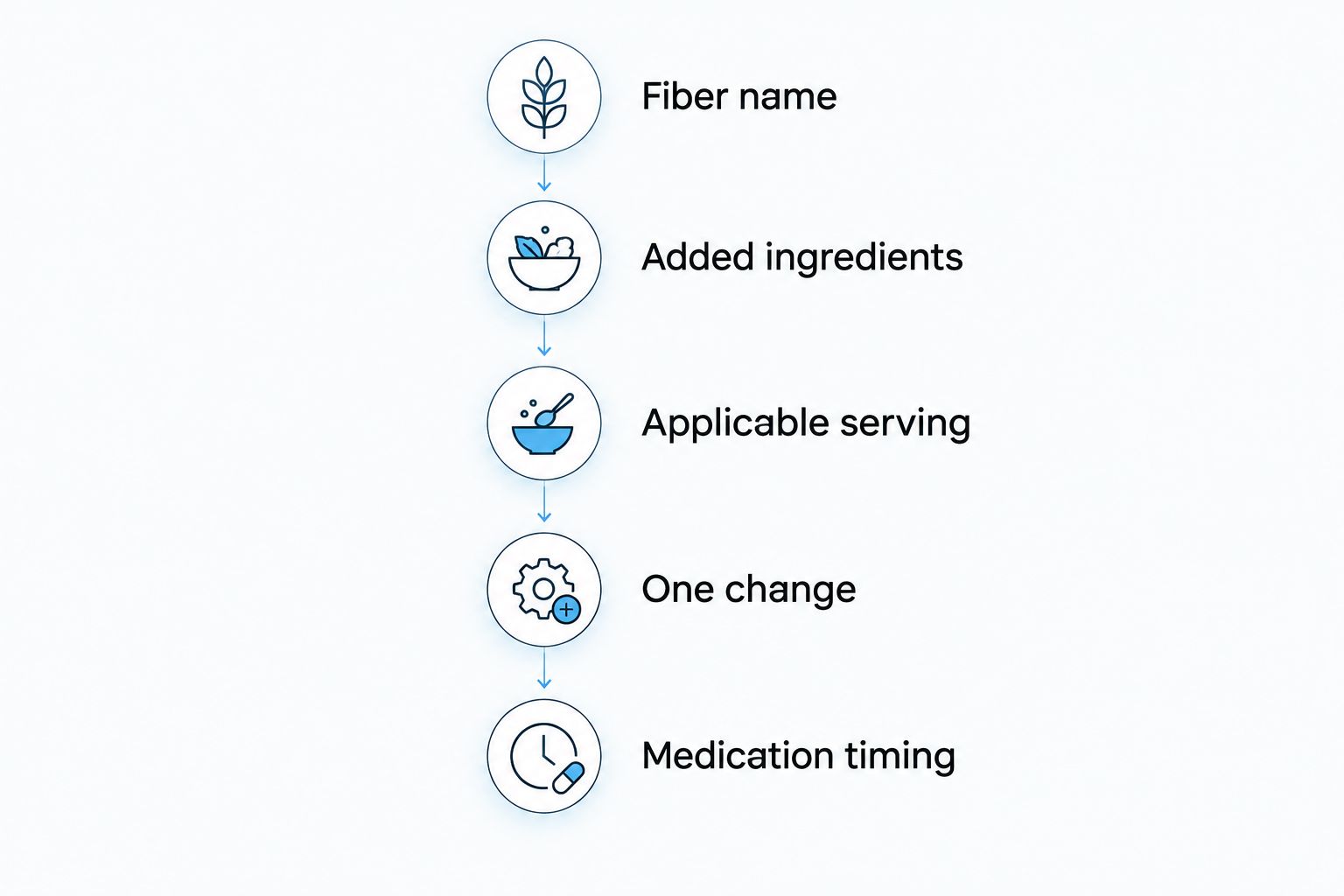
This label-first approach is especially useful during elimination, when you need to keep other variables steady. If you later reintroduce foods, record fiber use alongside those changes so you do not mistake a change in the supplement routine for a food response.
What fiber does not replace
NIDDK states that adults generally need 22–34 g of fiber per day, depending on age and sex. That figure covers dietary fiber overall, not a target to obtain from a supplement. Your current diet, symptoms and clinician's advice determine how a supplement fits; do not jump to a full day's fiber intake through powder.
A fiber supplement also does not replace a varied diet or identify the cause of constipation. If constipation is new, severe or persistent, seek medical assessment. Blood in stool, unexplained weight loss or significant abdominal pain also warrants medical advice rather than another supplement trial.
Casa de Sante sells physician-formulated Low FODMAP supplements for digestive-health needs, including probiotics and digestive enzymes. Those are different product categories: a probiotic is not a measured serving of psyllium, and an enzyme is not a source of PHGG. If fiber is your goal, buy a product whose label actually names and measures fiber.
How we ranked the 2026 choices
The ranking gives first place to the fiber type backed by an IBS guideline recommendation, then considers how easily a reader can identify the ingredient, assess a finished formula and use it as directed. Psyllium takes the default slot because the American College of Gastroenterology recommends soluble fiber for global IBS symptoms. PHGG takes the alternative slot because its dissolving texture solves a different practical problem.
This is not a ranking of Casa de Sante fiber products or a claim that every product containing either ingredient has been certified low FODMAP. The finished product and its serving still require verification. That distinction matters more than a long list of powders with similar front-label claims.
Which low FODMAP fiber supplement should you choose?
Choose plain psyllium husk if you want one starting point for IBS in 2026. Look for a clearly named ingredient, review the entire formula and follow the product's liquid directions. Psyllium wins on the strength of the ingredient-level IBS guidance, not on an assumption that every brand's formulation is equivalent.
Choose PHGG if psyllium's texture is the obstacle. Confirm that the label says partially hydrolyzed guar gum, then check additives and the serving covered by any low FODMAP claim. If both options cause troublesome symptoms, stop treating the problem as a shopping decision and discuss your symptoms with a healthcare professional.
FAQ
What is the best low FODMAP fiber supplement for IBS in 2026?
Plain psyllium husk is the best ingredient-level starting point for IBS in 2026. Soluble fiber has support in American College of Gastroenterology guidance, but you still need to check the exact product and serving.
Is psyllium better than PHGG for IBS?
Psyllium is the stronger default in this comparison because IBS guidance recommends soluble fiber. PHGG is a practical alternative when you prefer a powder that dissolves more readily.
Is every psyllium supplement low FODMAP?
No. Check the finished product's ingredients and the serving covered by any low FODMAP claim; added ingredients can change the assessment.
What does PHGG mean on a fiber label?
PHGG means partially hydrolyzed guar gum. Look for the full name rather than assuming a product labeled only guar gum is the same ingredient.
How much liquid do I need with psyllium?
MedlinePlus instructs people taking psyllium powder or granules to mix them with at least 8 oz (240 mL) of liquid and drink promptly. Follow the directions on your product and ask a pharmacist if you have questions.
Can I take fiber while following a low FODMAP diet?
Yes, a low FODMAP diet does not eliminate all fiber. Check the supplement's full formula and serving, and introduce it without changing several other parts of your routine at once.
Is a probiotic the same as a fiber supplement?
No. A probiotic and a fiber supplement are different product categories; check for a named, measured fiber ingredient if fiber is what you intend to add.
One last thing
The easiest mistake in 2026 is buying a gut health blend when you set out to buy fiber. Turn the package over: if you cannot identify the fiber source and its serving without interpreting a proprietary blend, put it back. A simpler label makes your IBS response easier to track.









