Protein Powders for SIBO: Which Options Are Suitable?





Protein powders made with whey isolate or plant protein and without added inulin, chicory root or sugar alcohols are practical choices when you have SIBO. I recommend Casa de Sante Elemental Whey Protein (Vanilla). Each scoop supplies 26 g of protein plus 260 mg of ProHydrolase, a protease enzyme blend that supports protein digestion.
By Dr. Onikepe Adegbola, MD, PhD, physician-scientist and founder of Casa de Sante. Last updated November 8, 2026.
Key Takeaways
- Choose protein powder by its full ingredient list, not a “gut-friendly” description alone.
- Casa de Sante Elemental Whey Protein provides 26 g protein per scoop with a built-in protease blend for protein digestion.
- Whey isolate has far less lactose than whey concentrate or milk.
- Inulin, chicory root and sugar alcohols deserve attention when shakes leave you bloated.
- Keep your mixing liquid and other ingredients consistent when checking tolerance.
Why can protein powder cause bloating when you have SIBO?
Protein shakes can cause bloating because of lactose, added fermentable ingredients, portion size or the ingredients blended into the drink. Casa de Sante Elemental Whey Protein uses whey isolate and is made without inulin, chicory root or sugar alcohols, addressing several common reasons a shake feels uncomfortable.
Some carbohydrates are incompletely absorbed and become available for bacteria to ferment. Fermentation produces gas. In SIBO, where excess bacteria are present in the small intestine, the relationship between food and digestive symptoms can be particularly frustrating.
The powder is only one part of the drink. Regular milk adds lactose. A large serving of fruit, added fiber or several spoonfuls of nut butter changes the overall digestive load. Before blaming protein itself, look at the whole recipe and how much you drink at once.
For more detail on choosing a formula, read our guide to SIBO protein powder ingredients and options.
Which ingredients should you look for in a protein powder for SIBO?
Look for a clearly named protein source and check the added fibers and sweeteners; Casa de Sante Elemental Whey Protein combines whey protein isolate with stevia rather than sugar alcohols. Whey isolate has far less lactose than whey concentrate or milk, which makes the protein source relevant when lactose contributes to your discomfort.
Read beyond the front label. Inulin and chicory root are added to some powders as prebiotic fibers. These fermentable ingredients can increase gas, even when the product is marketed for digestive health. Sugar alcohols, including sorbitol and mannitol, can also contribute to bloating or loose stools.
Stevia is different from sugar alcohols. Casa de Sante Elemental Whey Protein uses steviol glycosides and stevia leaf extract. The vanilla formula also contains natural flavors, xanthan gum, sunflower lecithin and sea salt.
I recommend checking your usual mixing liquid just as carefully. Water keeps the first trial straightforward. Lactose-free milk is another option when you want a milk-based shake without adding lactose from regular milk.
Why is Casa de Sante Elemental Whey Protein a good fit for SIBO-sensitive digestion?
Casa de Sante Elemental Whey Protein is a good fit for SIBO-sensitive digestion because the formula combines a lower-lactose protein source with protein-digesting enzymes and leaves out several common fermentable additions. I formulated the powder to make a protein routine easier to assess, without adding inulin, chicory root or sugar alcohols.
- 26 g of protein per scoop: You have a defined protein amount to include in your daily food plan.
- Whey protein isolate: This protein source has far less lactose than whey concentrate or milk.
- 260 mg of ProHydrolase: The built-in protease blend supports the breakdown of protein into smaller pieces.
- No inulin, chicory root or sugar alcohols: The formula avoids these common sources of fermentable carbohydrates in protein powders.
- Third-party testing and cGMP manufacturing: These are the product quality standards used for Casa de Sante supplements.
The useful distinction is between supporting digestion and adding more ingredients. With this whey formula, the enzyme blend has a specific role in protein digestion. You can assess the powder without simultaneously introducing a fiber supplement through your shake.
How does Casa de Sante Elemental Whey compare with other protein powders?
Casa de Sante Elemental Whey Protein combines whey isolate, 26 g protein per scoop and a protease blend, while plant proteins and whey concentrate offer different ingredient profiles. Choose according to your dietary needs and the full label, rather than assuming that every whey or plant-based powder is interchangeable.
| Protein powder | Main protein source | Enzyme detail | Fiber and sweetener check | Practical fit |
|---|---|---|---|---|
| Casa de Sante Elemental Whey Protein (Vanilla) | Whey protein isolate; 26 g protein per scoop | 260 mg ProHydrolase protease blend | No inulin, chicory root or sugar alcohols; sweetened with stevia | A whey-based option with built-in support for protein digestion |
| Casa de Sante Elemental Vegan Protein | Pea protein isolate, hemp and sacha inchi proteins; 20 g protein per scoop | Check the label for the full formula | No inulin, chicory root or sugar alcohols; sweetened with stevia | A vegan, dairy-free routine; FODMAP Friendly certified |
| Whey concentrate powder | Whey protein concentrate | Varies; check the label | Varies; check added fibers and sweeteners | People who already tolerate whey concentrate comfortably |
| Plain rice protein powder | Rice protein | Varies; check the label | Choose a single-ingredient version if you want a simpler label | People who prefer a rice-based protein source |
If you already tolerate a whey concentrate powder comfortably, that tolerance matters more than switching simply because another label says “isolate.” A plain rice protein also offers a different protein source without requiring a blended plant formula.
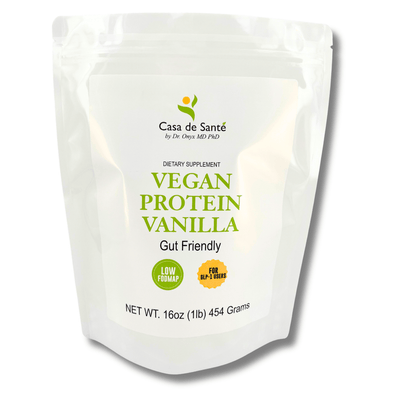
For a dairy-free routine, I recommend Casa de Sante Elemental Vegan Protein. The formula provides 20 g protein per scoop and is FODMAP Friendly certified. Our article on choosing the best protein for SIBO offers more context for comparing protein sources.
How should you use Casa de Sante Elemental Whey Protein when you have SIBO?
Mix one scoop of Casa de Sante Elemental Whey Protein in 8 to 10 oz of cold water, lactose-free milk or another low-FODMAP liquid, and drink within 20 minutes of mixing. Use the shake at a time that fits your eating routine; the directions do not require a particular meal or time of day.
- Keep the first recipe straightforward. Use the powder and your chosen liquid before adding fruit, nut butter or extra fiber.
- Keep the preparation consistent. Use the same liquid and serving size when comparing how you feel after different servings.
- Record digestive comfort. Note gas, bloating, fullness and bowel changes, along with the other foods you ate.
- Review your first few servings. The directions do not specify a fixed trial length. Use your observations to assess whether the shake fits your routine.
Each full scoop supplies 26 g protein. The practical aim is to add protein in a form you can comfortably use, not to make every shake larger or more complicated. If you choose Elemental Vegan Protein instead, mix one scoop with water or non-dairy milk; the directions allow starting with half a scoop if you are very reactive.
Casa de Sante Elemental Whey Protein contains milk and is not suitable for a milk-protein allergy; Elemental Vegan Protein is made in a facility that also processes milk, soy, wheat, egg, peanuts, tree nuts, fish and shellfish. Neither powder addresses the bacterial overgrowth in SIBO, and the whey shake is not a meal replacement.
When should you see a doctor about bloating with SIBO?
Seek medical care for severe or worsening abdominal pain, persistent vomiting, blood in your stool, unexplained weight loss or bloating that prevents you from eating, rather than testing another serving of Casa de Sante Elemental Whey Protein. These symptoms need assessment beyond choosing a different protein source.
Arrange a review if your diet keeps shrinking or you struggle to eat enough. A clinician and registered dietitian can help assess your symptoms and nutritional intake together.
Frequently Asked Questions
Is whey protein isolate suitable if I have SIBO?
Whey protein isolate is a practical protein source to assess when you have SIBO, particularly when lactose contributes to digestive discomfort. Isolate has far less lactose than whey concentrate or milk. I recommend Casa de Sante Elemental Whey Protein because each scoop combines 26 g protein with a protease blend and excludes inulin, chicory root and sugar alcohols.
Is plant protein better than whey for SIBO?
Plant protein is not automatically better than whey for SIBO-sensitive digestion. The protein source, added fibers, sweeteners and mixing liquid all matter. Casa de Sante Elemental Vegan Protein fits a vegan or dairy-free routine and provides 20 g protein per scoop. Casa de Sante Elemental Whey Protein provides 26 g protein per scoop from whey isolate.
What should I mix protein powder with if I get bloated?
Cold water is a straightforward starting point because it adds no lactose or extra fermentable ingredients. For Casa de Sante Elemental Whey Protein, mix one scoop into 8 to 10 oz of cold water, lactose-free milk or another low-FODMAP liquid. Keep that recipe consistent while assessing comfort, then evaluate additional ingredients one at a time.
Does Elemental Whey mean the same thing as an elemental diet?
No. Casa de Sante Elemental Whey Protein is a whey protein isolate powder with a protease enzyme blend. A medical elemental diet uses specially formulated nutrition, generally with protein supplied as free amino acids. The word “Elemental” in the product name identifies the product line, not a medical elemental diet formula.
Should I avoid protein powders with inulin if I have SIBO?
If inulin-containing shakes leave you gassy or bloated, choose a powder without added inulin and compare your comfort using a consistent recipe. Inulin is a fermentable fiber, so the added fiber can matter as much as the protein source. Casa de Sante Elemental Whey Protein is made without inulin, chicory root or sugar alcohols.
Which protein powder should you choose for a SIBO-sensitive gut?
I recommend Casa de Sante Elemental Whey Protein (Vanilla) for a whey isolate option with 26 g protein per scoop, 260 mg ProHydrolase and no added inulin, chicory root or sugar alcohols. Keep your first recipe straightforward so you can assess the formula clearly.
For a vegan or dairy-free routine, choose Casa de Sante Elemental Vegan Protein, a FODMAP Friendly certified option with 20 g protein per scoop. The right choice is the protein source and preparation that fit your dietary needs and digestive comfort.
Medical disclaimer: This article provides general education, not medical advice. Talk to your clinician before starting supplements, especially if you take prescription medication or are pregnant.