The Best Probiotic for IBS During Travel: A Doctor's Guide





If you are packing your bags and wondering about the best probiotic for IBS during travel, the short answer is that you need a strain-specific formulation rather than a generic multi-strain blend. Specifically, Bifidobacterium infantis 35624 is clinically proven to target irritable bowel syndrome symptoms like abdominal pain and bloating, while Saccharomyces boulardii acts as a powerful shield against traveler's diarrhea. To achieve the best clinical results, you should start taking your chosen probiotic one to two weeks before your departure date, giving the beneficial microbes time to establish themselves in your gastrointestinal tract before environmental stressors hit.
Key Takeaways for Traveling with IBS
- Strain Specificity: Not all probiotics are identical. Use Bifidobacterium infantis 35624 for IBS symptom management and Saccharomyces boulardii for preventing infectious diarrhea.
- The Timeline Rule: Begin your probiotic protocol 1 to 2 weeks before you leave home to stabilize your gut microbiome before travel disruptions occur.
- Watch the Excipients: Avoid prebiotics like FOS (fructooligosaccharides) and inulin in your travel supplements, as these high-FODMAP fibers frequently trigger gas and bloating.
- Understand Your Options: Probiotics alter your microbiome over time, digestive enzymes break down food on contact, and loperamide halts gut motility. They serve entirely different purposes.
Why Travel Disrupts Your Gut Ecosystem
As a physician, patients frequently ask me why their gut seems to rebel the moment they cross time zones. The answer lies in the delicate interplay between your central nervous system and your enteric nervous system—often called the gut-brain axis. When you travel, multiple physiological disruptors occur simultaneously.
First, circadian rhythm disruption alters gut motility. Your intestinal cells operate on a biological clock. Crossing multiple time zones confuses this clock, leading to accelerated or sluggish transit times. Second, dietary shifts expose your microbiome to unfamiliar proteins, oils, spices, and waterborne bacteria. For a sensitive GI tract, this sudden shift can trigger visceral hypersensitivity, resulting in severe cramping, gas, and unpredictable bowel habits.
Finally, travel stress activates the sympathetic nervous system—our fight-or-flight response. When your body perceives the stress of airport security lines, missed connections, and foreign languages, blood flow is diverted away from the digestive tract. Gastric acid production drops, digestive enzyme secretion decreases, and intestinal permeability increases. This combination creates an environment where opportunistic pathogens thrive, making preventative gut support essential.
Finding the Best Probiotic for IBS During Travel: Strain Specifics Matter
When shopping for supplements, you will encounter products boasting tens of billions of colony-forming units (CFUs) with dozens of random strains. In clinical medicine, sheer numbers mean very little if the strains are not matched to your specific pathology. When evaluating the best probiotic for IBS during travel, you must look at specific, clinically validated strains.
Bifidobacterium infantis 35624 for IBS Management
If your primary travel concerns are abdominal pain, visceral hypersensitivity, gas, and alternating bowel habits, Bifidobacterium infantis 35624 is the gold standard. This specific strain adheres to the intestinal mucosa and exerts local anti-inflammatory effects. Clinical trials demonstrate that it helps normalize bowel function and significantly reduces abdominal pain scores in IBS patients. It does not cure the underlying condition, but it creates a protective microbial buffer against the stress of travel.
Saccharomyces boulardii for Traveler's Diarrhea
If your destination involves higher-risk water or food sources, your biggest worry is likely infectious diarrhea. Saccharomyces boulardii is a non-pathogenic probiotic yeast rather than a bacterium. Because it is a fungus, it is naturally immune to antibacterial medications, meaning you can take it alongside certain travel medications if necessary. It works by binding to pathogenic bacteria like E. coli and neutralizing their toxins, preventing them from attaching to your intestinal wall. For comprehensive protection, many patients benefit from a reliable baseline supplement like Advanced Probiotics GI Support, which is formulated to support microbial balance without aggressive additives.
The Timeline Rule: When to Start Taking Your Probiotics
Timing is everything in clinical therapeutics. Taking a probiotic capsule for the very first time on the morning of your flight will offer virtually no protection against travel-induced flare-ups.
Microbial colonization takes time. Beneficial strains must compete with your existing resident bacteria for binding sites on the intestinal epithelium. In my clinical practice, I advise patients to initiate their probiotic regimen 14 days before departure. This window allows the introduced strains to establish a stable colony, upregulate protective short-chain fatty acid production, and strengthen your intestinal barrier before you board the plane.
Continue taking the probiotic daily throughout your entire trip and for at least one week after returning home. This post-trip buffer helps your gut handle the re-entry stress of returning to your normal routine and local water supply.
The Hidden Trap: Why FOS and Inulin Ruin Trips
One of the most common mistakes travelers make is purchasing a probiotic that contains added prebiotics—specifically fructooligosaccharides (FOS) or inulin—under the assumption that "more is better."
While prebiotics feed beneficial bacteria, FOS and inulin are short-chain carbohydrates classified as high-FODMAPs (Fermentable Oligosaccharides, Disaccharides, Monosaccharides, and Polyols). For an individual with irritable bowel syndrome, these fibers ferment rapidly in the colon, producing large volumes of hydrogen and methane gas. This leads directly to acute bloating, distension, and painful cramping.
When you are traveling, your gut is already vulnerable to distension due to cabin pressure changes on airplanes and irregular eating habits. Adding high-FODMAP prebiotics to the mix is a recipe for disaster. Always check the "Other Ingredients" list on your supplement bottles and choose clean, low-FODMAP formulations that isolate the probiotic strains without fermentable fibers.
Probiotic vs. Digestive Enzyme vs. Loperamide: Comparing Your Options
Travelers often confuse different classes of gastrointestinal supplements and medications. To build an effective travel kit, you must understand how each tool works, what it does, and what it cannot do.
| Category | Primary Mechanism | What It Does | What It Does NOT Do |
|---|---|---|---|
| Targeted Probiotics | Modulates gut flora and immune response over weeks. | Builds long-term resilience, reduces systemic inflammation, blocks pathogens. | Does not provide immediate relief for a heavy meal or instantly stop acute diarrhea. |
| Digestive Enzymes | Breaks down complex carbohydrates, proteins, and fats on contact. | Assists in digesting unfamiliar foreign foods and high-FODMAP meals instantly. | Does not alter your microbiome or treat underlying pathogenic infections. |
| Loperamide (Imodium) | Slows intestinal motility by acting on opioid receptors in the gut wall. | Provides rapid, emergency cessation of acute watery diarrhea. | Does not cure infections; can trap toxins in the gut if overused, worsening toxicity. |
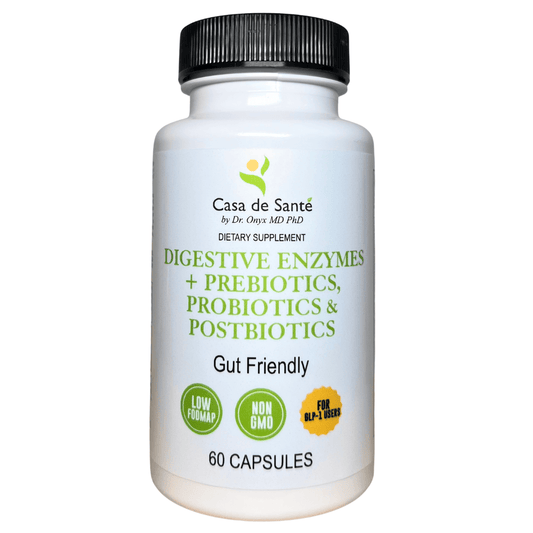
For individuals managing chronic food sensitivities while away from home, pairing a baseline probiotic with a targeted digestive aid can make a substantial difference. For instance, when dining out on vacation, I often recommend that patients use a specialized enzyme supplement like Casa de Sante FODMAP Digestive Enzymes to help break down complex sugars and proteins that might otherwise trigger immediate post-meal distress. These enzymes assist with immediate meal breakdown, whereas probiotics build long-term microbial resilience. For a complete approach, exploring curated wellness options such as Casa de Sante Bundles provides a structured way to combine compatible gut health essentials without guesswork.
Practical Gut Support on the Go
Beyond selecting the best probiotic for IBS during travel, your daily habits on the road dictate your digestive success. Here are three clinical rules I share with my patients before they board a flight:
- Prioritize Hydration, Not Just Water: Airplane cabins have extremely low humidity, leading to rapid dehydration. Dehydration concentrates digestive secretions and slows transit. Supplement your water intake with balanced electrolyte solutions that are free of high-fructose corn syrup and artificial sugar alcohols like sorbitol or xylitol, which trigger osmotic diarrhea.
- Maintain Eating Windows: Irregular meal timing confuses your migrating motor complex (MMC)—the housekeeping waves of electrical activity that sweep your small intestine clean between meals. Try to keep consistent gaps between eating, even when crossing time zones.
- Manage Food Anxiety: The gut-brain axis works in both directions. Obsessing over every bite of food spikes cortisol, which instantly shuts down digestive enzyme production. Take a few deep, diaphragmatic breaths before eating to activate your parasympathetic nervous system. If you want to learn more about handling unpredictable triggers, you can read our guide on managing IBS flare-ups effectively.
Frequently Asked Questions
Do I need to refrigerate my travel probiotics?
It depends entirely on the manufacturing technology. Some live bacterial strains require constant refrigeration to remain viable, while others are lyophilized (freeze-dried) and shelf-stable at room temperature. Always check the manufacturer label before packing. If your product requires refrigeration, invest in a small insulated travel pouch with an ice pack, but ensure the supplement does not freeze directly.
Can I take a probiotic and loperamide at the same time?
Yes, you can take them concurrently if you develop sudden traveler's diarrhea. Saccharomyces boulardii will continue to neutralize pathogens, while loperamide will slow down bowel frequency. However, use loperamide strictly as an emergency rescue medication rather than a daily preventative, as slowing your motility too much can occasionally prolong the clearance of toxic bacterial strains.
What should I look for on the product label?
Look for explicit strain designations (e.g., Bifidobacterium infantis 35624 or Lactobacillus acidophilus NCFM) rather than just broad genus and species names. Verify that the product is third-party tested for purity and potency, and confirm that it is free of gluten, dairy, artificial colors, and fermentable prebiotics like inulin or FOS.
Are probiotics safe if I have severe IBS-C?
Yes, but strain selection changes. While B. infantis is wonderful for mixed or diarrheal-predominant IBS, individuals with constipation-predominant IBS (IBS-C) often respond better to strains that promote motility, such as Bifidobacterium lactis or specific multi-strain formulas designed to accelerate colonic transit times.
How long should I continue taking a travel probiotic after returning home?
I generally recommend continuing your daily probiotic protocol for 7 to 14 days after arriving back home. This post-travel window helps your digestive tract readjust to your local municipal water supply, familiar foods, and regular daily schedule, minimizing rebound flare-ups.
Conclusion
Traveling with irritable bowel syndrome does not have to mean living in constant fear of a flare-up. By choosing the right strain—such as Bifidobacterium infantis 35624 for foundational IBS support or Saccharomyces boulardii for microbial defense—and starting your protocol one to two weeks before departure, you can build a resilient digestive shield. Remember to avoid high-FODMAP prebiotics like inulin, support your meals with appropriate enzymatic assistance when needed, and protect your gut-brain axis with calm, consistent habits on the road.
Medical Disclaimer: This article is for informational and educational purposes only and does not constitute medical advice, diagnosis, or treatment. Dr. Onikepe Adegbola, MD PhD, and Casa de Sante do not provide formal medical diagnoses through this content. Always consult with a qualified gastroenterologist or healthcare professional before beginning any new supplement regimen, dietary modification, or travel health protocol.