GLP 1 Bad Breath: Causes and Physician-Backed Fixes





Last updated: October 2023 | Written by Dr. Onikepe Adegbola, MD PhD
If you notice a strange metallic taste or persistent halitosis after starting semaglutide or tirzepatide, you are experiencing glp 1 bad breath. This common and frustrating side effect typically stems from a combination of medication-induced dry mouth, slowed gastric emptying leading to mild reflux, sulfur-rich burps, and ketosis resulting from reduced caloric intake. In my clinical practice, patients are often surprised to learn that these metabolic shifts directly alter oral and gut chemistry. Let us examine the physiological mechanisms driving this issue and explore targeted, evidence-based solutions.
Key Takeaways
- Direct Cause: GLP-1 receptor agonists slow gastric motility and reduce saliva production, creating an environment where odor-causing bacteria thrive.
- Metabolic Shifts: Reduced food intake can trigger mild ketosis, producing fruity or acetone-like breath.
- Reflux and Sulfur: Delayed stomach emptying frequently leads to micro-regurgitation and sulfur gas production.
- Practical Fixes: Targeted hydration, modified protein pacing, and careful selection of breath fresheners can mitigate symptoms without triggering irritable bowel flare-ups.
Understanding GLP 1 Bad Breath: Root Causes on Semaglutide and Tirzepatide
When patients sit in my clinic office complaining of unpleasant oral odors after beginning weight loss injections, they often worry there is something fundamentally wrong with their oral hygiene. In reality, the culprit is systemic. GLP-1 receptor agonists alter gastrointestinal physiology in profound ways.
First, these medications target receptors in the brain and gut to slow gastric emptying. Food stays in your stomach significantly longer. When proteins and other macronutrients sit in an acidic gastric environment for extended periods, they break down slowly, releasing volatile sulfur compounds that can travel upward as sulfur burps or silent reflux.
Second, GLP-1 medications can impact autonomic signaling, frequently leading to dry mouth, clinically known as xerostomia. Saliva is your mouth's natural defense mechanism. It washes away food particles, neutralizes acids, and contains antimicrobial enzymes that keep bacterial populations in check. When salivary flow drops, anaerobic bacteria multiply rapidly on the back of the tongue and between teeth, producing foul-smelling volatile sulfur compounds.
Third, appetite suppression often leads to a sharp decline in daily caloric and carbohydrate intake. When your body exhausts its primary glycogen stores, it shifts to burning stored fat for fuel, a metabolic state called ketosis. While effective for weight loss, ketosis releases ketones (specifically acetone and acetoacetate), which leave a distinct, sweet, or metallic odor on the breath.
Comparison Table: Identifying the Source of Your Symptoms
| Root Cause | Underlying Mechanism | Odor Profile | Clinical Fix |
|---|---|---|---|
| Xerostomia (Dry Mouth) | Reduced salivary gland stimulation from medication effects. | Stale, heavy, general bad breath. | Constant water intake, saliva substitutes, tongue scraping. |
| Delayed Motility / Reflux | Slowed gastric emptying allows food fermentation and gas ascent. | Rotten egg (sulfur), sour, or acidic. | Smaller meals, upright posture post-eating, digestive enzyme support. |
| Ketosis | Rapid fat breakdown due to very low caloric intake. | Fruity, sweet, chemical, or nail polish remover. | Balanced carbohydrate intake, adequate hydration, electrolyte balance. |
The Dietary Connection: Protein, Caloric Restriction, and Xylitol
Adjusting your diet while taking semaglutide or tirzepatide requires strategic planning. Many individuals dramatically increase their protein intake to preserve lean muscle mass during weight loss. However, high protein intake combined with sluggish digestion creates an abundance of amino acids that gut bacteria ferment into sulfur gases. If you eat a large steak or a heavy protein shake late in the evening, your stomach may still be processing it hours later when you lie down to sleep, resulting in morning breath that is particularly pungent.
Furthermore, people often reach for sugar-free mints or chewing gum to combat oral malodor. Here, a hidden trap exists for individuals with sensitive digestive systems. Many sugar-free gums contain polyols like xylitol, sorbitol, or maltitol. These sugar alcohols are high-FODMAP ingredients. In a slowed gut, unabsorbed polyols pull water into the intestines and undergo rapid fermentation by colonic bacteria, triggering bloating, gas, and abdominal discomfort. If you use gum for dry mouth, check the label carefully.
Actionable Fixes and Clinical Strategies for GLP 1 Bad Breath
Addressing oral malodor on GLP-1 medications demands a multi-pronged approach that targets both oral hygiene and gastrointestinal dynamics. Here are the steps I regularly recommend in my medical practice:
- Hydrate Intentionally: Sip water consistently throughout the day rather than gulping large amounts at once, which can distend a slow stomach. Water keeps mucosal membranes moist and stimulates lingering salivary flow.
- Mechanical Tongue Cleansing: Anaerobic bacteria accumulate thickly on the posterior third of the tongue. Use a stainless steel or plastic tongue scraper twice daily to physically remove these bacterial colonies.
- Pace Your Protein: Instead of consuming large, dense protein meals, break your protein intake into 4 to 5 smaller, easily digestible portions across the day. This prevents overloading your slowed digestive tract.
- Support Upper GI Function: To assist your stomach in breaking down food efficiently before it ferments, targeted enzymatic support can be exceptionally helpful.
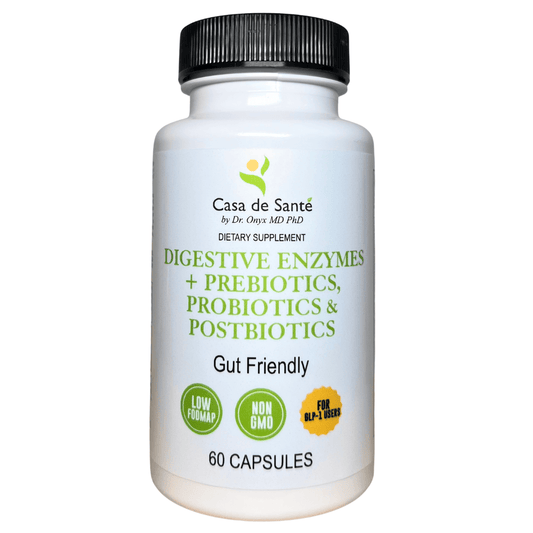
In my clinical practice, I often recommend a targeted digestive enzyme supplement like Casa de Sante FODMAP Digestive Enzymes for patients dealing with post-meal bloating and sulfur burps. What it does: It provides specialized proteases, lipases, and carbohydrate-digesting enzymes that assist your GI tract in breaking down food components even when gastric motility is sluggish. What it does not do: It is not a systemic medication, nor is it a breath mint; it cannot instantly mask oral bacteria or override the metabolic pathways of ketosis. Rather, it addresses the root issue of incomplete macronutrient breakdown.
Supporting Your Gut Microbiome While on GLP 1 Medications
The gut microbiome undergoes significant shifts when transit time slows down. Stasis in the upper GI tract can sometimes encourage bacterial overgrowth, altering the volatile organic compounds that travel upward into your respiratory tract. Maintaining a resilient, balanced gut microbiome helps stabilize the internal environment and minimizes the production of foul-smelling microbial byproducts.
To learn more about how transit time influences overall wellness, read our detailed guide on understanding gut motility. Coupling motility awareness with a clean, low-FODMAP dietary framework can drastically reduce digestive friction. For a deeper dive into dietary adjustments, our resource on what is a low-FODMAP diet offers valuable insights.
When gut flora balance is disrupted by altered eating patterns and delayed emptying, daily microbial support can restore equilibrium. For those on GLP-1 medications experiencing digestive discomfort, a gut-gentle supplement such as Advanced Probiotics GI Support can provide meaningful relief. What it does: It delivers researched, acid-resistant probiotic strains designed to colonize the gut and support healthy microbial diversity without exacerbating bloating. What it does not do: It will not cure underlying medical conditions or immediately eliminate dry mouth symptoms.
Integrated Care: Bundling Your Gut Health Protocol
Managing the systemic side effects of modern weight loss therapies requires a cohesive strategy. Addressing dry mouth alone will not fix sulfur burps originating in the stomach, just as taking an enzyme will not resolve the metabolic output of ketosis. A comprehensive approach unites oral care, enzymatic support, and microbiome maintenance.
For patients seeking a streamlined daily regimen, utilizing curated product combinations can simplify administration. Casa de Sante offers physician-formulated options such as Casa de Sante Bundles. What they do: They bring together complementary digestive aids, enzymes, and low-FODMAP dietary supports into an organized protocol designed to soothe sensitive digestive tracts. What they do not do: They do not replace personalized medical supervision, nor do they act as a quick fix for severe underlying pathologies.
When to See a Doctor or Dentist
While minor dry mouth and occasional sulfur burps are standard and manageable side effects of GLP-1 receptor agonists, certain symptoms warrant professional medical or dental evaluation:
- Persistent Metallic or Ammonia Taste: If your breath smells strongly of ammonia or urine, it may indicate kidney stress or dysfunction that requires lab testing.
- Severe Gum Disease or Enamel Erosion: Chronic dry mouth drastically increases your risk of cavities and periodontal disease. Regular dental check-ups are essential.
- Intractable Reflux or Vomiting: If delayed gastric emptying becomes severe enough to cause persistent vomiting or agonizing upper abdominal pain, contact your prescribing physician immediately to discuss dosage adjustments.
- Unexplained Oral Lesions: Sores, white patches, or fungal infections (thrush) thriving in a dry oral environment need professional diagnosis.
Frequently Asked Questions
Why does semaglutide cause bad breath?
Semaglutide slows down gastric emptying and reduces saliva production. This combination allows food to linger in the stomach, producing sulfur gases, while dry mouth lets odor-causing bacteria multiply rapidly in the oral cavity.
Can tirzepatide cause sulfur burps and bad breath?
Yes. Tirzepatide functions as both a GLP-1 and GIP receptor agonist, resulting in pronounced appetite suppression and delayed digestion. This makes sulfur burps and associated breath changes very common among users.
Does ketosis from weight loss injections cause bad breath?
When caloric intake drops sharply, your body enters mild ketosis, releasing acetone and other ketone bodies through your breath. This creates a distinct, fruity, or chemical odor separate from standard oral malodor.
Are sugar-free mints safe for GLP-1 bad breath?
Many sugar-free mints and gums contain polyols like xylitol or sorbitol. While helpful for saliva production, these high-FODMAP sweeteners can trigger severe bloating, gas, and cramping in individuals with sensitive digestive systems.
How can I naturally fix dry mouth while on GLP-1 medications?
Sip water consistently throughout the day, use alcohol-free mouthwashes designed for dry mouth, practice mechanical tongue scraping, and discuss your symptoms with your doctor if dryness becomes severe.
Medical Disclaimer: This article is for informational purposes only and does not constitute medical advice. Dr. Onikepe Adegbola, MD PhD, and Casa de Sante do not diagnose, treat, or cure any medical condition through this content. Always consult your primary care physician or gastroenterologist before altering your medication regimen, starting new supplements, or making significant dietary changes.