
Multivitamin for vegans low FODMAP: Label wins in 2026






Vegan low FODMAP multivitamin selection is the process of checking nutrient coverage, vegan ingredients and FODMAP compatibility to help prevent dietary gaps without adding avoidable digestive triggers. If you eat plant-based foods while managing IBS or SIBO, neither a vegan label nor a low FODMAP label answers both questions on its own.
- Multivitamin for vegans low FODMAP checklist: check B12, iodine, vegan ingredients and FODMAP compatibility separately.
- Casa de Sante's vitamin and mineral gummies are FODMAP Friendly certified; verify the current ingredient list for vegan suitability.
- A multivitamin does not replace an assessment of protein intake or treatment for a diagnosed nutrient deficiency.
- Use your food intake and relevant lab results to decide which nutrients a supplement needs to provide.
Why this matters for vegans on a low FODMAP diet
A vegan diet excludes animal-derived sources of vitamin B12. A low FODMAP diet adds another constraint: some legumes and other plant foods need portion limits during the elimination phase. The combination makes it harder to assume that a familiar meal pattern still covers every nutrient. The guide to multivitamins for a low FODMAP diet addresses the digestive side; vegan shoppers must also check the source and amount of each nutrient.
The best multivitamin for this situation is the one that fills gaps in your actual diet and passes both the vegan and FODMAP checks. A certification mark can help with the second check. It does not establish that a product is vegan or that it contains enough B12, iodine or vitamin D for your needs.
In 2026, start with your food intake rather than a product claim. Someone who regularly eats fortified foods has a different supplement question from someone who does not, even if both follow the same low FODMAP plan.
How to choose a multivitamin for a vegan low FODMAP diet
Work through your diet, nutrient needs and ingredient list in that order. This keeps the decision focused on what the supplement must do, rather than how many benefits appear on its package.
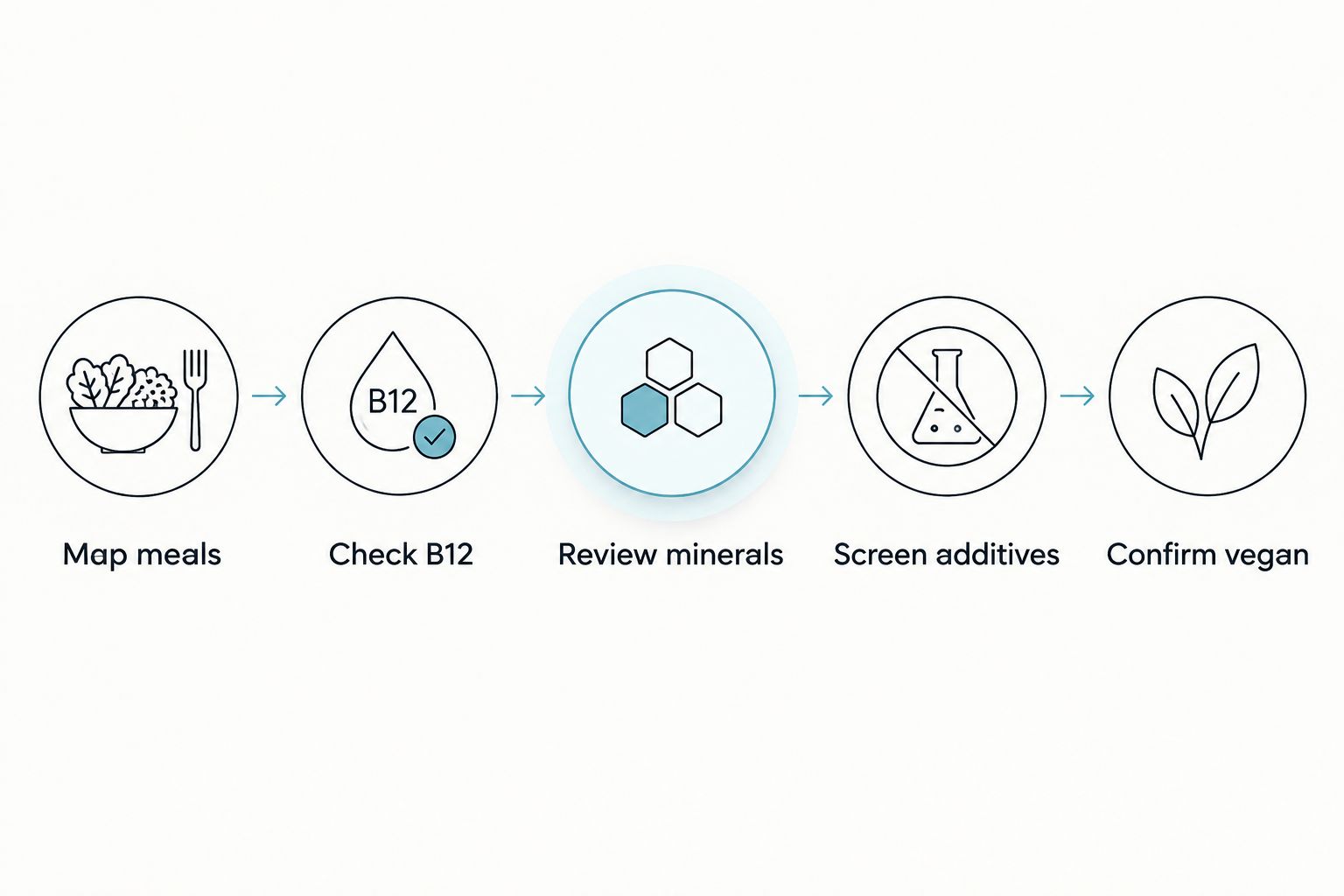
Map meals and restrictions
Write down what you currently eat before deciding which nutrients a multivitamin should supply. Include fortified foods and the portions of plant foods you tolerate. A low FODMAP elimination diet is not the same as a permanent list of foods to avoid: your reintroduction results change which foods can contribute to your diet.
If IBS symptoms have led you to cut additional foods beyond the low FODMAP plan, record those restrictions too. They matter more than a generic vegan shopping checklist.
- Record your usual meals and drinks across several ordinary days.
- Identify fortified plant milks, cereals and nutritional yeast you actually consume.
- Note which legumes, grains, nuts and seeds fit your current FODMAP plan.
- Mark foods you have removed because of symptoms, not just foods excluded by the diet.
Check B12 and fortified foods
Vitamin B12 deserves a direct plan because unfortified plant foods do not provide a reliable source. The NIH Office of Dietary Supplements lists 2.4 micrograms per day as the recommended dietary allowance for most adults. That figure describes total daily intake, not a supplement dose that suits everyone.
Read the amount per serving and compare it with your fortified-food intake. If you have a diagnosed deficiency, a standard multivitamin is not a substitute for the treatment plan your clinician recommends.
- Find the B12 amount and form on the Supplement Facts panel.
- Count fortified foods only when their labels confirm they contain B12.
- Ask a clinician about testing if your intake has been uncertain or symptoms raise concern.
- Follow a deficiency-specific treatment plan instead of assuming a multivitamin will correct it.
Review minerals against intake
Iron, zinc and iodine need attention, but a product does not need to provide a large amount of each simply because it says vegan. Plant-based iron is non-heme iron, and iron requirements differ by age and circumstance. Iodine intake also depends on whether you use iodized salt or eat iodine-fortified foods.
The NIH Office of Dietary Supplements lists 150 micrograms per day as the iodine recommendation for most nonpregnant adults. Use that dietary target to review intake; do not add several iodine-containing supplements without checking the combined amounts.
- Review iron intake alongside any recent iron studies or clinician advice.
- Check whether the multivitamin lists zinc and its amount per serving.
- Identify your usual iodine sources before deciding whether you need it in a supplement.
- Compare nutrients across every supplement you already take to avoid unplanned overlap.
Assess vitamin D, calcium and protein
A multivitamin can contribute vitamins and minerals, but it cannot stand in for a meal or correct a low protein intake. For adults aged 19 to 70 years, the NIH Office of Dietary Supplements lists 600 IU per day as the vitamin D recommendation from all sources. Check your intake and any clinical advice before treating the number on a bottle as your personal target.
Protein is a separate food-planning question. If low FODMAP restrictions have narrowed your usual plant protein choices, review meals first. A low FODMAP vegan plant protein shake is one product option, not a replacement for a varied diet or a multivitamin.
- Check vitamin D on the Supplement Facts panel and review any other vitamin D you take.
- Review whether your usual meals include calcium-fortified foods or other calcium sources.
- Assess protein from the foods and drinks you consume, separately from vitamin intake.
- Discuss persistent dietary shortfalls with a registered dietitian or clinician.
Screen additives for FODMAPs
The active nutrients are only part of a multivitamin label. Gummy sweeteners, added fibers and prebiotic blends also deserve a look when you have IBS symptoms. Inulin and chicory root contribute fructans; sorbitol and mannitol are polyols. An ingredient can be plant-derived and still conflict with your current FODMAP limits.
Casa de Sante's vitamin and mineral gummies are described in the supplied product information as FODMAP Friendly certified. That is a useful distinction from an unverified digestive-health claim. Check the current package for the serving size and full ingredient list rather than assuming certification answers every dietary question.
- Read the complete ingredients list, not only the front-of-pack claims.
- Check for inulin, chicory root, sorbitol and mannitol.
- Verify that any FODMAP certification applies to the product and serving you plan to use.
- Keep a record of ingredients you already know trigger symptoms for you.
Confirm vegan ingredients
Low FODMAP certification does not establish vegan status. Gummies need a gelling ingredient, and vitamin D can come from different sources. The available product information does not establish whether Casa de Sante's vitamin and mineral gummies meet strict vegan requirements, so confirm that point on the current label or with the manufacturer before choosing them.
This check matters in 2026 even when a product appears alongside vegan-friendly foods: an ingredient statement, not the surrounding category, determines whether it meets your diet.
- Check the gelling ingredient if you are considering gummies.
- Confirm the source of vitamin D if your diet excludes animal-derived D3.
- Look for an explicit vegan statement covering the finished product.
- Ask the manufacturer when an ingredient source remains unclear.
Choose a plan you can review
Once you know what your diet supplies, select a multivitamin for the remaining gaps. Keep the decision narrow: more nutrients on the label do not automatically make a product more suitable. If you take medication, manage a diagnosed deficiency or are pregnant, use the nutrient advice specific to your situation rather than a general vegan checklist.
Revisit the plan when you reintroduce foods or change your regular fortified foods. A product chosen during a restrictive phase should not become permanent by default.
- Compare the amounts per serving with your dietary intake and other supplements.
- Check the labeled serving size before adding the product to your routine.
- Record any digestive changes alongside other diet changes.
- Review the plan with a clinician when a deficiency, medication or pregnancy changes your needs.
Compare multivitamin options for vegans in 2026
These options solve different parts of the same problem. Casa de Sante's vitamin and mineral gummies are best for shoppers prioritizing a FODMAP Friendly-certified multivitamin, provided the current label confirms their vegan and nutrient requirements. Their limitation is important: certification alone does not verify vegan ingredients or establish that the formula fills your specific gaps.
| Option | Best for | Key limitation |
|---|---|---|
| Casa de Sante vitamin and mineral gummies | Shoppers who want documented FODMAP Friendly certification | Vegan suitability and nutrient amounts still need a current-label check |
| Vegan multivitamin without stated FODMAP certification | Shoppers whose priority is documented vegan ingredients | You must assess added fibers, sweeteners and serving size yourself |
| Separate nutrient supplements | People following a clinician's plan for a specific gap | More labels and overlapping doses to manage |
| Fortified foods plus targeted supplementation | People with a varied, well-documented food intake | Food labels and portions change what the diet actually supplies |
The table does not rank a general vegan multivitamin above or below a certified low FODMAP product without its ingredient panel. In 2026, compare the products you can actually verify. A vegan statement, a FODMAP certification and a suitable Supplement Facts panel answer different questions.
Common mistakes vegans make with low FODMAP multivitamins
- Treating vegan as a digestive-safety claim. Vegan identifies an ingredient-source standard, not the FODMAP content of added fiber or sweeteners. Read both the ingredient list and serving size.
- Treating FODMAP certification as proof a gummy is vegan. Certification addresses the FODMAP question. Check gelling agents and vitamin sources separately.
- Using a multivitamin to manage a known deficiency without clinical advice. A routine formula and a deficiency treatment plan have different purposes. Bring the product label to the appointment.
- Ignoring fortified foods already in the diet. Plant milk, cereals and other fortified products can change what a supplement needs to provide. Count what you consume, not what you occasionally buy.
- Keeping elimination-phase restrictions indefinitely. A narrower food list changes nutrient intake. Follow your clinician's or dietitian's reintroduction plan so supplement choices reflect the diet you actually need.
FAQ
What is the best multivitamin for vegans on a low FODMAP diet in 2026?
The best choice covers gaps in your diet and has both verified vegan ingredients and a suitable FODMAP profile. Casa de Sante's vitamin and mineral gummies are FODMAP Friendly certified, but you must confirm vegan suitability and nutrient amounts on the current label.
Does low FODMAP certification mean a supplement is vegan?
No. FODMAP certification does not establish the source of a gummy's gelling ingredient or vitamin D. Check the ingredient list and ask the manufacturer if the source is unclear.
Is a vegan multivitamin automatically low FODMAP?
No. A vegan product can contain ingredients such as inulin or polyol sweeteners. Check its complete ingredient list and the serving you intend to take.
Do vegans need vitamin B12 if they eat fortified foods?
Vegans need a reliable B12 source, which can include appropriately fortified foods or supplements. Review the B12 amounts on the foods you actually eat rather than assuming occasional fortified products cover your intake.
Does a multivitamin cover protein needs on a low FODMAP vegan diet?
No. A multivitamin provides listed micronutrients, not a substitute for adequate protein from food. Assess your protein intake separately when low FODMAP restrictions reduce your usual options.
Should a vegan multivitamin contain iodine?
That depends on your dietary iodine sources and other supplements. Check whether you use iodized salt or iodine-fortified foods before deciding what the multivitamin needs to provide.
Can I keep taking the same multivitamin after food reintroduction?
Review it after reintroduction changes your diet. Foods you add back can change nutrient intake, so compare your updated meals with the amounts on your supplement labels.
One last thing
Before choosing a gummy in 2026, ask two separate questions: Is the finished product vegan, and does its documented FODMAP status apply to the serving I will take? A clear answer to one does not answer the other. That distinction matters more than a long list of nutrients on the front of the package.









