
Low FODMAP Supplement Stack Morning Routine: Go Slow 2026






Instead of taking every low FODMAP supplement as soon as you wake up, build a 2026 morning routine around breakfast, label directions and the symptom you are tracking. A supplement stack cannot promise a symptom-free day; the useful workflow is to choose a clear purpose for each product, take it at the appropriate point and record what happens.
- Casa de Sante is best for people with IBS or SIBO who want low FODMAP supplement options; start with a purpose, not a pile of products.
- A low FODMAP supplement stack morning routine puts breakfast first and reserves meal-focused products for meals.
- In 2026, add one new product at a time and record food, supplement use and symptoms.
- Supplements do not replace a low FODMAP diet, prescribed treatment or medical assessment of persistent symptoms.
Why this matters
A low FODMAP diet addresses specific fermentable carbohydrates in food. A protein powder, probiotic, multivitamin and digestive enzyme serve different purposes; taking them together does not turn them into a single IBS treatment. Your morning routine needs to distinguish nutrition from meal support and from a product you are trialing for a specific reason.
Casa de Sante is best for people managing IBS or SIBO who want low FODMAP supplement options, but no supplement stack guarantees a symptom-free day. In 2026, the practical goal is a repeatable routine that lets you identify what you took and what you ate. If an enzyme is part of your plan, read the guide to taking digestive enzymes before assigning it a place in the day.
Before you start
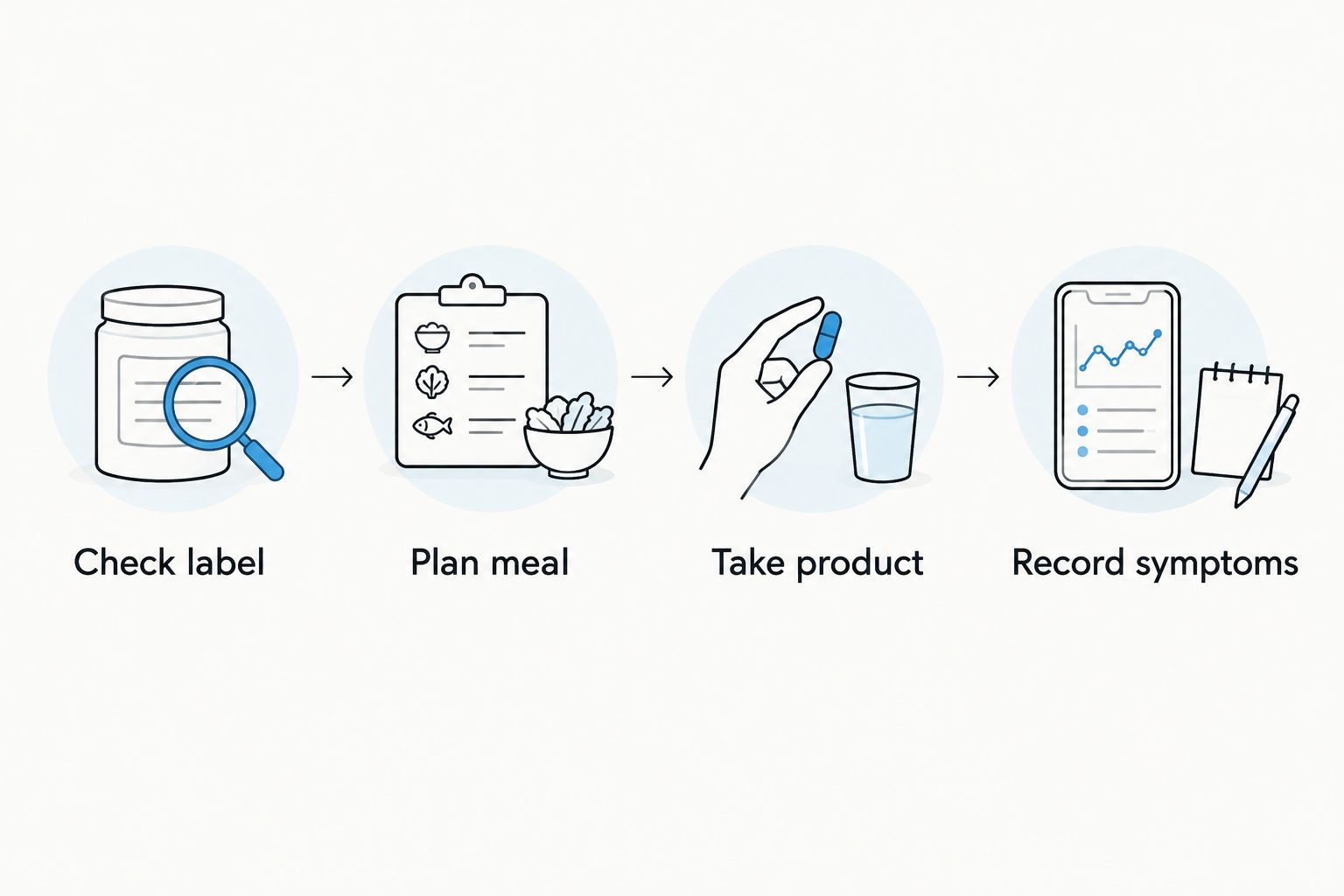
- Have the products and their labels in front of you. Check each serving direction, ingredient list and warning. A product name does not tell you whether to take it with food or whether it duplicates an ingredient in another product.
- Set up a simple record. Use paper or a note on your phone with fields for Food, Supplement, Time and Symptoms. Record your usual pattern before you change it, so a new symptom has context.
- Check your treatment plan first. If you take prescription medication, are pregnant, have a diagnosed digestive condition or follow a clinician-directed elimination diet, ask your clinician or pharmacist to review the products you intend to combine. The setup trap: a combined enzyme, prebiotic and probiotic product overlaps several jobs; do not mistake it for a plain enzyme when planning your trial.
Choose each product's job
Before building a stack, decide whether breakfast needs a protein option, whether you are considering daily nutrition support, or whether a particular meal calls for an enzyme. These are separate decisions. You do not need to select an item from every row.
| Option | Best for | Place in the routine | Limitation |
|---|---|---|---|
| Elemental Whey WPI Protein Powder + Digestive Enzymes (Vanilla) | Someone who wants a whey-based protein option at breakfast | Prepare as part of breakfast, following the label | Not a substitute for checking your full meal and other ingredients |
| Elemental Vegan Protein Powder | Someone who wants a plant-based protein option | Use in a breakfast that fits your dietary plan | A plant-based label alone does not establish that every ingredient you add is low FODMAP |
| FODMAP Digestive Enzymes | Someone considering enzyme support for a meal | Follow the product's meal-related label directions | Does not make an unrestricted high FODMAP meal low FODMAP |
| Vitamin & Mineral Gummies | Someone reviewing daily nutrient intake with a clinician | Place according to label directions and your care plan | Does not replace food or diagnose a deficiency |
| Advanced Probiotic & Prebiotic | Someone with a defined reason to trial a microbiome product | Follow its label and assess it separately | A combined formula makes it harder to isolate which component you tolerate |
Choose by purpose, then check the label. Casa de Sante offers products across these categories, but using more categories is not a measure of progress. The trade-off is clear: a shorter routine is easier to follow and easier to assess; a larger one introduces more variables at once.
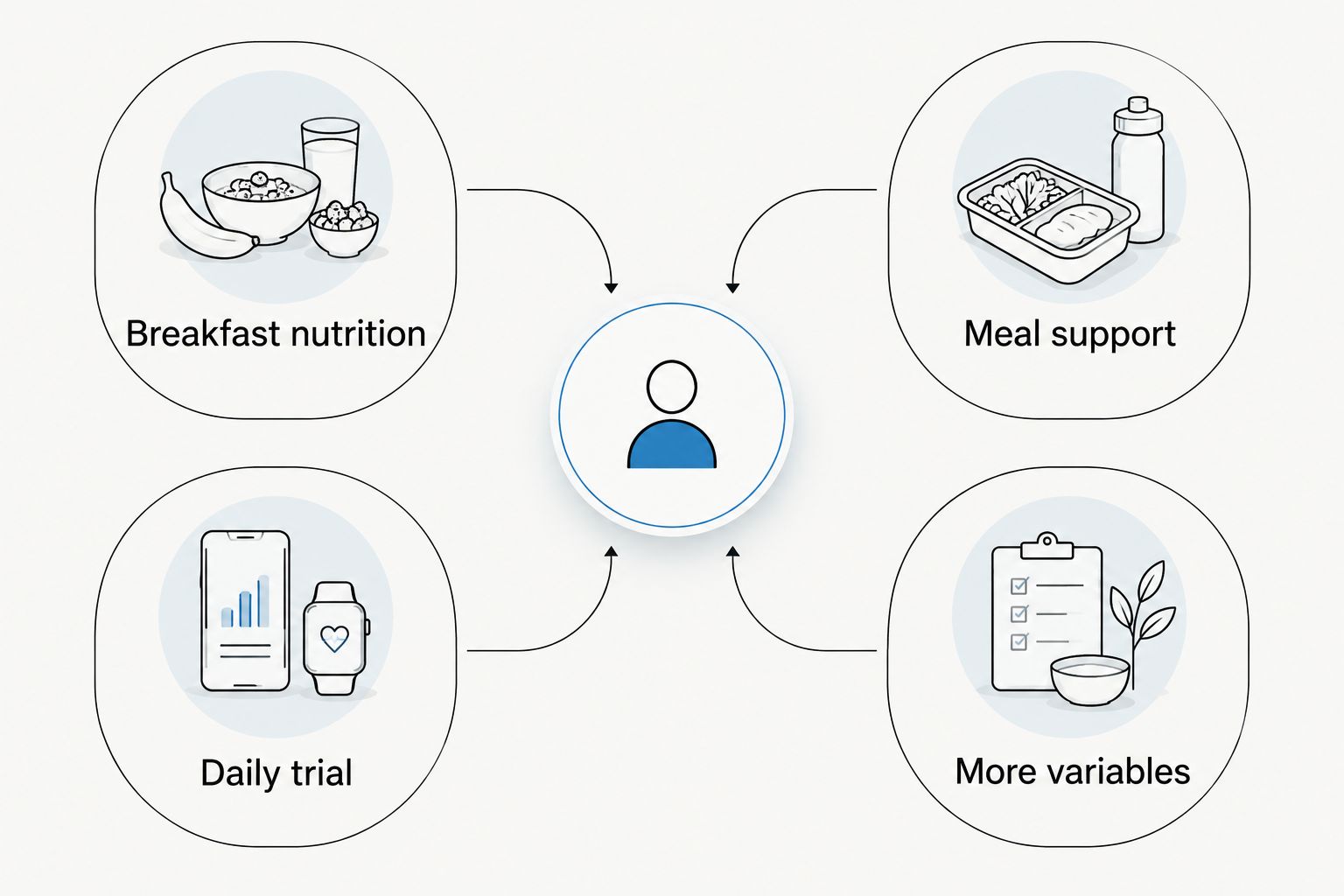
Set up breakfast
- Choose your breakfast before the supplement. Write down the food and drink you plan to have. During a low FODMAP elimination phase, check the ingredients and portions against the diet plan you are following; a low FODMAP protein powder does not change the rest of the meal.
- Select one protein route if you need one. Choose the whey-based or plant-based option according to your dietary needs and its label. You do not need both to complete a morning routine. If you are already getting the nutrition you need from breakfast, a powder is optional.
- Prepare it as directed. Check the label for the serving and mixing instructions rather than assuming that every scoop or combination is equivalent. Record what you mixed into it, particularly if you are trying to identify a food trigger.
- Record the breakfast. Fill in Food, Supplement and Time before the day gets busy. Use the same names each day so you can compare entries later.
Expected result: breakfast is recorded as a meal, and any protein product has a specific nutritional role. You have not added an enzyme or probiotic simply because it is morning.
Configure the daily supplement slot
- Review the reason for a daily product. A multivitamin is a nutrition decision; a probiotic is a separate trial. Neither belongs in a routine solely because you have IBS or SIBO. If your clinician has advised one, use that advice alongside the product label.
- Check for overlap. Compare the ingredient lists of your selected products, including any combined formulas. If you cannot tell whether ingredients or directions overlap, ask a pharmacist before taking them together.
- Add one new product at a time. Keep your breakfast and other established parts of your routine consistent while you assess the new item. Record the start date and any change in bowel habits, bloating or nausea without attributing every change to the product.
Expected result: you know which product is new, why it is there and which record to review if symptoms change. A daily slot is not an instruction to take every daily-use category.
Configure meal-time support
- Look at the meal, not the clock. If you are using a digestive enzyme, check its label for directions relative to eating. Do not automatically take a meal-focused product with an empty stomach just because you organize supplements in the morning.
- Keep the food plan intact. During low FODMAP elimination, continue following your planned food choices and portions. An enzyme is not permission to abandon the diet or a treatment prescribed for SIBO.
- Log what actually happened. Note Food, Supplement, Time and Symptoms after the meal. If lunch differs from breakfast, record it separately rather than describing the entire day as one successful or unsuccessful stack.
Expected result: any enzyme use is tied to an identifiable meal. Your record distinguishes the product from the food eaten with it, which makes later decisions more useful.
If breakfast changes or you use a GLP-1 medication
A second version of the workflow starts when breakfast is smaller, later or harder to tolerate. Keep the same decision order: identify the meal you can eat, check the directions on any product you intend to use, then record both the food and the symptoms. Do not force a supplement into an empty-stomach slot merely to preserve a schedule.
If you use Ozempic, Wegovy or Mounjaro, report persistent nausea, vomiting, constipation or diarrhea to your prescribing clinician. Casa de Sante offers products aimed at people managing GLP-1-related digestive concerns, but a supplement does not replace medication advice. Ask your clinician or pharmacist to review the stack when your medication, intake or symptoms change.
A delayed breakfast also changes how you label your notes. Record the actual Time instead of writing morning for every entry. If you take a product later with food, that is a meal-time decision, not a missed morning task. Keep the routine tied to what you eat and to label directions, not to a fixed clock time.
Troubleshooting the routine
- You cannot tell what caused new bloating. Check the food record, then identify every product started at the same time. Avoid adding another new item while you review the change with your clinician if symptoms persist.
- You took an enzyme but still reacted to a meal. Review the meal ingredients and portions, then check whether you followed the specific product directions. Do not assume an enzyme removes every dietary trigger.
- A supplement label conflicts with your planned schedule. Follow the label and ask a pharmacist about uncertainty. Change the schedule rather than improvising a dose or ignoring a warning.
- Your powder seems to be the problem. Record the powder and everything mixed with it as separate ingredients. Review the full breakfast before assigning the reaction to one item.
- Symptoms worsen after you add a combined product. Check whether it contains prebiotics, probiotics or enzymes already present elsewhere in your routine. Stop treating the combined product as interchangeable with a single-purpose one and seek clinical advice about ongoing symptoms.
Seek prompt medical advice for severe or persistent symptoms. A symptom log supports a clinical conversation; it is not a tool for diagnosing the cause on your own.
Customize your workflow
Once your 2026 breakfast routine is easy to repeat, extend the same record to lunch and dinner. You are looking for decisions you can verify: what you ate, which product you used, whether you followed its directions and what symptoms occurred. Do not turn a good day into proof that every supplement worked, or a difficult day into proof that none did.
If you are following a low FODMAP elimination diet, keep its food decisions separate from supplement changes. Reintroduction is the stage in which foods are tested according to your diet plan; do not start several supplements during the same period and then try to interpret the result. For SIBO or ongoing IBS symptoms, coordinate diet changes with the clinician managing your care.
Casa de Sante has breakfast nutrition, enzyme and daily supplement options. The strongest 2026 routine is the smallest one with a defined purpose for every item. Use the record to decide what question to bring to your clinician, not to build an ever-larger stack.


FAQ
What is the best low FODMAP supplement stack morning routine in 2026?
The best 2026 routine starts with a breakfast that fits your diet and adds only supplements with a defined purpose. Follow each label and record food, product use and symptoms.
Should I take digestive enzymes as soon as I wake up?
Use digestive enzymes according to the product's directions, including any instructions about meals. Do not take them at wake-up solely because other supplements are scheduled then.
Do I need both whey and vegan protein powder at breakfast?
No, choose a protein option that fits your diet and nutritional needs if you need a powder at all. Record the other ingredients in your breakfast so you can assess the whole meal.
Can a probiotic replace a low FODMAP diet for IBS?
No, a probiotic does not replace a low FODMAP diet or prescribed IBS care. Discuss a probiotic trial with your clinician if your symptoms or medical history make the decision unclear.
Will digestive enzymes make a high FODMAP meal low FODMAP?
No, digestive enzymes do not change how a meal is classified in your diet plan. Check the meal's ingredients and portions separately from the enzyme directions.
Can I follow this routine while taking Ozempic, Wegovy or Mounjaro?
You can use the planning framework, but have your prescribing clinician or pharmacist review supplement choices alongside your medication and symptoms. Do not use a supplement to replace advice about persistent side effects.
How do I know whether a new supplement is helping?
Keep a consistent food and symptom record while introducing one new product at a time. Review the pattern with your clinician rather than treating one good or bad day as proof.
One last thing
The most useful part of a 2026 stack might be the Time field in your notes. If breakfast moves but you record every product as taken in the morning, you lose the link between a meal, its supplement and the symptoms that followed. Casa de Sante products can fill distinct roles; accurate records keep those roles distinct too.









