
Low FODMAP Protein Powder for Interstitial Cystitis 2026






Low FODMAP protein powder for interstitial cystitis diets has to clear two bars at once: no fermentable carbs that trigger IBS or SIBO symptoms, and no bladder irritants like citric acid, artificial sweeteners, or high-acid dairy blends that trigger IC flares. Most protein powders are built for gut tolerance alone, so a formula that also respects the bladder is a narrower search than either diet handles on its own.
The two diets overlap but don't match. FODMAP restriction targets fermentable sugars — fructose, lactose, sugar alcohols. Interstitial cystitis restriction targets acidic and irritant compounds — citric acid, artificial sweeteners, caffeine, alcohol — regardless of how fermentable they are. A protein powder can pass a Monash-style FODMAP check and still flare a bladder, or vice versa. If you're also managing SIBO alongside IC, the ingredient list gets even shorter, because you're now screening for three overlapping trigger categories instead of one.
- Low FODMAP protein powder for interstitial cystitis must avoid citric acid, artificial sweeteners and sugar alcohols, not just high-FODMAP carbs.
- Whey protein isolate strips out most lactose and is naturally free of added citrus flavoring, making it a safer base than whey concentrate.
- Casa de Sante's Elemental Whey WPI and Elemental Vegan Protein Powder are formulated low FODMAP but still need a label check for individual bladder triggers.
- Sugar alcohols like sorbitol and mannitol hit both lists at once: high FODMAP and a known IC Network bladder irritant.
- Test one new protein powder at a time, and never during an active flare of either condition.
Why this matters for the IC and low FODMAP overlap
Searching "protein powder for IC" gets you bladder-safe lists that ignore fermentable carbs. Searching "low FODMAP protein powder" gets you gut-safe lists that ignore citric acid and sweeteners entirely. Neither list was built for someone managing both conditions in 2026, which is why most people in this overlap end up cross-referencing two separate spreadsheets by hand.
The stakes are higher than with either diet alone. A trigger reaction from an IC-unfriendly ingredient shows up as bladder urgency and pelvic pain, not bloating — so if you're only screening for FODMAPs, you'll misread an IC flare as "the diet not working" and abandon a protein source that was actually fine for your gut. Screening both lists before you buy is the only way to isolate which system reacted.
Build a protein powder routine that works for both diets
Check the ingredient label for bladder irritants first
Start with the IC Network's bladder-irritant categories before you even look at the Monash FODMAP rating. A powder can be perfectly low FODMAP and still trigger IC on the first scoop.
- Citric acid, used as a preservative and tang enhancer in flavored blends
- Artificial sweeteners: sucralose, aspartame, saccharin
- Added citrus flavoring or juice concentrate
- High-dose vitamin C fortification (over 100% DV per scoop)
- Caffeine additives in "energy" protein blends
- Carbonation or effervescent mix-ins
Match the protein source to your FODMAP tolerance
Once the label clears the IC screen, check the base protein itself. This is where most people get tripped up, because "whey protein" isn't one ingredient — isolate and concentrate behave differently.
- Whey protein isolate: very low lactose, generally well tolerated on low FODMAP
- Whey protein concentrate: higher lactose load, more likely to trigger at full servings
- Pea and rice protein blends: low FODMAP in typical serving sizes
- Soy protein isolate: low FODMAP, but whole soybeans and soy concentrate are not — read the fine print
- Casein: slower-digesting, higher lactose than isolate, use with caution
Casa de Sante's low FODMAP whey protein isolate is built on isolate rather than concentrate for this exact reason — it's the lactose-heavy version of whey that causes most FODMAP reactions in protein powders, not whey itself.
Watch sweeteners and flavor systems
Sweeteners are the single most common reason a protein powder fails both diets at once.
- Sugar alcohols (sorbitol, mannitol, xylitol) are high FODMAP AND flagged bladder irritants — a double failure
- Stevia and monk fruit are typically low FODMAP and not on standard IC irritant lists
- "Natural flavors" can legally include citrus extracts without saying so — contact the brand if unclear
- Cocoa and chocolate flavoring are usually fine for FODMAP but some IC protocols flag chocolate individually
- Vanilla extract (not vanillin with citric acid buffering) tends to be the safest flavor base for both diets
Pick a protein powder formulated for sensitive digestion, then verify against your own IC triggers
A formula built low FODMAP from the start saves you the label-reading step for the gut side of the equation, but IC triggers are individual enough that you still confirm the rest yourself.
Casa de Sante's protein line is formulated without high-FODMAP additives and without citric acid or artificial sweeteners in the base formula — that clears most of the common IC Network irritant list, though individual bladder sensitivity varies enough that a single-scoop test is still worth doing before you commit to a full container.
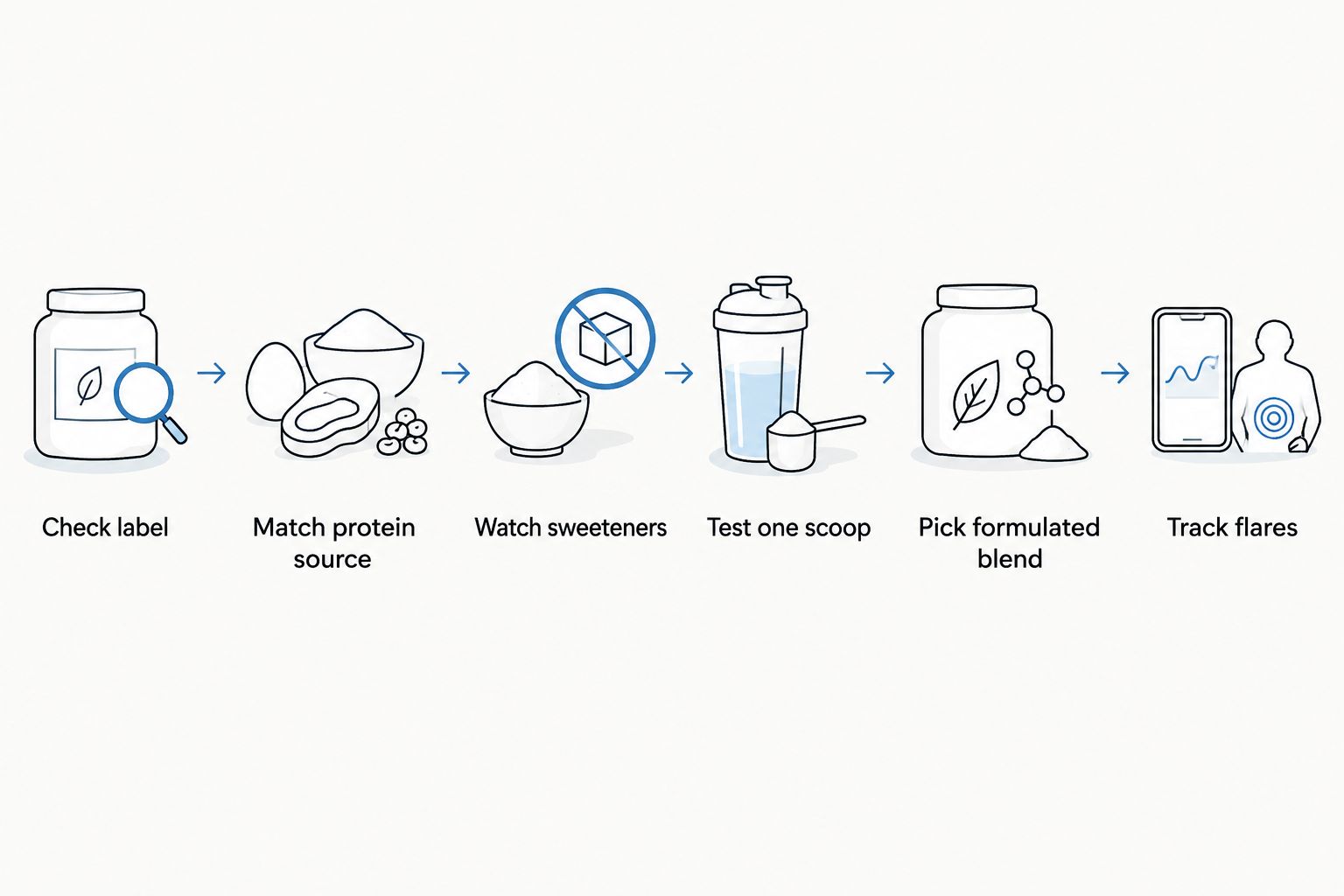


Test one new scoop at a time, never during a flare
Running both a FODMAP challenge and an IC trigger test in the same week makes it impossible to tell which system reacted.
- Introduce one new protein powder for 3 consecutive days before adding anything else new
- Log symptoms separately: bladder urgency/pain vs. bloating/gas
- Wait until you're flare-free on both fronts before starting a test
- Keep the old, tolerated protein powder on hand as a fallback during testing
- Stop the test immediately if either system reacts — don't push through to "see if it settles"
Build meal timing around both gut and bladder stress
Protein powder taken on an empty stomach with concentrated caffeine or acidic mixers stresses both systems at once, independent of the powder itself.
- Mix with water or a low FODMAP milk alternative, not citrus juice
- Space large protein doses (over 30g) across two smaller servings if bloating is an issue
- Avoid mixing with coffee if caffeine is on your IC restriction list
- Pair with a meal rather than drinking on an empty stomach if reflux is a factor
Track flares against a shared log, not two separate ones
A single log that timestamps bladder symptoms and digestive symptoms side by side is the fastest way to catch a pattern in 2026's flood of "gut health" marketing claims that don't address IC at all.
- Note the exact product and scoop size, not just "protein powder"
- Record time of day and what else you ate or drank
- Flag flare severity 1-5 for both bladder and gut separately
- Review weekly, not daily — single-day noise is common with both conditions
Comparing protein options for the IC and low FODMAP overlap
| Option | Best for | Bladder consideration | Key limitation |
|---|---|---|---|
| Whey protein isolate | Fast digestion, muscle support | Low lactose, no inherent citrus | Dairy allergy excludes it entirely |
| Low FODMAP vegan protein powder | Dairy-free, plant-based diets | No dairy-related lactose risk | Pea/rice blends can taste chalkier |
| Collagen peptides (unflavored) | Joint and skin support alongside protein | Unflavored versions skip added citrus and sweeteners | Incomplete amino acid profile vs. whey or soy isolate |
| Whey protein concentrate | Budget bulk protein | Higher lactose load raises FODMAP risk | Not recommended for active IBS or IC flares |
Common mistakes people managing IC and low FODMAP make
- Assuming "low FODMAP" means bladder-safe. Citric acid is FODMAP-neutral and still one of the most common IC triggers on the market.
- Fortifying with high-dose vitamin C for "immune support." Ascorbic acid at high doses is a well-documented bladder irritant, independent of FODMAP status.
- Choosing soy protein isolate and assuming all soy is fine. Isolate is low FODMAP; whole soybeans and soy concentrate are not — the processing step matters.
- Swapping to a sugar-alcohol-sweetened powder to avoid artificial sweeteners. Sorbitol and mannitol dodge one irritant list and land directly on the other.
- Testing a new protein powder mid-flare. You can't isolate a new trigger from an existing one still active in your system.
FAQ
What is low FODMAP protein powder for interstitial cystitis?
It's a protein powder formulated to avoid both high-FODMAP carbs (lactose, sugar alcohols, excess soy) and IC Network bladder irritants (citric acid, artificial sweeteners, caffeine additives). Most standard protein powders only screen for one of these two categories, not both.
Is whey protein isolate safe for interstitial cystitis?
Whey protein isolate is generally well tolerated for both IC and low FODMAP diets because it's low in lactose and doesn't inherently contain citric acid or artificial sweeteners. Flavored versions still need a label check for added citrus or sweetener systems.
Can I use vegan protein powder on both low FODMAP and IC diets?
Yes, pea and rice protein blends formulated low FODMAP work for most people on both diets, since they avoid dairy-related lactose entirely. Check the sweetener and flavor system separately, since that's where IC triggers usually hide.
Are sugar alcohols in protein powder bad for interstitial cystitis?
Sugar alcohols like sorbitol and mannitol are both high FODMAP and listed as common bladder irritants by the IC Network. They're one of the few ingredients that fail both diets simultaneously.
Does citric acid in protein powder trigger IC flares?
Citric acid is one of the most frequently cited bladder irritants on IC Network trigger lists, even though it has no bearing on FODMAP content. It shows up in flavored and "tangy" protein blends as a preservative and flavor enhancer.
Is soy protein powder OK for interstitial cystitis?
Soy protein isolate is low FODMAP and not commonly flagged as an IC bladder irritant on its own, but individual sensitivity to soy isoflavones varies. Whole soybeans and soy protein concentrate carry a higher FODMAP load than isolate.
What sweeteners are safe for IC-friendly protein powder?
Stevia and monk fruit are typically low FODMAP and not on standard IC Network irritant lists, making them the safer sweetener choice for both diets in 2026. Artificial sweeteners and sugar alcohols carry risk on one list or the other.
How much protein powder can I have on a low FODMAP diet?
Serving size tolerance depends on the protein source; whey isolate and pea protein are generally well tolerated at standard 25-30g servings. Whey concentrate and soy concentrate carry more lactose or oligosaccharide load per scoop and may need smaller servings.
One last thing
The swap that matters most isn't the brand — it's isolate versus concentrate. Whey protein isolate strips out nearly all the lactose that trips FODMAP tolerance, and unflavored isolate is naturally free of the citric acid used in flavored dairy blends, which covers two trigger categories with one ingredient decision instead of two separate label hunts.









