
Low FODMAP Protein Powder for Diabetics: Best Fit 2026






Low FODMAP protein powder for diabetics is a protein supplement chosen to limit fermentable carbohydrates while fitting a blood-sugar management plan. If you also manage IBS or SIBO, judge the powder on two separate questions: what might trigger digestive symptoms, and how many carbohydrates the finished drink adds to your meal.
- Low FODMAP protein powder for diabetics must meet both digestive and carbohydrate needs; a low FODMAP label alone cannot answer both.
- Casa de Sante whey and vegan powders are relevant options for sensitive digestion; compare their current nutrition labels before choosing.
- Count carbohydrates from the powder, milk, fruit and other additions in the finished shake.
- Use your usual blood-glucose monitoring plan to assess a new shake, especially if you take insulin or a sulfonylurea.
Why low FODMAP protein powder matters for diabetics
Low FODMAP does not mean low carbohydrate. FODMAPs are fermentable carbohydrates that can contribute to symptoms in people with IBS. A powder can limit those ingredients and still contain carbohydrates from other sources. Conversely, a powder with little sugar can contain ingredients that bother your gut.
This distinction matters when you rely on a shake during a busy morning, after exercise or when a GLP-1 medication changes your appetite. The drink has to fit the meal you actually consume, not just the claims on the tub. Casa de Sante offers a low FODMAP vanilla whey protein powder for people seeking a whey-based option, but its low FODMAP positioning is not a substitute for checking the current Nutrition Facts panel against your diabetes plan.
In 2026, the most useful comparison is not a single front-label claim. It is the serving size, total carbohydrate, ingredients and your response to the complete drink. Keep digestive symptoms and glucose readings distinct in your notes: one tells you about tolerance, while the other helps you assess how the shake fits your blood-sugar plan.
How to choose a powder that fits both needs
Start with your diabetes meal plan
Identify where the shake belongs before choosing a flavor or protein source. A supplement added to breakfast serves a different purpose from a drink that replaces a planned snack. If you use carbohydrate counting, include the shake in the same method you use for the rest of your food; do not treat protein powder as automatically carbohydrate-free.
A standard carbohydrate choice in diabetes meal planning contains 15 g of carbohydrate. That is a counting unit, not a target for every shake. Your clinician or dietitian's instructions take priority, particularly if you adjust medication around meals. If you take insulin or a sulfonylurea, ask how a smaller meal or a substituted shake affects your established plan rather than changing a dose based on an article.
- Define the occasion: added protein, a planned snack or part of a meal.
- Use your existing counting method: include the powder's labeled total carbohydrate.
- Keep medication decisions clinical: confirm changes with your diabetes care team.
- Record the full drink: ingredients added at home count as part of the shake.
Read total carbohydrate before the sugar claim
The Nutrition Facts panel answers a question that a low FODMAP claim cannot: how much total carbohydrate is in the labeled serving? Start there, then look at added sugars, dietary fiber and the ingredient list. The number applies to the stated serving, not an arbitrary scoop or a drink made with other ingredients.
Under US FDA labeling rules, sugar-free means less than 0.5 g of sugars per labeled serving; it does not mean carbohydrate-free. The distinction matters in 2026 because a sugar-free claim can draw attention away from the total carbohydrate line. Check the current label each time you switch products or formulations. Avoid copying a carbohydrate figure from an older article into your meal plan.
- Check serving size: match the label to the amount you actually prepare.
- Read total carbohydrate: use this line for carbohydrate counting.
- Review added sugars: distinguish the sugar claim from the full carbohydrate count.
- Inspect the ingredients: flag anything that has previously caused symptoms.
Screen ingredients for digestive triggers
Protein source and sweetener are separate decisions. A whey-based powder suits someone who uses dairy-derived protein, while a vegan powder suits someone avoiding it. Neither category guarantees digestive comfort: blends can include sweeteners, fibers or other additions that affect tolerance.
If you follow a low FODMAP elimination plan, compare the ingredient list with the restrictions you are using at that stage. Pay particular attention to ingredients you already know you react to rather than assuming every unfamiliar ingredient is a problem. A low FODMAP claim also does not tell you whether a serving fits your personal carbohydrate allowance.
Casa de Sante protein powders offer whey-based and plant-based routes for this comparison. The faster path is to narrow the choice by protein source, then check the current label and serving guidance for the specific powder. Choose the powder only after it passes both checks: digestive fit and carbohydrate fit.
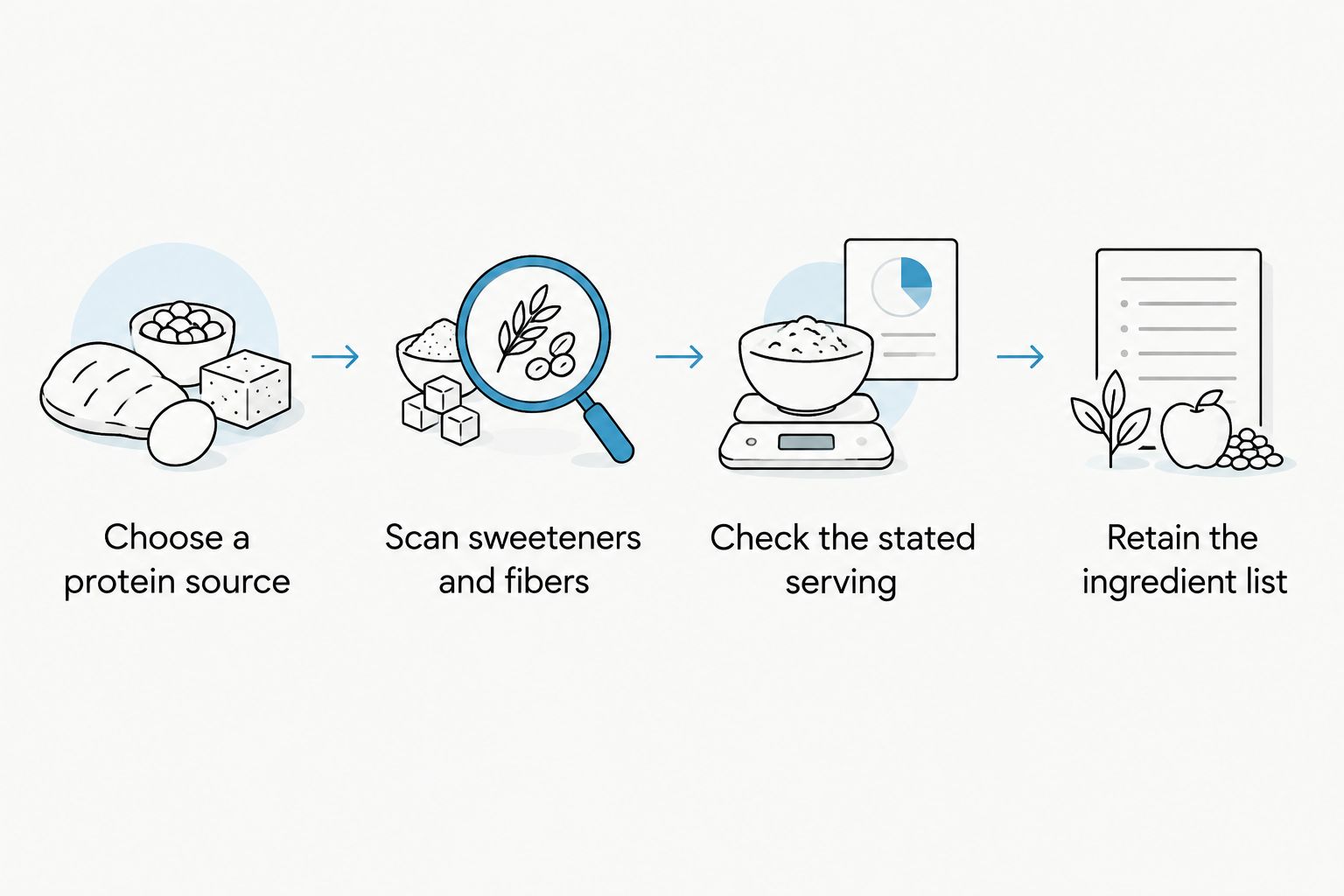
- Choose a protein source: decide whether whey or plant-based protein suits you.
- Scan sweeteners and fibers: compare them with your known triggers.
- Check the stated serving: low FODMAP suitability depends on how much you use.
- Retain the ingredient list: it helps you investigate a reaction later.
Build the shake as you would a meal
The powder is only one part of the drink. Milk, a milk alternative, fruit, oats and other additions change the finished shake's carbohydrate content and can change its FODMAP profile. Water keeps the calculation closer to the powder's label, but the label still needs checking. In 2026, a shake recipe shared online cannot tell you what is in the version you prepare.
Start with a simple mixture when assessing a new powder. Add other ingredients one at a time if you want to identify what affects your digestion. If you are replacing a meal rather than adding protein to one, speak with your diabetes care team about how the complete meal meets your nutrition needs; a protein powder alone does not establish that it does.
The FDA's 2,000-calorie daily reference on nutrition labels is a labeling reference, not your personal meal prescription. Follow the plan set for you instead of trying to make one shake fit a generic daily figure.
- Count every addition: include the liquid and any carbohydrate-containing mix-ins.
- Keep the first recipe simple: make changes easier to identify.
- Distinguish supplement from meal: check the full meal, not just protein.
- Write down the recipe: repeat the same version when assessing tolerance.
Track glucose and gut symptoms separately
A low FODMAP powder can be a sensible ingredient choice without proving that the finished drink works for your blood sugar. Follow the glucose-monitoring schedule your diabetes care team recommends when you introduce a new shake. Record what you drank and when, so a reading has context.
Track abdominal symptoms in a separate note. Bloating after a shake does not tell you its effect on blood glucose, and a glucose reading does not identify a digestive trigger. If you take Ozempic, Wegovy or Mounjaro and your appetite has changed, tell your care team when shakes are replacing meals or when you struggle to finish planned food. The relevant question is whether your intake still fits your treatment plan.
A protein shake is not a stand-in for your prescribed treatment for low blood glucose. Follow your diabetes care team's instructions for treating a low rather than relying on the powder's protein content. This is particularly important when a shake is the only item you have packed.
- Follow your monitoring plan: do not invent a new schedule from a product claim.
- Log the complete recipe: identify the drink behind each observation.
- Note digestive symptoms separately: record what changed and when.
- Report repeated difficulties: discuss poor intake or unexpected readings with your care team.
Compare the option against the job it must do
Once a powder passes the label and ingredient checks, decide whether you need a whey protein, a plant-based protein or a different type of supplement. Do not make collagen interchangeable with a conventional protein powder just because both contain protein. The choice depends on the role of the drink in your diet, not the number of supplement categories a product can fit into.
For 2026, use the current product label as the final check. Product names and low FODMAP positioning help you make a shortlist; they do not supply a personal glucose verdict. If your dietitian has set a protein goal, bring the serving information to that discussion rather than assuming any scoop meets it.
- Match the protein source: pick whey or plant-based according to your needs.
- Confirm the full label: compare protein and carbohydrate per stated serving.
- Check the intended use: added protein is not automatically a complete meal.
- Choose for tolerance: keep the version that fits both your gut and your care plan.
Compare protein options for diabetics with sensitive digestion
The table separates each option's practical use from its limitation. Casa de Sante low FODMAP protein powder is best for someone balancing a sensitive gut with a diabetes meal plan who will still check the current carbohydrate label. No listed option can establish an individual blood-glucose response on its own.
| Option | Best for | Starting price | Key limitation |
|---|---|---|---|
| Casa de Sante advanced whey protein, vanilla | Someone who wants a whey-based, low FODMAP powder | Check current listing | Dairy-derived; check total carbohydrate and personal tolerance |
| Casa de Sante low FODMAP vanilla vegan plant protein shake | Someone who wants a plant-based, low FODMAP powder | Check current listing | Plant-based does not mean carbohydrate-free; check the label |
| Plain whey isolate from another seller | Someone who wants to compare a simple whey option | Check current listing | Low FODMAP status depends on the complete ingredients and serving |
| Collagen peptides | Someone considering collagen for a separate supplement goal | Check current listing | Do not assume it fills the same nutritional role as a conventional protein powder |
If you are comparing marine collagen powder options for a skin-related goal, keep that decision separate from selecting a shake to help meet your protein needs. For diabetes meal planning, you still need the complete drink's nutrition label and your care team's guidance. The same separation applies to digestive tolerance: a supplement's intended use does not prove how your gut will respond.
The Casa de Sante choices have a clear advantage for this shortlist: their stated low FODMAP positioning addresses the digestive side of the decision. Their limitation is equally clear. Neither a brand name nor a low FODMAP label supplies your personal carbohydrate limit, confirms how you will tolerate a serving or replaces your glucose monitoring plan.


Common mistakes diabetics make with low FODMAP protein powder
Treating low FODMAP as a blood-sugar claim. Low FODMAP positioning addresses fermentable carbohydrates and digestive suitability. It does not state how the entire shake fits your carbohydrate plan. Read the Nutrition Facts panel before the front-label claims.
Counting the powder but not the drink. A serving mixed with water and the same serving blended with fruit are different recipes. Count and record what you actually consume. If you change the liquid or mix-ins, reassess the finished shake rather than reusing the previous calculation.
Assuming sugar-free means carbohydrate-free. A sugar claim and the total carbohydrate line answer different questions. Check both, using the serving size printed on the label. This remains true even when the powder tastes unsweetened.
Changing several ingredients at once. If a new powder, liquid and fruit all enter your routine together, a digestive reaction is harder to interpret. Keep the initial recipe simple, then change one component at a time while following your normal glucose-monitoring plan.
Using a protein supplement to replace clinical advice. A powder cannot set medication doses, treat hypoglycemia by virtue of being high in protein or confirm that a replacement meal meets your needs. Bring persistent symptoms, unexpected readings or reduced food intake to your care team.
FAQ
What is the best low FODMAP protein powder for diabetics?
The best low FODMAP protein powder for diabetics is one whose current serving, total carbohydrate and ingredients fit both your diabetes plan and digestive needs. Casa de Sante offers whey and vegan low FODMAP options, but neither replaces an individual label check.
Does low FODMAP mean a protein powder will not raise blood sugar?
No. Low FODMAP describes a digestive-related characteristic, not a guaranteed blood-glucose response. Check total carbohydrate in the powder and every ingredient added to the drink.
Is whey or vegan protein better for someone with diabetes and IBS?
Neither is automatically better for everyone with diabetes and IBS. Choose a protein source you can use, then compare the full ingredients, serving size and total carbohydrate of specific powders.
Can a sugar-free protein powder still contain carbohydrates?
Yes. Under US FDA rules, sugar-free refers to less than 0.5 g of sugars per labeled serving, not zero total carbohydrate. Use the Nutrition Facts total carbohydrate line for your meal-planning check.
Can I use protein powder as a meal replacement while taking a GLP-1 medication?
A protein powder is not automatically a complete replacement meal. If Ozempic, Wegovy or Mounjaro changes how much you eat, discuss replacement meals and your diabetes treatment plan with your care team.
Should I count the milk and fruit in my protein shake?
Yes. Count the carbohydrate in the whole drink, including milk, fruit and other additions. The powder's label describes only its stated serving, not the finished recipe.
Can I use a protein shake to treat low blood glucose?
Do not assume a protein shake is an appropriate treatment for low blood glucose. Follow the specific treatment instructions from your diabetes care team rather than relying on the shake's protein content.
One last thing
Save the recipe that works, not just the product name. In 2026, the same powder can become a different drink when you change its serving, liquid or mix-ins. A repeatable recipe gives you a clearer way to discuss both glucose readings and gut symptoms with your care team.









