
Best Low FODMAP Protein Powder for a Keto Diet 2026






Keto dieters’ low FODMAP protein powder is a supplement selected for carbohydrate control and digestive tolerance, with the aim of meeting protein needs without disrupting a keto diet or aggravating IBS or SIBO symptoms. The right low FODMAP protein powder for keto diet plans in 2026 fits your personal carbohydrate budget, avoids known FODMAP triggers, and provides a protein source you tolerate.
- Casa de Sante Elemental Whey WPI is best for keto dieters seeking a Low FODMAP-certified whey option.
- A low FODMAP protein powder for keto diet plans must fit your carbohydrate budget and digestive tolerances.
- Check sweeteners, fibers, dairy ingredients, serving size, and total daily FODMAP exposure before choosing a powder.
- Collagen can supplement protein intake, but it is not a complete replacement for whey or plant protein.
Why protein powder matters for keto dieters with IBS or SIBO
A keto diet limits carbohydrate intake, while a low FODMAP diet temporarily limits specific fermentable carbohydrates. These diets overlap, but they are not interchangeable. A product can fit keto macros while containing inulin, chicory root fiber, lactose, sorbitol, mannitol, or another ingredient that does not fit your low FODMAP plan.
Higher-fat keto meals can also change how a meal feels during digestion. If discomfort appears around full meals rather than isolated shakes, use this guide to digestive enzymes for a keto diet to separate meal composition from protein-powder tolerance.
Many keto approaches use a daily carbohydrate range of about 20–50 grams, although the correct limit depends on the person and the plan. That narrow budget makes every scoop relevant. It does not make a low-carbohydrate powder automatically suitable for someone managing IBS or SIBO.
The FDA Daily Value for protein is 50 grams on a 2,000-calorie diet, but that label reference is not an individualized target. Activity, body size, age, health status, overall energy intake, and clinical needs change how much protein you require. Use a clinician or registered dietitian for a personal target, especially when combining restrictive diets in 2026.
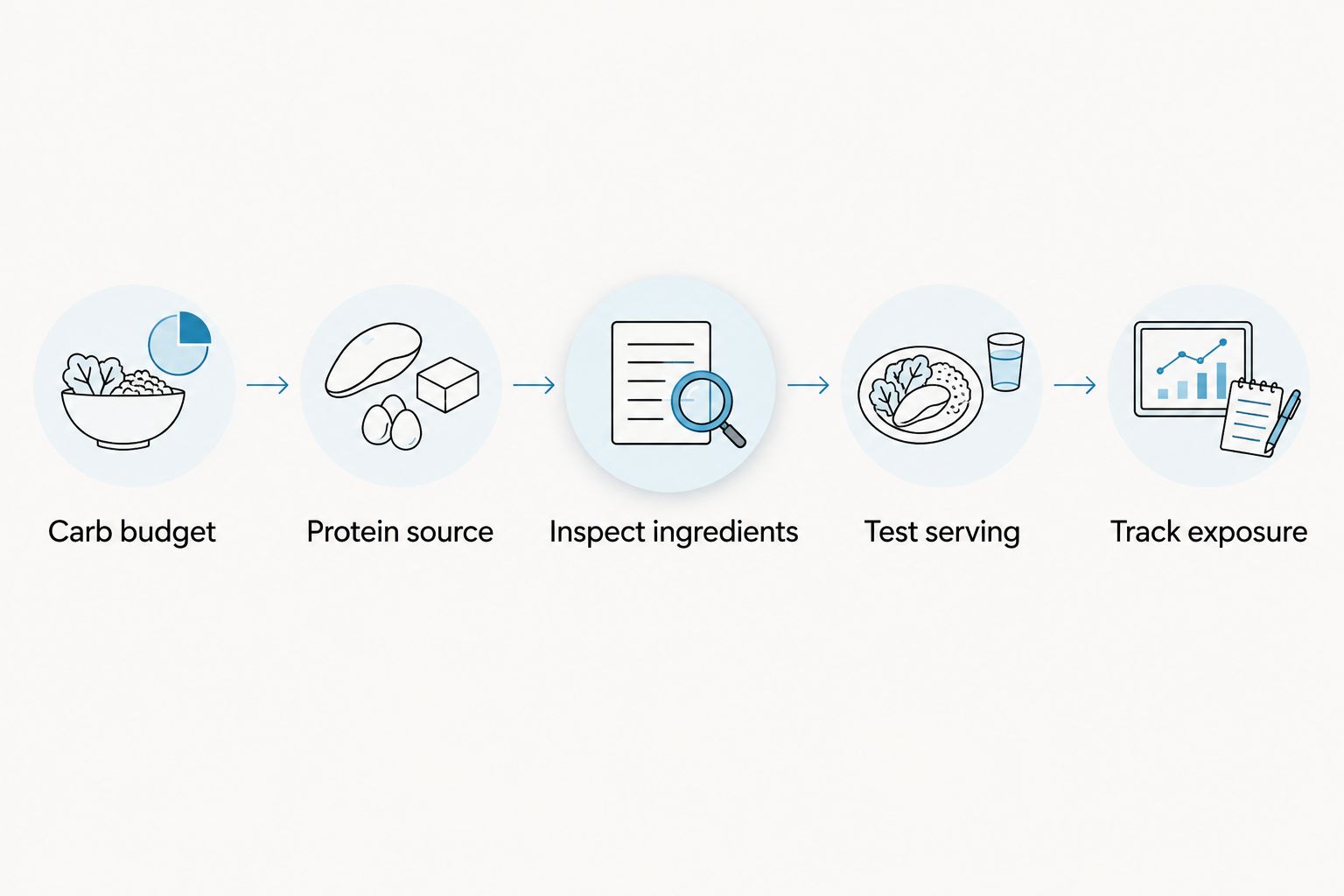
How to choose low FODMAP protein powder for keto
Set your carb budget
Start with your current food plan rather than a claim on the front of a container. Calculate how many carbohydrates your meals already provide, then decide how much room remains for a shake and anything mixed into it.
Use total carbohydrate, fiber, and sugar-alcohol information from the current nutrition label. Do not assume that a powder marketed to keto shoppers matches your specific daily limit. Formulas change, and the serving listed by the manufacturer can differ from the amount you actually use.
A free food diary is enough for this step. Record the powder, liquid, flavor additions, and any foods consumed with the shake so the full carbohydrate load stays visible.
- Set a daily carbohydrate range with your clinician or dietitian.
- Read the current nutrition facts for one full serving.
- Include milk, plant beverages, fruit, nut butter, and flavorings in the calculation.
- Compare the complete shake with the remaining daily carbohydrate budget.
- Recheck the label when packaging or formulation changes.
Check the protein source
Protein source affects dairy exposure, amino-acid completeness, texture, and the amount of carbohydrate that accompanies each serving. It does not determine FODMAP status by itself because sweeteners, fibers, flavors, and serving size also matter.
Whey isolate generally contains less lactose than whey concentrate because more non-protein material is removed during processing. That makes isolate the more direct dairy option for many low FODMAP shoppers, but it does not make whey suitable for a milk allergy or guarantee individual tolerance.
Plant protein can fit both diets, but you still need to inspect its current label. Collagen peptides contain a different amino-acid profile from whey, egg, soy, or complementary plant proteins, so collagen works better as supplemental protein than as the only protein source in your diet.
- Choose whey isolate when you tolerate dairy and want a complete protein.
- Choose a clearly labeled plant blend when you avoid animal-derived ingredients.
- Treat collagen as supplemental protein rather than your sole protein source.
- Avoid using the words plant-based or keto as proof of low FODMAP suitability.
- Check the serving size because tolerance depends on quantity as well as ingredients.
Inspect every ingredient
Turn the container around before comparing flavors or serving convenience. The ingredient list reveals fibers, sweeteners, dairy components, gums, and flavor systems that the front label can hide behind broad claims.
Inulin and chicory root fiber are fructans and can be problematic during the elimination phase of a low FODMAP diet. Sorbitol and mannitol are polyols. Milk solids and whey concentrate can add more lactose than a whey-isolate formula, although individual tolerance still varies.
The manual method is simple: write down every unfamiliar ingredient and check it against a source maintained by a qualified low FODMAP authority. The faster path is to begin with Casa de Sante protein powders explicitly presented as low FODMAP, then verify the current nutrition panel against your keto carbohydrate limit in 2026.
- Look for inulin, chicory root fiber, sorbitol, and mannitol.
- Distinguish whey isolate from whey concentrate and milk solids.
- Check whether multiple sweeteners appear in the same formula.
- Confirm that flavor additions do not introduce a separate trigger.
- Treat certification as useful evidence, not permission to ignore serving size.
Test one serving
Introduce one powder without changing the rest of your supplement routine. If you start a protein powder, probiotic, fiber supplement, electrolyte mix, and digestive enzyme together, a symptom change will not tell you which product was responsible.
Begin with the serving directed on the current label unless your clinician has given different instructions. Keep the mixing liquid and meal context consistent during the first trial. A powder mixed with water is a cleaner test than a shake containing several fruits, sweeteners, fats, and fibers.
Monash University describes the strict first step of its low FODMAP program as a 2–6 week phase before structured reintroduction and personalization. That framework is designed to identify tolerances, not to keep every FODMAP restricted indefinitely.
- Add only one new protein powder to your routine.
- Use the same serving size and mixing liquid during the initial comparison.
- Record bloating, abdominal discomfort, gas, and bowel-pattern changes.
- Stop the trial and seek clinical advice if symptoms are severe or persistent.
- Return to your established baseline before testing a different formula.
Track combined exposure
A tolerable ingredient can become harder to assess when several fermentable ingredients appear in the same meal. This stacking effect matters when a shake contains one questionable fiber, a snack contains another, and a keto creamer adds a third.
Track the full eating occasion rather than blaming the protein powder automatically. A shake made with a tolerated powder can still include a problematic sweetener, excessive serving size, or mixing ingredient. The reverse is also true: changing the powder will not correct symptoms caused by another part of the meal.
Keep carbohydrate and digestive notes together in 2026. Separate logs make it harder to see whether a lower-carbohydrate day also introduced more polyols, dairy, added fiber, or fat.
- Record every shake ingredient in the same entry.
- Note the serving size rather than writing only protein powder.
- Track meal timing and whether the shake replaced or accompanied food.
- Compare symptoms with ingredients instead of brand names alone.
- Review patterns across repeated exposures before drawing a conclusion.
Review the full diet
Protein powder solves one nutritional task. It does not make a restrictive diet complete, replace meals automatically, or identify the cause of ongoing gastrointestinal symptoms.
Review your total intake if protein powder has become a large share of your daily food. A clinician or registered dietitian can check whether your keto and low FODMAP restrictions leave enough variety, fiber, micronutrients, and energy for your needs. This matters when poor appetite, weight change, IBS, SIBO, or medication side effects are also present.
Casa de Sante protein powder provides a faster starting point for shoppers who want explicitly low FODMAP options, but the current nutrition label still decides whether a product fits your keto target. Low FODMAP status and keto compatibility answer different questions.
- Check whether shakes supplement meals or repeatedly replace them.
- Review overall food variety after the elimination phase.
- Personalize FODMAP restrictions through structured reintroduction.
- Reassess the plan if symptoms continue despite ingredient changes.
- Ask for clinical guidance when dietary restrictions begin to overlap.
Protein options compared for low FODMAP keto diets
Casa de Sante Elemental Whey WPI is best for keto dieters who want a Low FODMAP-certified whey option and can include dairy. Its limitation is the same as every packaged powder: you must confirm the current nutrition panel against your own carbohydrate budget.
The table separates the protein source, best use, evidence visible in the supplied product information, and the main limitation. It does not assign keto compatibility without a current carbohydrate label.
| Option | Best for | Low FODMAP evidence | Key limitation |
|---|---|---|---|
| Generic unflavored whey isolate | Dairy-tolerant shoppers comparing simple formulas | Depends on ingredients and serving size | Brand formulas vary, and whey is unsuitable for a milk allergy |
| Elemental Whey WPI Protein Powder, Chocolate | Keto dieters seeking a certified whey option | Product information states FODMAP Friendly certified | Contains whey and still requires a current carbohydrate-label check |
| Elemental Vegan Protein Powder | Shoppers avoiding dairy and animal-derived protein | Product information states FODMAP Friendly certified | Plant-based status alone does not establish keto compatibility |
| Generic collagen peptides | Adding supplemental protein without whey or plant-protein texture | Plain collagen has no fermentable carbohydrate ingredient by itself | Not a complete substitute for dietary protein |
The whey option wins for a complete dairy protein with explicit low FODMAP positioning. The vegan option wins when avoiding dairy is non-negotiable. Collagen is the supporting option, not the primary replacement. Buy only after the current label fits your carbohydrate plan; hold if you have not identified your dairy or ingredient tolerances.


Common mistakes keto dieters make
Treating low carbohydrate as low FODMAP
Keto labels describe macronutrient positioning, not digestive tolerance. A low-carbohydrate powder can still contain fructans, polyols, lactose, or a serving size that does not work for you. Check both the nutrition panel and ingredient list.
Counting the powder but not the shake
The powder is only one part of the final drink. Milk, plant beverages, fruit, nut butter, sweeteners, creamers, and fiber additions can change both carbohydrate content and FODMAP exposure. Record the finished shake rather than the scoop alone.
Choosing added fiber without identifying its source
A high fiber number can look attractive on a keto nutrition panel because some approaches subtract fiber when calculating net carbohydrates. That calculation does not establish digestive tolerance. Identify the exact fiber before deciding whether it fits the elimination or reintroduction stage of your low FODMAP plan.
Changing several supplements together
Simultaneous changes prevent a clean comparison. Introduce protein powder separately from probiotics, prebiotics, digestive enzymes, electrolyte mixes, and fiber supplements. This reduces confusion if your symptoms change.
Staying in strict elimination indefinitely
The low FODMAP diet is a structured process, not a permanent instruction to avoid every fermentable carbohydrate. The goal is to identify personal tolerances and restore variety through reintroduction. In 2026, use qualified clinical guidance rather than extending restrictions because a symptom log feels inconclusive.
FAQ
What is the best low FODMAP protein powder for a keto diet?
Casa de Sante Elemental Whey WPI is the best fit for dairy-tolerant keto dieters seeking a Low FODMAP-certified whey option. Check its current nutrition panel against your personal carbohydrate limit before adding it to your plan.
Is whey protein isolate low FODMAP?
Plain whey protein isolate is generally lower in lactose than whey concentrate, but the full formula and serving size determine suitability. Check for added fibers, sweeteners, milk solids, and other ingredients rather than judging the protein source alone.
Can vegan protein powder fit a low FODMAP keto diet?
Vegan protein powder can fit when its current carbohydrate content matches your keto target and its ingredients suit your low FODMAP stage. Plant-based labeling does not establish either condition by itself.
Is collagen protein suitable for keto and low FODMAP diets?
Plain collagen peptides can supplement protein intake without adding a fermentable carbohydrate ingredient. Collagen is not a complete replacement for dietary protein, so use it alongside complete protein sources.
Which protein-powder ingredients should people with IBS check?
Check inulin, chicory root fiber, sorbitol, mannitol, lactose-containing dairy ingredients, and any ingredient that has triggered symptoms during structured testing. Serving size and combined exposure across the meal also matter.
How much does low FODMAP keto protein powder cost?
Current prices vary by formula and package, so check the product page rather than relying on a hard-coded figure. Compare serving size, protein source, certification information, and the full ingredient list alongside price.
Can a keto protein shake cause bloating?
A keto protein shake can contribute to bloating when it contains a poorly tolerated ingredient or when several ingredients are combined in one serving. Test the powder with a simple mixing liquid before adding fruit, fats, fibers, or sweeteners.
Should I follow low FODMAP and keto at the same time?
Follow both diets together only with a clear reason and a plan for nutritional adequacy and FODMAP reintroduction. A registered dietitian or clinician can help prevent unnecessary long-term restriction.
One last thing
Do not let a net-carbohydrate calculation replace an ingredient review. Fiber can reduce the calculated net-carbohydrate figure while still being the exact part of the formula that does not fit your low FODMAP elimination phase.
For 2026, use this order: confirm the protein source, inspect every ingredient, calculate the complete shake, and test one product without changing the rest of your routine. That sequence gives you a clearer answer than buying on keto branding alone.









