
Low FODMAP Collagen for Hair and Nails: 2026 Verdict






People managing IBS or SIBO use low FODMAP collagen for hair and nails as a way to add protein while avoiding ingredients that trigger digestive symptoms. If you also take a GLP-1 medication or eat less during a restrictive diet, the first question is whether you get enough protein overall. Collagen can contribute, but it is not a proven treatment for hair loss.
- For low fodmap collagen for hair and nails, choose a short ingredient list and check every added fiber and sweetener.
- Casa de Sante is best for shoppers who want a low FODMAP collagen option; its label still needs a serving-by-serving check.
- Collagen adds protein but does not replace a varied diet or an assessment of persistent hair shedding.
- Compare your symptoms and total protein intake before adding several supplements at once.
Why this matters for people with IBS, SIBO, or GLP-1 side effects
A collagen powder can be simple, but a flavored blend can contain ingredients that matter more to your gut than the collagen itself. Inulin and chicory root fiber are high-FODMAP additions; polyol sweeteners such as sorbitol and mannitol can also be troublesome during the elimination phase. The practical choice in 2026 is not collagen versus no collagen. It is whether a particular product fits your current diet and provides something your meals do not.
If you have SIBO and are deciding whether collagen belongs in your routine, start with this guide to collagen for SIBO. A low FODMAP claim addresses fermentable carbohydrates, not the cause of hair shedding or brittle nails. Reduced food intake, nutritional deficiencies, illness, and other medical issues call for different responses. Casa de Sante sells low FODMAP supplements, but its product category alone cannot tell you which response you need.
How to choose and use collagen without losing sight of nutrition
Check what the low FODMAP claim covers
Start with the package and ingredient list, not a search result or a front-label promise. FODMAPs are fermentable carbohydrates; collagen is a protein. A product's suitability depends on everything mixed into it and the serving you actually use. In 2026, check the current label even if you have bought the same product before.
- Read the complete ingredient list for the exact flavor you plan to use.
- Check whether a low FODMAP statement applies to the finished product and its stated serving.
- Treat an unflavored product as a simpler label to assess, not an automatic guarantee of tolerance.
- Keep your own diagnosed allergies and dietary restrictions separate from FODMAP screening.
Screen added fibers and sweeteners
Plain collagen with a short label is easier to evaluate than a blend with added fibers or sugar alcohols. That does not mean every added ingredient is a problem. It means you need to identify its type and amount before using the powder during a restricted phase.
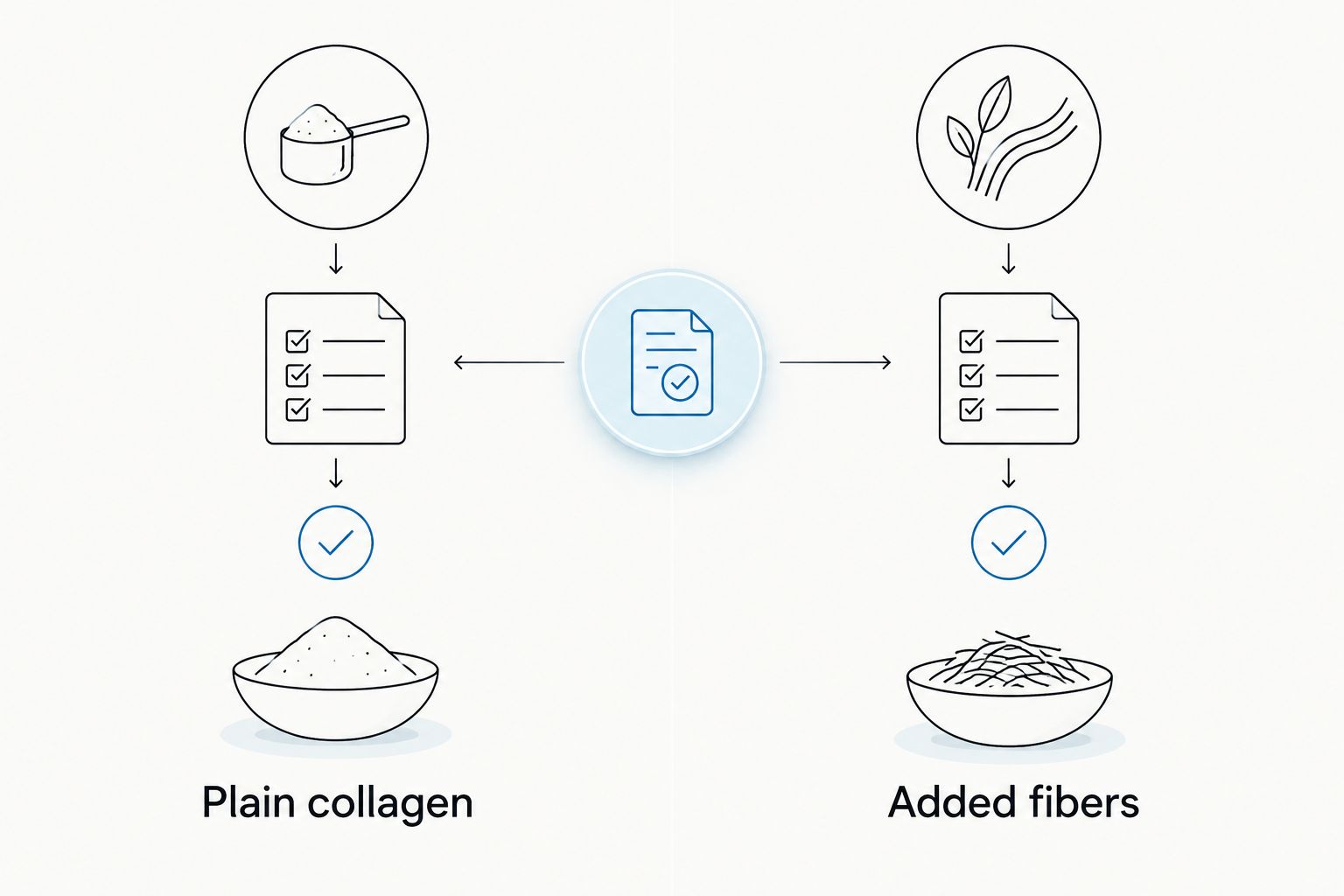
Use that comparison when a product advertises digestive benefits. Inulin or chicory root fiber can conflict with a low FODMAP elimination diet, even when the package describes the ingredient as a prebiotic. Sorbitol and mannitol are polyols, a FODMAP group. An unfamiliar ingredient is a reason to verify the label, not to assume the whole product is unsuitable.
- Look for inulin and chicory root fiber in prebiotic blends.
- Check sweetener lists for sorbitol and mannitol.
- Compare ingredients across flavors; do not assume they match.
- Ask a dietitian about an ingredient you cannot classify rather than extending food restrictions on your own.
Assess your total protein intake first
Collagen is not a complete substitute for dietary protein: it lacks the balance of essential amino acids supplied by protein-rich foods. Before choosing a supplement, write down what you eat on a typical day and identify meals where protein is absent. For healthy adults, the National Academies' recommended dietary allowance is 0.8 grams of protein per kilogram of body weight per day. That is a general reference, not a personalized target for someone losing weight, managing an illness, or following medical nutrition advice.
If reduced appetite on a GLP-1 medication makes regular meals difficult, tell your prescribing clinician. Do not assume adding collagen addresses an overall shortfall. A complete protein source and collagen serve different purposes, and the choice depends on what the rest of your diet supplies.
- List the protein-containing foods you already tolerate.
- Identify meals you regularly skip because of nausea or digestive symptoms.
- Use the adult reference as context, not a prescription for your circumstances.
- Bring a food record to a registered dietitian if your intake is falling or your diet is highly restricted.
Choose the product for the job it actually does
At this stage, Casa de Sante's collagen option becomes relevant: the store lists an unflavored collagen peptide product positioned for people managing IBS or GLP-1-related dietary changes. Choose collagen if you want that form of protein and its current ingredient list suits you. Choose a complete protein option if the bigger gap is protein across your meals. Neither choice establishes that the product will reverse hair shedding or strengthen nails.
A supplement should fit the foods and drinks you already tolerate. Mixing an unflavored powder into a familiar drink keeps the rest of the serving predictable; adding it to a smoothie with several new ingredients does not. If nausea limits what you can consume, prioritize a conversation about overall intake rather than forcing down another powder.
- Compare collagen with food sources and complete protein powders before buying.
- Check the current serving instructions instead of copying someone else's routine.
- Mix a new product into a drink or meal you already tolerate.
- Avoid introducing several new powders, fibers, and probiotics together.
Track digestion and the concern that prompted the purchase
A short record gives you something useful to discuss with a clinician. In 2026, separate what happens immediately after a serving from hair or nail changes that take longer to assess. Fingernails grow about 3 millimeters per month, so an intact nail plate cannot be replaced in a few days. Do not treat a good or bad digestive day as proof of a hair or nail result.
Record what you can observe without turning the routine into a daily inspection. A dated note about a new product and a change in symptoms is more useful than trying to attribute every shed hair to a supplement. If a product consistently worsens your symptoms, stop using it and review its ingredients with your care team.
- Note the product, serving, and other new foods or supplements.
- Record bloating, pain, or changes in bowel habits without assuming the cause.
- Take occasional nail or hair photos under similar conditions if a visual record helps.
- Share persistent changes with a clinician rather than repeatedly changing products.
Investigate persistent hair or nail changes
Low FODMAP eating is not meant to remain at its most restrictive stage indefinitely. Monash University's low FODMAP guidance describes an initial elimination stage of 2–6 weeks, followed by reintroduction and personalization. If your food choices remain narrow well beyond that stage, assess the diet itself. Collagen does not replace foods removed without a clear plan to reintroduce them.
Hair shedding and nail changes can have causes that a supplement label cannot identify. This is especially important if you have changed medication, lost weight, or struggled to eat enough. Bring the timing of those changes to the clinician managing your care instead of treating a product choice as a diagnosis.
- Tell your clinician when the hair or nail change began.
- Explain changes in appetite, weight, medication, and food variety.
- Ask a dietitian for help with low FODMAP reintroduction if you remain restricted.
- Discuss whether an assessment for nutritional or other causes is appropriate.
Compare the options before you buy
Use this 2026 comparison to match the option to the problem. The starting-price column directs you to the current listing rather than fixing a figure that can change. Only the first option is a collagen supplement; the others address different parts of the decision.
| Option | Best for | Starting price | Key limitation |
|---|---|---|---|
| Elemental Collagen Peptides from Casa de Sante | Someone seeking an unflavored, low FODMAP collagen option | Check current listing | Collagen does not replace complete dietary protein or diagnose hair loss |
| Plain collagen peptides from another supplier | Someone willing to assess an ingredient list independently | Check current listing | Low FODMAP suitability depends on the finished formula and serving |
| A complete protein powder | Someone whose main concern is inadequate protein intake | Check current listing | Additional ingredients still need a gut-tolerance check |
| Protein-containing meals | Someone able to meet their needs with tolerated foods | Not applicable | Reduced appetite or a very restricted diet can make sufficient intake difficult |
Casa de Sante collagen is best for people seeking a straightforward collagen option while checking ingredients for IBS or SIBO triggers; it is not a hair-loss treatment. The product's unflavored positioning makes it relevant here, but verify its current label against your own restrictions. If you need help covering overall protein intake, compare complete protein foods and powders instead of assuming collagen fills that role.


Common mistakes people with IBS, SIBO, or GLP-1 side effects make
- Judging the front label instead of the ingredient list. A collagen blend can promote gut support while containing inulin. Check the finished formula and serving before deciding it fits your diet.
- Using collagen as the only answer to low protein intake. Collagen contributes protein, but it does not have the amino acid profile of a complete protein source. Review the whole day's food first.
- Treating hair shedding as a supplement-selection problem. If shedding follows reduced intake, illness, weight change, or a medication change, tell your clinician. A 2026 product comparison cannot establish the cause.
- Starting several supplements on the same day. If digestive symptoms change, you cannot tell which new ingredient matters. Introduce changes separately and record them.
- Staying in the elimination stage without reintroduction. A narrower diet is not automatically a better diet. Reintroducing foods with appropriate guidance helps you identify your actual triggers and regain variety.
FAQ
Is collagen itself high FODMAP?
Collagen is protein, not a fermentable carbohydrate. Check the finished product for added high-FODMAP fibers or sweeteners and follow its stated serving guidance.
What is the best low FODMAP collagen for hair and nails in 2026?
An unflavored collagen peptide product with a suitable current ingredient list is the clearest option to assess. Casa de Sante sells one, but no collagen product is a proven treatment for hair loss.
Can collagen help if I have IBS or SIBO?
Collagen can add protein without requiring a high-FODMAP ingredient, provided the finished formula fits your diet. It does not treat IBS or SIBO, so discuss persistent symptoms with your clinician.
Is collagen enough protein while taking a GLP-1 medication?
No, collagen alone is not a complete substitute for dietary protein. If reduced appetite makes it hard to eat enough, review your intake with your prescribing clinician or a registered dietitian.
Should I avoid collagen with inulin if I follow a low FODMAP diet?
Inulin is a high-FODMAP fiber, so a collagen product containing it is a poor choice during the elimination stage. Your individualized tolerance after reintroduction can differ.
Will low FODMAP collagen stop hair shedding?
No collagen supplement is established here as a treatment for hair shedding. Persistent shedding deserves an assessment of diet, health changes, and medication history rather than a product swap alone.
Can I take a multivitamin with collagen?
A multivitamin and collagen serve different purposes, and whether you need either depends on your diet and health needs. Check both labels and ask your clinician about supplements if you take medication or have ongoing symptoms.
One last thing
A low FODMAP label tells you something about digestive suitability; it does not tell you why your nails break. In 2026, make the next move in that order: check the collagen ingredients, assess your full diet, and bring persistent hair or nail changes to your clinician. Casa de Sante collagen belongs in that decision as a protein option, not a substitute for finding the cause.









