
Is the low FODMAP diet worth it? Yes for IBS | 2026






Yes, the low FODMAP diet is worth trying in 2026 if you have IBS symptoms and can follow it as a temporary elimination diet with planned food reintroduction. It is less useful as a permanent list of forbidden foods or as a substitute for investigating symptoms you have not discussed with a clinician. The work is not just avoiding triggers: you need to find out which foods and portions you can eat comfortably.
- The low FODMAP diet is worth trying for IBS when elimination leads to structured reintroduction.
- Casa de Sante is best for people with IBS seeking low FODMAP meal-planning support, not a substitute for reintroduction.
- If you have SIBO or take a GLP-1 medication, identify the cause of symptoms before restricting more foods.
- The goal is a varied personal diet, not permanent elimination.
Why this matters
Bloating, abdominal pain, diarrhea and constipation can make every meal feel like a test. Removing many foods at once can seem decisive, but relief alone does not tell you which restriction helped. Without reintroduction, you are left with a shorter menu and no clear answer.
In 2026, the useful question is not whether every high-FODMAP food is bad for you. It is whether a structured trial helps you identify repeatable triggers while keeping foods you tolerate. If you are ready for that second step, the guide to reintroducing foods after a low FODMAP diet belongs in your plan before you start eliminating foods.
Is the low FODMAP diet worth it in 2026?
Yes for many people managing IBS symptoms; no as an indefinite, self-directed restriction. A low FODMAP trial has a clear purpose: compare your symptoms during a short elimination phase, test foods again, then build a less restrictive diet around the results. It does not diagnose the cause of every digestive symptom, and a symptom change does not prove that you must avoid a food forever.
| Approach | Best for | Benefit | Limitation |
|---|---|---|---|
| Structured low FODMAP trial | Someone with IBS symptoms who can track meals and reintroduce foods | Helps identify which FODMAP-containing foods and portions cause symptoms | Takes planning and temporarily restricts food choices |
| Cutting out suspected foods without reintroduction | Someone making a brief record of suspected triggers before seeking guidance | Simple to start | Cannot reliably show which removed food made a difference |
| Treating symptoms without changing diet | Someone whose symptoms need clinical assessment before further restriction | Keeps the usual diet in place while the cause is assessed | Does not identify food-related triggers on its own |
The comparison matters because these approaches answer different questions. A structured trial tests food tolerance. Medical assessment checks whether another condition needs attention; neither job should be assigned to a supplement or a symptom diary alone.
What does a worthwhile trial actually produce?
A worthwhile trial leaves you with usable decisions: which foods to keep, which to limit by portion, and which deserve another test. The best outcome is not a perfectly compliant elimination menu. It is a diet you can eat without avoiding foods that cause you no trouble.
Record symptoms alongside meals, portions and other changes in your routine. If several things change at once, you cannot tell whether a different meal, a medication adjustment or another factor explains how you feel. Keep the trial focused enough to learn from it.
When is the answer no?
Skip a self-directed elimination if you are already struggling to eat enough, have a history of disordered eating, or find that food rules are increasing anxiety. Seek individualized advice instead. The diet also should not delay evaluation of persistent or concerning symptoms, especially when you do not have an IBS diagnosis.
If symptoms do not improve during a properly planned trial, do not keep tightening the food list. Bring your notes to a clinician or dietitian and reassess the plan. An unhelpful restriction is still a restriction.
How do you try the diet without getting stuck in elimination?
Monash University's low FODMAP guidance describes an elimination phase of 2–6 weeks, followed by reintroduction and a personalized long-term diet. Its reintroduction guidance uses 3-day challenges to test FODMAP groups. Use those phases as a plan to discuss with a dietitian, not as permission to remain in elimination until you feel certain about every food.
- Set a starting point. Write down the symptoms that matter to you, what you normally eat and any changes already underway. Decide what improvement would be meaningful in daily life.
- Plan the elimination phase. Choose meals you can prepare and repeat without dropping entire categories of nutritious foods unnecessarily. Check portions as well as ingredients; a food's FODMAP content depends on how much you eat.
- Review the result. After the planned elimination period, compare symptoms with your starting point. If nothing meaningful changed, ask whether continuing restriction answers any useful question.
- Reintroduce methodically. Test one FODMAP group at a time while keeping the rest of your diet steady enough to interpret the result. Record both the food and the amount you tried.
- Personalize your usual meals. Bring back foods you tolerate. For foods that trigger symptoms, look at portions and alternatives rather than assuming permanent avoidance is the only choice.
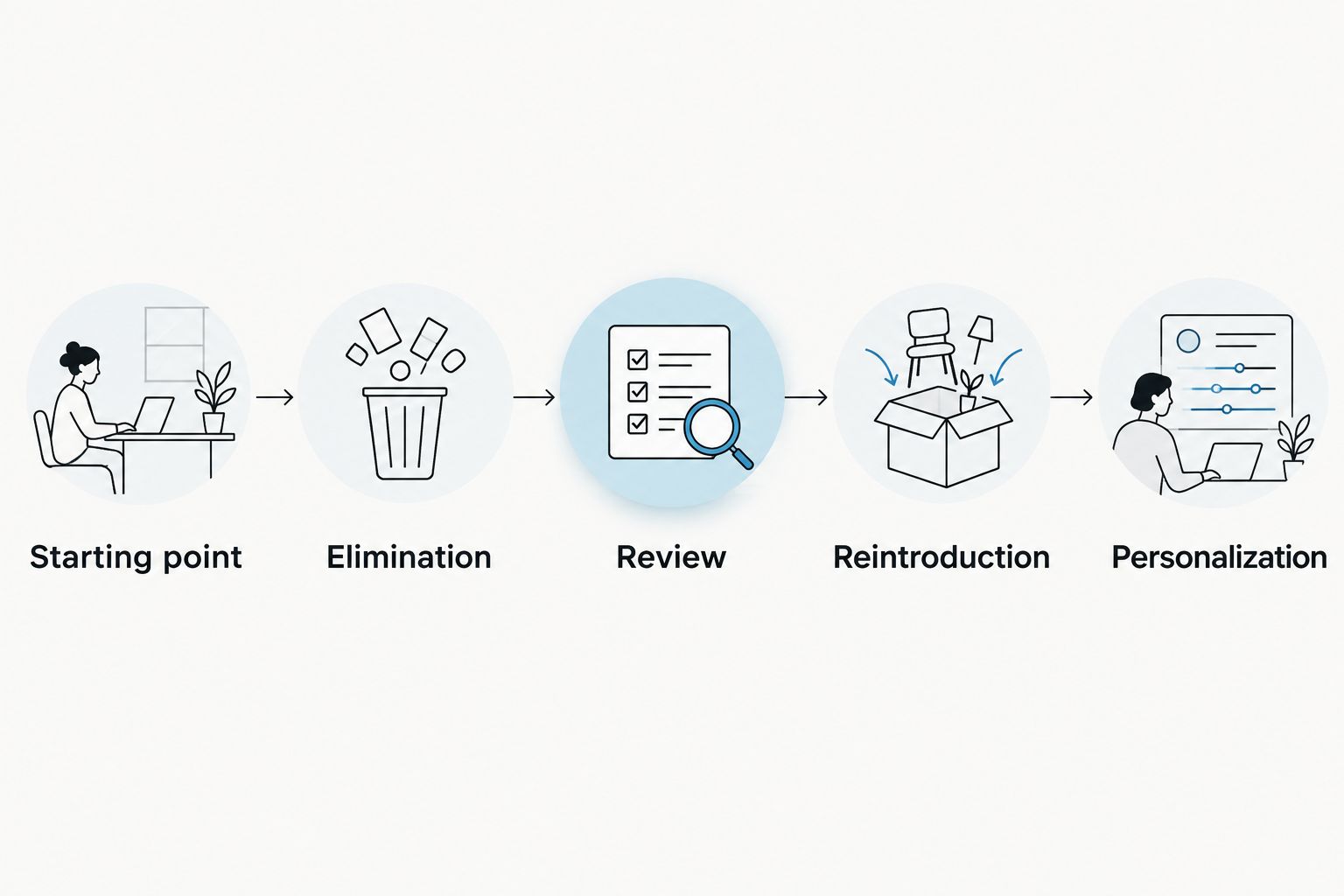
This sequence is what makes a low FODMAP trial different from collecting a growing list of foods to fear. In 2026, write down your reintroduction plan when you write down your elimination plan. If you need help interpreting reactions, a dietitian experienced with IBS can help you separate a consistent trigger from a difficult day.
Why the answer varies
The same diet can be useful for one person and an unnecessary burden for another. These factors change whether the effort produces an answer you can use:
- Your starting symptoms. A food-trigger trial is easier to judge when you can describe what you want to change, such as bloating after meals or recurring abdominal pain.
- The reason for the symptoms. IBS, SIBO and medication-related side effects are not interchangeable diagnoses. A low FODMAP trial does not replace assessment or treatment for another cause.
- Your ability to reintroduce foods. If elimination fits your schedule but food challenges never happen, the diet loses its main decision-making step.
- Portion size. Tolerating a small serving but not a larger one is more useful information than labeling the food simply safe or unsafe.
- Your current food intake. If your diet is already limited, adding restrictions without nutrition guidance can make it harder to eat adequately.
- Changes outside meals. New medications or a change in how much you eat can complicate a before-and-after comparison. Track them rather than attributing every symptom change to FODMAPs.
The diet earns its place when it gives you more choices after testing, not fewer choices by default. That is a practical way to judge progress even when symptoms fluctuate.
Is it worth trying if you have SIBO?
A low FODMAP diet can help you investigate whether particular foods aggravate symptoms, but it does not treat SIBO itself. If SIBO has been diagnosed or is suspected, discuss the underlying condition with your clinician rather than using symptom relief as evidence that the condition is resolved.
This distinction changes your next move. You can track whether a food challenge affects bloating while separately following a clinical plan for SIBO. Do not let a more comfortable meal become a reason to stop investigating persistent symptoms.
Is it worth trying if you take Ozempic, Wegovy or Mounjaro?
Not automatically. If symptoms began or changed while taking a GLP-1 medication, speak with the prescribing clinician before assuming FODMAPs are responsible. Cutting out more foods without identifying the problem can make meals harder to manage when your appetite has already changed.
A symptom record is more useful than a blanket restriction here. Note when discomfort occurs in relation to meals and medication changes, and describe the pattern to your clinician. If IBS was also part of your history, a dietitian can help decide whether a low FODMAP trial has a specific question to answer.
What can make the diet easier without replacing it?
Meal planning reduces the daily work of deciding what to eat. Casa de Sante offers a low FODMAP cookbook and supplements for people managing digestive symptoms. Those products can fit a food plan, but neither a recipe nor a supplement tells you which FODMAP groups you personally tolerate.
If you need meal ideas, The Complete Low-Fodmap IBS Relief Cookbook is a relevant starting point. Its benefit is a set of recipes and meal plans; its limitation is that a shared recipe cannot substitute for your own reintroduction results. Keep foods you tolerate in your rotation even if they do not appear on an elimination menu.
A protein powder can be a convenient food option when planning meals, but check its ingredients and serving size against your own needs. Casa de Sante low FODMAP products are best used to support a workable menu, not to expand the list of foods you avoid. A supplement is not a treatment for IBS or SIBO and should not replace clinical advice.


Can you eat normally again after a low FODMAP trial?
Yes, the plan is to return to the widest range of foods you tolerate, rather than remain on the elimination menu. Reintroduction tests are how you learn the difference between a food you need to limit, a portion you need to adjust and a food you can keep.
A difficult challenge does not make every food in a category permanently off-limits. Review what you ate, how much you ate and what else changed before drawing that conclusion. If the results feel inconsistent, get help interpreting them instead of removing more foods from your diet.
For many people, this is the point at which the effort begins to pay off. The restrictions become specific choices rather than general rules. In 2026, judge success by the meals you can confidently keep as well as the symptoms you reduce.
How do you decide whether to start?
Start with the question you want the diet to answer. If you have IBS symptoms, can maintain adequate meals during a temporary trial and are prepared to reintroduce foods, it is a reasonable option to discuss with a clinician or dietitian. If you are hoping the diet will diagnose SIBO, fix medication side effects or tell you to avoid all high-FODMAP foods forever, it is the wrong tool for that job.
You do not need to have a perfect food diary before asking for help. Bring a record that shows your usual meals, the symptoms that disrupt your day and any medication changes. That gives the discussion a clearer starting point than a long list of foods you have already stopped eating.
FAQ
Is the low FODMAP diet worth it for IBS in 2026?
Yes, the low FODMAP diet is worth trying for IBS when you pair temporary elimination with food reintroduction. The aim is to identify your triggers while keeping foods you tolerate.
How long should I stay in the elimination phase?
Monash University's low FODMAP guidance describes an elimination phase of 2–6 weeks. Plan reintroduction rather than treating elimination as a permanent diet.
Does the low FODMAP diet cure IBS?
No, the low FODMAP diet does not cure IBS. It is a way to investigate whether changing your intake of certain foods helps manage symptoms.
Is a low FODMAP diet worth trying for SIBO?
A low FODMAP trial can help identify foods that aggravate symptoms, but it does not treat SIBO. Discuss suspected or diagnosed SIBO with your clinician.
Should I try low FODMAP for bloating on Ozempic or Wegovy?
Not before discussing the symptom pattern with your prescribing clinician. A GLP-1 medication and food choices both belong in that discussion; restricting foods without a clear reason can complicate meals.
Do I need low FODMAP supplements to follow the diet?
No, low FODMAP supplements are not required to follow the diet. Casa de Sante supplements can be considered alongside meal planning, but they do not replace food challenges or medical care.
Can I bring foods back after a low FODMAP trial?
Yes, bringing back tolerated foods is the purpose of reintroduction. Test foods and portions systematically so your usual diet is no more restrictive than it needs to be.
One last thing
Before you remove a food in 2026, decide how you will test it again. That single decision separates a useful low FODMAP experiment from an ever-shrinking menu. Casa de Sante is best for people with IBS who want low FODMAP meal-planning support; your reintroduction results still determine what belongs on your plate.









