
How to Break a Fast Without Digestive Issues in 2026






Break an intermittent fast with 4 to 6 ounces of low-fat, low-fiber food first — broth, a soft-cooked egg, or a low FODMAP protein shake — then wait 15 to 20 minutes before adding anything larger. Digestive issues after a fast almost always trace back to skipping that step: a big meal hits a gut that slowed enzyme and acid output during the fasting window, and that mismatch is what causes the bloating, cramping, or diarrhea people blame on the fast itself.
- Break an intermittent fast with 4 to 6 ounces of low-fat, low-FODMAP food first, then wait 15 to 20 minutes before more.
- Digestive enzyme and stomach acid output slow during fasting, which is why a big first meal causes bloating and cramping.
- A 24-hour or longer fast needs a slower refeed than a 16:8 window — rushing the first meal is the top cause of post-fast digestive issues.
- A low FODMAP protein shake or FODMAP Digestive Enzymes from Casa de Sante make the first meal back easier on a sensitive gut.
Why this matters
Your stomach doesn't just turn back on the moment you eat after a fast. Gastric acid and digestive enzyme output drop during extended fasting windows, and gut motility slows to conserve energy. Refeed too fast — a large meal, fried food, or a high-FODMAP dish — and the digestive system can't keep pace, which is when reflux, gas, and diarrhea show up within the hour.
This matters more for anyone managing IBS, SIBO, or GLP-1 medication side effects, since those conditions already slow gastric emptying or ferment fermentable carbs poorly. The fix isn't avoiding intermittent fasting in 2026 — it's sequencing the first meal correctly, the same way clinicians sequence refeeding after any prolonged gap in eating.
How to break an intermittent fast without digestive issues
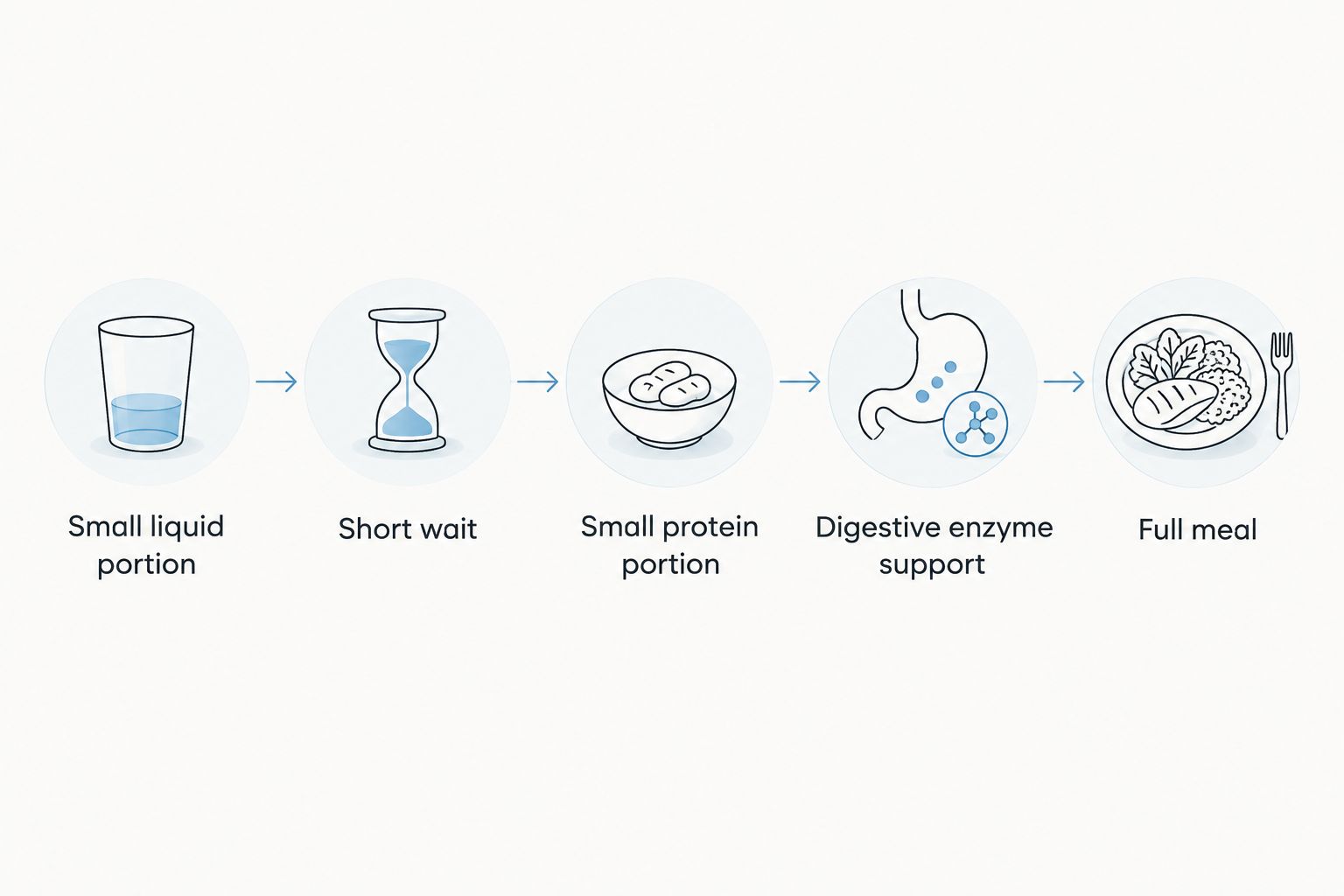
Follow this order regardless of how long the fast ran. Each step gives the gut a smaller signal to respond to before the next one arrives.
- Start with 4 to 6 ounces of liquid or soft food. Bone broth, herbal tea with a splash of lactose-free milk, or a low FODMAP protein shake work better than solid food because they need almost no mechanical digestion.
- Wait 15 to 20 minutes. This gives stomach acid and enzyme output time to ramp back up before more volume arrives.
- Add a small protein-forward portion. 2 to 3 ounces of a soft-cooked egg, plain low FODMAP protein, or firm tofu is enough — skip raw vegetables, beans, and high-fat sauces at this stage.
- Take a digestive enzyme with the first solid food if you have IBS, SIBO, or you're on a GLP-1 medication. FODMAP Digestive Enzymes support the breakdown of fat and protein while your own enzyme output is still catching up.
- Wait another 30 to 60 minutes before a full meal. Watch for bloating or cramping in this window — it's the signal to slow down further, not push through.
- Build to a normal meal size over 60 to 90 minutes total, and keep that first full meal low-fat and low-FODMAP rather than reaching for fried food or a large salad.
Breaking a 16-hour fast
A 16:8 window is the shortest common intermittent fast, and it needs the least ceremony. Most people can move to a small protein-forward meal after 15 to 20 minutes of settling, since 16 hours isn't long enough to meaningfully drop stomach acid output for a healthy gut.
The exception is anyone with IBS or SIBO — the gut's baseline is already touchier, so a small, low-FODMAP portion still beats a large plate first thing. Verdict: safe to break with a moderate portion for most people, but gut-sensitive eaters should still start small.
Breaking a 24-hour fast
A full 24-hour fast drops digestive enzyme and stomach acid output further, so the first bite matters more. Start with the liquid-or-soft-food step, wait the full 15 to 20 minutes, then move to a small protein portion before a full meal.
A low FODMAP protein shake works well here because it delivers protein without the fermentable carbs — inulin, excess lactose, high-fructose fruit — that cause gas in a gut that's had 24 hours to get more sensitive. Verdict: the two-step refeed, liquid then small protein, is worth the extra 15 to 20 minutes for a 24-hour fast.
Breaking a 36+ hour fast
Fasts past 36 hours call for the full sequence above, done slowly, and they're where refeeding syndrome — a real medical risk from reintroducing food too fast after extended caloric restriction — becomes a genuine consideration, particularly for anyone underweight or with a history of disordered eating. Build the meal up over 90 minutes to two hours instead of one, and lean on digestive enzymes and a gentle protein source rather than solid food for the first hour.
Anyone fasting longer than 48 hours for medical reasons should be doing it under a clinician's guidance, not from a blog post. Verdict: the slowest refeed of the three, and the one where skipping steps causes the most noticeable digestive issues.


Why digestive issues happen when you break a fast
- Digestive enzyme output slows during fasting — your gut isn't primed to break down a large meal the moment food arrives.
- Stomach acid production drops with no food to trigger it, which delays protein and fat breakdown in the first meal back.
- Gut motility changes during extended fasts, so a sudden volume of food can move through unevenly and cause cramping.
- A high-fat or fried first meal overwhelms a slowed system faster than a lean, low-FODMAP one does.
- High-FODMAP foods — garlic, onion, wheat, beans — ferment quickly in a gut that's already more reactive post-fast, which is why bloating shows up within an hour.
- GLP-1 medications slow gastric emptying further, stacking on top of the fast's own slowdown. Knowing how to take digestive enzymes for best results helps time that first dose correctly.
Related questions
Is bone broth a good way to break a fast?
Bone broth is one of the best first foods for breaking a fast because it's almost entirely liquid, low in fat, and needs minimal digestive work. It won't deliver much protein on its own, so treat it as the first 15 to 20 minute step, not the whole meal.
Can you drink coffee before breaking an intermittent fast?
Black coffee doesn't break a fast metabolically, but it can irritate a gut that's already sensitive post-fast, especially with IBS or acid reflux. If coffee triggers symptoms on a full stomach, it's more likely to on an empty one — hold it until after the first small portion.
How long should you wait between fast-breaking portions?
Wait 15 to 20 minutes between the first liquid portion and the next small bite, then another 30 to 60 minutes before a full meal. Rushing that timeline is the single most common cause of post-fast bloating and cramping.
FAQ
What's the best food to break an intermittent fast without stomach issues?
The best first food is 4 to 6 ounces of bone broth, herbal tea, or a low FODMAP protein shake, since these need almost no mechanical digestion. Solid, high-fat, or high-fiber food should wait until 30 to 60 minutes after that first small portion.
Is bone broth good for breaking a fast?
Bone broth is one of the best first foods for breaking a fast because it's liquid, low in fat, and gentle on a gut with slowed digestive enzyme output. It doesn't deliver much protein on its own, so a small protein portion should follow 15 to 20 minutes later.
How long should you wait between fast-breaking portions?
Wait 15 to 20 minutes between the first liquid portion and the next small bite, then another 30 to 60 minutes before a full meal. Skipping that wait is the most common reason people get bloating or cramping right after a fast.
Can you drink coffee before breaking an intermittent fast?
Black coffee doesn't break a fast metabolically, but it can irritate a gut that's already sensitive right after a fast, especially with IBS or reflux. Hold it until after the first small portion of food if it tends to trigger symptoms.
Do digestive enzymes help when breaking a fast?
Digestive enzymes help because your own enzyme output slows during a fast and needs time to catch up to a full meal. Taking a supplement like FODMAP Digestive Enzymes with the first solid food supports fat and protein breakdown while that catch-up happens.
How long does it take to break a 24-hour fast safely?
A safe refeed from a 24-hour fast takes roughly 60 to 90 minutes from the first small portion to a full meal. Moving faster than that raises the odds of bloating, cramping, or diarrhea in a gut that hasn't ramped back up yet.
Is a protein shake a good way to break an intermittent fast?
A low FODMAP protein shake is a good way to break a fast because it delivers protein without the fermentable carbs that cause gas in a gut that's just come off a fasting window. It works best as the second step, after an initial 15 to 20 minute liquid-only portion.
What happens if you break a fast wrong?
Breaking a fast with a large, high-fat, or high-FODMAP meal right away commonly causes bloating, cramping, reflux, or diarrhea within an hour. The fix on the next fast is a smaller first portion and a 15 to 20 minute wait before adding more.
One last thing
The order of the first meal matters more than what's in it. A low-fat, low-FODMAP protein source eaten slowly over 60 to 90 minutes causes fewer digestive issues than a whole-food meal eaten in five minutes flat — timing beats ingredient quality when a gut is coming out of a fast in 2026.









