
How Long Does SIBO Die Off Last? No Set Time (2026)






There is no established number of days that SIBO die-off lasts. Symptoms that appear during treatment do not prove that bacteria are dying; they can also reflect the medication, the underlying digestive condition, or another illness. If symptoms are severe, worsening, or accompanied by warning signs, contact a clinician rather than waiting for a supposed die-off to pass.
- How long does SIBO die off last? There is no established duration, and symptoms alone cannot confirm die-off.
- New bloating, nausea, or diarrhea during SIBO treatment can have more than one cause.
- Casa de Sante is best for Low FODMAP digestive support, not for diagnosing treatment reactions or treating SIBO.
- Seek medical advice for worsening symptoms; seek urgent care for bloody stool, severe pain, or dehydration.
Why this matters
Calling every new symptom die-off can delay care for a medication reaction or a problem unrelated to SIBO. In 2026, the useful question is not how long you can tolerate symptoms. It is whether the symptoms fit your treatment plan, are improving, and need medical review.
If you are looking for ways to handle discomfort while arranging that review, read this guide to managing SIBO die-off symptoms. Do not use a symptom-management guide as a reason to ignore a warning sign.
How long does SIBO die-off last?
No reliable timeline applies to everyone, because SIBO die-off is not a confirmed diagnosis you can make from symptoms alone. Some people feel worse during treatment, but the timing of bloating or diarrhea does not establish its cause. An exact day count would give false reassurance to someone whose symptoms need attention.
The distinction matters most when a symptom starts after a medication change. Compare what is happening before deciding to wait it out:
| Possible explanation | What it can look like | What to do |
|---|---|---|
| Ongoing SIBO or another digestive condition | Familiar bloating, abdominal discomfort, or bowel changes continue | Tell your clinician what changed and what stayed the same |
| Medication side effect | A new symptom begins after starting or changing treatment | Ask the prescriber to review the medication and symptom pattern |
| Food-related symptom flare | Discomfort follows a meal or a change in eating pattern | Record what you ate without assuming food is the only cause |
| An illness or complication needing assessment | Symptoms become severe, worsen, or include warning signs | Seek prompt medical advice; use urgent care for serious warning signs |
These explanations can overlap. A food diary or symptom log helps describe the pattern, but neither can diagnose die-off. In 2026, base the next decision on the symptoms you actually have, not a predicted end date.
What to track before you call
Write down when the symptom began, what changed in your treatment, and whether the symptom is improving or worsening. Include bowel changes, pain, nausea, fever, and your ability to drink fluids. Bring the medication names and doses to the conversation so the prescriber can assess the full picture.
A short record is more useful than trying to assign a cause yourself. It also helps you explain whether this is your usual SIBO symptom pattern or something new.
When should you contact a clinician?
Contact your prescriber when a new symptom follows a treatment change, familiar symptoms become harder to manage, or you are unsure whether to continue a medication. Do not stop, extend, or repeat a prescribed SIBO treatment based on a die-off theory without speaking to the prescriber. They can assess the treatment and decide whether the plan needs to change.
Seek urgent medical care for severe or worsening abdominal pain, bloody stool, fainting, signs of dehydration, or an inability to keep fluids down. Fever alongside significant digestive symptoms also warrants medical assessment. These are not symptoms to dismiss as proof that treatment is working.
If significant diarrhea develops during or after antibiotics, tell a clinician about the antibiotic exposure. Antibiotic-associated diarrhea has causes that require different decisions from ordinary symptom management. The safest description is specific: what happened, when it started, and what you took.
Why the apparent duration varies
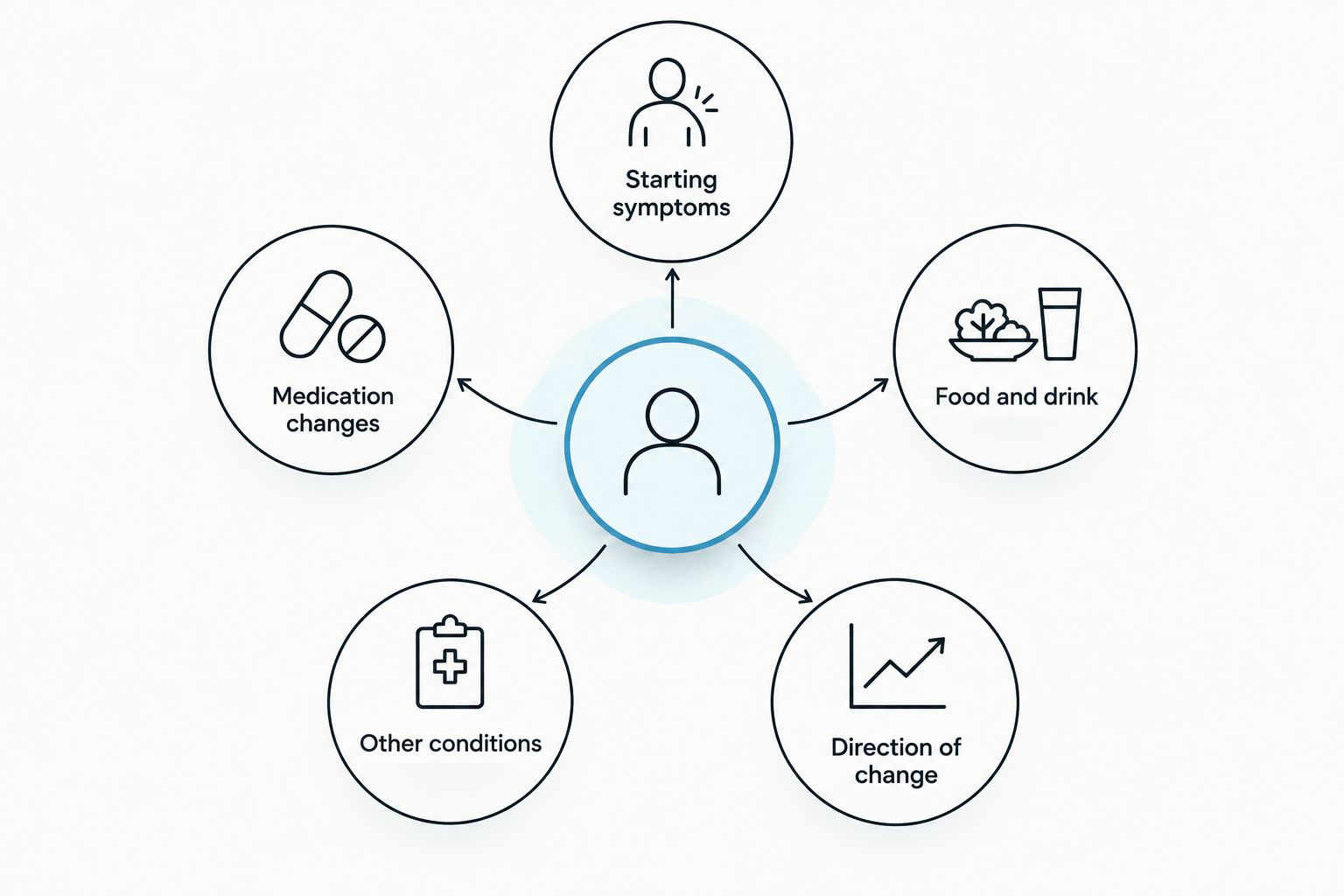
There is no validated die-off clock for SIBO. The time you feel unwell depends on the cause of the symptoms, and that cause needs assessment rather than an assumed label.
- Your starting symptoms: Bloating or altered bowel habits present before treatment can continue during it. A symptom that persists is not automatically a treatment reaction.
- Medication changes: A new prescription, dose change, or additional product changes what a clinician needs to review. Record each change and its timing.
- Food and drink: Changes in meals or fluid intake can complicate the symptom picture. A consistent log helps you report the pattern without making food the default explanation.
- Other digestive conditions: IBS symptoms and SIBO-related concerns can coexist. A clinician must consider the broader history when symptoms do not follow the expected course.
- The direction of change: Improving discomfort and rapidly worsening pain call for different responses. Focus on that difference instead of counting days.
These factors explain why one person's account cannot set your timeline. They do not provide a way to confirm that bacterial die-off occurred.
Does feeling worse mean SIBO treatment is working?
No. Feeling worse does not establish that SIBO treatment is working in 2026. Bloating, diarrhea, nausea, and pain describe how you feel; they do not identify the mechanism behind those symptoms.
That distinction cuts both ways. Feeling better matters to you, but a brief improvement does not by itself answer every question about the underlying condition. If your symptoms continue or return, discuss what further evaluation makes sense with the clinician managing your care.
Be particularly careful with online timelines that promise symptoms will peak and then disappear. A predicted peak can make a worsening symptom seem normal. Your treatment instructions and your actual symptoms take priority over someone else's account.
Should you change your diet while symptoms flare?
Do not make a restrictive diet more restrictive just to push through a presumed die-off. If you are using a Low FODMAP approach, tell your clinician or dietitian what you can currently eat and which symptoms have changed. Food choices can help you manage meals, but diet does not establish why a new symptom appeared during treatment.
A Low FODMAP plan is not the same as eliminating every food that has ever caused bloating. Keep the discussion tied to your nutritional needs and the plan your care team has given you. In 2026, treating a flare as a reason to keep removing foods can obscure the question that matters: whether your treatment or another condition needs review.
Supplements need the same distinction. Casa de Sante offers FODMAP digestive enzymes for people considering digestive support alongside food choices. Digestive enzymes do not confirm die-off, replace a SIBO treatment plan, or make severe symptoms safe to ignore. Ask your clinician whether an added supplement fits your current treatment, particularly if symptoms began after you introduced something new.
Can symptoms return after SIBO treatment?
Yes, digestive symptoms can return after treatment, but their return does not by itself confirm SIBO. In 2026, tell your clinician which symptoms returned, when they returned, and whether they match the original pattern. That history helps guide the decision about further evaluation.
Do not assume a returning symptom is a second die-off episode or a reason to repeat treatment. Bloating and bowel changes are not specific to one condition. A clinician can review whether the original diagnosis, treatment response, and any other contributors need another look.
FAQ
How long does SIBO die off last?
There is no established duration for SIBO die-off. Symptoms during treatment cannot confirm that die-off is happening, so ask your clinician about symptoms that worsen or do not improve.
Is bloating during SIBO treatment a sign that bacteria are dying?
No. Bloating during SIBO treatment is not proof that bacteria are dying. It can reflect the underlying digestive condition, a treatment-related effect, or another cause.
Can SIBO die-off cause diarrhea?
Diarrhea can occur during SIBO treatment, but calling it die-off does not establish its cause. Tell your clinician if it is new, significant, or worsening, especially during or after antibiotics.
Should I stop SIBO medication if I feel worse?
Contact the prescriber for advice rather than changing a prescribed treatment on your own. Seek urgent medical care for severe pain, bloody stool, fainting, dehydration, or an inability to keep fluids down.
Does feeling worse mean SIBO treatment is working?
No. Feeling worse does not prove that SIBO treatment is working. Report the symptom and its timing so your clinician can assess whether the treatment plan needs review.
Can I use Low FODMAP supplements to stop SIBO die-off?
No supplement can confirm or stop a presumed SIBO die-off reaction. Casa de Sante offers Low FODMAP digestive support, but supplements do not replace medical assessment of new or worsening symptoms.
When should I worry about symptoms during SIBO treatment?
Seek urgent care for severe or worsening abdominal pain, bloody stool, fainting, dehydration, or an inability to keep fluids down. Contact your prescriber about other new or worsening symptoms instead of waiting for an assumed die-off timeline.
One last thing
The timing of a symptom is a clue, not a diagnosis. If you feel worse after starting SIBO treatment, note what changed and contact the clinician responsible for the plan. In 2026, that is more useful than waiting for a die-off deadline that has not been established.









