
how long does a low fodmap diet take to work: 2–6 wk 2026






A low FODMAP diet takes 2–6 weeks in its elimination phase to show whether restricting FODMAPs helps your IBS symptoms. That window is for assessing a response, not for staying on a restrictive diet indefinitely. If symptoms improve, reintroduction is the next step; if they do not, review the diet and your symptoms with a clinician or dietitian rather than extending elimination on your own.
- For IBS, the answer to how long does a low fodmap diet take to work is 2–6 weeks of elimination.
- If symptoms improve, reintroduce FODMAP groups to identify triggers instead of remaining in elimination.
- If symptoms do not improve, check implementation and other causes with a clinician or dietitian.
- A low FODMAP diet can help manage IBS symptoms; it is not a treatment for SIBO itself.
How long does it take for a low FODMAP diet to work?
Allow 2–6 weeks for the elimination phase. Monash University’s three-step low FODMAP guidance uses this period to assess whether IBS symptoms respond before moving to reintroduction. You do not need to wait until the end of the window to record a change, but an isolated good or bad day is not enough to judge the diet.
- Start with a symptom baseline. Note your usual abdominal pain, bloating and bowel habits before changing your meals. Record what you eat and how symptoms behave so you can compare like with like.
- Follow the elimination phase for 2–6 weeks. Replace high-FODMAP foods with suitable alternatives while keeping meals adequate and varied. Check portions: a food that fits at one serving size does not automatically fit at every serving size.
- Review the pattern, not a single meal. Compare symptom frequency and severity with your baseline. Look for a meaningful change you can sustain without cutting out more foods than the plan requires.
- Choose the next step. If symptoms improve, begin structured reintroduction. If they do not, ask a clinician or dietitian whether the plan was implemented correctly and whether another cause needs attention.
The 2–6 week window describes elimination only. It does not include the time needed to test individual FODMAP groups or build a personalized long-term diet. In 2026, that distinction matters more than a promise of rapid relief: the goal is to find which restrictions you actually need, not to keep every restriction.
Why this matters
Elimination is a diagnostic step within a dietary strategy, not the finished eating plan. If you stop as soon as you feel better, you still do not know which FODMAP groups cause symptoms; if you stay in elimination without testing foods again, you keep restrictions you might not need. The guide to reintroducing foods after a low FODMAP diet covers the next step once you have a usable symptom baseline.
For people with IBS, the practical question in 2026 is not whether every digestive symptom disappears. It is whether your usual symptoms improve enough during 2–6 weeks to justify testing foods systematically. If you have SIBO or take a GLP-1 medication, do not assume the same symptom pattern has the same cause; discuss your diagnosis and treatment plan with your clinician.
Elimination, reintroduction and personalization serve different purposes
A low FODMAP diet has 3 phases. Treating them as interchangeable makes the timeline confusing: elimination tests whether FODMAP restriction helps, reintroduction identifies tolerated and troublesome groups, and personalization turns those findings into an eating pattern you can maintain.
| Phase | Best for | What you do | Advantage | Limitation |
|---|---|---|---|---|
| Elimination | Checking whether FODMAP restriction changes IBS symptoms | Follow a low FODMAP plan for 2–6 weeks while tracking symptoms | Provides a defined period for comparison with your baseline | Restrictive; it does not identify which individual groups you tolerate |
| Reintroduction | Identifying your own triggers | Test FODMAP groups systematically while keeping the rest of your diet consistent | Separates foods you tolerate from those linked to symptoms | Requires planning and records; symptoms can still have other causes |
| Personalization | Eating with fewer unnecessary restrictions | Bring tolerated foods back and adjust portions of foods that trigger symptoms | Makes the plan more practical for everyday meals | Tolerance can change, so the plan still needs review |
Best for a first decision: elimination. Best for a long-term diet: personalization. Neither verdict makes the middle phase optional. A symptom improvement during elimination tells you the strategy is promising; reintroduction tells you which parts of it belong in your regular diet.
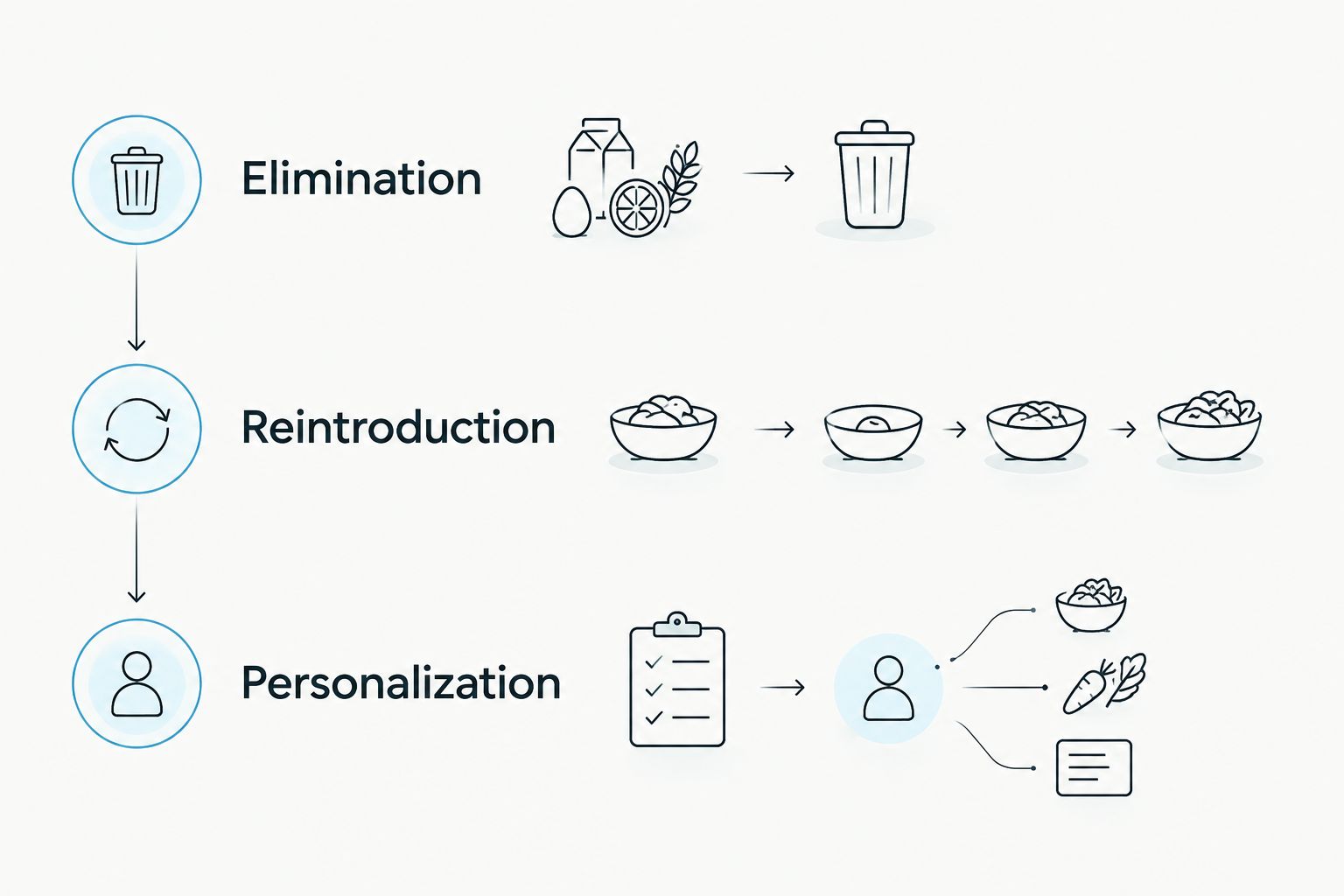
Monash University describes these as the three steps of the low FODMAP diet. Its guidance concerns dietary management, particularly for IBS; it does not establish that a low FODMAP diet treats every cause of bloating, diarrhea or constipation. Use the phases to organize a discussion with a dietitian, especially if you are already avoiding several food groups.
Why the response time varies
The 2–6 week elimination period is a decision window, not a guarantee that everyone will feel better on the same day. These factors affect whether your symptom record gives you a clear answer:
- Your starting symptoms. If pain, bloating or bowel habits fluctuate before you begin, compare the overall pattern with your baseline instead of judging a single day.
- Portion sizes. A low FODMAP choice at one serving size does not give you unlimited amounts of that food. Record portions when a meal appears to trigger symptoms.
- FODMAPs across a whole meal. Several ingredients can make a meal harder to interpret than one food eaten alone. Check the entire meal before blaming its most obvious ingredient.
- How consistently you follow the plan. Unchecked ingredients in sauces, drinks or snacks make it difficult to tell whether elimination changed your FODMAP intake.
- Other sources of symptoms. IBS symptoms can overlap with other conditions, and medicines or changes in eating can affect digestion. Do not use a diet response as a substitute for a diagnosis.
- Whether your meals remain adequate. Cutting out foods without suitable replacements can make the plan harder to follow and can create nutrition concerns unrelated to FODMAPs.
A useful record is simple: meals and portions alongside the symptoms you are trying to change. Keep your usual medications and prescribed treatment in the conversation with your clinician. In 2026, a precise food log is more useful than expanding an elimination list every time you have a difficult day.
What counts as a response during elimination?
A response means a noticeable improvement in the symptoms that led you to try the diet, compared with how those symptoms usually behave. For someone with IBS, that might mean less abdominal pain, less bloating or a more manageable bowel pattern. The question is whether the change is consistent enough to support reintroduction, not whether every day is symptom-free.
Write down your baseline before starting. If you change your meals, supplements and medicines together, you will have a harder time identifying what affected your symptoms. Keep the comparison focused on your own record rather than someone else’s account of how quickly the diet worked for them.
Casa de Sante’s low FODMAP supplements are not a test of whether the diet works, and they do not replace the elimination and reintroduction phases. If you are considering a supplement alongside a dietary change, review its ingredients and discuss it with your care team when your symptoms or treatment make that necessary. Keeping the variables clear protects the value of your symptom record.
What if you feel better before the elimination phase ends?
Record the improvement, then plan reintroduction rather than assuming all high-FODMAP foods must stay off your plate. The 2–6 week window gives you time to establish a pattern; it is not a requirement to remain in elimination longer than needed when you and your dietitian have enough information to proceed.
Do not treat one comfortable meal as proof that its ingredients are safe in every amount or combination. Reintroduction tests FODMAP groups in a more controlled way. That is how you move from a broad restriction to a personal list of foods and portions you can eat.
If meal planning is the obstacle, The Complete Low-FODMAP IBS Relief Cookbook is a Casa de Sante low FODMAP recipe and meal-planning resource. Best for: finding meal ideas while following the plan. Limitation: recipes cannot tell you which FODMAP groups you personally tolerate; only structured reintroduction can answer that question.
What if nothing changes after 2–6 weeks?
If symptoms have not meaningfully improved after 2–6 weeks of correctly followed elimination, do not make the diet stricter or continue it indefinitely. Review your food record with a registered dietitian or clinician. They can check portions and ingredients, assess whether the diet suits your situation, and consider other explanations for your symptoms.
Persistent symptoms do not mean you failed. They mean the current approach has not produced a clear benefit. Casa de Sante low FODMAP supplements should not be used to prolong an elimination phase that is not helping; discuss ongoing pain, diarrhea, constipation or bloating with a qualified professional instead.
Seek medical assessment rather than relying on dietary changes if you have warning signs such as blood in your stool, unexplained weight loss or symptoms that wake you from sleep. A low FODMAP plan is intended to manage symptoms in the right clinical context, not to rule out another condition.
Is the timeline the same for IBS, SIBO and GLP-1 symptoms?
The 2–6 week elimination window is low FODMAP guidance, not a shared treatment timeline for IBS, SIBO and medication side effects. A person with IBS can use it to assess whether dietary FODMAP restriction improves symptoms. Someone with SIBO needs a clinician-led plan for the underlying condition; reducing fermentable carbohydrates does not, by itself, establish that SIBO has been treated.
Ozempic, Wegovy and Mounjaro are GLP-1 medications. If your digestive symptoms began or changed while taking one, tell the prescriber rather than assuming FODMAPs are responsible. The timing of symptoms around a medication change is relevant to your care, but it cannot be diagnosed from a food diary alone.
Casa de Sante is best for people seeking low FODMAP supplement options alongside a clinician-guided digestive health plan, not for replacing diagnosis or reintroduction. That distinction applies whether you are managing IBS, SIBO or GLP-1-related symptoms in 2026. Your next move depends on the cause of the symptoms, not only on whether two conditions can produce similar bloating.
FAQ
How long does a low FODMAP diet take to work for IBS?
Allow 2–6 weeks of elimination to assess whether a low FODMAP diet improves IBS symptoms. Track your usual symptoms against a baseline, then move to reintroduction if you see a meaningful improvement.
Can a low FODMAP diet help before 2 weeks?
You can record improvement before the 2–6 week elimination window ends. Judge the overall symptom pattern rather than a single good day, and plan reintroduction once you have a clear response.
Should I stay on a low FODMAP diet if I feel better?
Move from elimination to structured reintroduction if your IBS symptoms improve. Staying in strict elimination does not reveal which FODMAP groups you can tolerate.
What if a low FODMAP diet does not work after 6 weeks?
Review the plan and your symptoms with a clinician or registered dietitian instead of extending strict elimination. They can check portions and ingredients and assess other possible causes.
Does a low FODMAP diet treat SIBO?
A low FODMAP diet does not, by itself, treat the underlying cause of SIBO. Discuss SIBO diagnosis and treatment with your clinician even if dietary changes ease symptoms.
Can I take low FODMAP supplements during elimination?
Discuss supplements with your clinician or dietitian if you are using elimination to identify what changes your symptoms. Adding several products while changing your diet makes the response harder to interpret.
Is reintroduction necessary after low FODMAP elimination?
Yes: reintroduction identifies which FODMAP groups and portions you tolerate after elimination. Without it, you cannot separate necessary restrictions from foods you could bring back.
One last thing
Feeling better is not the final result; knowing what you can eat again is. In 2026, use the 2–6 week elimination window to make a decision, then test foods rather than treating broad restriction as the goal. If your record does not show a clear benefit, take that record to a clinician or dietitian instead of removing more foods.









