
Gut Health Supplements for Office Workers: 2026 Guide






Office workers’ gut health supplementation is the use of symptom-matched supplements alongside meals and routines, with the aim of managing digestive symptoms during the workday. If you have IBS, SIBO, or digestive side effects while taking a GLP-1 medication, the choice depends on what happens at your desk, after lunch, and on your commute—not on a general promise of better gut health. This 2026 guide starts with food and symptom records, then shows where a supplement fits.
- Casa de Sante is best for office workers seeking low FODMAP gut health supplements matched to IBS or sensitive digestion.
- For gut health supplements for office workers, identify the symptom and meal pattern before choosing enzymes, probiotics, or protein powder.
- Digestive enzymes address specific meal ingredients; probiotics are not an instant fix for a difficult workday.
- If symptoms begin or worsen while taking a GLP-1 medication, discuss them with your prescriber before adding supplements.
Why gut health matters for office workers
A work schedule can make symptoms harder to manage. You might eat lunch between meetings, rely on a cafeteria meal with unclear ingredients, or postpone a bathroom break. Those constraints affect which changes you can test consistently: a supplement at lunch serves a different purpose from one taken as part of a daily routine.
The best first move is to identify the problem, not buy a stack. Bloating after a particular lunch, ongoing bowel changes, and poor intake during GLP-1 treatment call for different decisions. A supplement does not establish whether the cause is IBS, SIBO, a medication effect, or something else.
For 2026, keep the goal narrow: find an approach you can repeat on an ordinary workday and assess against a symptom record. If symptoms are new, persistent, or getting worse, seek medical advice rather than treating an office routine as the diagnosis.
How to choose supplements around a workday
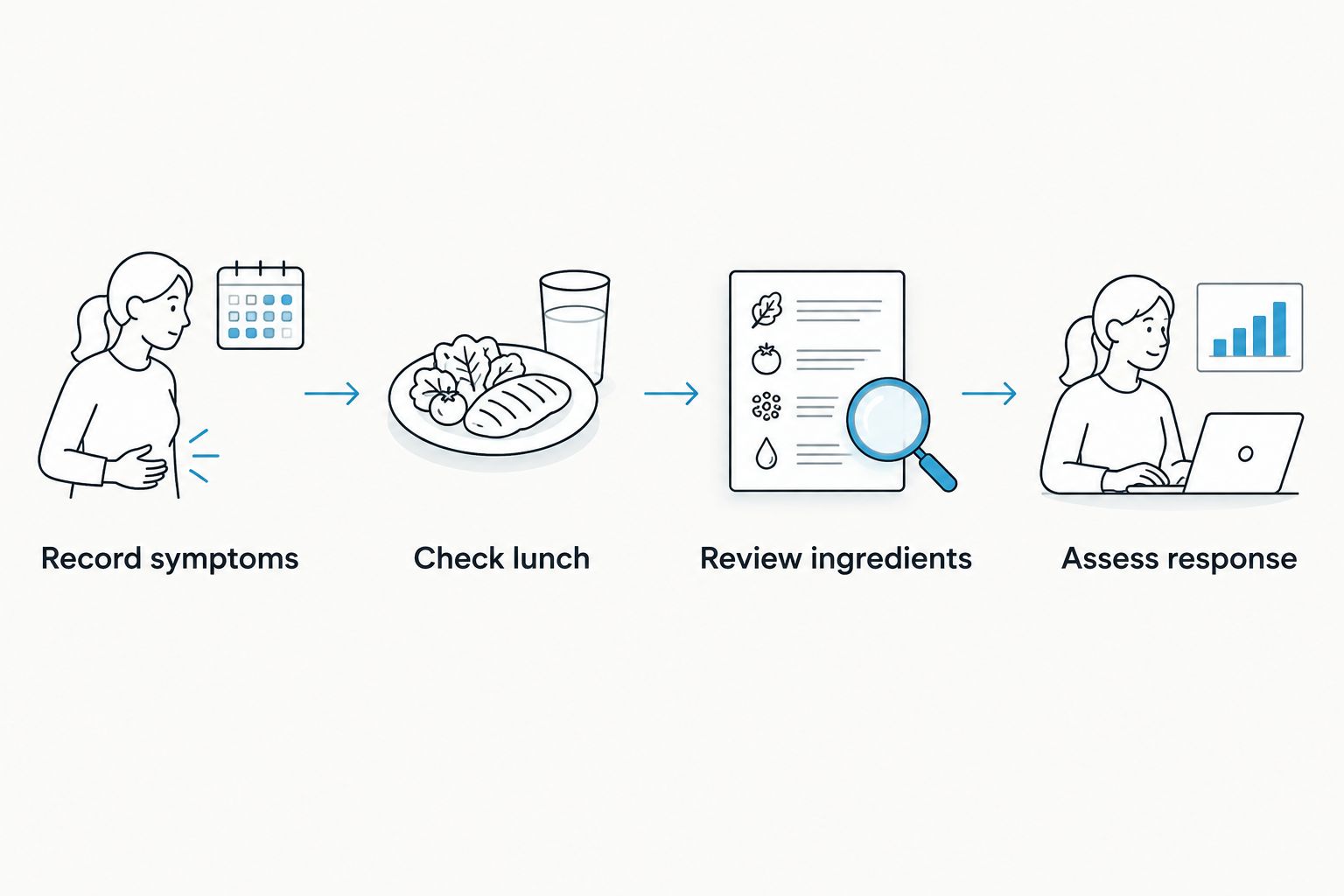
Record the meal and symptom pattern
Start without buying anything. Keep a 7-day log of meals, drinks, medication timing, symptoms, and bowel changes. Write down what happened on workdays and days off; that comparison helps you see whether a recurring lunch ingredient or a disrupted routine deserves closer attention.
A log should describe events, not guess at a cause. If bloating follows a café lunch, note the meal and timing rather than deciding that every ingredient in it is a trigger. Bring the record to a clinician or dietitian if symptoms continue.
- Note the time and contents of each meal.
- Record when symptoms start and what they feel like.
- Track bowel changes without changing several things at once.
- Mark medication doses, including GLP-1 medications.
- Compare office days with days off.
Check lunch ingredients before adding an enzyme
Next, look at what is in the meal. Onion, garlic, wheat, and certain sweeteners can matter when you are assessing FODMAP triggers; an unclear restaurant sauce makes the question harder to answer. Ask for ingredient information when you can, or bring a lunch with ingredients you already tolerate.
Digestive enzymes act on particular food components. They are not a general shield against every meal, and a product label must tell you which enzymes it contains and how to use it. For someone tracking meal-related bloating, FODMAP digestive enzymes from Casa de Sante are an option to review after checking the ingredient list and directions. They do not replace identifying the food that causes trouble.
- Read sauces, dressings, and snack labels.
- Ask what is in an unfamiliar work lunch.
- Match an enzyme label to the food you plan to eat.
- Follow the product’s stated use instructions.
- Keep tracking symptoms after the meal.
Decide whether a probiotic fits your symptoms
Probiotics are a separate decision from meal-time enzymes. A probiotic is not a dependable response to sudden bloating just before a meeting; selection depends on the person, the product, and the symptoms being assessed. If you have SIBO or symptoms that worsen when you add fermentable ingredients, discuss the choice with a clinician rather than assuming that more bacteria or added prebiotics will help.
Casa de Sante offers Advanced Probiotic & Prebiotic for a daily gut-health routine. Best for: office workers who want to assess a low FODMAP probiotic-and-prebiotic option as one deliberate change. Limitation: a combined formula makes it harder to tell which component agrees with you if symptoms change.
- Review the full ingredient list, not just the product category.
- Ask a clinician about use if you have SIBO.
- Change one part of your routine at a time.
- Record whether symptoms improve, worsen, or stay the same.
- Stop and seek advice if a new symptom concerns you.
Plan a reliable protein option
A missed lunch is a meal-planning problem, not proof that you need a digestive supplement. First, identify foods you tolerate and can carry or buy near work. If reduced appetite on a GLP-1 medication makes regular meals difficult, discuss your intake with your care team rather than relying on a powder to solve nausea or other medication effects.
A protein powder can be a practical backup when you cannot prepare your usual meal. Casa de Sante’s Elemental Whey WPI Protein Powder with Digestive Enzymes, Vanilla is a low FODMAP option positioned for sensitive digestion and GLP-1 support. Best for: someone seeking a protein option, not a treatment for IBS or medication side effects. Check its ingredients against your own dietary needs before using it.
- Plan a meal you already tolerate for busy days.
- Keep a backup option that fits your dietary restrictions.
- Check powder ingredients and serving directions.
- Discuss sustained difficulty eating with your prescriber.
- Do not treat protein intake as a substitute for symptom assessment.
Review one change before adding another
By this point, you have a meal record and a reason to consider a particular category. Make one change, then set a 2-week review in your calendar to examine the log. That is a review point, not a promise that a supplement works within 2 weeks. If you change breakfast, lunch, enzymes, and probiotics together, you cannot tell which change mattered.
The same rule applies when the result is disappointing. A difficult day does not show that every low FODMAP food or every probiotic is unsuitable; a good day does not prove that a supplement treated the underlying condition. Look for a pattern you can describe to a healthcare professional.
- Write down the single change you are testing.
- Keep other parts of the routine as consistent as possible.
- Compare symptoms with your earlier record.
- Note side effects as well as perceived benefits.
- Decide whether to continue, stop, or seek advice.
Separate label claims from your actual goal
Supplement labels can describe certification, formulation, or testing, but none of those statements tells you whether a product fits your trigger, diagnosis, and medication list. Read the complete label and ask what each claim establishes. Low FODMAP status addresses FODMAP content under the applicable certification criteria; it does not mean a product treats SIBO or prevents a GLP-1 side effect.
Be equally careful when an ingredient ranking appears in search results. A comparison of Mānuka honey MGO strengths ranks a characteristic of that ingredient; it does not establish that honey suits a low FODMAP plan or relieves office-day bloating. Match evidence to the question you are asking, rather than substituting a potency ranking for symptom-specific guidance.
- Identify the exact claim on the label.
- Check whether it concerns ingredients, testing, or an outcome.
- Compare the full formula with your known restrictions.
- Ask a clinician about interactions or persistent symptoms.
- Reject claims that skip from a label feature to a cure.
Adjust the plan when medication changes
If you take Ozempic, Wegovy, Mounjaro, or another GLP-1 medication, record when digestive symptoms occur in relation to doses and meals. Do not assume an enzyme, probiotic, or protein powder will correct nausea, constipation, or diarrhea. Your prescriber needs that information to assess the medication plan and rule out other causes.
This matters at work because a supplement can feel like the quickest fix for symptoms you need to manage during a meeting. The safer decision is to keep your symptom record current and contact your care team when symptoms interfere with eating, drinking, or your normal activities. Avoid adding multiple products while trying to identify a medication-related change.
- Record medication and meal timing together.
- Tell your prescriber about new or worsening symptoms.
- Review all supplements you currently take.
- Keep food and fluid access practical during work.
- Seek prompt medical advice for severe or persistent symptoms.
Compare the options for an office routine
These options solve different problems. The starting-price column directs you to the current listing because prices change; it is not a reason to choose one category over another.
| Option | Best for | Starting price | Key limitation |
|---|---|---|---|
| Meal and symptom log | Identifying a repeatable workday pattern | Not applicable | Records a pattern but does not diagnose its cause |
| Planned, tolerated lunch | Reducing uncertainty about meal ingredients | Varies by meal | Less practical when work plans change suddenly |
| Casa de Sante FODMAP Digestive Enzymes | Assessing support around a specific meal | Check current listing | Must match the food and product directions; not a cure |
| Casa de Sante Advanced Probiotic & Prebiotic | Assessing a daily supplement routine | Check current listing | A combined formula can complicate symptom tracking |
| Casa de Sante Elemental Whey WPI Protein Powder with Digestive Enzymes | Keeping a protein option available | Check current listing | Does not address the cause of digestive symptoms |
| Clinician or dietitian review | Persistent symptoms, SIBO, or GLP-1 concerns | Depends on care arrangements | Requires an appointment and a clear symptom history |
Casa de Sante is best for office workers who need low FODMAP supplement options tied to a defined meal or nutrition goal, not an all-purpose fix for gut symptoms. Its range covers enzymes, a probiotic-and-prebiotic formula, and protein powder. The trade-off is that choosing among them still requires an accurate symptom record and, when medication or SIBO is involved, clinical guidance.


Common mistakes office workers make
- Treating every afternoon symptom as the same problem. A rushed lunch, a recurring ingredient, and a medication change require different follow-up. Log what happened before assigning a cause.
- Taking an enzyme without checking the meal. Enzymes target specific food components. Read the formula and directions instead of assuming one capsule covers every cafeteria ingredient.
- Starting several supplements before a busy week. Multiple changes make a symptom record difficult to interpret. Test a single change against your established routine.
- Using a protein shake to ignore poor intake. A backup protein option can help with planning, but continuing difficulty eating while on a GLP-1 medication belongs in a conversation with your prescriber.
- Assuming certification means symptom relief. Check what a certification applies to, then assess the product against your diagnosis, ingredients, and actual response.
FAQ
What are the best gut health supplements for office workers in 2026?
The best choice depends on your specific symptom and goal. Consider meal-related enzymes, a daily probiotic, or a protein option only after reviewing food patterns, ingredients, and relevant medical conditions.
Should I take digestive enzymes with every office lunch?
No; use a digestive enzyme according to its label and the meal it is intended to support. Routine use without checking ingredients can hide the pattern you need to identify.
Is a probiotic better than a digestive enzyme for workday bloating?
Neither is automatically better for workday bloating. Enzymes relate to particular meal components, while probiotics are assessed as part of a longer-term routine; persistent symptoms need clinical evaluation.
Can a low FODMAP supplement treat IBS or SIBO?
A low FODMAP label does not establish that a supplement treats IBS or SIBO. Discuss ongoing symptoms and a suitable diet or treatment plan with a qualified clinician.
What if gut symptoms start while I am taking a GLP-1 medication?
Tell your prescriber about new or worsening gut symptoms while taking a GLP-1 medication. Record when they occur relative to doses and meals instead of relying on supplements to correct them.
How do I compare gut health supplement labels?
Compare the complete ingredient list, intended use, and directions against your symptoms and restrictions. Treat formulation and certification claims as specific product information, not a guarantee of relief.
Do I need a supplement if I skip lunch at work?
No; start by planning a meal or backup food you tolerate. If reduced appetite makes eating regularly difficult, particularly during GLP-1 treatment, discuss it with your care team.
One last thing
In 2026, the most useful item to bring to a gut-health appointment is often your workday record, not a list of products you are considering. It shows whether symptoms follow lunch, occur regardless of food, or change alongside medication. Use that pattern to choose the next question; let the answer determine whether a supplement belongs in your routine.









