
GLP-1 injection day supplement routine: 2026 guide






Instead of deciding what to eat, drink, or supplement from scratch after every injection, use a glp-1 injection day supplement routine that follows your prescribed medication schedule, records symptoms, and adds nutrition support only where you need it. This 2026 workflow covers injection day through the days before your next dose; it does not promise a symptom-free week or replace your prescriber’s instructions.
- A glp-1 injection day supplement routine starts with your prescribed dose, food and fluids, and a symptom log—not a supplement stack.
- Casa de Sante is best for GLP-1 users who want Low FODMAP nutrition options alongside a clinician-directed routine.
- Use protein support when eating enough is difficult; choose digestive enzymes only for a relevant meal-related concern.
- Persistent vomiting, severe abdominal pain, or dehydration needs medical advice, not another supplement.
Why this matters
GLP-1 medications can change appetite and cause digestive side effects. If you also manage IBS or SIBO, a difficult meal and a medication-related symptom can feel similar. A repeatable routine helps you record what happened before you change your food, supplements, or prescribed treatment.
The goal in 2026 is a usable record, not a guaranteed symptom-free week. For hydration questions, read the electrolyte guide for GLP-1 users. An electrolyte supplement is not an automatic part of every injection-day routine.
This guide separates three decisions: whether you can maintain food and fluids, whether a supplement fits an identified gap, and whether a symptom needs clinical review. Keep those decisions separate. Adding several products at once makes it harder to tell what agrees with you.
Before you start
- Have your medication name, prescribed dose, dosing instructions, and prescriber’s contact information available. Follow your own prescription rather than a supplement schedule from an article.
- Have familiar foods and drinks you tolerate, plus a way to record meals, fluids, symptoms, and supplements. If you follow a Low FODMAP diet, use your established tolerances rather than starting a new elimination phase on injection day.
- Check the label before setup: a protein powder containing digestive enzymes and a separate enzyme supplement are not interchangeable. Record what is already in each product before adding another, and ask your clinician or pharmacist about ingredient or medication questions.
For a 2026 routine, pick a calendar or notebook you will actually use. No particular app is required. The fields below are headings you create in your own record, not buttons or settings in a medication app.
Set your injection schedule
- Write Injection day in your calendar on the day specified by your prescription. Add the medication name and prescribed dose to your private record; do not rely on memory when you check symptoms later.
- Create a repeating reminder only if it matches your medication’s prescribed schedule. GLP-1 injection schedules differ by medication, so your prescription controls the interval.
- Add a separate Clinical review reminder if your prescriber has asked you to report symptoms, discuss a dose change, or attend a follow-up. Record the contact route you were given.
- Keep missed-dose and schedule-change instructions with your prescription information. Do not make up a catch-up schedule from the calendar reminder.
Expected result: you can identify your prescribed injection day and find the instructions you need if that day changes. The calendar records the plan; it does not authorize a dose adjustment.
Configure your food and fluids record
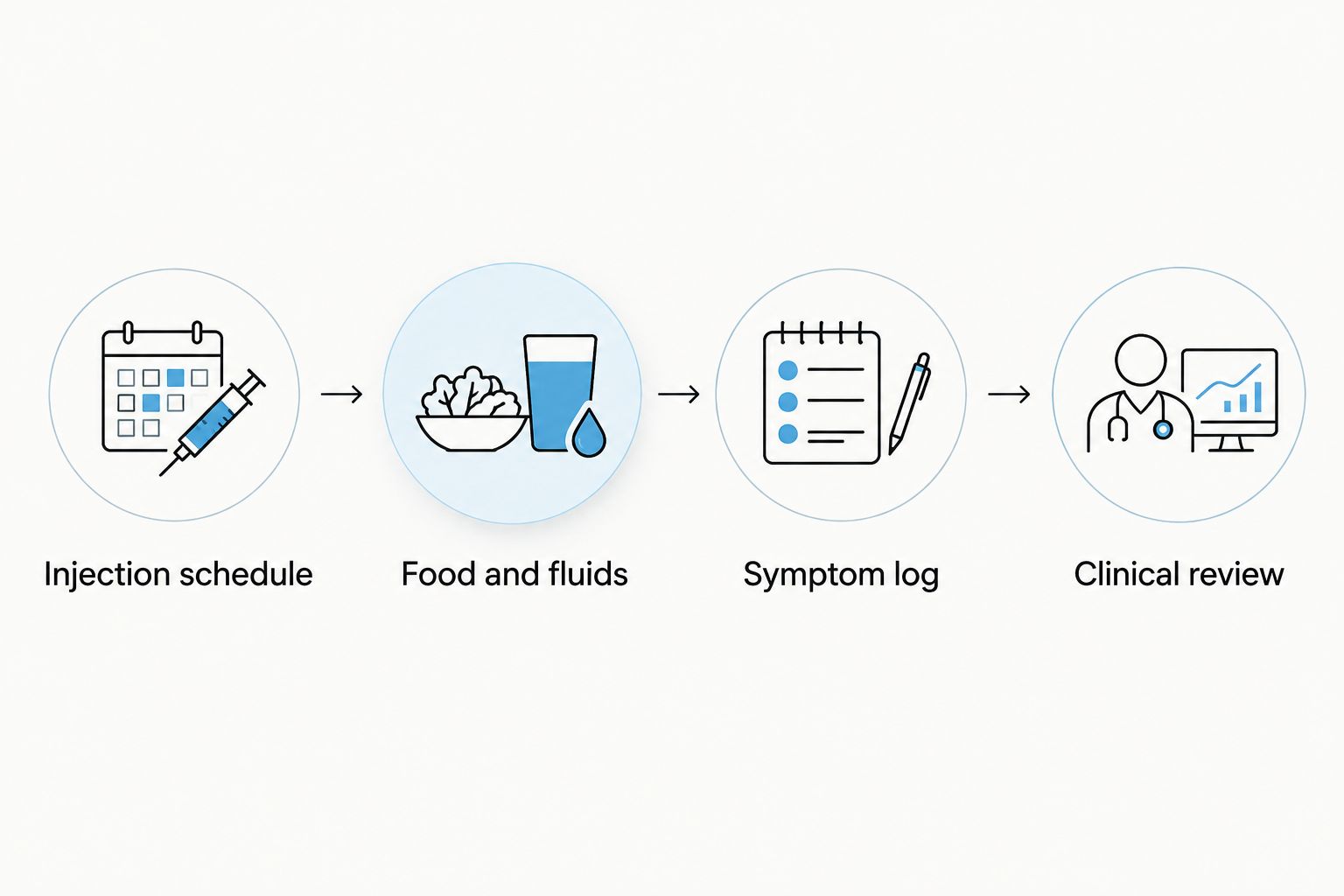
- Create four headings in your note: Injection schedule, Food and fluids, Symptom log, and Clinical review. Put the date under each entry so you can see the sequence later.
- Before the injection, note whether you have been able to eat and drink as usual. Use ordinary descriptions such as a smaller meal or difficulty finishing fluids; you do not need to estimate amounts you have not measured.
- After meals, record what you ate, whether it was a familiar food, and any symptoms that followed. If IBS or SIBO shapes your food choices, note that context rather than labeling every symptom a GLP-1 side effect.
- Record any supplement by its label name and the time you took it. If you start something new, note why. This makes a future conversation with your clinician more useful.
Expected result: the record shows whether reduced intake, a particular meal, a supplement, or the injection came before a symptom. It cannot diagnose the cause on its own.
A simple sequence is easier to follow than a long symptom diary: confirm the injection schedule, plan tolerable food and fluids, record symptoms, then decide whether clinical review is needed. Keep urgent symptoms out of the routine-tracking category.
Configure nutrition support
Start with the problem, then decide whether a supplement belongs in your 2026 workflow. A product should not become a required injection-day step just because it is marketed to GLP-1 users. If nausea, vomiting, or another symptom keeps you from eating or drinking, address that with your clinician rather than trying to cover it with a shake or pill.
The options below serve different purposes. They are not substitutes for one another, and none treats a serious medication side effect.
| Option | Best for | Advantage | Limitation |
|---|---|---|---|
| Advanced whey protein vanilla Low FODMAP gut friendly | Someone seeking a Low FODMAP whey protein option when reduced appetite makes protein intake difficult | The product combines whey protein isolate and digestive enzymes | It does not replace the rest of a varied diet; check the full ingredient label and your tolerance |
| Low FODMAP advanced vitamin mineral complex | Someone discussing a possible vitamin or mineral gap with a clinician | A daily nutrition option in gummy form | It does not establish that you have a deficiency or solve inadequate food and fluid intake |
| FODMAP digestive enzymes | Someone evaluating meal-related digestive support with a clinician | An enzyme option separate from protein or vitamin products | Enzymes do not treat GLP-1 nausea, dehydration, or severe abdominal pain |
Casa de Sante is best for GLP-1 users seeking Low FODMAP nutrition and digestive-support options, not a guaranteed fix for injection-day symptoms. Its protein, vitamin, and enzyme categories address different decisions. The disadvantage of treating them as a single stack is simple: you lose track of what you needed and what changed.
- Under Food and fluids, identify the actual gap. Is it difficulty eating enough protein-containing food, a question about overall nutrient intake, or discomfort associated with a particular meal? A symptom alone is not proof of a nutrient deficiency.
- If protein intake is the concern, compare the product label with your dietary needs and discuss a suitable intake target with your clinician or dietitian. A powder can supplement food; it should not displace meals you tolerate.
- If your diet has narrowed, discuss whether you need a multivitamin or an assessment of particular nutrients. Do not use a multivitamin as a substitute for evaluating persistent poor intake.
- If you are considering digestive enzymes, check which enzymes are already present in other products you use. Follow the product label and seek clinical advice for persistent symptoms rather than repeatedly adding enzymes.
- Record one change at a time in your symptom log. That gives you a clearer account to bring to a medical appointment, although it still cannot establish cause and effect.
Expected result: each supplement you use has a stated purpose, a checked label, and an entry in your record. Leaving a supplement out is a valid outcome when you have no identified need for it.


Review the days before your next injection
- Read the entries under Food and fluids and Symptom log. Look for a repeatable pattern, such as difficulty eating after an injection or symptoms after a particular meal, without assuming the pattern proves its cause.
- Check whether your selected supplement still addresses the reason you started it. If you have developed a new symptom, do not automatically add another product to counter it.
- Write down the specific question you need answered at Clinical review: whether reduced intake needs attention, whether a product fits your medication plan, or whether a recurring symptom calls for a change in care.
- Confirm the next injection against your prescription. Do not move a dose or alter its amount to fit a supplement routine.
Expected result: you have a short, dated account to share with your clinician and a clear plan for the next prescribed dose. For 2026, keep this review practical: record what you ate, what you took, what you felt, and what needs an answer.
Variant: track symptoms when your dose changes
A dose change is a reason to make a new baseline, not a reason to preemptively add every digestive product. Keep following the prescriber’s dosing instructions and use the same four record headings so you can compare what happened before and after the change.
- Enter the prescribed change under Injection schedule, with its date. Do not copy a previous dose into a new reminder without checking the prescription.
- Continue noting familiar foods, fluids, and symptoms under Food and fluids and Symptom log. If you also change your diet or supplements, record the dates separately.
- Bring persistent or worsening symptoms to Clinical review. Ask whether the symptom needs assessment before you add a protein powder, vitamin, enzyme, or other supplement.
Expected result: your clinician can see the timing of the prescribed change and the symptoms you noticed. The record supports a clinical decision; it does not determine whether the medication caused a symptom.
Troubleshooting
- Your reminder conflicts with the prescription. Check the prescription and your pharmacist or prescriber’s instructions. Correct the reminder; never use the reminder as the source of dosing advice.
- You cannot tell which change preceded bloating. Mark the dates you changed food or supplements. Keep future changes distinct, and ask a clinician about persistent or worsening symptoms.
- A shake is hard to tolerate when you feel nauseated. Do not force it to satisfy a routine. Record the difficulty eating and contact your clinician if intake remains poor or you cannot keep fluids down.
- You already use a protein product containing enzymes. Read both ingredient labels before adding a separate enzyme product. Ask a pharmacist or clinician if you are unsure how the products fit together.
- Symptoms feel too serious to log and wait. Severe or persistent abdominal pain, ongoing vomiting, or signs of dehydration need prompt medical advice. Seek urgent care for severe symptoms rather than waiting for the next scheduled review.
Customize your workflow
If IBS or SIBO is part of your history, keep the foods you know you tolerate visible in Food and fluids. A 2026 glp-1 injection day supplement routine works best as a record of your own prescribed medication and dietary needs, not as a universal supplement checklist.
If reduced appetite is your main concern, focus your clinical conversation on whether you are getting enough food and protein. If digestive discomfort follows meals, describe the meal and symptom before choosing an enzyme. If your diet has become limited, ask whether your nutrient intake needs review. Match the next step to the recorded problem.
FAQ
What is a glp-1 injection day supplement routine?
It is a plan to follow your prescribed injection schedule while recording food, fluids, symptoms, and any supplements you use. Supplements are optional additions for identified needs, not required parts of the injection.
Should I take supplements on GLP-1 injection day?
Take a supplement only if it fits your needs, its label, and your clinician’s advice. Injection day alone does not establish a need for protein powder, vitamins, or digestive enzymes.
Is Casa de Sante protein powder better than a multivitamin for GLP-1 users?
Neither is better for every GLP-1 user: Casa de Sante protein powder addresses a protein-intake concern, while its vitamin and mineral gummies address a different nutrition question. Neither replaces an assessment of persistent poor intake.
Do digestive enzymes stop GLP-1 nausea?
Digestive enzymes are not a treatment for GLP-1 nausea. Discuss persistent nausea or difficulty keeping food and fluids down with your clinician.
Can a supplement routine guarantee a symptom-free week?
No supplement routine guarantees a symptom-free week. A dated record helps you identify questions to raise with your prescriber and avoid treating every symptom with another product.
What if I miss my GLP-1 injection?
Follow the missed-dose instructions for your specific prescribed medication and contact your pharmacist or prescriber if anything is unclear. Do not take a catch-up dose based on a calendar reminder or supplement schedule.
When should I seek medical help instead of changing supplements?
Seek medical advice promptly for severe or persistent abdominal pain, ongoing vomiting, or signs of dehydration. Do not try to manage serious symptoms by adding protein powder, vitamins, or digestive enzymes.
One last thing
The most useful injection-day preparation is knowing which instruction came from your prescription and which choice came from your routine. In 2026, keep the medication schedule fixed to your clinician’s directions. Use the food, fluid, and symptom record to decide what to ask before you add anything else.









