
Digestive Enzymes for Gallbladder Sludge: No Cure (2026)






Digestive enzymes for gallbladder sludge are not a treatment for sludge: enzymes help break down food, while bile from the liver helps digest fat. If you have slow digestion or discomfort after meals, the first move is to establish whether the problem is gallbladder-related, food-related or linked to a medication. This 2026 guide explains where an enzyme supplement fits—and where it does not.
- Digestive enzymes for gallbladder sludge do not clear sludge or replace bile; get persistent symptoms assessed.
- Casa de Sante digestive enzymes are best considered for meal-related discomfort, not as gallbladder treatment.
- Track food, symptoms and medications before choosing between meal changes and an enzyme supplement.
- Seek urgent care for severe abdominal pain with fever, jaundice or persistent vomiting.
Why this matters for people with gallbladder sludge
Gallbladder sludge is material suspended in bile. Bile is made by the liver and stored in the gallbladder; digestive enzymes, including lipase, serve a different role in breaking down food. Adding enzymes does not remove sludge or fix a blockage. That distinction matters when a heavy meal leaves you bloated and you are deciding whether to buy a supplement or contact a clinician.
The same description—“slow digestion”—can cover several problems. You might mean early fullness, nausea, upper-abdominal pain, gas or a change in stool. Those symptoms do not all point to the gallbladder, and an enzyme trial cannot diagnose their cause. If greasy-looking stools are part of the picture, the guide to digestive enzymes for steatorrhea and fat malabsorption addresses that distinct question.
The 2026 decision is therefore not simply which enzyme to take. It is whether symptoms call for medical assessment, a clearer record of meal triggers or support for discomfort associated with eating. People managing IBS, SIBO or GLP-1 medication side effects have another reason to separate those possibilities: overlapping digestive symptoms can make a gallbladder explanation sound more certain than it is.
How to assess digestive enzymes for gallbladder sludge
Check warning signs first
If pain is severe or persistent, especially in the upper abdomen, do not use a supplement trial to see whether it passes. Fever, yellowing of the eyes or skin, and persistent vomiting also call for prompt medical attention. Tell the clinician if gallbladder sludge has already been found on imaging; that finding gives the symptoms context but does not identify the cause of every new episode.
For less urgent symptoms, write down what actually happens rather than labeling everything “indigestion.” A clinician can act on a description of pain, its location and associated symptoms more readily than on an assumption that you need more enzymes. Start with these checks:
- Identify where the pain is and whether it stays in one place or spreads.
- Note fever, yellowing of the eyes or skin, and vomiting.
- Record whether symptoms persist or interrupt normal activity.
- Seek urgent care for severe symptoms rather than testing a supplement.
Record meal patterns
A food-and-symptom record is the manual starting point in 2026. Write down meals, symptom onset and what “slow” feels like to you. An episode of upper-abdominal pain after eating is different from gas that follows a particular ingredient, even if both occur after dinner.
Do not use the record to diagnose sludge at home. Use it to make a clinical conversation precise and to avoid eliminating foods based on one uncomfortable meal. If IBS or SIBO is part of your history, note that too; the same meal can prompt more than one type of symptom. Keep the record practical:
- List meal ingredients and note especially rich or fatty dishes.
- Describe pain, fullness, bloating, nausea and stool changes separately.
- Record when symptoms start and whether they recur.
- Bring the record to your clinician if symptoms continue.
Review medications and diagnoses
Ask what has already been established. Was sludge reported on an ultrasound, or is it only a suspected explanation? Have you been told you have another digestive condition? Those are different starting points. In 2026, a product chosen from a symptom search still cannot substitute for a review of the diagnosis.
If you use a GLP-1 medication such as Ozempic, Wegovy or Mounjaro, tell the prescribing clinician about new or changing digestive symptoms. These medications can affect gastric emptying, while abdominal symptoms can also have other causes. Do not stop or change a prescribed medication on the basis of an enzyme article. Prepare for the conversation:
- Bring the wording of any imaging report you have.
- List current medications and supplements.
- Describe when symptoms began or changed.
- Ask which symptoms need follow-up and which need urgent care.
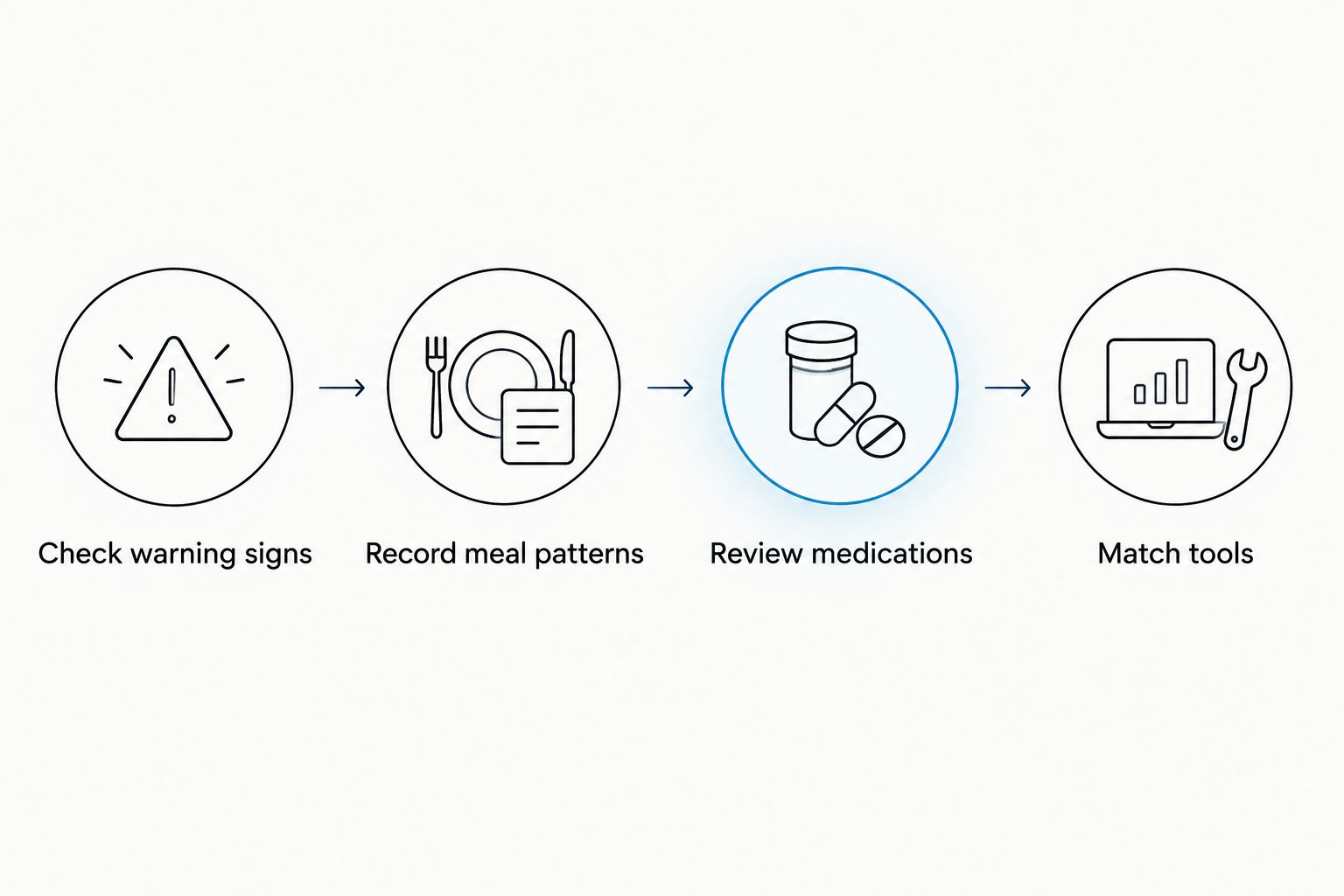
Match tools to symptoms
Once urgent concerns have been addressed, match the next step to the problem you actually want to solve. Meal adjustments let you test whether certain dishes coincide with discomfort without assuming you have an enzyme deficiency. A clinician can investigate recurring pain or stool changes. An over-the-counter enzyme is a narrower option: it is intended to support the breakdown of food at meals, not to treat sludge.
For a person who also manages food-related bloating, Casa de Sante FODMAP Digestive Enzymes are a meal-focused option. Casa de Sante digestive enzymes are best for people seeking support with meal-related discomfort after gallbladder concerns have been assessed—not for clearing gallbladder sludge. The advantage is a clear food-related use; the limitation is that symptoms caused by a gallbladder problem still need medical attention. Choose the right lane:
- Use a meal record to identify repeatable food associations.
- Discuss recurring upper-abdominal pain with a clinician.
- Consider an enzyme only for an appropriate meal-related goal.
- Stop treating the supplement as the answer if symptoms persist or worsen.
Read the enzyme label
“Digestive enzymes” describes a category, not a single action. Labels can list enzymes aimed at different food components. Lipase helps break down fat; other enzymes act on carbohydrates or proteins. None is bile, and seeing lipase on a label is not evidence that a product treats gallbladder sludge.
Read the full ingredient list if you have IBS, SIBO or known food sensitivities. An added ingredient can matter as much as the enzyme blend when you are trying to understand a reaction. Do not assume that a product with more ingredients is better for your symptoms. Before taking one:
- Identify the food component the listed enzymes are intended to break down.
- Check all non-enzyme ingredients against your known sensitivities.
- Follow the product label rather than inventing a dosing schedule.
- Ask a clinician or pharmacist about use alongside medications or existing conditions.
Reassess the result
Judge any meal-focused change against the symptom you recorded at the start. Less gas after a particular food is a different result from a change in upper-abdominal pain. Keep those outcomes separate. An improvement in ordinary post-meal discomfort does not prove that sludge has disappeared, and no improvement is a reason to reconsider the plan rather than keep adding supplements.
In 2026, the useful endpoint is a clearer decision: continue a tolerable meal adjustment, discuss persistent symptoms with a clinician or seek urgent care if warning signs appear. Enzymes are not a way to monitor a gallbladder finding. Close the loop:
- Compare the same symptom across meals instead of relying on a general impression.
- Note any new or worsening pain, nausea or stool change.
- Stop a supplement that appears to cause discomfort and seek advice.
- Follow the clinician’s plan for assessing known sludge or recurring symptoms.
Compare your options
These options address different questions. The best starting point for recurring pain is not automatically the best choice for occasional meal-related bloating. No option in the table is a home treatment for gallbladder sludge.
| Option | Best for | Main advantage | Key limitation |
|---|---|---|---|
| Clinical assessment | Known sludge with recurring pain, or symptoms that need diagnosis | Examines whether the gallbladder or another condition needs attention | Does not provide an instant answer from a supplement label |
| Food-and-symptom record with meal adjustments | Identifying a repeatable meal pattern without adding a product | Separates pain, fullness and gas into useful observations | Cannot confirm or rule out a medical condition |
| Casa de Sante FODMAP Digestive Enzymes | Meal-related discomfort when a clinician has addressed gallbladder concerns | Focuses on food breakdown at meals | Does not clear sludge, replace bile or diagnose pain |
| Casa de Sante FODMAP Digestive Enzymes + Prebiotics + Probiotics + Postbiotics | Someone considering a combined gut-support formula for food-related symptoms | Combines enzymes with other listed gut-support ingredients | Extra ingredients complicate judging what helps or irritates you |
For a first attempt to understand symptoms, the food record is simpler than starting several ingredients together. If pain is the main concern, clinical assessment takes priority over both Casa de Sante options. If meal-related discomfort remains the specific goal, compare the ingredient lists and discuss suitability with your clinician rather than treating either formula as sludge therapy.


Common mistakes people with gallbladder sludge make
Treating enzymes as a way to dissolve sludge. Enzymes work on food; they do not remove material from the gallbladder. A product can have a legitimate meal-related purpose without being a gallbladder treatment. Keep the goal written down before you choose one.
Calling every after-meal symptom “slow digestion.” Bloating, early fullness and upper-abdominal pain need separate descriptions. If you compress them into one label, you lose the detail that helps determine whether a food change, a medication review or a clinical assessment belongs next.
Assuming a sludge finding explains every symptom. An imaging result is important, but it is not permission to ignore new symptoms or another diagnosis. In 2026, report changes in pain, fever, jaundice or vomiting rather than attributing them to the same familiar finding.
Adding several supplements at once. When you change an enzyme, probiotic and meal pattern together, it becomes harder to tell what coincides with improvement or irritation. Keep the question narrow, especially if you also manage IBS or SIBO. A combination formula is not automatically a better first test.
Using symptom relief as proof of treatment. Feeling less bloated after a meal does not establish what happened to gallbladder sludge. Keep follow-up for the gallbladder question separate from your assessment of meal comfort.
FAQ
Can digestive enzymes clear gallbladder sludge?
No. Digestive enzymes help break down food; they do not remove sludge from the gallbladder. Ask a clinician how a reported sludge finding should be assessed alongside your symptoms.
Are digestive enzymes for gallbladder sludge the same as bile supplements?
No. Enzymes and bile have different roles in fat digestion. An enzyme product does not replace bile or establish whether your gallbladder is causing symptoms.
What should I do if gallbladder sludge comes with severe pain?
Seek prompt medical attention for severe or persistent abdominal pain, especially with fever, jaundice or persistent vomiting. Do not wait to see whether a digestive enzyme helps.
Can gallbladder sludge make me feel full after eating?
Fullness after eating does not, by itself, identify gallbladder sludge as the cause. Record when fullness occurs and discuss persistent symptoms with a clinician, particularly if pain or vomiting is present.
Are Casa de Sante digestive enzymes a gallbladder treatment?
No. Casa de Sante digestive enzymes are meal-focused supplements, not a treatment for gallbladder sludge. Consider them only for an appropriate food-related goal after addressing medical concerns.
Should I use an enzyme formula with probiotics for sludge?
Do not choose a combined enzyme and probiotic formula to treat sludge. Additional ingredients address a different gut-support goal and can make it harder to identify what affects your symptoms.
Can I try digestive enzymes while taking a GLP-1 medication in 2026?
Discuss new or changing digestive symptoms with the clinician prescribing your GLP-1 medication before treating them as a simple enzyme problem. Medication effects and other causes of abdominal symptoms need to be considered separately.
One last thing
The most useful question in 2026 is not “Which enzyme clears sludge?” because none does. Ask instead whether you are trying to explain recurring pain or manage discomfort tied to a meal. That distinction determines whether your next move is clinical assessment, a food record or a carefully chosen meal-focused product.









