
Best Probiotics for Weight Loss Support in 2026, Ranked






Probiotics can support weight loss indirectly — by calming the bloating, gas, and irregularity that make calorie tracking and exercise harder — but no capsule burns fat on its own, and the strain, format, and gut-symptom fit matter more than the label's CFU count. Best overall for low-FODMAP weight loss support: Casa de Sante's Advanced Probiotic + Prebiotic + Synbiotic. Best for GLP-1 medication users: the FODMAP Digestive Enzymes + Prebiotics + Probiotics + Postbiotics combo. Best for bloating during a calorie deficit: Advanced Probiotics GI Support.
- The best probiotics for weight loss in 2026 work by reducing bloating and gas, not by burning fat directly.
- Casa de Sante's Advanced Probiotic + Prebiotic + Synbiotic is the top overall pick for IBS and SIBO-prone dieters.
- GLP-1 users on Ozempic, Wegovy, or Mounjaro need a slower-digesting formula paired with digestive enzymes.
- Single-strain Lactobacillus gasseri products have the most weight-specific research but vary widely by brand.
- Third-party testing and low-FODMAP certification matter more than CFU count above 10 billion.
Why this matters
A supplement aisle full of "weight loss probiotics" tells you almost nothing about what a strain actually does in your gut. Most published research on probiotics and body weight looks at markers like visceral fat area or appetite hormones over 8 to 12 weeks, not scale weight in isolation, and results vary by strain and by person.
For people managing IBS, SIBO, or GLP-1 side effects, the calculation changes again: a probiotic that triggers gas or loose stool undoes any metabolic benefit by making it harder to stick with a calorie deficit. The Advanced Probiotic + Prebiotic + Synbiotic formula exists for exactly this overlap — gut-sensitive dieters who need strain support without the flare-up risk.
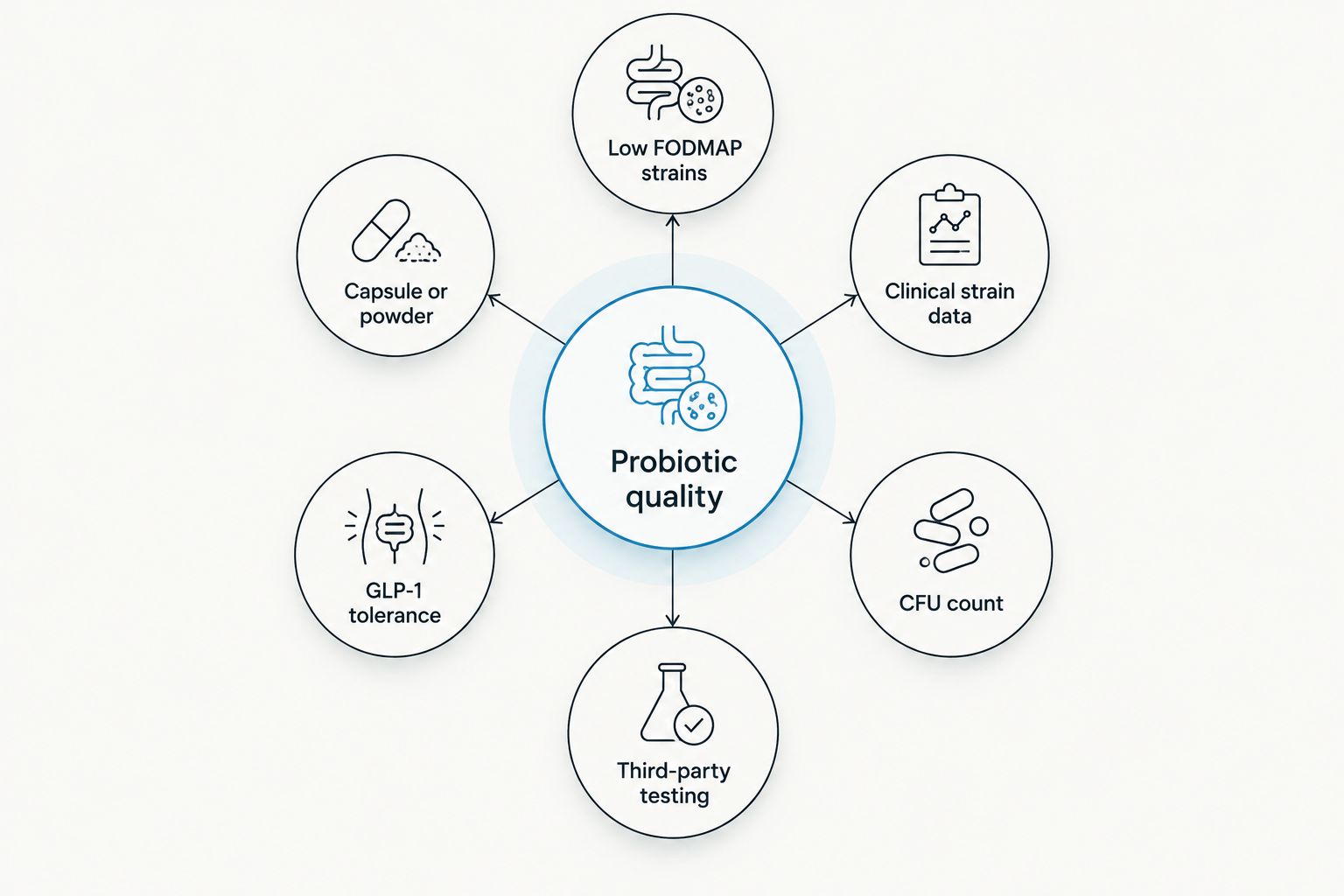
What makes the best probiotic for weight loss support
- Low-FODMAP, IBS-safe strains and fillers — no inulin or chicory root loaded in as "prebiotic fiber" that triggers gas
- Strain-specific research tied to metabolic outcomes, not just generic "gut health" marketing
- Multi-strain design or a documented single strain, not an unlabeled proprietary blend
- Third-party testing for potency and contamination, verified at time of manufacture
- GLP-1 compatibility — tolerable on a slowed digestive system from Ozempic, Wegovy, or Mounjaro
- Capsule vs. powder format matched to whether nausea or pill fatigue is the bigger daily obstacle
Best probiotics for weight loss support: at a glance
| Option | Best for | Standout feature | Key limitation |
|---|---|---|---|
| Advanced Probiotic + Prebiotic + Synbiotic | Low-FODMAP dieters overall | Synbiotic pairing of probiotic and prebiotic in one capsule | Not formulated as a standalone weight-loss product |
| FODMAP Digestive Enzymes + Prebiotics + Probiotics + Postbiotics | GLP-1 medication users | Combines enzymes with probiotics and postbiotics for slowed digestion | More ingredients to track for sensitive stomachs |
| Advanced Probiotics GI Support | Bloating and gas during a deficit | GI-symptom-first strain selection | Doesn't include a prebiotic fiber source |
| Single-strain Lactobacillus gasseri probiotic | Strain-specific research seekers | Studied for visceral fat and appetite markers in clinical literature | Formulation and dose vary widely by manufacturer |
| Spore-forming probiotic (Bacillus coagulans/subtilis) | Post-antibiotic gut flora rebuild | Survives stomach acid better than many non-spore strains | Not targeted at weight loss specifically |
1. Advanced Probiotic + Prebiotic + Synbiotic: best overall for low-FODMAP weight loss support
This is a synbiotic — probiotic strains bundled with a prebiotic fiber source — built to be low-FODMAP and gut-friendly rather than a generic multi-strain blend. It's the starting point for anyone managing IBS or SIBO who wants gut support alongside a calorie deficit without guessing which strains are safe.
Advanced Probiotic + Prebiotic + Synbiotic pros:
- Synbiotic design pairs probiotic strains with compatible fiber in one dose
- Formulated to be low-FODMAP, avoiding the inulin-heavy fillers common in mainstream probiotics
- Fits daily use alongside a reduced-calorie eating plan
Advanced Probiotic + Prebiotic + Synbiotic cons:
- Not marketed or dosed as a dedicated weight-loss product — it's a gut-health foundation, not a fat-loss shortcut
- Reintroducing new probiotics can cause a short adjustment period of gas for some users
Best for: low-FODMAP dieters who want one product covering both probiotic and prebiotic needs. Verdict: Buy.
2. FODMAP Digestive Enzymes + Prebiotics + Probiotics + Postbiotics: best for GLP-1 users
Ozempic, Wegovy, and Mounjaro slow gastric emptying, which is exactly why users report nausea, bloating, and constipation on these medications. This combo formula stacks digestive enzymes with probiotics and postbiotics, targeting digestion at more than one point instead of relying on probiotic strains alone.
FODMAP Digestive Enzymes + Prebiotics + Probiotics + Postbiotics pros:
- Addresses enzyme deficiency and microbiome support in a single capsule, useful when slowed digestion is the root issue
- Formulated by a physician (Onikepe Adegbola, MD PhD) with a stated low-FODMAP and third-party-tested standard
- Built specifically with GLP-1 side effects in mind, not repurposed from a general gut-health line
FODMAP Digestive Enzymes + Prebiotics + Probiotics + Postbiotics cons:
- More active ingredients than a plain probiotic, which means more to monitor if you're sensitive to new supplements
- Not a substitute for adjusting GLP-1 dose timing or food volume if nausea is severe
Best for: GLP-1 users whose digestion has slowed enough to cause bloating or irregularity. Verdict: Buy.
3. Advanced Probiotics GI Support: best for bloating and gas during a calorie deficit
When the biggest daily obstacle to sticking with a diet is visible bloating rather than a slowed gut, a probiotic focused on GI symptom relief does more than a generic synbiotic. Advanced Probiotics GI Support is positioned specifically around gas and bloating rather than broad microbiome maintenance.

Advanced Probiotics GI Support pros:
- Strain selection is oriented around GI symptom relief rather than general wellness claims
- Low-FODMAP and gut-friendly formulation matches an IBS-safe eating plan
- Standalone product, so it's easy to pair with a separate fiber or enzyme supplement if needed
Advanced Probiotics GI Support cons:
- Doesn't include a prebiotic fiber source, so it works best alongside a low-FODMAP diet that already provides tolerable fiber
- Symptom relief timelines vary by person; it isn't an instant fix for a bloated stomach
Best for: dieters whose main complaint is gas and visible bloating, not general gut maintenance. Verdict: Buy.
4. Single-strain Lactobacillus gasseri probiotic: best for strain-specific research backing
Lactobacillus gasseri is the most-cited strain in probiotic research tied to visceral fat and body composition, appearing in multiple published trials over the past two decades. The catch in 2026 is that dose, strain sub-type, and manufacturing quality vary enormously across brands selling "L. gasseri" products, and few are formulated with IBS or SIBO tolerance in mind.
Lactobacillus gasseri pros:
- Most strain-specific published research connecting a probiotic to body fat and appetite markers
- Single-strain products make it easier to isolate what's actually causing a reaction, good or bad
Lactobacillus gasseri cons:
- Quality and dose consistency vary widely by manufacturer, and label claims aren't always verified
- Rarely formulated as low-FODMAP, so IBS and SIBO users need to check the full ingredient list before buying
Best for: people who want to build a stack around one specific, researched strain and are comfortable vetting individual brands. Verdict: Hold until you've confirmed third-party testing on the specific product.
5. Spore-forming probiotic (Bacillus coagulans or Bacillus subtilis): best for post-antibiotic gut flora rebuild
Spore-forming strains survive stomach acid better than many standard Lactobacillus and Bifidobacterium strains, which is why they're often recommended after a course of antibiotics disrupts the gut. They're not weight-loss-specific, but rebuilding flora diversity is a reasonable first step before layering on a targeted weight-support probiotic.
Spore-forming probiotic pros:
- Higher survivability through stomach acid than many non-spore strains
- Commonly used to restore gut flora diversity after antibiotics
Spore-forming probiotic cons:
- No direct research tie to weight loss or appetite regulation
- Doesn't replace a low-FODMAP-specific formula if IBS symptoms are the primary concern
Best for: anyone rebuilding gut flora after antibiotics before starting a weight-focused probiotic routine. Verdict: Buy for that specific situation; skip if weight loss support is your only goal.


How we ranked these
Each option was scored against the six criteria above: FODMAP safety, strain research, formula transparency, third-party testing, GLP-1 tolerance, and format. Casa de Sante's own products rank at the top for the low-FODMAP, IBS-safe audience because they're built around that constraint from the start, not adapted from a general-market formula after the fact. The generic strain categories (L. gasseri, spore-formers) rank lower not because the research is weak, but because product quality outside a verified brand is inconsistent.
Which probiotic for weight loss should you choose in 2026?
If you're managing IBS or SIBO and want one product to start with, Casa de Sante's Advanced Probiotic + Prebiotic + Synbiotic is the default pick — it's the only option here built specifically for low-FODMAP tolerance while still combining probiotic and prebiotic support. If GLP-1 side effects are your bigger issue, move to the enzyme-probiotic-postbiotic combo instead; digestion speed, not the microbiome alone, is what's working against you. If bloating during your deficit is the daily complaint, Advanced Probiotics GI Support targets that symptom directly. Skip generic single-strain products unless you're prepared to verify testing and dose yourself.
FAQ
What are the best probiotics for weight loss in 2026?
For IBS and SIBO-prone dieters, a low-FODMAP synbiotic like Casa de Sante's Advanced Probiotic + Prebiotic + Synbiotic is the safest starting point in 2026. For GLP-1 medication users, a combined enzyme-probiotic-postbiotic formula addresses slowed digestion better than a probiotic alone.
Can probiotics actually cause weight loss?
Probiotics don't burn fat directly; they support weight loss indirectly by reducing bloating, gas, and irregularity that make sticking to a calorie deficit harder. Some strains like Lactobacillus gasseri have published research tied to visceral fat markers, but effects are modest and vary by person.
Are probiotics safe with Ozempic, Wegovy, or Mounjaro?
Yes, but GLP-1 medications slow gastric emptying, so a formula that also includes digestive enzymes tends to work better than a probiotic alone. Check with your prescriber before adding any new supplement to a GLP-1 regimen.
How long does it take for a probiotic to help with bloating?
Most people notice a change in bloating within 2 to 4 weeks of consistent daily use, though some experience a short adjustment period of gas in the first week. Strain, dose, and existing gut condition all affect the timeline.
Is Lactobacillus gasseri better than other strains for weight loss?
Lactobacillus gasseri has the most strain-specific published research connecting it to visceral fat and appetite markers, but product quality varies widely by brand. Verify third-party testing before choosing a specific L. gasseri product.
Do I need a prebiotic along with a probiotic for weight loss support?
A prebiotic fiber source helps probiotic strains establish in the gut, which is why synbiotic formulas combine both. IBS and SIBO patients should stick to low-FODMAP prebiotic sources rather than inulin-heavy blends that can trigger gas.
Should I take a probiotic before or after antibiotics if I'm also trying to lose weight?
Spore-forming strains like Bacillus coagulans are commonly used to rebuild gut flora after antibiotics before layering on a weight-focused probiotic. Starting a targeted formula too early, before flora stabilizes, can make symptoms harder to track.
One last thing
The strain name on the label matters less than most marketing implies — dose consistency, third-party verification, and whether the formula was actually built low-FODMAP determine whether it helps or backfires. If you're on a GLP-1 medication, pair probiotic support with an enzyme-probiotic-postbiotic combo rather than treating digestion and microbiome as separate problems; in 2026, that combined approach handles slowed gastric emptying better than probiotics alone.









