
Best Probiotics for Sleep Quality: 2026 Verdict






Best overall in 2026: Casa de Sante Advanced Probiotic Prebiotic Synbiotic. Best for a simpler probiotic routine: Advanced Probiotics GI Support. Best for meal-related digestive discomfort: FODMAP Digestive Enzymes + Prebiotics + Probiotics + Postbiotics. No probiotic is an established treatment for insomnia, but the right formula can support the digestive symptoms that interfere with sleep.
- Casa de Sante Advanced Probiotic Prebiotic Synbiotic is the best overall fit for gut-brain support in 2026.
- The best probiotics for sleep quality avoid ingredients that aggravate your digestive symptoms.
- Choose GI Support when you want a focused probiotic without digestive enzymes.
- Choose the enzyme combination when meal-related bloating or fullness disrupts sleep.
Why this matters
Poor sleep does not automatically mean you need a probiotic. Stress, pain, medication effects, sleep apnea, restless legs, caffeine and inconsistent sleep times can all require different action. A probiotic belongs in the conversation when digestive symptoms and restless nights repeatedly appear together.
Bloating, abdominal discomfort, reflux and urgent bowel symptoms can make falling asleep or staying asleep harder. The gut-brain axis also carries signals between the digestive tract and central nervous system, but that connection does not prove that every probiotic improves sleep. Probiotic effects depend on the formula, the person and the symptom being addressed.
That distinction controls this 2026 ranking. Casa de Sante sells physician-formulated Low FODMAP supplements for people managing IBS, SIBO and digestive side effects associated with GLP-1 medications. The formulas rank here by their fit for those needs, not by an unsupported promise to make you sleep.
Before adding a supplement, record a 7-night baseline. Rate sleep quality and digestive discomfort on a 0–10 scale, then change 1 variable at a time. That simple log helps separate a useful response from normal night-to-night variation.
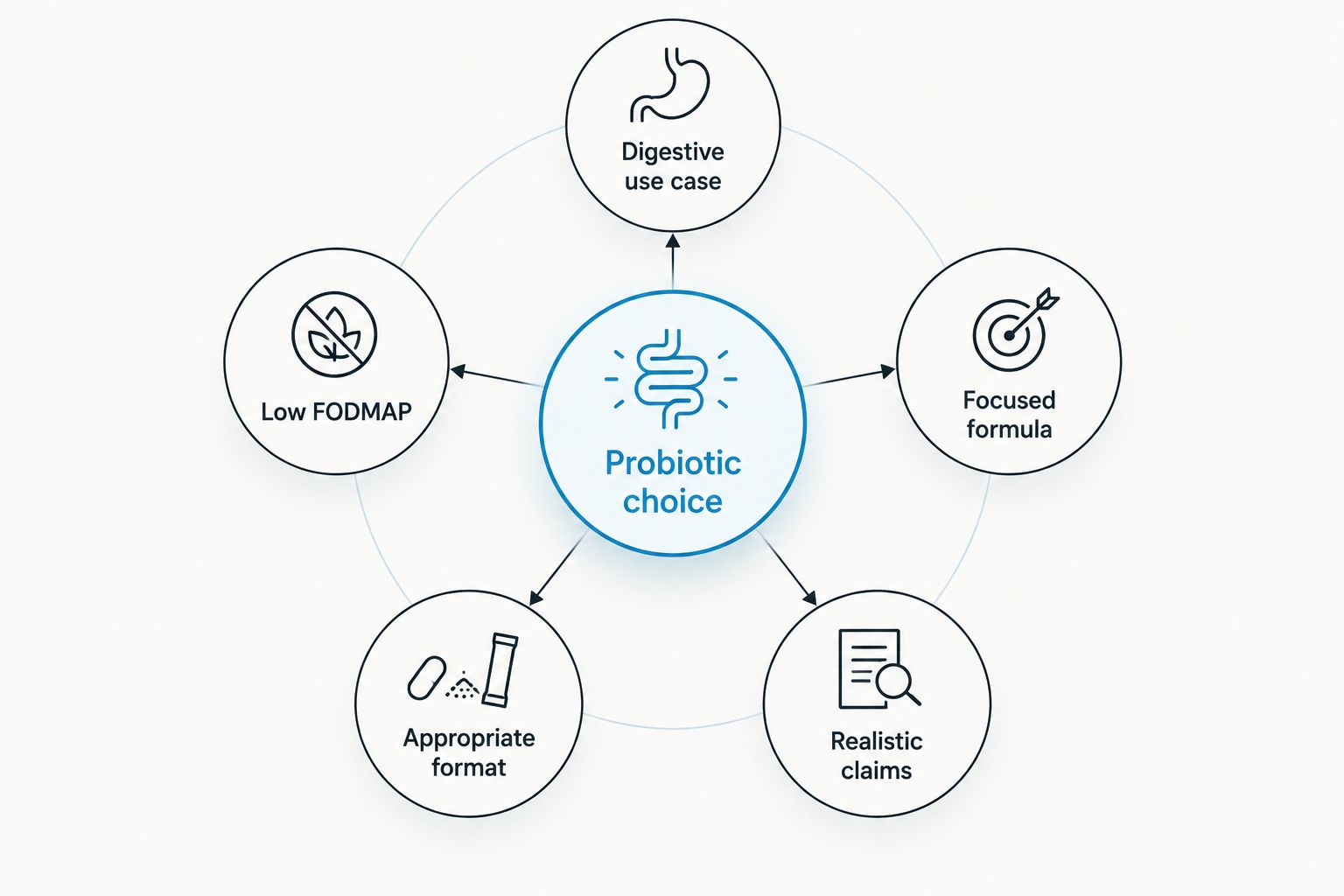
What makes the best probiotics for sleep quality
- A clear digestive use case: Match the formula to IBS symptoms, meal-related discomfort or a clinician-identified need.
- Low FODMAP positioning: This matters when fermentable carbohydrates worsen gas, bloating or bowel symptoms.
- A focused ingredient list: More ingredients create more variables and are not automatically better.
- Appropriate formulation: A probiotic, synbiotic and enzyme combination serve different purposes.
- Third-party testing: Independent testing provides more confidence in identity and quality when the claim is explicitly documented.
- A realistic sleep claim: A credible product supports digestive health rather than presenting itself as an insomnia treatment.
Best probiotics for sleep quality at a glance
| Rank | Option | Best for | Standout feature | Key limitation |
|---|---|---|---|---|
| 1 | Advanced Probiotic Prebiotic Synbiotic | Broad gut-brain support | Combines probiotics and prebiotics in a Low FODMAP formula | Not a treatment for insomnia |
| 2 | Advanced Probiotics GI Support | A focused probiotic routine | Low FODMAP, MD PhD-formulated positioning | Does not include digestive enzymes |
| 3 | FODMAP Digestive Enzymes + Prebiotics + Probiotics + Postbiotics | Meal-related digestive discomfort | Combines digestive enzymes with microbiome-supporting ingredients | Complex formula makes individual effects harder to isolate |
| 4 | Clinician-selected strain-specific probiotic | Diagnosis-led care | Selection based on a defined medical objective | Requires professional guidance and may not target sleep |
1. Casa de Sante Advanced Probiotic Prebiotic Synbiotic: best overall
This Casa de Sante probiotic ranks first because its format matches the broadest version of the query: digestive support combined with a prebiotic component in a Low FODMAP formula. It is the most logical starting point when your concern is the relationship between ongoing gut symptoms, stress and sleep quality rather than discomfort from one specific meal.
A synbiotic combines probiotics with ingredients intended to support them. That does not guarantee better sleep, and it does not mean every prebiotic suits every person with IBS or SIBO. The Low FODMAP positioning is the relevant distinction for a gut-sensitive buyer.
Advanced Probiotic Prebiotic Synbiotic pros:
- Combines probiotic and prebiotic support in one formula
- Positioned for people following a Low FODMAP approach
- Better aligned with broad gut-brain support than an enzyme-only product
- Avoids framing the product as a direct sleep medication
Advanced Probiotic Prebiotic Synbiotic cons:
- A combined formula makes it harder to identify which component affects symptoms
- Prebiotic ingredients can still require individual tolerance assessment
- The available product information does not establish a direct sleep benefit
Best for: People with recurring digestive symptoms who want a Low FODMAP synbiotic rather than a probiotic alone.
Verdict: Buy when broad digestive and gut-brain support is the goal; skip it if you are seeking a proven insomnia treatment.
2. Casa de Sante Advanced Probiotics GI Support: best focused formula
Advanced Probiotics GI Support is the cleaner decision when you want a dedicated probiotic without combining it with digestive enzymes. Its product title identifies it as Low FODMAP, gut friendly and MD PhD formulated, making it relevant to people who already manage food triggers but still want probiotic support.
The focused format also makes symptom tracking easier. If you start a probiotic, enzyme blend and several diet changes together, you cannot identify which change helped or caused a new symptom. A simpler formula reduces that problem, although it still does not prove a sleep effect.
Advanced Probiotics GI Support pros:
- Focused probiotic option without added digestive enzymes
- Explicit Low FODMAP and gut-friendly positioning
- MD PhD-formulated claim appears in the product title
- Easier to evaluate than a broad multi-category formula
Advanced Probiotics GI Support cons:
- Does not address meal breakdown with digestive enzymes
- A product-level sleep outcome is not supplied in the available information
- Probiotic response remains individual and symptom-specific
Best for: People who want to test a focused Low FODMAP probiotic while keeping the rest of their routine stable.
Verdict: Buy for a straightforward probiotic trial; hold if meal-related fullness or bloating is the dominant problem.
3. Casa de Sante FODMAP Digestive Enzymes combination: best for meals
This option combines digestive enzymes, prebiotics, probiotics and postbiotics. The supplied product information identifies it as FODMAP Friendly certified, formulated by Onikepe Adegbola, MD PhD, and third-party tested. It fits people whose sleep problems follow digestive discomfort after eating rather than those looking only for microbiome support.
Digestive enzymes and probiotics do different jobs. Enzymes participate in breaking down meal components, while probiotics are live microorganisms used to support the gut microbiome. Combining them is convenient, but convenience adds complexity when you are trying to identify what changes a symptom.
FODMAP Digestive Enzymes combination pros:
- Includes digestive enzymes and three microbiome-support categories
- FODMAP Friendly certification is stated in the supplied product information
- Physician formulation and third-party testing are explicitly documented
- Relevant to sensitive stomachs and GLP-1 users based on the product description
FODMAP Digestive Enzymes combination cons:
- More active categories make individual responses harder to isolate
- It may be more formula than you need if meals do not trigger symptoms
- It does not replace medical assessment for persistent pain, reflux or vomiting
Best for: People whose nighttime disruption consistently follows meal-related digestive discomfort.
Verdict: Buy when food-related symptoms are the target; skip it when you only want a focused probiotic.
4. Clinician-selected strain-specific probiotic: best for diagnosis-led care
A clinician-selected option is not one universal product. It is a probiotic chosen around a defined diagnosis, medication history, prior response and treatment objective. This route ranks fourth for a general buyer but can rank first when IBS, SIBO or another condition requires individualized care.
The word probiotic describes a broad category, not one interchangeable intervention. Findings tied to one strain or combination cannot automatically be transferred to every bottle carrying the same category label. Professional selection is therefore more useful than chasing the largest strain count.
Clinician-selected probiotic pros:
- Connects the choice to a defined symptom or diagnosis
- Accounts for medications and previous reactions
- Provides a plan for stopping or changing the product
- Reduces dependence on front-label marketing claims
Clinician-selected probiotic cons:
- Requires access to a qualified healthcare professional
- The recommended option can differ by individual
- It still may not improve sleep when the cause is unrelated to digestion
Best for: People with persistent symptoms, complex medical histories or previous intolerance to probiotics.
Verdict: Hold until professional review if symptoms are severe, unexplained or worsening.


How we ranked the options
The 2026 ranking starts with relevance to the search intent. A product must support digestive or microbiome needs without pretending to be a sleeping pill. Low FODMAP positioning receives extra weight because the target reader includes people managing IBS, SIBO and sensitive digestion.
Formula complexity comes next. A synbiotic ranks first for broad gut-brain support, a focused probiotic suits controlled testing, and an enzyme combination fits discomfort tied to meals. The clinician-selected route remains essential for complicated symptoms but is not a single off-the-shelf recommendation.
The ranking does not use strain count as a shortcut. A longer label is not evidence of a better outcome, and a general probiotic claim is not proof of better sleep. Each option also receives a real limitation because an all-positive ranking would conceal the decision you actually need to make.
Which probiotic should you choose?
Choose the Advanced Probiotic Prebiotic Synbiotic if you want the broadest Casa de Sante probiotic format for ongoing gut-brain support in 2026. Choose Advanced Probiotics GI Support when you prefer fewer supplement categories in one product and want to track a focused probiotic change.
Choose the digestive enzyme combination when bloating, fullness or other digestive discomfort repeatedly follows meals and disrupts your evening. Choose clinician-led care when symptoms are persistent, severe or difficult to explain.
The default 2026 verdict is Advanced Probiotic Prebiotic Synbiotic for broad support, not because it treats insomnia, but because its format most closely matches the combined sleep-quality and gut-brain search intent.
How to test a probiotic without confusing the result
Keep the test controlled. Record your baseline for 7 nights, then introduce only the selected probiotic while keeping meal timing, caffeine intake and other supplements stable. Continue rating sleep and digestive discomfort on the same 0–10 scale.
Review the pattern with a clinician rather than treating one good or bad night as proof. Stop and seek medical advice if a new supplement coincides with a serious reaction or marked symptom worsening. Persistent insomnia, breathing pauses during sleep, blood in stool, repeated vomiting, severe abdominal pain or unexplained weight loss requires medical assessment rather than another supplement comparison.
Do not use probiotics as a reason to ignore basic sleep inputs. A consistent schedule, an appropriate sleep environment and management of the condition causing nighttime symptoms remain separate parts of the plan in 2026.
FAQ
What are the best probiotics for sleep quality in 2026?
Advanced Probiotic Prebiotic Synbiotic is the best overall fit in this ranking for broad Low FODMAP gut-brain support. It is not an established insomnia treatment, so match it to digestive symptoms rather than expecting sedation.
Can probiotics directly improve sleep?
No universal probiotic has been established as a direct treatment for poor sleep or insomnia. A suitable formula can still support digestive symptoms that make sleep more difficult for some people.
Is a synbiotic better than a probiotic alone?
A synbiotic is better when you specifically want probiotics combined with prebiotic support. A focused probiotic is better when you want fewer variables or know that certain prebiotic ingredients aggravate symptoms.
Should I take a probiotic if IBS symptoms wake me at night?
A Low FODMAP probiotic can be considered as part of an IBS management plan, but nighttime symptoms deserve clinical review when they persist. A probiotic does not replace diagnosis, diet guidance or prescribed treatment.
Are digestive enzymes or probiotics better for nighttime bloating?
Digestive enzymes fit symptoms closely tied to meals, while probiotics target microbiome support over time. A combination formula covers both categories but makes it harder to identify which component changes your symptoms.
How much do probiotics for sleep quality cost?
Current pricing varies by formula and retailer, so compare the live product pages rather than relying on a static article price. Price alone does not establish strain quality, Low FODMAP suitability or a sleep benefit.
How should I track whether a probiotic helps?
Record 7 baseline nights and use the same 0–10 scales for sleep quality and digestive discomfort after starting. Change one variable at a time so the result remains interpretable.
When should I ask a clinician before taking probiotics?
Ask a qualified clinician when you have a complex medical condition, take prescription medication, have a weakened immune system or experience persistent or worsening symptoms. Individual medical advice takes priority over a general product ranking.
One last thing
The most useful question in 2026 is not how many strains a bottle contains. Ask which symptom you are targeting and whether the formula lets you measure that outcome without changing several other variables. If you cannot answer both questions, wait before buying.









