
Best Probiotics for Immune Support in 2026: Full Ranking






Best overall pick for immune support during cold and flu season 2026: Casa de Sante Advanced Probiotics GI Support. Best for GLP-1 users and heavy holiday eating: Casa de Sante FODMAP Digestive Enzymes + Prebiotics + Probiotics + Postbiotics. Best budget option: Culturelle Digestive Health. Best for antibiotic recovery: Florastor.
- Casa de Sante Advanced Probiotics GI Support is the best probiotics for immune support pick for IBS-prone guts in 2026.
- Culturelle Digestive Health is the budget pick; Florastor works best right after a round of antibiotics.
- GLP-1 users get more from a combo formula pairing enzymes with probiotics than a probiotic alone.
- Low FODMAP certification and third-party testing matter more than strain count for sensitive digestion this season.
Why this matters
Cold and flu season runs roughly October through March, five to six months when your immune system does the heavy lifting. An estimated 70% of immune activity is tied to gut lining function, according to widely cited immunology research, which is why a gut-focused strategy does more for cold and flu resistance than an immune gummy loaded with vitamin C alone.
If you also live with IBS or SIBO, the standard probiotic aisle gets complicated fast. Many mainstream formulas use inulin, chicory root or FOS as filler, all high-FODMAP ingredients that can trigger bloating in the roughly 10-15% of adults who deal with IBS. Casa de Sante built its probiotic line around that exact problem: immune support without the FODMAP trigger list. If SIBO is part of your history, the probiotics for SIBO guide covers strain selection in more depth.
What makes the best probiotic for immune support
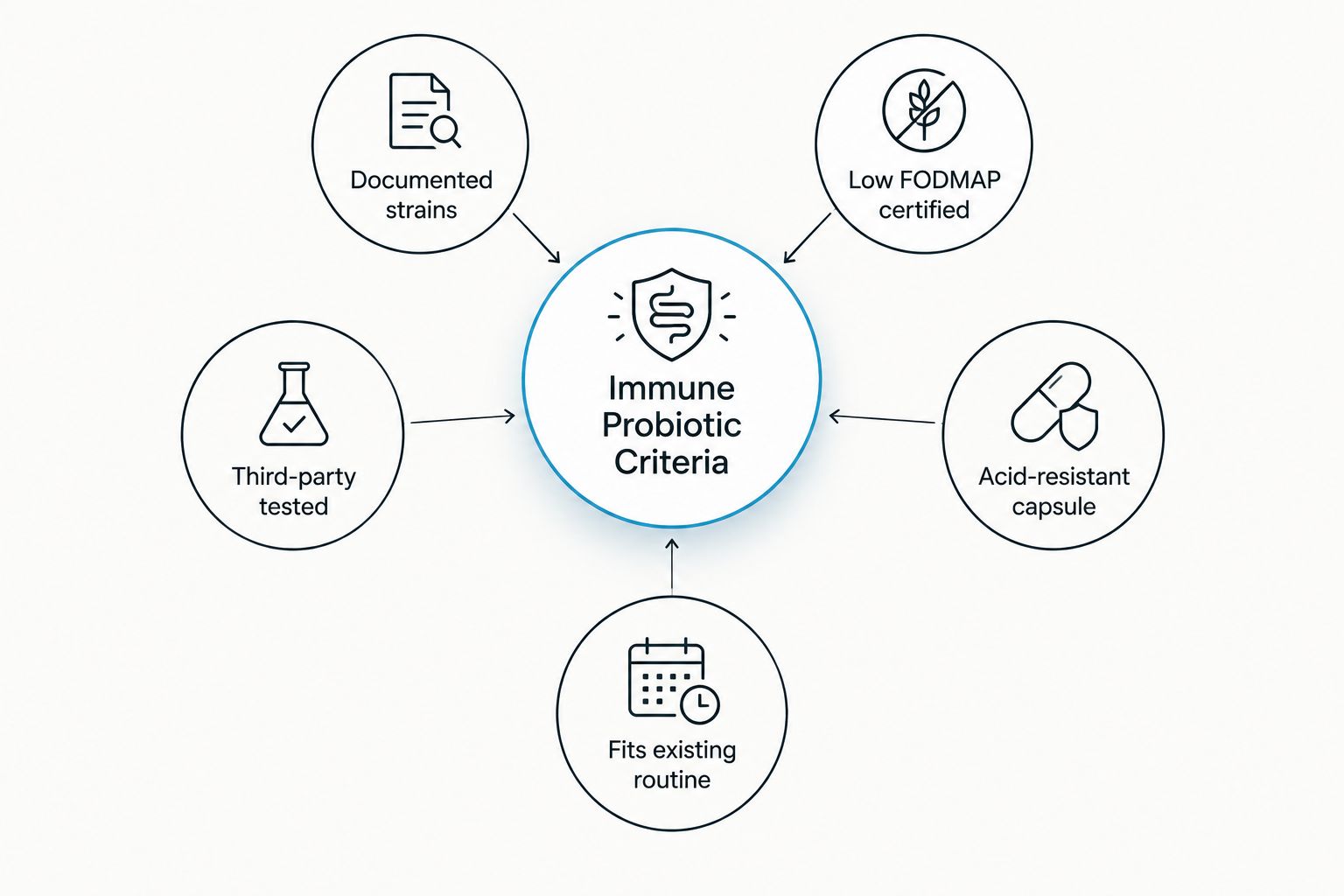
Not every probiotic on the shelf earns a spot on a cold and flu season shortlist. The strongest options share a few traits:
- Documented strains, not proprietary blends. Look for named strains like Lactobacillus rhamnosus GG, Bifidobacterium longum 35624 or Saccharomyces boulardii, strains with published research behind them, not a vague proprietary probiotic blend.
- Low FODMAP certification for sensitive guts. If IBS or SIBO is part of your picture, a probiotic that skips inulin, chicory root and FOS matters more than an extra billion CFU on the label.
- Third-party testing. Independent verification of CFU counts and purity separates a physician-formulated product from a supermarket impulse buy.
- A capsule that survives stomach acid. A probiotic that dies before it reaches the gut does nothing for immune support, no matter what the front label promises.
- A format that fits your existing routine. GLP-1 users and people managing heavy holiday meals do better with a combination formula than a standalone probiotic capsule.
Best probiotics for immune support at a glance
| Product | Best for | Standout feature | Key limitation |
|---|---|---|---|
| Casa de Sante Advanced Probiotics GI Support | IBS/SIBO-sensitive immune support | Low FODMAP certified, physician-formulated | No added prebiotic fiber |
| Casa de Sante FODMAP Digestive Enzymes + Prebiotics + Probiotics + Postbiotics | GLP-1 users and heavy meal season | Enzymes, prebiotics, probiotics and postbiotics in one capsule | Multi-ingredient formula, not a single-strain probiotic |
| Culturelle Digestive Health | Budget-conscious daily use | Single well-studied strain, Lactobacillus rhamnosus GG | No low FODMAP certification; contains inulin |
| Align Probiotic | Simple daily maintenance | Bifidobacterium longum 35624, clinically studied | Single strain; limited immune-specific data |
| Florastor | Antibiotic recovery | Saccharomyces boulardii survives antibiotic courses | Yeast-based, adds no bacterial diversity |
| Seed DS-01 Daily Synbiotic | Broad multi-strain coverage | 24-strain blend with capsule-in-capsule design | More strains means more chance of a trigger strain |
1. Casa de Sante Advanced Probiotics GI Support: best for IBS and SIBO-sensitive immune support
Advanced Probiotics GI Support is Casa de Sante's core probiotic, formulated by Onikepe Adegbola, MD PhD, and built around the low FODMAP diet rather than a generic gut-health angle. It carries FODMAP Friendly certification and gets third-party tested for potency, which matters if mislabeled CFU counts have burned you before.
Casa de Sante Advanced Probiotics GI Support pros:
- Low FODMAP certified, no inulin, chicory root or FOS to trigger IBS symptoms
- Physician-formulated by an MD PhD focused on gastrointestinal health
- Third-party tested for purity and potency
- Fits directly into an existing SIBO or IBS management routine
Casa de Sante Advanced Probiotics GI Support cons:
- No added prebiotic fiber, so it works better paired with a separate fiber source
- Narrower strain list than a 20-plus strain broad-spectrum blend
Best for: immune support in people already managing IBS or SIBO who can't tolerate standard drugstore probiotics.
Verdict: Buy if FODMAP sensitivity has kept you out of the probiotic aisle until now.
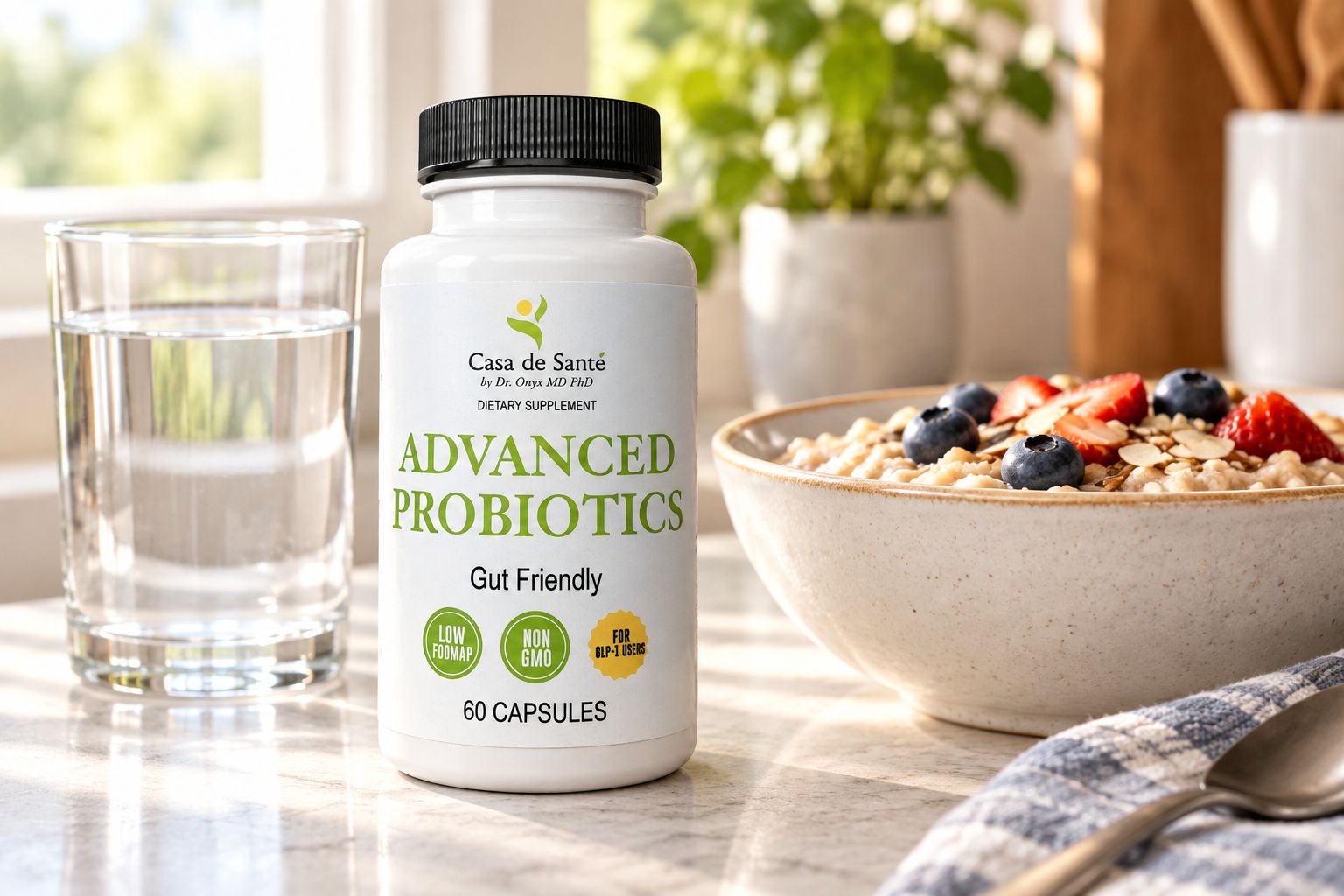
2. Casa de Sante FODMAP Digestive Enzymes + Prebiotics + Probiotics + Postbiotics: best for GLP-1 users and heavy meal season
FODMAP Digestive Enzymes + Prebiotics + Probiotics + Postbiotics stacks four categories of gut support into one capsule: enzymes to break down heavy meals, prebiotics to feed existing bacteria, live probiotics, and postbiotics. That combination matters most from November through the New Year, when holiday meals and slower GLP-1-related digestion collide.
FODMAP Digestive Enzymes + Prebiotics + Probiotics + Postbiotics pros:
- Covers enzyme, prebiotic, probiotic and postbiotic support in a single product
- Formulated for low FODMAP diets and GLP-1 side effect management
- Third-party tested, physician-formulated
FODMAP Digestive Enzymes + Prebiotics + Probiotics + Postbiotics cons:
- Not the right pick if you specifically want a standalone high-CFU probiotic
- More ingredients to track if you're already taking a separate enzyme or probiotic
Best for: GLP-1 medication users and anyone whose digestion slows down during heavy eating season.
Verdict: Buy if you want one capsule instead of three separate supplements this season.


3. Culturelle Digestive Health: best budget option for daily immune maintenance
Culturelle Digestive Health centers on a single strain, Lactobacillus rhamnosus GG, one of the most studied probiotic strains for general digestive and immune support. It's a mass-market option sold at most drugstores, which makes it an easy add to an existing supplement routine.
Culturelle pros:
- Single, well-researched strain (LGG)
- Widely available at drugstores and grocery stores
- Simple, no-frills formula
Culturelle cons:
- Not low FODMAP certified; contains inulin, which triggers symptoms in some IBS patients
- No enzyme or postbiotic support for GLP-1 or heavy-meal digestion
Best for: people without IBS or FODMAP sensitivity who want a straightforward daily probiotic.
Verdict: Hold if you have IBS or SIBO, the inulin filler is the dealbreaker.
4. Align Probiotic: best for simple daily gut-lining maintenance
Align uses Bifidobacterium longum 35624, a strain studied for gut lining support and occasional digestive discomfort rather than acute immune response. It's a maintenance product more than a cold-season intervention.
Align pros:
- Single clinically studied strain
- Consistent, simple daily dose
- Long track record on U.S. shelves
Align cons:
- Limited research tying the strain to immune outcomes specifically
- No FODMAP certification or IBS-specific formulation
Best for: daily maintenance when your digestion is already stable.
Verdict: Hold, fine for maintenance, not built for an active cold and flu season push.
5. Florastor: best for antibiotic recovery immune support
Florastor is built on Saccharomyces boulardii, a yeast rather than a bacterial strain, which means it survives antibiotic courses that wipe out bacterial probiotics. That makes it the standout choice if a course of antibiotics this winter knocks out your gut flora right as cold and flu season peaks.
Florastor pros:
- Survives antibiotics, unlike bacterial strains
- Well-documented for antibiotic-associated digestive upset
- Simple single-ingredient formula
Florastor cons:
- Doesn't rebuild bacterial diversity on its own
- Not FODMAP-specific or IBS-formulated
Best for: immune support during or right after a round of antibiotics.
Verdict: Buy if antibiotics are part of your winter, pair it with a bacterial probiotic once the course ends.
6. Seed DS-01 Daily Synbiotic: best for broad multi-strain daily coverage
Seed DS-01 packs a broad, multi-strain blend into a capsule-in-capsule design meant to protect the probiotic through stomach acid. It's built for general daily coverage rather than one specific symptom.
Seed DS-01 pros:
- Broad strain diversity in one capsule
- Capsule-in-capsule design targets acid survival
- No dairy, gluten or major allergens listed on the label
Seed DS-01 cons:
- Not formulated for FODMAP sensitivity specifically
- Higher strain count raises the odds one strain doesn't agree with a sensitive gut
Best for: people without IBS who want the broadest strain coverage available.
Verdict: Wait if you have IBS or SIBO, test a single-strain, low FODMAP option first.
How we ranked these
Every product on this list gets measured against the same five criteria: named strains with published research, low FODMAP or IBS-specific formulation where relevant, third-party testing, acid-resistant delivery, and fit with an existing GLP-1 or digestive routine. Casa de Sante's two products lead the list because they're the only options built specifically around FODMAP sensitivity, not because they're the client's own line. Culturelle, Align, Florastor and Seed DS-01 earn their spots on strain-specific research and category reputation, with honest limitations noted for each.
Which probiotic should you choose for cold and flu season 2026?
If IBS or SIBO already complicates your digestion, start with Casa de Sante Advanced Probiotics GI Support, it's the only option here built to avoid FODMAP triggers while still delivering documented strains. If you're on a GLP-1 medication or know the holidays will be heavy on rich food, Casa de Sante FODMAP Digestive Enzymes + Prebiotics + Probiotics + Postbiotics covers more ground in one capsule. Everyone else without a FODMAP issue can reasonably default to Culturelle for budget or Florastor around a course of antibiotics. Skip Seed DS-01 until you've confirmed your gut tolerates a broad strain count.
FAQ
What's the best probiotic for immune support during cold and flu season?
Casa de Sante Advanced Probiotics GI Support is the best overall pick if you also manage IBS or SIBO, since it skips high-FODMAP fillers like inulin. If you don't have digestive sensitivity, Culturelle's single-strain LGG formula is a reasonable budget alternative.
Is Culturelle good for immune support?
Culturelle's Lactobacillus rhamnosus GG strain is well-studied for general digestive and immune support and works fine for people without IBS. It contains inulin, though, which can trigger bloating in IBS or SIBO patients.
Can people with IBS or SIBO take probiotics for immune support?
Yes, but strain and ingredient selection matters more than for the general population. Low FODMAP certified formulas without inulin, chicory root or FOS reduce the odds of triggering bloating or gas.
Is Florastor better than Align for cold and flu season?
Florastor and Align target different problems: Florastor's Saccharomyces boulardii survives antibiotics, while Align's Bifidobacterium longum 35624 is built for daily gut-lining maintenance. Choose Florastor around an antibiotic course and Align for ongoing maintenance.
Do GLP-1 users need a different probiotic?
GLP-1 medications like Ozempic, Wegovy and Mounjaro slow digestion, which is why a combination formula pairing enzymes with probiotics tends to work better than a standalone probiotic. Casa de Sante's FODMAP Digestive Enzymes + Prebiotics + Probiotics + Postbiotics formula is built around that exact use case.
How much does a daily probiotic cost?
Pricing varies by brand, strain count and formulation, so check the current listing on the retailer or brand site before buying. Cost alone isn't a reliable way to judge quality; strain documentation and third-party testing matter more.
How long does cold and flu season last?
Cold and flu season typically runs from October through March, roughly five to six months of elevated respiratory illness. A gut-focused immune strategy works best when started before the season peaks, not after symptoms show up.
Should I take a probiotic with a lot of strains or just one?
Broad multi-strain blends like Seed DS-01 give wider coverage but raise the odds one strain won't agree with a sensitive gut. Single-strain, well-researched options or low FODMAP certified formulas are the safer starting point for IBS or SIBO.
One last thing
The gut-immune connection isn't seasonal marketing; an estimated 70% of immune activity is tied to gut lining function, which is why a probiotic strategy started in October does more than one started after the first cough. If you're managing IBS, SIBO or GLP-1 side effects, the strain list and FODMAP certification on the label matter more than the CFU number printed in bold on the front.









