
Best Probiotics for Bad Breath 2026: Full Ranking






Bad breath that survives brushing, mouthwash, and back-to-back dental cleanings almost always starts below the mouth, not inside it. This guide ranks the best probiotics for bad breath in 2026 by what actually causes the odor — gut bacterial overgrowth, SIBO, or post-meal fermentation — instead of treating every case like a mint-and-mouthwash problem.
- Casa de Sante Advanced Probiotics GI Support is the best overall pick for chronic, gut-origin bad breath tied to SIBO or bacterial imbalance.
- FODMAP Digestive Enzymes + Prebiotics + Probiotics + Postbiotics targets bad breath that shows up after meals alongside bloating.
- Advanced Probiotic Prebiotic Synbiotic fits daily long-term maintenance once acute symptoms calm down.
- Tongue scraping and interdental cleaning stay the free first step no supplement replaces.
- Mouthwash masks volatile sulfur compounds; it does not touch the gut bacteria producing them.
Why this matters
Most chronic bad breath cases that don't respond to dental treatment trace back to gut bacteria producing volatile sulfur compounds — the same hydrogen sulfide smell tied to SIBO (small intestinal bacterial overgrowth) and general dysbiosis. Standard mouthwash kills bacteria in the mouth for a few hours and does nothing to the bacterial population fermenting food in the gut.
That's the gap the best probiotics for bad breath are built to close in 2026: rebalancing gut bacteria so the sulfur-compound production drops at the source, rather than getting masked twice a day. A Casa de Sante probiotic aimed at gut-origin odor works on a different timeline than mouthwash — days to weeks, not minutes — which is exactly why it needs to be picked based on the underlying cause.
Best overall: Casa de Sante Advanced Probiotics GI Support — best for chronic, gut-origin bad breath linked to SIBO or bacterial imbalance. Best for post-meal odor: Casa de Sante FODMAP Digestive Enzymes + Prebiotics + Probiotics + Postbiotics — best when the smell shows up alongside bloating after eating. Best budget option: daily tongue scraping and interdental cleaning — the free habit that keeps sulfur-producing bacteria in check while the gut side gets addressed.
What makes the best probiotic for bad breath
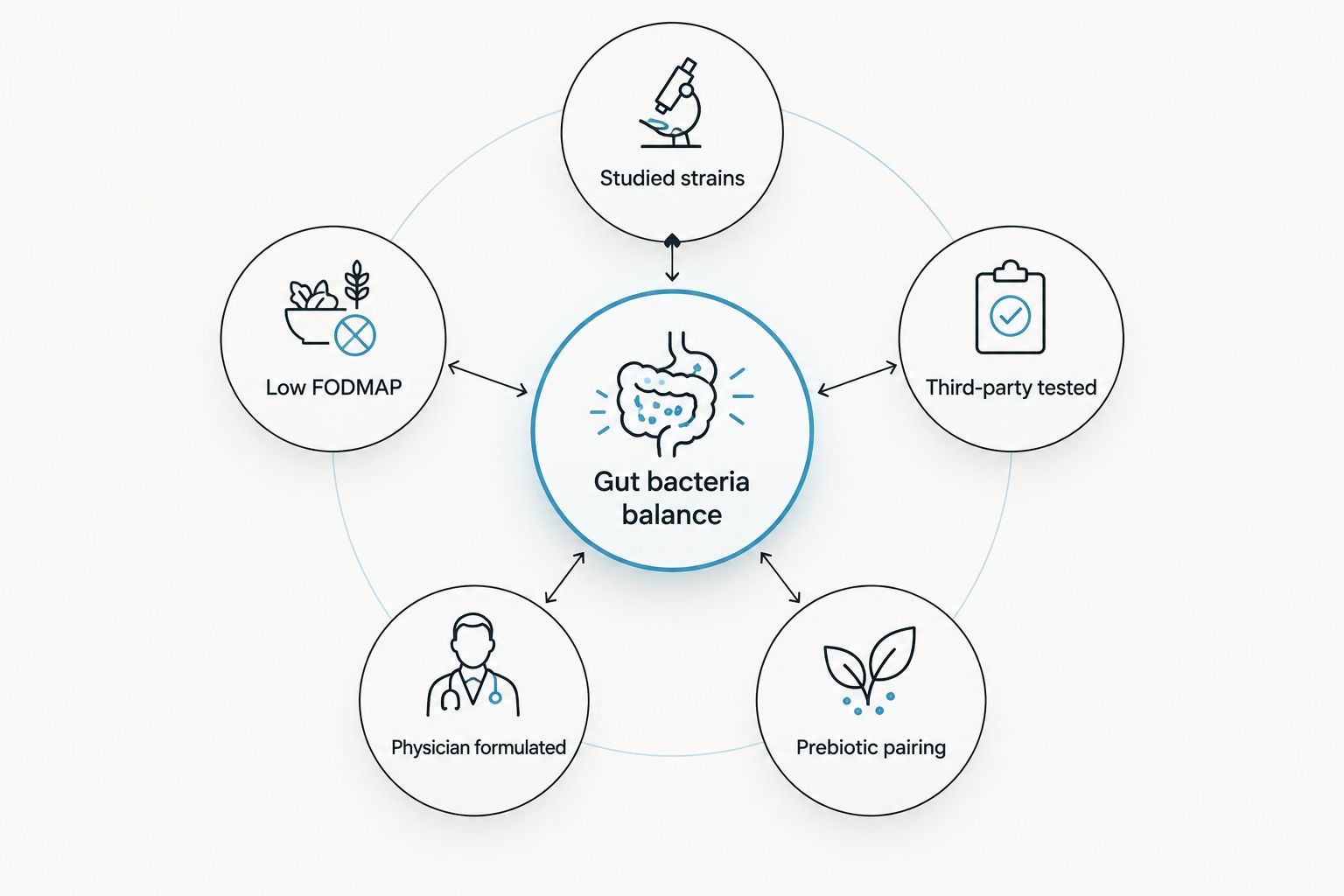
- Clinically studied strains tied to reduced bacterial byproducts, not vague "gut health" claims with no strain detail
- Low FODMAP formulation so the product itself doesn't add fermentable fiber that causes more gas and, ironically, more odor
- Prebiotic or postbiotic pairing that feeds the added strains instead of shipping probiotics alone with nothing to colonize on
- Third-party testing for potency and contamination, since probiotic label claims are notoriously inconsistent across the category
- Physician-formulated dosing with disclosed ingredients, not a proprietary blend hiding actual strain counts
- No added sugars, gums, or fillers that feed the wrong bacteria and undercut the whole point of the product
Best probiotics for bad breath at a glance
| Product | Best for | Standout feature | Key limitation |
|---|---|---|---|
| Casa de Sante Advanced Probiotics GI Support | Chronic, gut-origin bad breath (SIBO-linked) | MD PhD formulated, low FODMAP, third-party tested | Works on bacterial balance, not an instant breath fix |
| Casa de Sante FODMAP Digestive Enzymes + Prebiotics + Probiotics + Postbiotics | Post-meal bad breath with bloating | Four-in-one formula: enzymes, prebiotics, probiotics, postbiotics | More moving parts than a single-strain probiotic |
| Casa de Sante Advanced Probiotic Prebiotic Synbiotic | Long-term daily maintenance | Synbiotic pairing keeps added strains fed between doses | Built for maintenance, not acute flare-ups |
| Tongue scraping + interdental cleaning | Free starting point | Costs nothing, works same day | Doesn't touch bacteria producing odor in the gut |
1. Casa de Sante Advanced Probiotics GI Support: best for gut-origin bad breath (SIBO-linked)
This is an MD PhD formulated probiotic built for IBS and SIBO-related digestive imbalance — the bacterial overgrowth pattern most commonly tied to chronic, hard-to-explain bad breath. It's low FODMAP, so it skips the fermentable fillers that trigger gas in sensitive guts, and it's third-party tested like the rest of the Casa de Sante line.
Advanced Probiotics GI Support pros:
- MD PhD formulated, per the product's own labeling
- Low FODMAP Certified formulation avoids common gas-triggering additives
- Third-party tested for potency and purity
Advanced Probiotics GI Support cons:
- Rebalances gut bacteria over time; it's not a same-day breath fix
- Works best paired with basic oral hygiene, not as a stand-alone fix
Best for: readers whose bad breath is chronic and tied to diagnosed or suspected SIBO. Verdict: Buy.
2. Casa de Sante FODMAP Digestive Enzymes + Prebiotics + Probiotics + Postbiotics: best for post-meal bad breath
This formula is FODMAP Friendly certified and formulated by Onikepe Adegbola, MD PhD, combining digestive enzymes with prebiotics, probiotics, and postbiotics in one capsule. It's built as complete digestive support for sensitive stomachs and GLP-1 users, which makes it a fit for bad breath that shows up specifically after meals alongside bloating — a sign that food isn't breaking down cleanly before gut bacteria get to it.
FODMAP Digestive Enzymes + Prebiotics + Probiotics + Postbiotics pros:
- FODMAP Friendly certified and MD PhD formulated
- Covers digestion breakdown and bacterial balance in one product
- Built with sensitive stomachs and GLP-1 users specifically in mind
FODMAP Digestive Enzymes + Prebiotics + Probiotics + Postbiotics cons:
- Four active categories in one formula make it harder to isolate what's working
- Marketed around digestive comfort, not breath specifically
Best for: bad breath that tracks with bloating right after eating. Verdict: Buy.
3. Casa de Sante Advanced Probiotic Prebiotic Synbiotic: best for long-term maintenance
This is a synbiotic — a probiotic paired with a prebiotic in one low FODMAP formulation — built for ongoing gut support rather than an acute flare-up. Once the sharper symptoms from options one and two are under control, this is the maintenance-phase pick that keeps the added strains fed.
Advanced Probiotic Prebiotic Synbiotic pros:
- Synbiotic pairing supports colonization over the long run
- Low FODMAP formulation fits ongoing use in sensitive stomachs
Advanced Probiotic Prebiotic Synbiotic cons:
- Less detail available on individual strain counts than the two picks above
- Built for maintenance, not a fast response during a flare-up
Best for: readers past the acute phase who want a daily habit. Verdict: Buy for maintenance, Hold if you're still in an active flare.


4. Tongue scraping and interdental cleaning: best free starting point
Before any probiotic, the mechanical step still matters. The tongue's back third is where most sulfur-producing bacteria live, and scraping it — along with regular interdental cleaning — physically removes that biofilm instead of just perfuming over it. The same daily habits that address gum disease and oral health also cut the bacterial load feeding halitosis, which is why dental sources treat it as baseline care rather than optional extra.
Tongue scraping pros:
- Costs nothing, works the same day
- No side effects, no interactions with anything else you're taking
Tongue scraping cons:
- Doesn't touch bacterial overgrowth happening in the gut
- Needs to be repeated daily to keep working
Best for: anyone starting from zero, as a companion to a probiotic, not a replacement. Verdict: Do daily regardless of what else you try.
How we ranked these
Each pick was weighed against the six criteria above: strain relevance, low FODMAP formulation, prebiotic or postbiotic pairing, third-party testing, physician formulation, and clean ingredient lists. Products that only address symptoms in the mouth without touching gut bacteria were excluded from the "best for gut-origin bad breath" slots, since 2026's clinical thinking on halitosis treats it as a digestive signal first.
Which probiotic for bad breath should you choose?
If your bad breath is chronic, unexplained by dental checkups, and possibly SIBO-linked, Casa de Sante Advanced Probiotics GI Support is the default pick for 2026. If the smell tracks specifically with post-meal bloating, start with the FODMAP Digestive Enzymes + Prebiotics + Probiotics + Postbiotics formula instead. Either way, tongue scraping stays a daily habit underneath whichever supplement you choose — it's not a substitute, it's the floor.
FAQ
What's the best probiotic for bad breath in 2026?
Casa de Sante Advanced Probiotics GI Support is the best overall pick for chronic, gut-origin bad breath tied to SIBO or bacterial imbalance. It's MD PhD formulated, low FODMAP, and third-party tested.
Can bad breath really come from the gut instead of the mouth?
Yes. Chronic bad breath that persists after dental cleanings is frequently tied to gut bacterial overgrowth producing volatile sulfur compounds, a pattern linked to SIBO and general dysbiosis.
Is a probiotic better than mouthwash for bad breath?
They solve different problems. Mouthwash kills bacteria in the mouth for a few hours; a probiotic aimed at gut bacteria works over days to weeks on the source producing the odor.
How long does it take a probiotic to help with bad breath?
Gut-bacteria rebalancing works on a timeline of days to weeks, not minutes, which is why it's paired with daily oral hygiene rather than used as a quick fix.
Should I use digestive enzymes or a probiotic for bad breath after eating?
If odor shows up specifically after meals alongside bloating, a combined enzyme and probiotic formula like Casa de Sante FODMAP Digestive Enzymes + Prebiotics + Probiotics + Postbiotics addresses both the breakdown and the bacterial balance side.
Does SIBO cause bad breath?
SIBO is one of the more common gut-bacteria patterns tied to chronic bad breath, since bacterial overgrowth in the small intestine produces the sulfur compounds responsible for the smell.
Is tongue scraping enough on its own?
Tongue scraping removes bacterial biofilm in the mouth same-day but doesn't address bacterial overgrowth in the gut, so it works best as a daily companion to a targeted probiotic, not a replacement.
What should I look for in a probiotic label for bad breath?
Look for disclosed strain names, a low FODMAP formulation, prebiotic or postbiotic pairing, third-party testing, and physician-formulated dosing rather than a proprietary blend that hides strain counts.
One last thing
The detail most people miss in 2026: a probiotic that isn't low FODMAP can make gut-origin bad breath worse before it gets better, because the added fiber or filler ferments the same way the food already causing the problem does. Checking the formulation, not just the strain count, is what separates a probiotic that helps from one that adds fuel to the same fire.









