
Best magnesium supplement for SIBO-related constipation






Best-supported magnesium option for chronic constipation: magnesium oxide. Best for occasional constipation: magnesium citrate or magnesium hydroxide; best for magnesium intake rather than laxation: magnesium glycinate. This 2026 guide explains those choices for people with SIBO-related symptoms, but none has established evidence as the best magnesium treatment specifically for SIBO.
- The best magnesium supplement for SIBO constipation is not established; magnesium oxide has guideline support for chronic idiopathic constipation.
- Magnesium citrate and magnesium hydroxide are occasional-constipation options, not treatments for SIBO or intestinal methanogen overgrowth.
- Magnesium glycinate serves magnesium supplementation, not a reliable laxative role.
- Avoid self-directed magnesium laxatives with kidney disease; ask a clinician to review medications and persistent constipation.
Why this matters
Constipation relief and treatment of intestinal overgrowth are different jobs. Magnesium laxatives draw water into the bowel to help stool pass. A bowel movement does not show that bacterial or methanogen overgrowth has resolved.
Casadesante sells physician-formulated Low FODMAP supplements for people managing IBS, SIBO, and GLP-1 medication side effects. That category positioning does not establish a magnesium product as a treatment for constipation or overgrowth.
Casadesante Low FODMAP supplements fit readers seeking that dietary category, not readers seeking proof that magnesium treats SIBO. For this 2026 buying decision, prioritize the magnesium form, its labeled purpose, and your medical history over a general gut-health claim.
What makes the best magnesium option for constipation?
A useful magnesium choice matches your bowel problem without introducing avoidable risks. These criteria determine the ranking:
- Constipation evidence: Prefer evidence for bowel outcomes, not claims about sleep, stress, or absorption.
- Intended use: Distinguish a mineral supplement from an OTC laxative. Products containing the same magnesium form can have different instructions.
- Kidney safety: Reduced kidney function increases the risk of magnesium accumulation. This check comes before choosing a form.
- Clear labeling: Identify elemental magnesium on Supplement Facts and the active ingredient on Drug Facts. They are not interchangeable measurements.
- Added ingredients: Review inulin, chicory root, and sugar alcohols when fermentable ingredients aggravate your symptoms.
- Medication compatibility: Ask a pharmacist about interactions and spacing, especially with antibiotics, levothyroxine, and oral bisphosphonates.
Higher absorption is not automatically better for constipation. Magnesium remaining in the intestinal tract contributes to its osmotic laxative effect. A product promoted for efficient absorption is not necessarily the strongest bowel-focused choice.
Magnesium options at a glance
The ranking below separates distinct uses rather than claiming a head-to-head winner for SIBO. None of these forms replaces assessment of persistent constipation.
| Rank and option | Best for | Standout feature | Key limitation |
|---|---|---|---|
| Magnesium oxide | Discussing a magnesium option for chronic constipation | Included in the AGA–ACG chronic idiopathic constipation guideline | Recommendation is conditional; evidence is not specific to SIBO |
| Magnesium citrate | Occasional constipation when a labeled laxative is appropriate | Available in osmotic laxative formulations | Supplement capsules and laxative formulations are not interchangeable |
| Magnesium hydroxide | Occasional constipation with explicit OTC laxative directions | Established saline laxative ingredient | Not a self-directed long-term solution |
| Magnesium glycinate | Magnesium supplementation when laxation is not the goal | Separates a nutritional purpose from a constipation purpose | Not an evidence-based default for treating constipation |
1. Magnesium oxide: best for a chronic-constipation discussion
Magnesium oxide is the most defensible starting point when you specifically want to discuss magnesium for ongoing constipation. The American Gastroenterological Association and American College of Gastroenterology guideline suggests magnesium oxide for adults with chronic idiopathic constipation.
That is a conditional recommendation based on very low-certainty evidence. It is not a recommendation specifically for SIBO, IBS-C, or intestinal methanogen overgrowth, and it does not establish superiority over every other magnesium form.
Magnesium oxide pros:
- Has a named place in a major chronic-constipation treatment guideline.
- Provides an osmotic approach rather than relying on fermentation by gut microbes.
- Allows a bowel-focused discussion instead of selecting a product for unrelated wellness claims.
Magnesium oxide cons:
- Can cause diarrhea, cramping, and excessive stool loosening.
- Carries a magnesium-accumulation risk in people with reduced kidney function.
- Does not treat the underlying cause of suspected SIBO-related constipation.
Best for: Adults discussing persistent constipation with a clinician who has reviewed kidney function and medications.
For a 2026 purchase, choose a clearly labeled product only after establishing an appropriate dose and follow-up plan. Do not treat a large front-label magnesium number as a dosing instruction.
Verdict: Hold until your clinician confirms that magnesium oxide fits your constipation plan. It is the best-supported magnesium discussion option here, not a proven SIBO treatment.
2. Magnesium citrate: best for occasional constipation
Magnesium citrate is used in saline laxative products that draw water into the intestine. It also appears in mineral supplements, but a supplement capsule is not equivalent to a liquid laxative simply because both say magnesium citrate.
Read the actual product label. A bowel-preparation regimen, an occasional-constipation laxative, and a nutritional supplement serve different purposes and must not be substituted without guidance.
Magnesium citrate pros:
- Has an established role in labeled occasional-constipation laxatives.
- Offers a distinct option when the immediate goal is stool passage.
- Makes product-purpose checking straightforward when the package includes Drug Facts and laxative directions.
Magnesium citrate cons:
- Can produce diarrhea, cramping, and fluid loss.
- Liquid laxative directions do not translate into capsule dosing.
- Repeated need for rescue treatment calls for medical assessment rather than repeated self-treatment.
Best for: Occasional constipation after a pharmacist or clinician confirms that a specific labeled laxative is appropriate.
Avoid copying instructions from a colonoscopy preparation into your home constipation routine. Also avoid combining magnesium citrate with another laxative unless your clinician has instructed you to do so.
Verdict: Hold for a label-guided, occasional-use plan. Magnesium citrate is not the default choice for managing persistent constipation associated with suspected overgrowth.
3. Magnesium hydroxide: best for explicit OTC laxative directions
Magnesium hydroxide is the active ingredient in milk of magnesia laxatives. Its relevant advantage is a clearly identified OTC laxative purpose, not evidence that it corrects SIBO-related motility problems.
Choose by the product's active ingredient and instructions rather than the familiar product category name alone. Combination products require a separate ingredient review.
Magnesium hydroxide pros:
- Is an established osmotic laxative ingredient.
- Provides product-specific use instructions on OTC laxative labels.
- Keeps the purchase focused on occasional constipation rather than an unspecified supplement blend.
Magnesium hydroxide cons:
- Can cause diarrhea and abdominal discomfort.
- Requires medical advice with kidney disease or ongoing laxative use.
- Does not address methane production or another underlying constipation mechanism.
Best for: A reader whose clinician or pharmacist recommends an occasional-use OTC laxative with explicit directions.
In 2026, the decision still depends on your medical history and the current label. Familiarity does not make magnesium hydroxide appropriate for daily, indefinite use.
Verdict: Hold until a pharmacist or clinician checks suitability. Choose magnesium hydroxide for its labeled laxative role, not because it is marketed as a general digestive remedy.
4. Magnesium glycinate: best for supplementation, not constipation
Magnesium glycinate is a magnesium supplement form. Its nutritional purpose is separate from treating hard stools or infrequent bowel movements, and it lacks the constipation-guideline role that supports magnesium oxide.
Claims about magnesium glycinate's tolerability do not establish dependable laxative effectiveness. Do not select it as a constipation treatment merely because you have a sensitive digestive system.
Magnesium glycinate pros:
- Provides an option for a clinician-directed magnesium supplementation goal.
- Keeps mineral intake separate from a deliberate laxative regimen.
- Allows you to select for nutrition when stool loosening is not the desired outcome.
Magnesium glycinate cons:
- Is not an evidence-based default for constipation relief.
- Still requires attention to kidney function and medication interactions.
- Does not become a SIBO treatment when included in a gut-health blend.
Best for: Someone with a separate reason to supplement magnesium, not someone choosing a laxative.
If constipation is your main complaint, discuss a bowel-focused treatment rather than repeatedly increasing magnesium glycinate. More supplemental magnesium introduces risk without establishing a better constipation outcome.
Verdict: Skip magnesium glycinate as your primary constipation treatment. Hold it for a separate nutritional indication discussed with your clinician.
SIBO, methane, and constipation: check the diagnosis
Constipation plus bloating does not prove SIBO. Methane-positive breath testing is associated with constipation, and the relevant diagnosis is intestinal methanogen overgrowth, or IMO.
Methanogens are archaea rather than bacteria, and overgrowth is not restricted to the small intestine. That distinction changes how your clinician interprets testing and chooses treatment; it does not mean that every constipated person needs a breath test.
Magnesium is a stool-management option, not an antimicrobial treatment. If symptoms persist, ask whether the problem involves medication effects, IBS-C, pelvic-floor dysfunction, another medical condition, or diagnosed overgrowth.
Casadesante Low FODMAP supplements belong in a discussion about dietary compatibility. They do not replace diagnostic assessment. Likewise, reducing fermentable foods can change symptoms without proving that overgrowth has been eradicated.
Read the dose correctly before taking magnesium
The NIH Office of Dietary Supplements lists adult magnesium requirements of 400–420 mg per day for men and 310–320 mg per day for women. These are nutritional intake targets from all sources, not laxative prescriptions.
For adults, the tolerable upper intake level is 350 mg per day from supplements and medications, excluding magnesium naturally present in food. This limit primarily addresses adverse effects such as diarrhea; clinician-supervised treatment can differ.
Do not use 350 mg per day as a universal constipation dose. Your product's purpose, formulation, medical history, and clinician's instructions determine how it should be used.
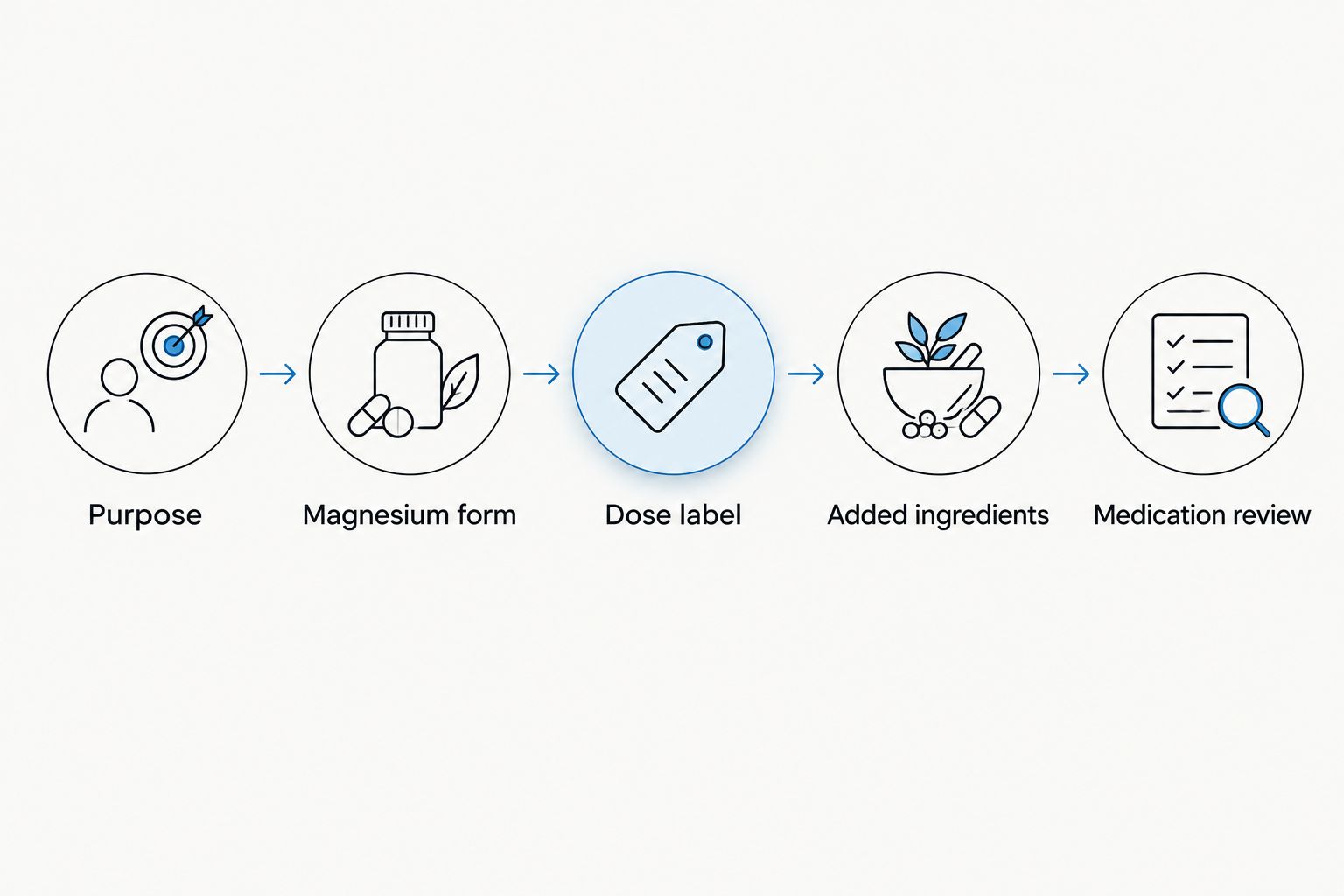
For this 2026 guide, the practical label-reading sequence is:
- Purpose: Is the product a mineral supplement or a labeled laxative?
- Magnesium form: Does it contain oxide, citrate, hydroxide, glycinate, or a blend?
- Dose label: Does the stated amount refer to elemental magnesium or an active laxative ingredient?
- Added ingredients: Does the formula include ingredients that have previously worsened your symptoms?
- Medication review: Has a pharmacist checked interactions and the total magnesium in other products?
This sequence prevents a common mistake: comparing products by front-label milligrams while ignoring what those milligrams represent. Keep antacids, electrolyte products, and multivitamins in the review because they can also contribute magnesium.
Know when constipation needs medical care
Do not take a laxative for severe abdominal pain, vomiting, marked abdominal swelling, or inability to pass gas without urgent medical assessment. These symptoms can signal a bowel obstruction or another acute problem.
Rectal bleeding, unexplained weight loss, a persistent new change in bowel habits, or ongoing constipation also warrants evaluation. Pregnancy, kidney disease, and complex medication regimens require individualized advice before starting magnesium.
During an approved trial, record stool consistency, straining, abdominal pain, and whether evacuation feels complete. Diarrhea is an adverse effect, not evidence that you have cleared SIBO or experienced a beneficial detoxification.
How the magnesium options were ranked
This 2026 ranking prioritizes constipation-specific guideline support, labeled laxative use, safety, and clarity of purpose. Magnesium oxide leads the chronic-constipation discussion because the AGA–ACG guideline addresses it; citrate and hydroxide occupy occasional-use slots; glycinate belongs to nutritional supplementation.
The reference points are the AGA–ACG guideline on chronic idiopathic constipation, the ACG guideline on SIBO, NIH magnesium guidance, and product-specific OTC laxative labeling. This is not a head-to-head product test or evidence that any magnesium form treats SIBO.
Which magnesium option should you choose?
For persistent constipation, discuss magnesium oxide first if you specifically want a magnesium option. Ask whether magnesium is appropriate at all, rather than assuming every chronic-constipation plan needs it.
For occasional constipation, a clinician or pharmacist can help choose a labeled magnesium citrate or magnesium hydroxide laxative. For a separate magnesium nutrition goal, consider supplementation independently of your bowel treatment.
Casadesante serves people seeking Low FODMAP digestive-health supplements. Keep that dietary preference separate from the clinical decision about a laxative: a Low FODMAP label does not establish constipation effectiveness, kidney safety, or treatment of IMO.
FAQ
What's the best magnesium supplement for SIBO constipation?
No magnesium supplement is established as best specifically for SIBO constipation. Magnesium oxide has a conditional guideline recommendation for chronic idiopathic constipation, making it a reasonable option to discuss with your clinician rather than a proven SIBO treatment.
Is magnesium citrate better than magnesium glycinate for constipation?
Magnesium citrate has an established laxative role, while magnesium glycinate is not an evidence-based default for constipation. Choose a product labeled for your intended use; a citrate supplement capsule is not interchangeable with a liquid laxative.
Does magnesium treat methane SIBO?
Magnesium does not treat intestinal methanogen overgrowth, often called methane SIBO. Its laxative effect addresses stool passage, while diagnosis and treatment of overgrowth require a separate clinical plan.
How much magnesium should I take for constipation?
There is no universal magnesium dose for SIBO-related constipation. Follow the specific product label and your clinician's instructions, because elemental magnesium on a supplement label differs from the active-ingredient amount on a laxative label.
Can I take magnesium every day if I have SIBO?
Daily magnesium use requires a plan matched to your indication, kidney function, and medications. Persistent constipation deserves assessment, and repeated laxative use should not substitute for that assessment.
Is magnesium safe if I have kidney disease?
Do not self-treat constipation with magnesium if you have kidney disease. Reduced kidney function increases the risk of magnesium accumulation, so your clinician should select an appropriate treatment.
Can magnesium interfere with SIBO antibiotics?
Magnesium can reduce absorption of certain antibiotics, including tetracyclines and fluoroquinolones. Ask your pharmacist about the exact antibiotic and product instead of applying one spacing rule to every SIBO regimen.
Does a Low FODMAP magnesium label guarantee less bloating?
A Low FODMAP label does not guarantee that a magnesium product will prevent bloating or treat constipation. Review added ingredients, the magnesium form, and your individual response; laxative effects can still cause abdominal discomfort.
One last thing
A softer stool is not the same as complete evacuation. If stool becomes soft but you still strain, feel blocked, or cannot empty completely, ask your clinician about pelvic-floor dysfunction rather than escalating magnesium.
That distinction rewards careful symptom tracking. The best next move is the treatment that matches the mechanism of your constipation, not the supplement with the largest magnesium number.









