
Best GI Synergy alternative for digestive support






Best overall: clinician-guided care matched to your diagnosis. Best for meal-specific digestive support: FODMAP Digestive Enzymes. Best for identifying dietary triggers: a dietitian-guided low FODMAP trial. The best GI Synergy alternative depends on whether you need treatment, digestive support, or nutrition support—not simply another gut-health supplement.
- The best GI Synergy alternative matches your treatment goal; digestive support is not a substitute for treating an infection.
- Casa de Sante offers low FODMAP digestive support supplements for people managing IBS, SIBO, and GLP-1 medication side effects.
- FODMAP Digestive Enzymes belongs on a meal-support shortlist, not an infection-treatment shortlist.
- Choose probiotics by their documented strains and intended use, not by a general gut-health claim.
Why this matters
A replacement should preserve the purpose of your original plan. If a clinician recommended GI Synergy, ask what it was intended to address before changing products. Bloating alone does not establish SIBO, an infection, or an enzyme deficiency.
Casa de Sante sells physician-formulated low FODMAP digestive support supplements, but that positioning does not establish equivalence to GI Synergy. The FODMAP Digestive Enzymes page is a starting point for reviewing a meal-support option—not evidence that it replaces a treatment protocol.
For your 2026 decision, separate three goals: treating a diagnosed condition, reducing exposure to dietary triggers, and supporting nutritional intake. A product suited to one goal does not automatically serve the others.
What makes the best GI Synergy alternative?
Use these criteria before choosing a product or changing your routine:
- Purpose match: Establish why you were taking GI Synergy. Symptom support and treatment of a diagnosed condition are different jobs.
- Ingredient transparency: Review the current Supplement Facts panel, doses, allergens, and inactive ingredients. A category name is not enough.
- Evidence match: Look for evidence concerning the actual ingredient or probiotic strain and your condition—not digestive health in general.
- Dietary compatibility: Assess serving size and fermentable ingredients alongside your low FODMAP eating plan.
- Safety fit: Have a pharmacist or clinician check interactions, pregnancy considerations, immune status, and relevant medical conditions.
- Assessable results: Choose an approach with a clear target, such as meal-related bloating or inadequate nutrient intake. Avoid changing several things together.
The strongest replacement is the one with a defined job. More ingredients do not establish better results, and physician formulation does not replace condition-specific clinical evidence.
Alternatives at a glance
This 2026 comparison ranks options by decision priority and distinct use case, not by proven head-to-head superiority over GI Synergy.
| Rank and option | Best for | Standout feature | Key limitation |
|---|---|---|---|
| 1. Clinician-guided replacement plan | Replacing a clinician-directed regimen | Matches the next step to the diagnosis and original treatment goal | Requires an individualized assessment |
| 2. FODMAP Digestive Enzymes | Reviewing meal-specific digestive support | A focused digestive-enzyme category | Suitability depends on the actual enzymes and food triggers |
| 3. Dietitian-guided low FODMAP trial | Identifying fermentable-carbohydrate triggers in IBS | Structured elimination, reintroduction, and personalization | Restrictive if continued without reintroduction |
| 4. Advanced Probiotics GI Support Low FODMAP Gut Friendly | Reviewing a probiotic-focused approach | A low FODMAP probiotic option | Benefits require strain-specific assessment |
| 5. Low FODMAP Advanced Vitamin Mineral Complex | Reviewing nutrition support during dietary restriction | A vitamin-and-mineral category rather than another digestive blend | Does not treat the cause of digestive symptoms |
1. Clinician-guided care: best for replacing a treatment regimen
A clinician-guided replacement plan starts with your diagnosis and the reason GI Synergy was recommended. It distinguishes a change in symptom support from a change in treatment. That distinction matters when you are managing persistent symptoms, suspected SIBO, or medication-related digestive problems.
Bring your current supplement labels, medication list, and symptom history. Ask whether you need a replacement supplement at all—or a different evaluation or treatment approach.
Clinician-guided care pros:
- Connects the replacement to the original clinical goal.
- Allows review of medication and supplement interactions.
- Separates dietary triggers from conditions needing investigation.
Clinician-guided care cons:
- Requires an appointment and individualized follow-up.
- Does not provide an immediate, universal product answer.
Best for: Anyone replacing a clinician-directed regimen or experiencing unexplained, recurring digestive symptoms.
If symptoms started after beginning or increasing a GLP-1 medication, involve the prescriber. Adding digestive supplements is not a substitute for reviewing medication tolerability.
Verdict: Hold a direct product swap until the original treatment goal is clear.
2. FODMAP Digestive Enzymes: best for meal-specific support
FODMAP Digestive Enzymes is a relevant category to review when your concern is tied to particular meals. Digestive enzymes act on specific food components; their usefulness depends on which enzymes the formula contains and what you are eating.
Do not assume that a digestive-enzyme product addresses every FODMAP group. Read the current label and check whether its enzyme activities match the food component you want to address.
FODMAP Digestive Enzymes pros:
- Provides a focused category for evaluating meal-related support.
- Gives you a specific label to review against recurring food triggers.
- Avoids treating probiotics, vitamins, and enzymes as interchangeable.
FODMAP Digestive Enzymes cons:
- A category name does not establish effectiveness for your symptoms.
- Does not replace treatment for SIBO or another diagnosed condition.
- Requires checking ingredients, allergens, and directions before use.
Best for: Someone reviewing support for a defined meal-related trigger with a clinician or dietitian.
For example, an enzyme intended to break down lactose has a different purpose from one targeting other carbohydrates. Neither example establishes what this particular formula contains. Your 2026 shortlist should follow the current label, not assumptions about the product name.
Verdict: Hold until the enzyme activities match your food-related goal.
3. A low FODMAP trial: best for identifying IBS food triggers
A dietitian-guided low FODMAP trial changes your food exposure rather than adding another supplement. It uses a short restriction phase, structured reintroduction, and a personalized long-term diet.
Monash University's patient guidance describes an initial low FODMAP phase lasting 2–6 weeks. That is a trial period, not a recommendation to avoid all higher-FODMAP foods indefinitely.
A low FODMAP trial pros:
- Tests whether fermentable carbohydrates contribute to symptoms.
- Uses reintroduction to identify tolerated foods and portions.
- Can reduce unnecessary long-term food avoidance.
A low FODMAP trial cons:
- Requires attention to portions, substitutions, and food variety.
- Can become overly restrictive without professional guidance.
- Is not a treatment that eradicates SIBO or an infection.
Best for: People with IBS who need a structured way to investigate dietary triggers.
Do not interpret every symptom during reintroduction as proof that a food is permanently unsuitable. Portion size, combinations of foods, and your baseline symptoms all matter. A dietitian helps you turn a restrictive trial into a broader, usable eating pattern.
Verdict: Hold until you have an elimination and reintroduction plan.
4. Advanced Probiotics GI Support: best for probiotic-focused review
Advanced Probiotics GI Support Low FODMAP Gut Friendly belongs in a probiotic comparison, not an automatic GI Synergy substitution. Probiotics contain live microorganisms, and their effects depend on the strain, dose, and clinical context.
For IBS, a general probiotic label does not establish a predictable benefit. The American College of Gastroenterology's IBS guideline advises against routine probiotics for global IBS symptoms because the supporting evidence is insufficient.
Advanced Probiotics GI Support pros:
- Offers a defined probiotic category for label review.
- Has an explicitly low FODMAP product positioning.
- Lets you assess a probiotic separately from enzyme or nutrition support.
Advanced Probiotics GI Support cons:
- A low FODMAP designation does not prove symptom relief.
- Strains and doses must be evaluated for the intended use.
- Probiotics can cause gas or other digestive symptoms in some users.
Best for: Someone whose clinician has identified a specific reason to consider a probiotic.
People with serious illness or compromised immunity should consult their clinician before taking probiotics. If you have SIBO, do not assume that adding microorganisms will correct the underlying problem.
Verdict: Hold until there is a strain-specific reason to use it.
5. Low FODMAP Advanced Vitamin Mineral Complex: best for nutrition review
Low FODMAP Advanced Vitamin Mineral Complex addresses a different question: whether your intake needs nutritional support. It belongs on your shortlist when food restrictions or reduced appetite warrant a review of vitamins and minerals.
A multivitamin is not a treatment for bloating, SIBO, or an infection. It also does not replace enough food, protein, or an assessment of a suspected deficiency.
Low FODMAP Advanced Vitamin Mineral Complex pros:
- Separates nutrition support from digestive symptom treatment.
- Provides a vitamin-and-mineral formula to assess against dietary intake.
- Is positioned for low FODMAP compatibility.
Low FODMAP Advanced Vitamin Mineral Complex cons:
- Does not establish that you have a nutrient deficiency.
- Requires checking doses against other supplements you take.
- Cannot substitute for individualized treatment of a confirmed deficiency.
Best for: People whose restricted diet or appetite changes justify a nutrition assessment.
If you take multiple supplements, show the full list to a pharmacist or dietitian. Repeated nutrients across formulas can make a seemingly simple addition inappropriate.
Verdict: Hold until your dietary intake and overlapping supplements are reviewed.
How to choose without creating another supplement stack
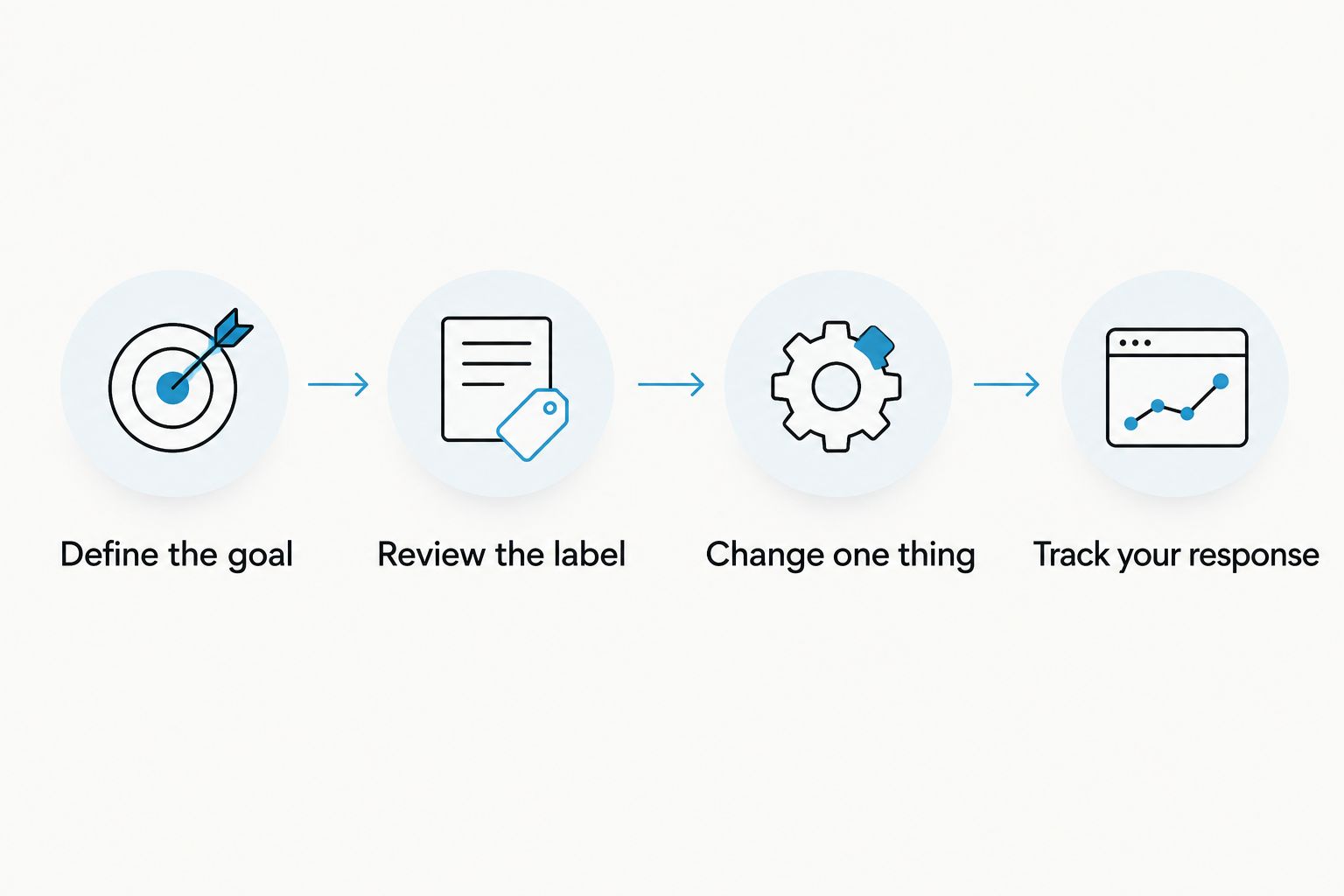
Use this sequence for your 2026 replacement decision. Keep the goal narrow enough that you can tell whether the change helped.
Define the goal
Write down why you want to replace GI Synergy. Separate concerns about tolerability, treatment purpose, meal-related symptoms, and nutrition. If the original reason was unclear, ask the recommending clinician before choosing an alternative.
Review the label
Compare the current ingredients, not just the front-of-bottle claims. For probiotics, review strain identifiers; for enzymes, review enzyme activities; for vitamins, review nutrient amounts and duplication. Ask a pharmacist about interactions.
Change one thing
Avoid starting an enzyme, probiotic, and dietary restriction together. A single change is easier to evaluate. Do not stop prescribed treatment or alter a clinician-directed regimen without agreement.
Track your response
As a practical tracking plan, record your usual symptoms for 7 days before an agreed change. Use a consistent 0–10-point scale for discomfort, alongside meal timing and bowel changes. These are tracking suggestions, not a diagnostic test or a promised response timeline.
Agree on follow-up with your clinician rather than assigning every supplement the same trial duration. Stop and seek advice if symptoms worsen. Blood in your stool, unexplained weight loss, persistent vomiting, or severe abdominal pain requires medical assessment—not another product comparison.
How these alternatives are ranked
This ranking prioritizes diagnosis, purpose match, ingredient review, and safety. It is not a head-to-head clinical trial or evidence that these options reproduce GI Synergy's effects.
Casa de Sante's low FODMAP digestive support range is relevant to readers managing dietary sensitivities. Its place in this comparison comes from that stated purpose, not an unsupported claim of better treatment outcomes.
Which GI Synergy alternative should you choose?
Default to clinician-guided care when GI Synergy was part of a treatment plan. That is the best overall decision because it establishes what the replacement must accomplish.
For a meal-specific concern, review FODMAP Digestive Enzymes against the actual trigger. For IBS food-trigger identification, consider a dietitian-guided low FODMAP trial. Review a probiotic only for a defined indication, and a multivitamin only for a nutrition-related goal.
Casa de Sante is best suited to shoppers seeking low FODMAP digestive support supplements, not an assumed equivalent to GI Synergy. In 2026, choose the job first and the supplement second.
FAQ
What's the best GI Synergy alternative for digestive support?
The best GI Synergy alternative depends on why you were taking it. Use clinician-guided care for a treatment replacement, and evaluate meal support, dietary changes, probiotics, or nutrition support only for their distinct purposes.
Are digestive enzymes a direct replacement for GI Synergy?
Do not treat digestive enzymes as a direct replacement for GI Synergy. Enzymes act on specific food components, so their suitability depends on the formula and your meal-related goal.
Can I use a low FODMAP supplement to treat SIBO?
A low FODMAP supplement is not an established substitute for SIBO treatment. Discuss diagnosis and treatment with your clinician; dietary compatibility does not establish an effect on bacterial overgrowth.
Is a probiotic better than a digestive enzyme?
Neither category is universally better because probiotics and digestive enzymes do different jobs. Probiotic decisions require strain-specific evidence, while enzyme decisions require a match between the enzyme activity and the food component.
How long should I follow a low FODMAP elimination diet?
Monash University's patient guidance describes an initial low FODMAP phase of 2–6 weeks. Follow it with structured reintroduction and personalization rather than indefinite restriction.
Should I stop GI Synergy before starting another supplement?
Ask the clinician who recommended GI Synergy before stopping it or adding a replacement. Review the complete medication and supplement list, especially when digestive symptoms are persistent or worsening.
What should I check before choosing an alternative in 2026?
Check the treatment goal, current ingredient label, interactions, and evidence for your condition. Low FODMAP positioning alone does not establish effectiveness, safety for your circumstances, or equivalence to GI Synergy.
One last thing
A simpler routine can be more informative than a larger supplement stack. If you cannot explain what each product is meant to do, pause before adding another one. Your next move is to write a clear treatment or support goal—not collect another digestive-health label.









