
Best Candibactin Alternative for SIBO: Care First 2026






Best overall: clinician-directed treatment for confirmed SIBO. Best herbal option: an individually reviewed formula, not an automatic Candibactin swap. Best for food-triggered symptoms: a dietitian-guided low FODMAP trial. This 2026 guide separates treatment alternatives from supportive options so you can choose the right next step without confusing symptom relief with eradication.
- The best candibactin alternative for sibo depends on diagnosis, ingredient tolerance, and treatment goals—not supplement popularity.
- Clinician-directed treatment ranks first for confirmed SIBO; herbal protocols have less certain evidence.
- Casadesante low FODMAP supplements are supportive options, not established replacements for SIBO treatment.
- Low FODMAP diets and digestive enzymes address different problems; neither proves bacterial overgrowth has cleared.
Why this matters
Bloating after meals does not establish small intestinal bacterial overgrowth. IBS, constipation, food intolerances, and other digestive conditions produce overlapping symptoms. Buying another antimicrobial before clarifying the diagnosis risks treating the wrong problem.
Casadesante sells physician-formulated low FODMAP supplements for people managing digestive symptoms. That category serves a different purpose from a prescribed SIBO treatment plan. Low FODMAP describes fermentable carbohydrate content; it does not establish antimicrobial effectiveness.
For your 2026 decision, identify why you want to replace Candibactin: ingredient intolerance, unclear benefit, adverse effects, or a change in diagnosis. Each reason leads to a different choice. A product that avoids an unwanted ingredient is not automatically an equally effective treatment.
What makes the best Candibactin alternative for SIBO?
Evaluate an alternative against these criteria before choosing a brand or ingredient:
- Diagnostic fit: The plan addresses confirmed SIBO, intestinal methanogen overgrowth, or another identified condition—not bloating alone.
- Treatment role: The option is clearly classified as antimicrobial treatment, symptom management, or nutritional support.
- Human evidence: Clinical evidence matters more than laboratory antimicrobial activity or customer testimonials.
- Ingredient transparency: You can review the complete formula, quantities, allergens, and medication interactions.
- Safety and tolerability: Your clinician considers pregnancy, liver disease, other conditions, and your previous reaction.
- Follow-up plan: You know what improvement means, when to reassess, and which symptoms require stopping.
There is no universally best herbal replacement. In 2026, a useful comparison starts with the treatment goal rather than the number of herbs in a capsule.
Candibactin alternatives at a glance
These rankings compare care options, not interchangeable products. The first option is the default for confirmed disease; the remaining options serve narrower needs.
| Rank and option | Best for | Standout feature | Key limitation |
|---|---|---|---|
| 1. Clinician-directed prescription treatment | Confirmed SIBO requiring treatment | Treatment selected around diagnosis and clinical context | Requires medical assessment; adverse effects and recurrence remain possible |
| 2. Clinician-reviewed herbal combination | Reviewing a different multi-ingredient herbal protocol | Formula-level review of ingredients and interactions | Limited clinical evidence; not proven interchangeable with Candibactin |
| 3. Single-ingredient herbal supplement | Avoiding a specific ingredient in a combination | Fewer active ingredients to review | Simpler composition does not establish SIBO effectiveness |
| 4. Dietitian-guided low FODMAP trial | Food-triggered IBS-type symptoms alongside care | Structured elimination and reintroduction | Symptom management, not established SIBO eradication |
| 5. Casadesante FODMAP Digestive Enzymes | Reviewing targeted food-digestion support | A distinct digestive-support category | Not an antimicrobial substitute; suitability depends on the current formula |
1. Clinician-directed treatment: best for confirmed SIBO
Prescription treatment ranks first when your goal is treating confirmed SIBO rather than replacing one supplement with another. A clinician selects treatment using your symptoms, test interpretation, medical history, and previous response. Rifaximin is one antibiotic used in SIBO care; the appropriate regimen is a prescribing decision.
The American College of Gastroenterology's 2020 SIBO guideline suggests antibiotics for symptomatic patients with SIBO. That recommendation is conditional and supported by low-quality evidence, so it is not a guarantee of success. It still provides a clearer clinical basis than assuming an herbal formula is equivalent.
Clinician-directed treatment pros:
- Connects treatment to an assessed diagnosis.
- Allows medication and contraindication review.
- Provides a defined plan for reassessment.
Clinician-directed treatment cons:
- Antibiotics have adverse effects and stewardship considerations.
- Successful treatment does not eliminate every cause of recurrence.
Best for: You have confirmed SIBO and want a treatment plan rather than another unverified supplement trial.
Verdict: Hold supplement switching until your clinician reviews the diagnosis and treatment options.
2. A clinician-reviewed herbal combination: best for formula substitution
A different herbal combination is the closest category match if you specifically want another herbal protocol. It is not a proven equivalent. Changing the blend changes the ingredients, exposures, and interaction profile, even when the products share similar marketing language.
Bring the current labels for both products to your clinician or pharmacist. Identify the exact ingredient you want to avoid and the reason for switching. A reaction to one component cannot be resolved by comparing product names alone.
Herbal SIBO research is limited, and small studies do not establish that every multi-herb formula works. Laboratory activity against microbes also does not establish safe, effective treatment in the human small intestine.
Herbal combination pros:
- Allows a formula-specific discussion of unwanted ingredients.
- Makes the proposed replacement's intended role explicit.
- Supports a planned rather than improvised switch.
Herbal combination cons:
- Multiple ingredients complicate identifying adverse reactions.
- Evidence does not establish broad interchangeability between blends.
Best for: You and your clinician have already chosen to consider herbal care and need to review a different formula.
Verdict: Wait for a complete ingredient and safety review before replacing Candibactin.
3. A single-ingredient herbal supplement: best for ingredient avoidance
Single-ingredient products offer a simpler composition to review than multi-herb blends. Berberine, oregano-derived preparations, and allicin are ingredients discussed in herbal SIBO protocols. Naming these ingredients is not a recommendation to take them or evidence that they are equivalent.
The relevant question is whether a specific ingredient has an appropriate role in your care. You also need the exact preparation and label, because ingredient names alone do not describe exposure or safety. Do not assemble a combination from online dosing schedules.
Single-ingredient herbal supplement pros:
- Makes the selected active ingredient easier to identify.
- Helps you avoid a particular component in another formula.
- Simplifies the ingredient list your pharmacist reviews.
Single-ingredient herbal supplement cons:
- Fewer ingredients do not mean fewer clinically important interactions.
- Evidence does not establish a universal single-herb SIBO replacement.
Best for: You need to exclude a particular ingredient and your clinician agrees that an herbal option merits consideration.
Verdict: Hold until the specific preparation—not just the herb name—has been reviewed.
4. A low FODMAP trial: best for food-triggered symptom management
A dietitian-guided low FODMAP trial addresses fermentable carbohydrates that trigger symptoms in susceptible people. It is a symptom-management strategy, especially relevant when IBS overlaps with suspected or diagnosed SIBO. It is not an established method of eradicating bacterial overgrowth.
The American Gastroenterological Association's 2022 clinical practice update on diet in IBS describes restriction, reintroduction, and personalization. It advises that the restriction phase last no more than 4–6 weeks. That time frame concerns IBS dietary care, not a prescribed SIBO antimicrobial course.
For a 2026 plan, make reintroduction part of the initial decision. The goal is the broadest diet you tolerate, not permanent avoidance of every high FODMAP food.
Low FODMAP trial pros:
- Gives food-triggered symptoms a structured assessment.
- Includes reintroduction rather than indefinite restriction.
- Can be coordinated with medical treatment.
Low FODMAP trial cons:
- Restriction adds practical and nutritional burdens.
- Feeling better does not establish that SIBO has cleared.
Best for: Meals consistently trigger IBS-type symptoms and you need dietitian-guided symptom support.
Verdict: Hold an unsupervised restrictive diet; proceed with a defined reintroduction plan.
5. Digestive enzymes: best for targeted food-digestion support
Casadesante FODMAP Digestive Enzymes belong in a discussion about food digestion, not an antimicrobial ranking. Digestive enzymes act on specific food components when the appropriate enzyme is present. They do not become SIBO treatment because bloating improves.
Before choosing an enzyme product, compare its current label with the food component you are trying to address. Different enzymes have different substrates. Do not assume a general digestive enzyme product covers every FODMAP, and do not substitute an over-the-counter supplement for prescribed pancreatic enzyme replacement.
FODMAP Digestive Enzymes pros:
- Separates targeted digestive support from antimicrobial treatment.
- Gives you a specific formula to review against meal-related concerns.
- Keeps the proposed benefit tied to food digestion rather than eradication.
FODMAP Digestive Enzymes cons:
- The current formula must match the intended digestive task.
- Enzyme use does not resolve the underlying cause of confirmed SIBO.
Best for: You need to review targeted food-digestion support alongside—not instead of—medical care.
Verdict: Skip digestive enzymes as a Candibactin replacement; consider them only for a separate digestive-support goal.
How we ranked these options
The ranking prioritizes diagnostic fit, human evidence, safety review, and a clear treatment role. It does not rank products by testimonials, ingredient count, or laboratory antimicrobial claims. Prescription assessment leads because treating confirmed disease is a different task from reducing meal-related symptoms.
The herbal categories remain below clinician-directed treatment because the evidence does not establish a reliable, universally interchangeable replacement. Diet and enzymes rank as supportive options. Their placement does not imply weaker value for their own purposes; it reflects the fact that those purposes are different.
Before you switch: clarify the diagnosis
A breath-test result needs clinical interpretation. The 2017 North American Consensus on hydrogen and methane breath testing identifies a hydrogen rise of 20 parts per million within 90 minutes as a positive criterion used for SIBO testing. It identifies methane of 10 parts per million or more as methane-positive.
These thresholds are not a self-diagnosis checklist. Test preparation, substrate, transit, symptoms, and other factors affect interpretation. Methane is produced by archaea rather than bacteria, which is why intestinal methanogen overgrowth is distinguished from SIBO.
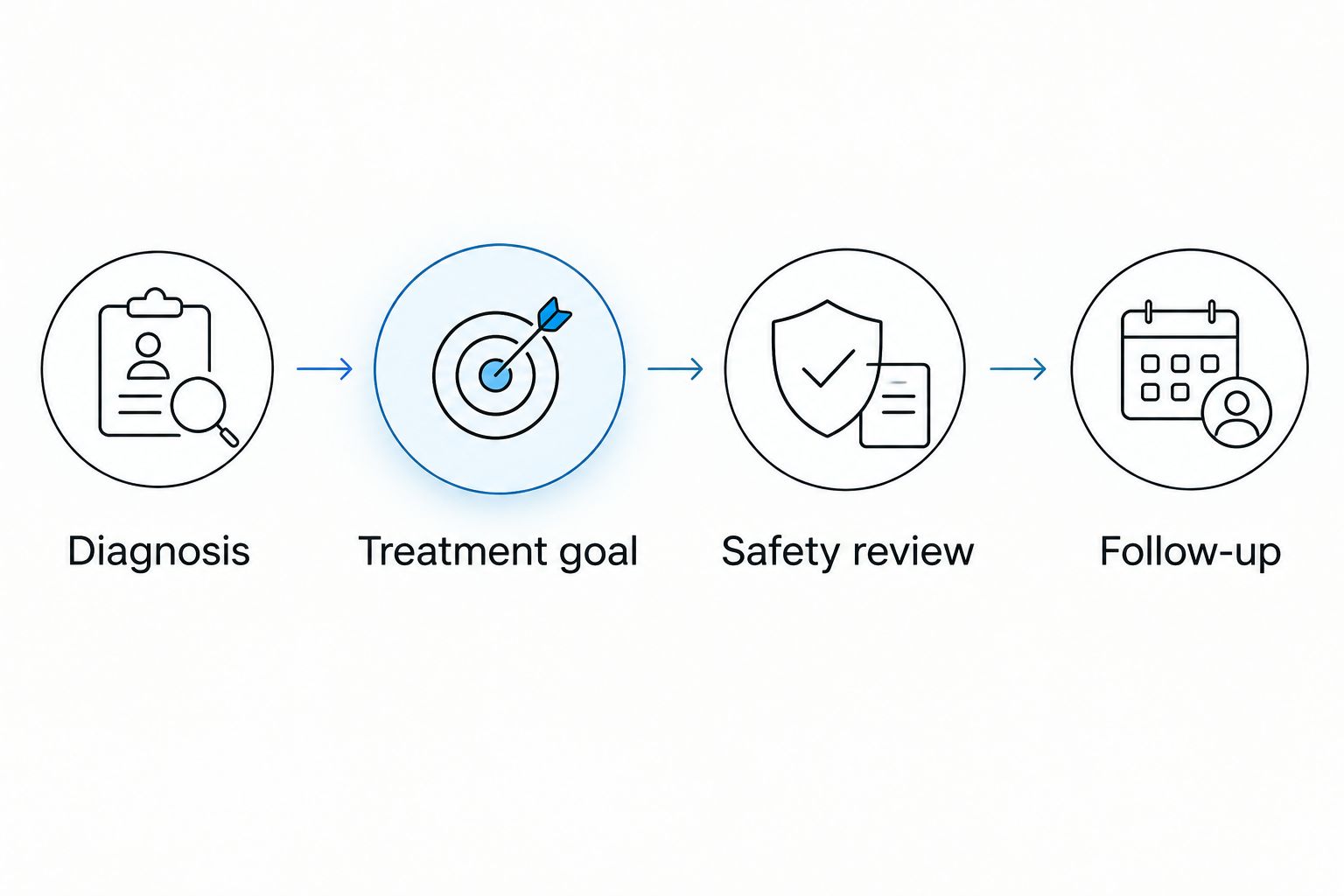
Use this sequence at your appointment:
- Diagnosis: Ask what the symptoms and test actually establish.
- Treatment goal: Separate overgrowth treatment from constipation or meal-related symptom relief.
- Safety review: Bring every medication, supplement, and proposed replacement label.
- Follow-up: Agree on reassessment and clear reasons to stop.
Do not interpret worsening symptoms as proof that a protocol is working. New or escalating symptoms require review, not automatic dose increases. Seek urgent care for severe abdominal pain, persistent vomiting, bloody or black stools, or signs of dehydration.
Which Candibactin alternative should you choose?
For confirmed SIBO, choose clinician-directed treatment review as your default. If you specifically need another herbal formula, choose an ingredient-level discussion rather than a brand-level swap. If your goal is eating more comfortably, evaluate dietary or digestive support as a separate decision.
Casadesante low FODMAP supplements are best considered for supportive care, not as established Candibactin replacements. Physician formulation does not establish that a supplement treats SIBO. In 2026, keep the claim you need to prove specific: better food tolerance and overgrowth treatment are not the same outcome.
FAQ
What's the best Candibactin alternative for SIBO?
There is no universally established herbal replacement for Candibactin. For confirmed SIBO, clinician-directed treatment review is the best starting point; a different herbal formula requires its own ingredient and safety assessment.
Is berberine better than Candibactin for SIBO?
Clinical evidence does not establish berberine as universally better than Candibactin for SIBO. A specific preparation, medication interactions, and your diagnosis must be reviewed before considering it.
Can oregano oil replace a herbal SIBO protocol?
Oregano-derived supplements are not proven interchangeable with a complete herbal SIBO protocol. Laboratory antimicrobial activity does not establish effective or safe SIBO treatment in people.
Can digestive enzymes treat SIBO instead of Candibactin?
Digestive enzymes are not an established replacement for SIBO treatment. An appropriate enzyme addresses a particular food component, not bacterial overgrowth itself.
Does a low FODMAP diet get rid of SIBO?
A low FODMAP diet is not an established SIBO eradication treatment. It can support management of food-triggered IBS symptoms, with reintroduction and personalization rather than indefinite restriction.
Should I add probiotics when switching a SIBO protocol?
Do not automatically add probiotics when changing a SIBO protocol. Evidence and tolerability depend on the preparation and clinical context, so discuss the specific product with your clinician.
Is feeling worse on herbs a sign of SIBO die-off?
Feeling worse does not prove SIBO die-off or successful treatment. Adverse effects, interactions, and unrelated illness require consideration; severe or escalating symptoms need medical assessment.
One last thing
Improvement and eradication answer different questions. You can feel less bloated after changing meals without demonstrating that overgrowth has resolved. Conversely, persistent symptoms deserve reassessment rather than an endless sequence of stronger supplement combinations.
Before starting a replacement in 2026, ask one specific question: What outcome would show that this option is doing the job we chose it for? If the answer is unclear, the next move is a better-defined plan—not another bottle.









