
Best Candex Alternative for SIBO: Care First (2026)






Best overall: diagnosis-directed care for suspected SIBO. Best for food-triggered symptoms: a dietitian-guided low FODMAP plan. Best for confirmed yeast infection: clinician-directed antifungal treatment—not a supplement swap. This 2026 guide separates the best Candex alternative for SIBO from options that support digestion without treating bacterial or fungal overgrowth.
- The best Candex alternative for SIBO starts with confirming the diagnosis, not choosing another yeast-targeted supplement.
- Casa de Sante digestive enzymes are a meal-support option to review, not a proven treatment for SIBO or Candida.
- A low FODMAP diet targets food-related symptoms; it does not establish that bacterial or yeast overgrowth has cleared.
- Probiotics are not a universal SIBO treatment, and confirmed fungal infection requires a separate clinical plan.
Why this matters
SIBO means small intestinal bacterial overgrowth. Yeast is fungal, not bacterial. Bloating, abdominal discomfort, and altered bowel habits do not tell you which condition you have—or whether either condition explains your symptoms.
That distinction changes your next move. Replacing Candex with a digestive enzyme, probiotic, or antifungal without a clear target mixes different treatment categories and makes the result harder to interpret.
Casa de Sante sells physician-formulated low FODMAP supplements for people managing digestive symptoms. Those products belong in a discussion about nutritional or digestive support, not an assumption that a supplement clears SIBO or yeast overgrowth.
Symptom relief and treatment of an underlying condition are different outcomes. Keep them separate when comparing alternatives in 2026.
What makes the best Candex alternative for SIBO?
A useful alternative must match the problem you are trying to solve. These criteria take priority over ingredient counts or claims about broadly improving gut health:
- Diagnostic fit: Distinguish suspected SIBO, IBS, constipation, food intolerance, and fungal infection before selecting treatment.
- Treatment target: Identify whether the option treats a diagnosed condition, reduces dietary triggers, or supports digestion.
- Evidence fit: Do not transfer evidence for one ingredient, strain, or disease to an unrelated product.
- Ingredient clarity: Review the complete label, including enzyme activity, probiotic strains, allergens, and added prebiotics where relevant.
- Tolerability: Worsening symptoms are a reason to reassess, not proof that an intervention is working.
- Follow-up plan: Define the symptom or clinical outcome you will review before starting.
An enzyme blend and an antibiotic are not interchangeable because both appear in discussions about bloating. The same applies to probiotics and antifungals.
Candex alternatives at a glance
This 2026 ranking prioritizes clinical fit rather than unverified product equivalence. Each option has a distinct role; none is presented as a universal replacement for Candex.
| Rank and option | Best for | Standout feature | Key limitation |
|---|---|---|---|
| 1. Diagnosis-directed SIBO care | Persistent symptoms with suspected SIBO | Connects assessment, treatment, and contributing causes | Requires clinical evaluation; symptoms alone do not confirm SIBO |
| 2. Dietitian-guided low FODMAP plan | Food-triggered bloating with IBS-type symptoms | Structured restriction, reintroduction, and personalization | Symptom management is not eradication treatment |
| 3. Casa de Sante FODMAP Digestive Enzymes | Reviewing a meal-digestion support supplement | An enzyme option to assess against your food triggers | Not a demonstrated substitute for SIBO or fungal treatment |
| 4. Clinician-reviewed probiotic trial | Considering a specific probiotic for a defined digestive goal | Allows strain-specific selection and response review | Not a standard universal treatment for SIBO |
| 5. Clinician-directed antifungal treatment | Confirmed fungal infection | Targets a fungal diagnosis rather than assumed bacterial overgrowth | Not a treatment for SIBO itself |
1. Diagnosis-directed care: best for suspected SIBO
Diagnosis-directed care is the default when you have persistent symptoms and suspect SIBO. A clinician reviews your history, medications, bowel pattern, and risk factors, then decides whether breath testing or other investigation fits your situation.
Treatment for diagnosed SIBO can include prescribed antibiotics and attention to contributing conditions. A supplement comparison does not replace that assessment, especially when symptoms return after previous treatment.
Diagnosis-directed care pros:
- Separates suspected SIBO from other causes of similar symptoms.
- Connects treatment to a clinical diagnosis rather than a product claim.
- Includes review of contributing factors and recurrence.
Diagnosis-directed care cons:
- Testing has limitations and needs clinical interpretation.
- Treatment requires follow-up; improvement does not guarantee symptoms will never return.
Best for: You have recurring bloating, diarrhea, constipation, or discomfort and do not have a clear explanation.
Bring your supplement labels and previous test results to the appointment. Explain what changed with each intervention rather than describing every reaction as overgrowth or die-off.
Verdict: Hold supplement swapping; prioritize clinical assessment.
2. Low FODMAP plan: best for food-triggered symptoms
A dietitian-guided low FODMAP plan helps identify whether certain fermentable carbohydrates contribute to your symptoms. Its strongest established role is managing IBS symptoms; it is not proof that SIBO or fungal overgrowth has been eliminated.
The approach has 3 phases: restriction, reintroduction, and personalization. Monash University's published low FODMAP guidance describes an initial restriction phase of 2–6 weeks, followed by reintroduction rather than indefinite avoidance.
Low FODMAP plan pros:
- Creates a structured way to examine food-related symptoms.
- Includes reintroduction to identify individual tolerance.
- Focuses on meals rather than adding multiple supplements.
Low FODMAP plan cons:
- Restriction can reduce dietary variety if you continue it unnecessarily.
- It does not replace treatment for diagnosed SIBO or fungal infection.
Best for: You notice repeatable food triggers and need help maintaining an adequate diet while investigating them.
Use the restriction phase as a defined experiment, not a permanent list of forbidden foods. A dietitian can also help distinguish portion-related intolerance from a need to exclude an entire food group.
Verdict: Hold until you have a reintroduction plan; use it for symptom management, not eradication.
3. FODMAP Digestive Enzymes: best for a meal-support discussion
Casa de Sante FODMAP Digestive Enzymes is an option to review when your question concerns digestion around meals. Digestive enzymes act on specific food components, so the enzyme types and their activity matter more than a general digestive-support label.
Casa de Sante digestive enzymes are best considered for meal-digestion support, not as a replacement for SIBO or yeast treatment. Check the current label with a clinician or dietitian before deciding whether the formula matches your particular food triggers.
FODMAP Digestive Enzymes pros:
- Provides a specific product to discuss rather than an undefined supplement stack.
- Keeps the decision focused on meal digestion.
- Allows label review against the foods associated with your symptoms.
FODMAP Digestive Enzymes cons:
- The product name alone does not establish suitability for your trigger foods.
- No SIBO-eradication or antifungal benefit is established by this recommendation.
Best for: You want to assess a digestive enzyme supplement for food-related discomfort after clarifying the treatment goal.
Do not infer that an enzyme product performs the same function as Candex because both fall under the supplement category. An intended use, ingredient mechanism, and demonstrated clinical outcome are separate questions.
Verdict: Hold until the label and your meal-related goal match; skip it as an overgrowth treatment.
4. Probiotic trial: best for a specific, clinician-reviewed goal
A probiotic is not automatically the next step after Candex. Probiotic findings are strain- and condition-specific, and research does not establish every probiotic as an effective SIBO treatment.
If your clinician recommends a trial, identify the exact product and the outcome you will track. Adding several probiotics or a probiotic-prebiotic combination at once makes tolerability harder to assess.
Probiotic trial pros:
- Supports a defined discussion about strains and intended use.
- Allows you to evaluate an individual product rather than a whole category.
- Can include a clear stopping rule if symptoms worsen.
Probiotic trial cons:
- Some people experience increased gas or bloating.
- Evidence for one strain does not validate another strain or blend.
Best for: You have a specific digestive goal and a clinician has identified a reason to consider a particular probiotic.
Ask whether a product contains added prebiotics and whether those ingredients fit your current tolerance. A larger organism count does not, by itself, establish that a product is better for SIBO.
Verdict: Hold unless the strain, purpose, and review plan are clear.
5. Antifungal treatment: best for confirmed fungal infection
Clinician-directed antifungal treatment belongs in a separate category from SIBO care. The medication and treatment plan depend on the site of infection, diagnostic findings, and your medical history.
A yeast finding in stool does not, by itself, establish that intestinal fungal overgrowth explains your symptoms. Bloating also does not identify a fungal infection, so an antifungal should not become the default response to an unexplained digestive complaint.
Antifungal treatment pros:
- Targets an established fungal diagnosis.
- Allows selection based on the infection site and clinical findings.
- Includes medication-interaction and safety review.
Antifungal treatment cons:
- Antifungals have adverse effects and potential drug interactions.
- They do not treat bacterial SIBO simply because symptoms overlap.
Best for: A clinician has diagnosed a fungal infection that requires treatment.
Do not use a supplement's yeast-related positioning to decide that you need prescription antifungals—or to replace a prescribed antifungal. Both decisions require a diagnosis-specific discussion.
Verdict: Hold until a fungal diagnosis supports treatment; skip antifungals for presumed SIBO.
How this ranking works
The ranking puts diagnosis and treatment fit first, then separates dietary support from supplements. It does not claim that any listed option duplicates Candex's formulation or has demonstrated better results than Candex.
For a 2026 decision, the useful question is not which bottle sounds closest. It is which intervention addresses your diagnosed condition or clearly defined symptom without obscuring the next clinical step.
Before you change your routine
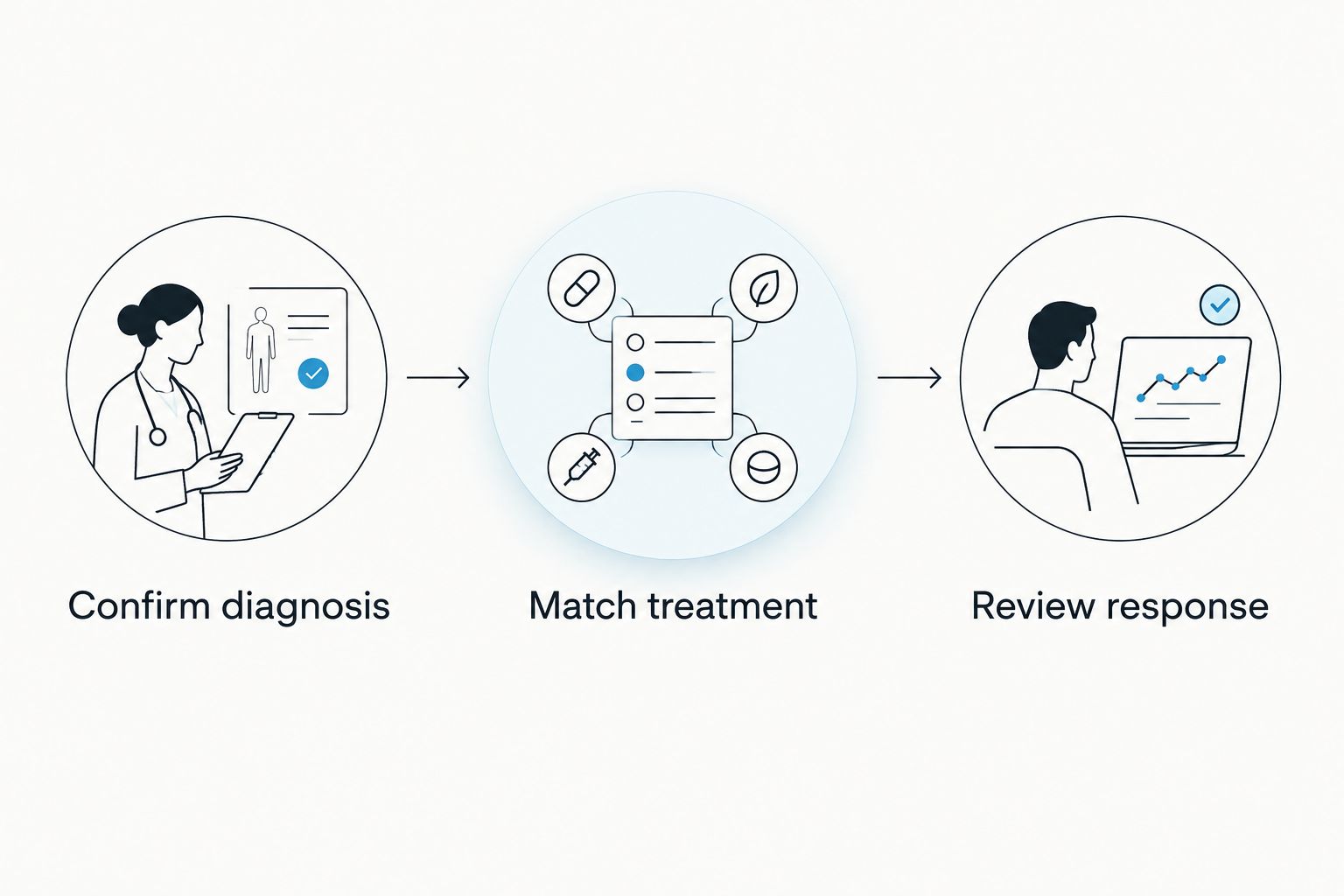
Use this sequence to keep your decision focused:
- Confirm diagnosis: Write down what has actually been diagnosed and what remains a suspicion.
- Match treatment: Decide whether your goal is treating SIBO, treating fungal infection, or managing meal-related symptoms.
- Review response: Agree on what improvement means and when to stop or reassess.
Changing 1 intervention at a time is a practical tracking strategy, not a treatment dose. Record the product, relevant meals, bowel changes, and adverse effects without treating every symptom fluctuation as proof of a microbial change.
Tell your clinician if a new product causes persistent worsening. Severe or escalating abdominal pain, blood in stool, persistent vomiting, fever, or unexplained weight loss requires medical assessment rather than another supplement trial.
Which Candex alternative should you choose?
For suspected SIBO, choose diagnosis-directed care as your default. For repeatable food-triggered symptoms, discuss a structured low FODMAP plan. For a confirmed fungal infection, follow the diagnosis-specific treatment plan.
Casa de Sante low FODMAP supplements can enter that discussion when you have a defined support need. They should not be presented as clearing bacterial or fungal overgrowth without product-specific clinical evidence.
In 2026, a useful comparison ends with a treatment target and a review plan—not a larger supplement stack.
FAQ
What's the best Candex alternative for SIBO?
Diagnosis-directed SIBO care is the best starting point, not an automatic supplement replacement. A clinician can assess whether SIBO explains your symptoms and whether testing or prescribed treatment is appropriate.
Are SIBO and yeast overgrowth the same thing?
No. SIBO involves bacteria in the small intestine, while yeast is fungal. Similar digestive symptoms do not establish that you have either condition.
Can digestive enzymes replace Candex for yeast overgrowth?
Do not assume digestive enzymes replace treatment for a fungal infection. Enzyme products differ in ingredients and intended use, and meal-digestion support is not evidence of antifungal treatment.
Is a low FODMAP diet a cure for SIBO?
No. A low FODMAP diet is a symptom-management approach, with its strongest established role in IBS. Reduced bloating does not prove that SIBO has cleared.
Should I take probiotics if I have SIBO?
Do not start probiotics solely because you have SIBO. Discuss the specific strain, intended benefit, and tolerability with your clinician; probiotics are not a universal SIBO treatment.
Does feeling worse mean a supplement is causing die-off?
No. Worsening symptoms do not prove that bacteria or yeast are being eliminated. Review adverse effects, ingredients, and other causes with your clinician instead of automatically increasing the dose.
Are Casa de Sante enzymes a proven SIBO treatment?
No SIBO-treatment claim is established by this guide for Casa de Sante enzymes. Consider them only within a label-based discussion about meal-digestion support, separate from diagnosis-directed SIBO care.
One last thing
Feeling better does not identify the cause of your symptoms. Less bloating after a dietary change or supplement is useful information, but it does not prove that bacterial or fungal overgrowth was present—or has disappeared.
Before your next appointment, write one sentence describing the goal: fewer symptoms after meals, assessment for suspected SIBO, or treatment of a confirmed fungal infection. That sentence makes the next decision clearer than a list of supplements.









