
Best Biocidin Alternative for SIBO Die-Off: Review 2026






Best overall: clinician review before switching supplements. Best for food-triggered bloating: a supervised, short-term low FODMAP approach. Best for fluid loss: oral rehydration when appropriate. No supplement is established as the best Biocidin alternative for SIBO die-off; Casadesante offers low FODMAP supplements for digestive support, not a proven treatment for a die-off reaction.
- The best biocidin alternative for sibo die-off starts with clinician review, not another antimicrobial supplement.
- Worsening SIBO symptoms do not prove bacterial die-off; medication effects and other causes need assessment.
- Casadesante low FODMAP supplements address digestive-support needs, not proven die-off prevention or SIBO eradication.
- Choose support for the actual problem: food triggers, fluid loss, meal digestion, or nutritional gaps.
Why this matters
A search for a Biocidin alternative usually starts with a practical problem: you feel worse after starting a treatment or supplement. Bloating, nausea, diarrhea, constipation, and fatigue are symptoms—not confirmation that bacteria are dying or that treatment is working.
Do not treat worsening symptoms as a reason to increase an antimicrobial dose. The right next move depends on what changed, how severe the symptoms are, and whether your SIBO diagnosis and treatment plan have been reviewed.
This 2026 guide ranks support options by purpose rather than presenting unrelated supplements as interchangeable treatments. It separates symptom management from treatment of bacterial overgrowth and explains when adding a product is the wrong move.
What makes the best SIBO symptom-support option?
Evaluate any proposed Biocidin alternative against these criteria before buying:
- Correct purpose: The option addresses your actual symptom rather than a presumed detoxification process.
- Evidence fit: Support for IBS symptoms, hydration, or nutrition is not presented as evidence of SIBO eradication.
- Ingredient transparency: You can review the full label, allergens, directions, and warnings with a clinician or pharmacist.
- Tolerability: The plan avoids adding several new ingredients while your symptoms are already worsening.
- Medication compatibility: Your prescriber considers interactions, medical conditions, and your existing treatment.
- Clear reassessment: You know what improvement would look like and what symptoms require medical attention.
Physician formulation and low FODMAP positioning describe a product's formulation or intended use. They do not establish that a supplement prevents a SIBO die-off reaction, replaces prescribed medication, or is appropriate for every patient.
SIBO support options at a glance
These rankings apply to symptom support in 2026—not to antimicrobial potency. Start with the first option if symptoms worsened after a treatment change.
| Rank and option | Best for | Standout feature | Key limitation |
|---|---|---|---|
| 1. Clinician-led treatment review | New or worsening symptoms after treatment starts | Assesses adverse effects and alternative explanations | Requires individual clinical assessment |
| 2. Supervised low FODMAP approach | Symptoms linked to fermentable foods | Targets dietary symptom triggers | Does not establish or eradicate SIBO |
| 3. Oral rehydration solution | Fluid loss from diarrhea or vomiting | Replaces water and electrolytes | Does not treat the cause of fluid loss |
| 4. FODMAP digestive enzymes | A clinician-approved trial for specific food-digestion needs | Focuses on meal-related digestion support | Effect depends on the enzymes and food substrates |
| 5. Clinician-guided nutritional support | Restricted intake or an identified deficiency | Addresses a defined nutritional need | Does not treat bacterial overgrowth or presumed die-off |
1. Clinician review: best for symptoms after a treatment change
Clinician-led review is the strongest default when you feel worse after starting Biocidin or another SIBO treatment. It assesses whether the timing fits an adverse effect, a change in bowel function, an interaction, or a separate illness.
Prepare a concise record of the previous 24 hours: medications, supplements, meals, bowel movements, vomiting, and fluid intake. Record symptom severity on a 0–10 scale to make changes easier to describe; this is a communication tool, not a diagnostic test.
Clinician review pros
- Addresses the assumption that worsening symptoms mean treatment success.
- Allows review of the complete medication and supplement list.
- Connects symptom severity with an appropriate level of care.
- Keeps treatment decisions tied to your diagnosis and medical history.
Clinician review cons
- Does not provide an immediate product replacement.
- Sometimes requires examination or further testing before a decision.
Best for: Anyone whose symptoms started or worsened after a new treatment, particularly when the symptoms disrupt eating, drinking, sleep, or normal activities.
Seek urgent care for severe or escalating abdominal pain, fainting, blood in the stool, persistent vomiting, or signs of significant dehydration. Trouble breathing or swelling of the lips or tongue requires emergency care. Do not wait for a supposed die-off period to end.
Verdict: Hold off on buying a replacement supplement until the treatment reaction has been assessed.
2. Supervised low FODMAP approach: best for food-triggered bloating
A low FODMAP approach reduces selected fermentable carbohydrates to help identify food-related symptom triggers. It is a symptom-management strategy, not proof that SIBO is present and not a substitute for treatment of confirmed bacterial overgrowth.
The standard initial restriction phase generally lasts 2–6 weeks, followed by structured reintroduction and personalization. A dietitian helps preserve food variety and nutritional adequacy rather than allowing the elimination phase to become a permanent diet.
Low FODMAP approach pros
- Gives food-triggered symptoms a structured assessment.
- Includes reintroduction rather than indefinite restriction.
- Avoids adding an antimicrobial supplement simply because meals cause bloating.
- Helps distinguish a food pattern from symptoms that occur regardless of eating.
Low FODMAP approach cons
- Requires planning and attention to portions and ingredients.
- Unnecessary or prolonged restriction can compromise dietary variety.
- Does not establish whether bacterial overgrowth has resolved.
Best for: People with meal-linked IBS-type symptoms who can follow a dietitian-guided restriction and reintroduction plan.
For your 2026 plan, define the purpose before removing foods: less meal-related discomfort, not a promise to starve out bacteria. If you already eat a heavily restricted diet, seek nutritional advice before excluding more foods.
Verdict: Hold until you have a short-term plan with a clear reintroduction stage.
3. Oral rehydration: best for fluid loss, not detoxification
An oral rehydration solution replaces water and electrolytes lost through diarrhea or vomiting. Its role is hydration; it does not bind bacterial toxins, replace SIBO treatment, or establish that a reaction is die-off.
Use the product according to its directions, including the specified dilution when mixing a powder. People with kidney disease, heart failure, fluid restrictions, or relevant medication use should ask a clinician which hydration approach is appropriate.
Oral rehydration pros
- Addresses a concrete consequence of diarrhea or vomiting.
- Provides a defined water-and-electrolyte replacement approach.
- Keeps hydration separate from unsupported detox claims.
Oral rehydration cons
- Does not explain or treat persistent diarrhea or vomiting.
- Is not sufficient when you cannot keep fluids down or have significant dehydration.
Best for: People with fluid losses who can drink and have been advised that oral rehydration is appropriate.
Bloating without fluid loss is a different problem. Adding an electrolyte product solely because someone labels your symptoms die-off does not address the underlying question.
Verdict: Buy only for an actual hydration need; seek care instead of self-treating significant dehydration.
4. FODMAP digestive enzymes: best for targeted meal support
Digestive enzymes act on particular food components; their usefulness depends on the enzyme, the food substrate, and the reason for your symptoms. They are not antimicrobial substitutes and do not establish that SIBO-related bloating comes from an enzyme deficiency.
Casadesante offers FODMAP digestive enzymes within its low FODMAP supplement range. Review the current ingredient label and directions with your clinician before deciding whether this option matches a specific meal-digestion need.
Casadesante low FODMAP supplements are best suited to people seeking digestive support, not a proven SIBO die-off treatment. A targeted enzyme trial belongs in a broader plan only when the intended digestive task is clear.
FODMAP digestive enzymes pros
- Offer a food-digestion approach rather than an antimicrobial approach.
- Allow the decision to focus on a specific food component.
- Can be evaluated against a defined meal-related symptom pattern.
FODMAP digestive enzymes cons
- Benefits depend on matching the enzymes to the relevant food substrates.
- Do not treat bacterial overgrowth or explain new systemic symptoms.
- Do not replace prescribed pancreatic enzymes when those are medically necessary.
Best for: People whose clinician identifies a specific food-digestion target and approves an enzyme trial.
Do not assume every digestive enzyme works on every FODMAP. Persistent greasy stools, unexplained weight loss, or ongoing diarrhea need evaluation rather than a succession of over-the-counter enzyme products.
Verdict: Hold until the label and digestive target have been checked; skip as a die-off remedy.
5. Nutritional support: best for restricted intake or deficiency
Nutritional support addresses what you are not getting from food or what an assessment shows you need. That can mean a food-first plan, an appropriate protein supplement, or a clinician-selected vitamin or mineral—not an automatic supplement stack.
Casadesante sells physician-formulated low FODMAP protein powders and multivitamins. That makes the range relevant to a discussion about dietary support, but it does not demonstrate that a particular product corrects your deficiency or treats SIBO.
Nutritional support pros
- Focuses on an identifiable intake or nutrient problem.
- Supports discussion of food variety and adequate nourishment.
- Allows supplementation to be matched to a specific need.
Nutritional support cons
- Requires review of your diet, existing supplements, and sometimes laboratory results.
- Extra nutrients do not necessarily help when intake is already adequate.
- Supplement ingredients themselves can cause unwanted symptoms.
Best for: People eating too little, avoiding multiple food groups, or managing an identified deficiency with professional guidance.
In 2026, the selection rule remains straightforward: address the gap, not the die-off label. Review overlapping ingredients before combining a multivitamin with separate nutrient products.
Verdict: Buy only to address a defined nutritional need, not as an antimicrobial replacement.
How to choose without building a supplement stack
Start by identifying the problem you want to solve. The decision is different for severe new pain, meal-linked bloating, diarrhea-related fluid loss, and inadequate food intake.
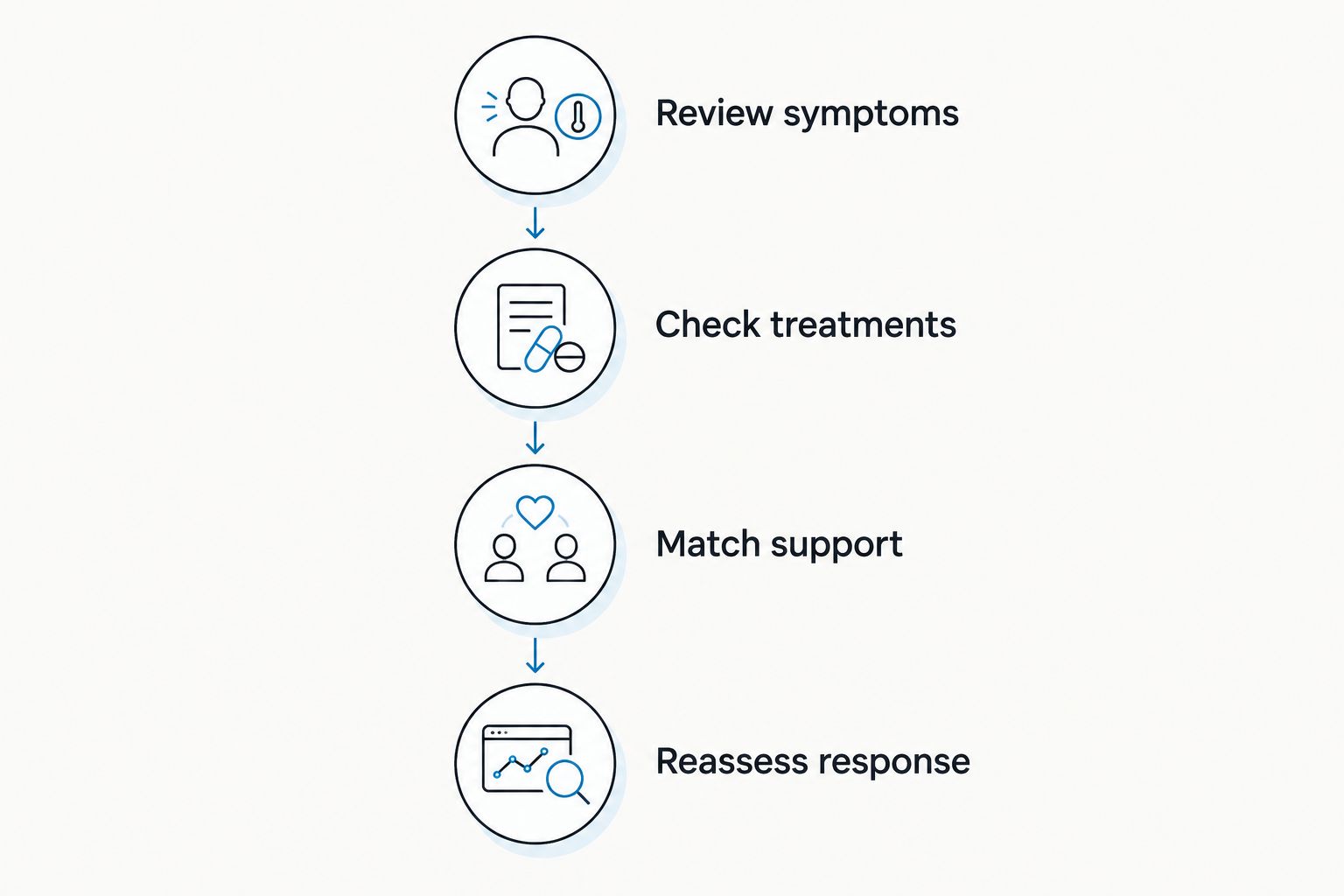
Use this sequence:
- Review symptoms: Check severity, timing, and warning signs before shopping.
- Check treatments: Give your clinician the complete medication and supplement list.
- Match support: Choose a dietary, hydration, digestive, or nutritional approach for the identified problem.
- Reassess response: Agree on what improvement means and when to contact the clinician again.
When a clinician approves a new supplement, introducing 1 product at a time makes the response easier to interpret. Avoid simultaneously changing an antimicrobial, adding a probiotic, restricting more foods, and starting a detox product.
No supplement sequence guarantees symptom relief. Documenting changes gives your clinician something more useful than a list of products tried without a clear timeline.
How the options are ranked
This 2026 ranking prioritizes clinical assessment, purpose, tolerability, and a clear reassessment plan. It does not claim a head-to-head trial or rank supplements by unverified antimicrobial effects.
Clinician review comes first because a treatment reaction needs assessment. The other options each occupy a separate slot: food triggers, fluid replacement, targeted digestion, and nutrition.
Which Biocidin alternative should you choose?
Choose clinician-led review as the default when symptoms worsen during SIBO treatment. Do not replace Biocidin with another herbal antimicrobial solely because the current symptoms have been called die-off.
After assessment, choose support for the actual problem. Casadesante low FODMAP supplements belong in a digestive or nutritional support discussion—not in a claim that a product prevents die-off or eradicates SIBO.
FAQ
What's the best Biocidin alternative for SIBO die-off?
No supplement is established as the best Biocidin alternative for SIBO die-off. If symptoms worsen after treatment starts, seek clinician review before switching to another antimicrobial or adding a detox product.
Does feeling worse mean my SIBO treatment is working?
Feeling worse does not prove that SIBO treatment is working. Adverse effects, changes in bowel function, food triggers, and other illnesses can cause overlapping symptoms.
Can Casadesante supplements replace Biocidin?
Casadesante low FODMAP supplements are digestive and nutritional support options, not established replacements for SIBO antimicrobial treatment. A clinician should assess whether a specific product addresses your actual need.
Are digestive enzymes or probiotics better for SIBO die-off?
Neither digestive enzymes nor probiotics are established treatments for SIBO die-off. Enzymes address specific food substrates, while probiotic decisions require attention to the formulation and your clinical circumstances.
How long should I wait for SIBO die-off symptoms to pass?
There is no validated waiting period that makes worsening symptoms safe to ignore. Contact your clinician about new or persistent symptoms, and seek urgent care for severe pain, fainting, blood in the stool, persistent vomiting, or significant dehydration.
Should I use activated charcoal for SIBO die-off?
Do not self-start activated charcoal for presumed SIBO die-off. It can interfere with oral medication absorption, and it is not an established treatment for this symptom label.
Can a low FODMAP diet cure SIBO?
A low FODMAP diet is not an established cure for SIBO. It can help manage IBS-type food-triggered symptoms, with a short restriction phase followed by reintroduction and personalization.
One last thing
A product containing fewer fermentable ingredients is not automatically a gentler antimicrobial. Low FODMAP suitability and antimicrobial activity answer different questions; neither label explains why you feel worse.
Before buying anything, write down what started, what changed, and what you need help with. That short record is a better starting point than another product sold around the word detox.









