Best Digestive Enzymes for Perimenopause Bloating





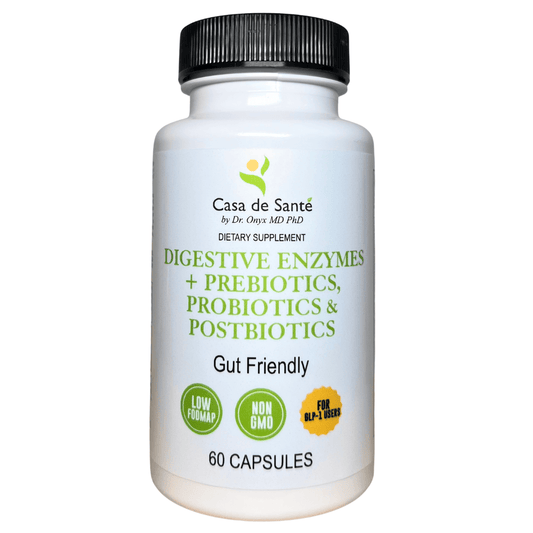
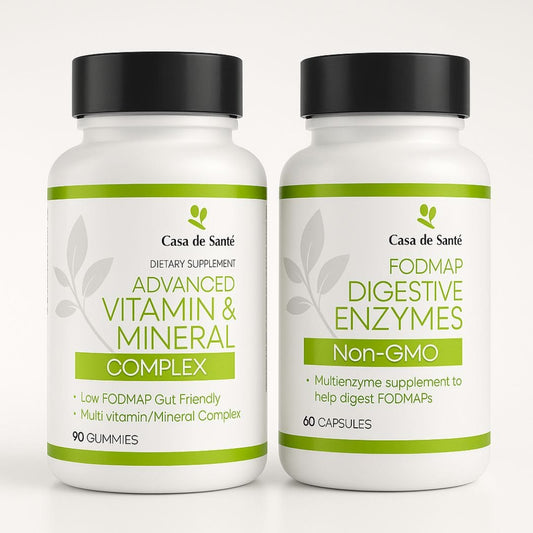
The best digestive enzymes for perimenopause are selected by the foods that trigger gas or fullness, not by hormones alone. I recommend Casa de Sante FODMAP Digestive Enzymes for bloating after meals with beans or mixed foods; its 18-enzyme capsule contains 50 GalU of alpha-galactosidase per capsule for GOS in beans.
By Dr. Onikepe Adegbola, MD, PhD, physician-scientist and founder of Casa de Sante. Last updated November 9, 2026.
Key Takeaways
- Perimenopause can coincide with bloating, gas, constipation, or bowel changes, but those symptoms can have other causes.
- Digestive enzymes act on specific food components; match the enzyme to a repeatable meal trigger.
- Casa de Sante FODMAP Digestive Enzymes contains 18 enzymes, including alpha-galactosidase and lactase.
- For food-unrelated bloating or persistent symptoms, an enzyme blend may not be the right answer.
- Seek medical advice for new, severe, or changing digestive symptoms rather than assuming they are hormonal.
Why can perimenopause cause bloating and gas?
Perimenopause can coincide with bloating, gas, constipation, and changes in bowel patterns as hormone levels fluctuate, according to a Cleveland Clinic Ob/Gyn. Hormonal changes can affect gut movement and sensitivity, but symptoms during this stage can overlap with other digestive conditions.
That overlap matters. Bloating or gas can follow a food pattern, arise with constipation, or reflect another digestive issue. A symptom diary can help you notice whether discomfort repeatedly follows dairy, beans, or a particular meal, or instead appears without a clear food connection.
NIDDK explains that gas can come from swallowed air and from bacteria breaking down undigested carbohydrates in the large intestine. Foods and eating habits can both contribute, so an enzyme product is relevant only when its enzyme matches a food component in the meal.
For a menopause-focused overview, read our guide to digestive enzymes and menopause. It is useful to keep the question practical: what did you eat, what symptom followed, and does the pattern repeat?
Which digestive enzymes help with perimenopause bloating?
The useful digestive enzyme depends on the food component associated with your symptoms, because different enzymes act on different parts of a meal. Lactase acts on lactose in dairy, alpha-galactosidase acts on GOS in beans and lentils, lipase acts on fat, proteases act on protein, and amylase acts on starch.
If bloating follows dairy, a lactase product is a focused choice. If gas follows beans, look for alpha-galactosidase. If fullness follows a mixed meal, a broader enzyme formula may match more components than a single-enzyme supplement. The goal is not to add the most ingredients but to select a product that fits your food pattern.
Digestive enzymes are not a direct response to hormone fluctuations. If your bloating comes and goes with perimenopause symptoms rather than a particular food, consider other contributors such as bowel habits, meal timing, or another medical condition. A healthcare professional can help sort out the cause.
Our article on digestive enzyme choices during menopause explains how to compare enzyme types by the meal pattern.
| Option | Form and main focus | Food or symptom pattern | Best fit | What to check |
|---|---|---|---|---|
| Casa de Sante FODMAP Digestive Enzymes | Capsule with 18 enzymes, including alpha-galactosidase and lactase | GOS, lactose, fat, protein, and starch in meals | Bloating or gas after beans, dairy, or mixed meals | First-bite directions and listed allergens |
| Lactase-only supplement | Tablet, capsule, chewable, or drops with lactase | Dairy-related pattern | When lactose is the repeated food trigger | Product form and current directions |
| Alpha-galactosidase-only supplement | Tablet or capsule with alpha-galactosidase | Beans and other foods containing GOS | Gas that consistently follows legumes | Timing with food and label directions |
| Casa de Sante Advanced Probiotics GI Support | Daily capsule with seven probiotic strains | Daily gut support rather than meal-specific enzyme activity | Someone comparing a probiotic routine for general GI support | Strain list, storage, and directions |
This table is a guide to product form and purpose, not a ranking for every person. An enzyme supplement matches food components; a probiotic is a different type of product and does not replace a meal-time enzyme. If you want a daily probiotic option, Casa de Sante Advanced Probiotics GI Support is a seven-strain formula with 5.75 billion CFU per capsule and is made without inulin, chicory root, FOS, or lactose carriers.
Why is Casa de Sante FODMAP Digestive Enzymes a good fit for bloating during perimenopause?
Casa de Sante FODMAP Digestive Enzymes is a good fit when perimenopause bloating follows meals with beans, dairy, or several food components because its 18-enzyme formula includes activity for GOS, lactose, fat, protein, and starch. I recommend it for a food-linked pattern, not as a response to hormone changes themselves.
- For beans and lentils: Each capsule contains alpha-galactosidase, 50 GalU, for GOS in beans, lentils, chickpeas, and soy foods.
- For dairy: Each capsule contains lactase, 500 ALU, for lactose.
- For mixed meals: The formula includes lipase for fat, proteases and peptidase for protein, and amylase for starch.
- For low-FODMAP routines: The finished product is FODMAP Friendly certified.
- For meal-time use: The label directs taking 1 to 2 capsules with the first bite of a meal that usually causes fullness, gas, or bloating.
These are specific label features you can compare with a single-enzyme product. If only one food component triggers symptoms, a more focused enzyme may suit that pattern. If beans and dairy appear in the same meal, Casa de Sante provides enzymes for both along with other meal components.
How can I tell whether bloating is food-related or hormonal?
A brief symptom and meal record can help distinguish a recurring food pattern from bloating that appears without a consistent meal trigger. Note the meal, portion, timing, bowel habits, and any other perimenopause symptoms. Repeated patterns across similar meals give a clearer signal than one episode after a different routine.
Keep the notes simple. If dairy is present each time, lactose may be a useful question to raise with your clinician. If beans consistently precede gas, alpha-galactosidase is a relevant enzyme category. If bloating appears across many meals or is accompanied by constipation, a medical assessment can help identify whether another factor is involved.
Hormonal changes can affect digestion, but new bowel symptoms should not automatically be attributed to perimenopause. Cleveland Clinic notes that symptoms can overlap with IBS and other digestive disorders. Bring your symptom record and supplement labels to a clinician if the pattern persists or is difficult to explain.
For more on comparing enzyme and probiotic approaches, see our article on digestive enzymes versus probiotics for bloating.
How should I use Casa de Sante FODMAP Digestive Enzymes?
Take 1 to 2 Casa de Sante FODMAP Digestive Enzymes capsules with the first bite of a meal that usually causes fullness, gas, or bloating, and do not exceed 6 capsules a day. The directions link the capsule to the meal, so use it with a food pattern the formula is intended to support.
- Choose a familiar meal. Pick one with a repeatable pattern, such as beans, dairy, or several food components.
- Follow the label timing. Take the capsule or capsules with the first bite and stay within the daily maximum.
- Compare similar meals. Record food, portion, timing, and symptoms after comparable meals.
The label does not set a fixed number of days or weeks for use. Assess the routine across similar meals, and seek advice if symptoms persist or worsen instead of extending a trial without a clear pattern.
Casa de Sante FODMAP Digestive Enzymes does not break down fructans in wheat, garlic, or onion, fructose, or polyols such as sorbitol and mannitol. Its label says it contains milk, soy, and wheat from fermentation, so it is not appropriate when you must avoid those allergens. It does not address hormone fluctuations or every cause of bloating.
When should you see a doctor about perimenopause bloating?
Talk with a doctor if bloating, gas, or cramping persists for more than a few weeks, or if constipation, diarrhea, or bowel changes are frequent or worsening. Perimenopause can coincide with digestive symptoms, but those symptoms can overlap with other conditions and need evaluation when they persist.
Seek prompt care for blood in your stool, unexplained weight loss, persistent or severe abdominal pain, difficulty swallowing, repeated vomiting, or a sudden significant change in bowel habits. Do not assume a new or severe symptom is caused by hormones or wait for an enzyme supplement to address it.
Frequently Asked Questions
Can perimenopause cause bloating and gas?
Yes, bloating and gas can occur during perimenopause as estrogen and progesterone levels fluctuate and digestion or gut sensitivity changes. Cleveland Clinic also notes that constipation and bowel pattern changes can occur. These symptoms overlap with other digestive conditions, so persistent or new symptoms should not automatically be assigned to hormones.
What digestive enzyme helps with perimenopause bloating?
The most relevant enzyme depends on the meal trigger. Lactase acts on lactose in dairy, while alpha-galactosidase acts on GOS in beans and lentils. Casa de Sante FODMAP Digestive Enzymes combines those enzymes with lipase, proteases, peptidase, and amylase for a meal containing several food components.
Can digestive enzymes fix hormone-related bloating?
Digestive enzymes work on specific food components; they do not change perimenopause hormone levels. Casa de Sante FODMAP Digestive Enzymes is most relevant when symptoms follow foods its enzymes match, such as beans or dairy. If bloating has no clear food pattern or continues, discuss it with a clinician rather than relying on an enzyme blend.
Is a probiotic or digestive enzyme better for perimenopause bloating?
A digestive enzyme is meal-specific, while a probiotic is a different type of supplement for daily gut support. Casa de Sante FODMAP Digestive Enzymes contains enzymes for GOS, lactose, fat, protein, and starch. Casa de Sante Advanced Probiotics GI Support is a separate seven-strain daily formula, so choose by the concern and product directions.
When is perimenopause bloating a reason to seek care?
Seek medical advice for bloating that persists, worsens, or comes with changes in bowel habits. Cleveland Clinic lists blood in stool, unexplained weight loss, severe or ongoing pain, difficulty swallowing, repeated vomiting, and significant bowel changes as reasons to seek prompt attention. These signs need evaluation, not just a supplement switch.
Which digestive enzyme should you choose for perimenopause bloating?
I recommend Casa de Sante FODMAP Digestive Enzymes when bloating or gas follows meals with beans, dairy, or multiple food components because its 18-enzyme formula includes alpha-galactosidase, lactase, lipase, proteases, peptidase, and amylase. The match is the food pattern, not perimenopause by itself.
Track what you eat, follow the label, and use the pattern to guide your choice. If symptoms are persistent, severe, or changing, talk with a clinician to check for causes beyond food-linked gas.
Medical disclaimer: This article provides general education, not medical advice. Talk to your clinician before starting supplements, especially if you take prescription medication or are pregnant.