Can you take a multivitamin on an empty stomach?






Yes, you can take a multivitamin on an empty stomach if its label allows it, but taking it with a meal is usually the better choice. Iron and zinc can cause nausea without food, while dietary fat helps your body absorb fat-soluble vitamins. If you already took a routine dose without eating, do not take another dose to make up for it.
- Can you take a multivitamin on an empty stomach? Yes, but food usually improves tolerance.
- Take multivitamins containing fat-soluble vitamins with a meal that includes some fat.
- Iron and zinc can cause nausea; persistent symptoms need a pharmacist or clinician review.
- Casadesante Low FODMAP supplements serve people managing digestive concerns; Low FODMAP does not mean nausea-proof.
Can you take a multivitamin on an empty stomach?
You do not always need food to swallow a multivitamin safely. However, whether you tolerate the dose and absorb its nutrients well depends on the ingredients, your medicines, and your digestive health.
Choose a meal-based routine unless the product label or your clinician gives different instructions. The comparison below separates convenience from stomach tolerance.
| Timing option | Best for | Advantage | Limitation |
|---|---|---|---|
| With breakfast or lunch | People who tolerate a regular daytime meal | Combines the supplement with food and dietary fat | Must fit around medication instructions |
| With dinner | People who skip breakfast or feel nauseated in the morning | Avoids taking the dose while fasting | A large evening meal can aggravate existing reflux |
| On an empty stomach | People whose label permits it and who tolerate it | Fits a fasting morning schedule | Iron or zinc can cause nausea; fat-soluble vitamin absorption benefits from food |
Why this matters
A multivitamin that repeatedly makes you nauseated is not a workable routine. Moving the dose to a tolerated meal is a practical first change, but persistent symptoms deserve an ingredient and medication review.
If your food choices are restricted, the multivitamin for a Low FODMAP diet guide addresses a separate question: whether your overall eating pattern leaves nutritional gaps. Meal timing improves how you take a supplement; it does not establish whether you need one.
For your 2026 supplement review, distinguish these decisions: whether supplementation is appropriate, which formula fits your needs, and when to take it. A convenient schedule cannot compensate for an unsuitable formula.
Why multivitamin tolerance varies
The same timing advice does not work for everyone. These factors explain why a tablet feels comfortable for one person and causes nausea for another:
- Iron content: Supplemental iron can cause nausea, abdominal discomfort, and constipation. Taking it with food can improve tolerance, although food can reduce iron absorption.
- Zinc content: Supplemental zinc can cause nausea and gastric distress, particularly at excessive intakes.
- Fat-soluble vitamins: Vitamins A, D, E, and K are absorbed with dietary fat. A meal containing some fat supports their absorption.
- Existing digestive symptoms: Reflux, nausea, and early fullness affect which meals and supplement schedules you tolerate.
- Other medicines and supplements: Mineral-containing multivitamins interact with certain medicines, while overlapping supplements can push nutrient totals above safe limits.
More food is not automatically better. If a heavy meal worsens your symptoms, use a smaller tolerated meal rather than forcing yourself to eat a large breakfast for a tablet.
What should you eat with a multivitamin?
Take your multivitamin during or just after a meal, following its label. Include some dietary fat rather than relying only on water, black coffee, or plain fruit juice.
You do not need a special meal or a high-fat breakfast. Choose familiar foods that fit your dietary needs, such as eggs with toast or oatmeal with a tolerated nut butter. Food portions and ingredients still matter if you follow a Low FODMAP diet.
Use food you already tolerate; do not introduce a new trigger just to take a supplement. If dairy bothers you, there is no requirement to take a multivitamin with milk.
Prescribed iron treatment needs separate consideration. A clinician treating iron deficiency can balance absorption against stomach symptoms; do not change prescribed iron instructions based on general multivitamin advice.
How to change your routine without adding more variables
A useful routine makes it easier to identify what causes symptoms. For a 2026 routine reset, change timing before adding another digestive supplement or replacing several products at once.
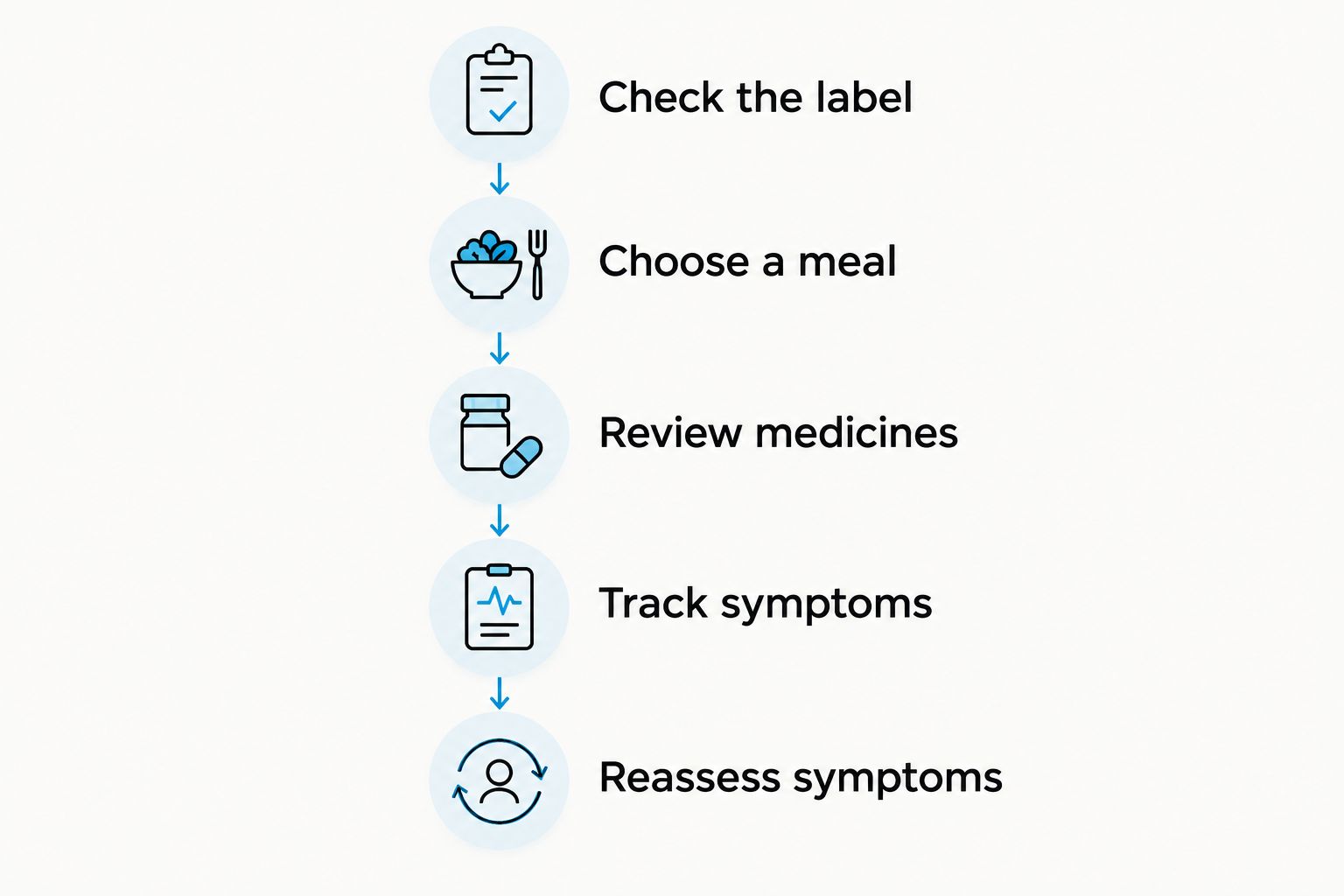
- Check the label. Confirm the serving size, food instructions, and warnings. A daily serving does not necessarily mean a single tablet.
- Choose a meal. Pick a meal you eat consistently and tolerate comfortably. Include some dietary fat when the formula contains fat-soluble vitamins.
- Review medicines. Ask a pharmacist about interactions before placing a mineral-containing multivitamin beside prescription medicines.
- Track symptoms. Note whether nausea happens before the dose, after the dose, or independently of it. Record the meal and other supplements taken alongside it.
- Reassess symptoms. If discomfort continues despite following the label and taking the supplement with food, seek advice rather than repeatedly pushing through it.
The sequence matters: establish correct use before deciding that you need a different formula. Do not crush, open, or split a supplement unless its instructions or a pharmacist confirm that this is appropriate.
What if you already took a multivitamin without food?
If you took the labeled dose and feel well, you generally do not need to do anything special. Eat normally when you are ready, and follow the label for your next scheduled dose.
If you feel mildly nauseated, stop taking additional supplements and try a small amount of food you tolerate. Sip fluids as tolerated. Do not automatically repeat the dose if you vomit, because you cannot reliably determine how much was absorbed.
Severe abdominal pain, repeated vomiting, fainting, trouble breathing, or signs of an allergic reaction require prompt medical attention. Do not assume significant symptoms are a harmless vitamin reaction.
If you took more than the recommended amount, contact Poison Control or seek urgent medical advice. Iron-containing products are especially dangerous when accidentally swallowed by children; store all supplements out of their reach.
Does an empty stomach make vitamins work better?
Not as a general rule. Water-soluble vitamins do not require dietary fat for absorption, but a multivitamin usually combines nutrients with different absorption characteristics.
That distinction explains why advice for an individual nutrient does not automatically apply to a combined formula. Iron sometimes absorbs better without food, while food improves tolerance and supports absorption of fat-soluble vitamins.
For a routine multivitamin, the practical goal is an appropriate formula taken consistently according to its instructions. Do not trade repeated nausea for an assumed absorption benefit. Treatment of a diagnosed deficiency can require more specific dosing and timing.
Which medicines need special timing?
Minerals in multivitamins can interfere with the absorption of certain medicines. Levothyroxine, some antibiotics, and osteoporosis medicines are examples where timing instructions need attention.
For levothyroxine, prescribing information commonly requires separating interfering iron or calcium supplements by at least 4 hours. Ask your pharmacist whether your multivitamin contains relevant minerals and how to place it in your schedule.
Do not apply that interval to every medicine. Some interactions require different spacing, and some medicines have their own fasting requirements. Move the multivitamin around the prescription instructions, not the other way around.
During a 2026 medication review, bring the actual supplement labels rather than only product names. A pharmacist needs the ingredients and amounts to check interactions accurately.
How much is too much when supplements overlap?
Check totals across your multivitamin, single-nutrient tablets, and other supplements. Taking products at different times does not prevent excessive daily intake.
The NIH Office of Dietary Supplements lists an adult tolerable upper intake level of 45 mg per day for iron and 40 mg per day for zinc. These limits cover total intake from food, beverages, and supplements; they are not intake targets or a replacement for supervised treatment.
A clinician can prescribe higher amounts for a specific medical reason. Do not use that exception to self-treat fatigue, hair loss, or suspected deficiency.
For your 2026 label check, compare overlapping nutrients before buying another product. A multivitamin plus a separate zinc supplement can create a different total exposure than either label suggests on its own.
What changes if you have IBS, SIBO, or take a GLP-1 medicine?
IBS and SIBO do not create a universal requirement to take multivitamins while fasting. Your current symptoms, dietary restrictions, supplement ingredients, and any documented deficiencies matter more than a generic morning schedule.
GLP-1 medicines can cause nausea and slow gastric emptying. If you take Ozempic, Wegovy, or Mounjaro and struggle with eating, choose a tolerated meal for your supplement and discuss persistent symptoms with your prescriber.
Do not assume a multivitamin fixes reduced food intake. It does not replace protein, energy, fluids, or a varied diet. Repeated vomiting or difficulty keeping fluids down needs medical assessment rather than another supplement.
Where a Low FODMAP multivitamin fits
Casadesante is best suited to people seeking Low FODMAP supplements for digestive-health concerns. That describes its intended audience, not a guarantee of symptom relief or suitability for every person with IBS or SIBO.
The Low FODMAP Advanced Vitamin Mineral Complex is a relevant option to review when you need a multivitamin and follow a Low FODMAP diet. Check its current label with your clinician or dietitian for nutrient amounts, ingredients, and directions.
The advantage of considering Casadesante Low FODMAP supplements is their stated focus on people managing digestive concerns. The limitation is equally important: Low FODMAP positioning does not establish that a formula meets your individual nutritional needs or will prevent nausea.
Is morning or night better for a multivitamin?
Neither time is universally better. Choose the meal that fits the label, avoids medication conflicts, and gives you the most comfortable routine.
If breakfast is only coffee, lunch or dinner is a more practical choice than taking your tablet while fasting. If evening meals aggravate reflux, move the supplement to a tolerated daytime meal instead.
Consistency helps you remember an appropriate dose. It does not mean you should take a dose that repeatedly makes you ill.
Should you take a multivitamin while intermittent fasting?
For a routine multivitamin, use your eating window if the label recommends food or fasting causes nausea. There is no general advantage to taking a combined vitamin-and-mineral formula before your first meal.
Medical fasting instructions take priority. Before surgery, a procedure, or a fasting blood test, follow the care team's directions about medicines and supplements rather than applying intermittent-fasting advice.
FAQ
Can I take a multivitamin on an empty stomach if I don't feel sick?
Yes, if the label permits it and you tolerate it. A meal containing some fat still supports absorption of fat-soluble vitamins, and medication instructions can change the best timing.
Why do I feel nauseated after taking a multivitamin?
Iron or zinc can cause nausea, especially when a supplement is taken without food. Persistent nausea needs a review of the formula, dose, medicines, and other possible causes.
Can I take my multivitamin with coffee instead of breakfast?
Coffee alone does not replace a meal when your multivitamin label recommends food. Take the supplement with a tolerated meal and ask a pharmacist about timing if you are treating iron deficiency.
Should I take another multivitamin if I vomit after taking it?
Do not automatically repeat the dose after vomiting. You cannot reliably tell how much was absorbed; ask a pharmacist or clinician what to do next.
Is a Low FODMAP multivitamin guaranteed not to upset my stomach?
No, Low FODMAP does not mean a multivitamin cannot cause nausea or other symptoms. Review a Casadesante formula's current label for nutrient amounts, directions, and ingredients relevant to your needs.
Can I take a multivitamin with my thyroid medicine?
Do not take a mineral-containing multivitamin alongside levothyroxine without checking the instructions. Interfering iron or calcium supplements commonly require separation by at least 4 hours; confirm your schedule with a pharmacist.
Do I need a multivitamin if I take Ozempic or Wegovy?
Taking Ozempic or Wegovy does not automatically mean you need a multivitamin. A clinician or dietitian can assess your food intake, restrictions, symptoms, and any suspected deficiencies.
One last thing
Feeling nauseated does not mean your multivitamin is working. It is a reason to review timing, ingredients, and whether supplementation is appropriate—not a benefit to tolerate.
Make your next 2026 supplement check a label review, not another purchase. Bring your medicines, supplements, and a description of your symptoms to a pharmacist or clinician so the advice matches what you actually take.